
Emily Hahn (1) (1905–1997)
Author of Leonardo da Vinci
For other authors named Emily Hahn, see the disambiguation page.
About the Author
Image credit: estate of emily hahn
Series
Works by Emily Hahn
No Hurry to Get Home: The Memoir of the New Yorker Writer Whose Unconventional Life and Adventures Spanned the 20th Century (1970) 137 copies, 2 reviews
Associated Works
A Sense of History: The Best Writing from the Pages of American Heritage (1985) — Contributor — 490 copies, 4 reviews
Rachel Cade / It's a Big Country / Pirate / A Stillness at Appomattox / Diamond (1957) — Contributor — 1 copy
Tagged
Common Knowledge
- Birthdate
- 1905-01-14
- Date of death
- 1997-02-18
- Gender
- female
- Education
- University of Wisconsin-Madison (Mining Engineering ∙ 1926)
Columbia University
University of Oxford - Occupations
- journalist
author
biographer
magazine writer
novelist
children's book author (show all 8)
oil geologist
mining engineer - Organizations
- American Academy of Arts and Letters (Literature ∙ 1987)
The New Yorker - Relationships
- Boxer, Charles R. (husband)
- Short biography
- Emily Hahn was born in St. Louis, Missouri, one of six daughters in a Jewish American family of German origin. Her parents were Isaac Newton Hahn, a dry goods salesman, and his wife Hannah Schoen Hahn, a suffragist. The family moved to Chicago, Illinois, when she was in high school. Emily initially enrolled in a general arts program at the University of Wisconsin–Madison, but changed her course of study to mining engineering after being told by a professor that the female mind was incapable of grasping mechanics or higher mathematics. In 1926, she became the first woman to receive a degree in Mining Engineering at the University. Prior to graduating, she drove 2,400 miles across the USA dressed as a man with a friend, Dorothy Raper. During the trip, she wrote about her travel experiences to her brother-in-law, who showed the letters to The New Yorker, jump-starting her career as a writer. Emily wrote for The New Yorker from 1929 to 1996. Her first book, the tongue-in-cheek Seductio ad Absurdum: The Principles and Practices of Seduction--A Beginner's Handbook, was published in 1930. She went on to study mineralogy at Columbia University and anthropology at Oxford, working in between as an oil geologist, a teacher, and a guide in New Mexico. She hiked across Central Africa in the 1930s. In 1935, she traveled to Shanghai, China, where she taught English for three years and became acquainted with prominent figures such as Sir Victor Sassoon, Mao Zedong, Zhou EnLai, and the Soong sisters. She had a romance with poet and publisher Shao Xunmei. After moving to Hong Kong, she began an affair with Major Charles Boxer, the local head of British army intelligence, with whom she had a daughter. When the Japanese army marched into Hong Kong a few weeks later in World War II, Maj. Boxer was imprisoned in a POW camp. Emily was brought in for questioning, but was not interned after she stated she was married to Shao Xunmei, and was sent back to the USA in 1943. Her book about this period, China to Me (1944) became an instant hit with the public. Her reunion with Boxer after the war also made headlines; the couple married and settled in Dorset, England, and had a second daughter. In 1950, Emily rented an apartment in New York, and from then on visited her husband and children in England only occasionally. She wrote biographies of Leonardo da Vinci, Aphra Behn, James Brooke, Fanny Burney, Chiang Kai-shek, D.H. Lawrence, and Mabel Dodge Luhan; books about cooking, zoos, diamonds, natural history, and travel; novels; and books for children. In total, she was the author of 54 books and nearly 200 articles.
- Nationality
- USA
- Birthplace
- St Louis, Missouri, USA
- Places of residence
- Chicago, Illinois, USA
Shanghai, China
Hong Kong
Dorset, England, UK
New York, New York, USA - Place of death
- New York, New York, USA
- Associated Place (for map)
- USA
Members
Reviews
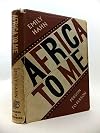
Published in 1964, most of the book is about Africa in transition from colonial to independent status. The subtitle, “Person to Person,” is apt. The “to Me” of the title is fair warning that this will not be a detached, scholarly study. Emily Hahn travels with an amused eye and an open mind, meeting government officials of the clueless-old and naive-new regimes. As always, she has a wonderful sense for detail and an ear for the revelatory anecdote. For example:
Somebody introduced me show more to an enchantingly pretty young African woman in a shapely evening dress, her hair pulled to a little bun at the top of her head. …When she spoke longingly of her home town on the slopes of Kilimanjaro, so cool, so beautiful, so thoroughly unlike Dar-es-Salaam, she added, like any English lady from the country, 'And we have many wild animals, you know. We have giraffes. Oh, I do love giraffes!'
'She never!' said an Englishman later, when I reported this conversation. 'No African woman ever said that! Well, if you assure me, but… Did she say whether she loved them raw or cooked?'
I’m a fan of Emily Hahn. She cannot write a dull sentence. Still, the subject matter of the book is dated. Since so many of her interactions are with government workers, diplomats, and officials, you get something of a top-down view. Unless you’re a student of the post-colonial transition in Africa, you’ll want to skip large sections of writing.
The best — and indeed timeless — chapter is the first. In it, Emily Hahn deciphers an African mystery relating to a particular early explorer named Alexandrine Tinne. Ms. Hahn and Ms. Tinne have something in common: they each audaciously set out to explore the deepest, most unknown parts of Africa as single women, Ms. Tinne in the 1860s, Ms. Hahn in the 1930s. Ms. Tinne met an unfortunate fate — hacked to death for her barrels of gold, so it was said. The hacking was quite believable, but the barrels of gold never made sense. She would not have possessed such gold, nor would she have traveled with it. Twenty years of inquiries, and a few remarkable twists of fate, finally reveal the truth of Alexandrine Tinne. It’s a great chapter.
The final chapter is a good one, too. It involves an anecdote that begins in 1932 and ends 25 pages later with a punch line in 1962, the last sentence in the book. Along the way, like all her stories, we get a sense of Africa as it was and as it was becoming. show less
Somebody introduced me show more to an enchantingly pretty young African woman in a shapely evening dress, her hair pulled to a little bun at the top of her head. …When she spoke longingly of her home town on the slopes of Kilimanjaro, so cool, so beautiful, so thoroughly unlike Dar-es-Salaam, she added, like any English lady from the country, 'And we have many wild animals, you know. We have giraffes. Oh, I do love giraffes!'
'She never!' said an Englishman later, when I reported this conversation. 'No African woman ever said that! Well, if you assure me, but… Did she say whether she loved them raw or cooked?'
I’m a fan of Emily Hahn. She cannot write a dull sentence. Still, the subject matter of the book is dated. Since so many of her interactions are with government workers, diplomats, and officials, you get something of a top-down view. Unless you’re a student of the post-colonial transition in Africa, you’ll want to skip large sections of writing.
The best — and indeed timeless — chapter is the first. In it, Emily Hahn deciphers an African mystery relating to a particular early explorer named Alexandrine Tinne. Ms. Hahn and Ms. Tinne have something in common: they each audaciously set out to explore the deepest, most unknown parts of Africa as single women, Ms. Tinne in the 1860s, Ms. Hahn in the 1930s. Ms. Tinne met an unfortunate fate — hacked to death for her barrels of gold, so it was said. The hacking was quite believable, but the barrels of gold never made sense. She would not have possessed such gold, nor would she have traveled with it. Twenty years of inquiries, and a few remarkable twists of fate, finally reveal the truth of Alexandrine Tinne. It’s a great chapter.
The final chapter is a good one, too. It involves an anecdote that begins in 1932 and ends 25 pages later with a punch line in 1962, the last sentence in the book. Along the way, like all her stories, we get a sense of Africa as it was and as it was becoming. show less
No Hurry to Get Home: The Memoir of the New Yorker Writer Whose Unconventional Life and Adventures Spanned the Century (Adventura Books) by Emily Hahn
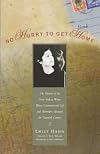
Scintillating collection of autobiographical articles, which originally appeared in New Yorker magazine - covering roughly the period 1920-1945. Emily Hahn writes in an almost conversational style, fluidly and at times poetically. She was a lifelong, inveterate traveller, but more than that she often stayed in out of the way places for years on end - in the Congo while under Belgian rule, in China during the Japanese invasion and in Hong Kong after the Japanese takeover, etc. She travelled show more solo in Africa, with a party of bearers, became an opium addict and the mistress of a Chinese poet, before marrying Britain's top intelligence agent in Hong Kong - a marriage which produced two daughters and endured until her death, more than 50 years later. Left me wanting to read more by her and learn more about her. show less

Writer Emily Hahn – known to her friends as Mickey – traveled from the USA to China in 1935 and she didn’t come home until she was repatriated – with her daughter – in 1943.
She hadn’t intended to stay for so long, but she found so many reasons to stay and establish a life there.
She was offered an interesting job, in newspaper journalism; and that led her into a business partnership and a romantic alliance with her – married – Chinese publisher.
She mixed with the rich and show more powerful, mainly British and other European expatriates.
She found and furnished an apartment in Shanghai’s red light district, and she kept a pet gibbon who she named Mr. Mills and who often accompanied her to social events.
Starting to read this book was a little like stepping into a party not knowing any of the other guests and catching the voice of a warm and witty raconteur with a great deal to talk about. I can’t say that I got the whole story straight, but I picked up lots of details and I was intrigued.
That might have happened because the author was a columnist for the New Yorker and was writing for an audience who already knew the shape of her story; it might be because she was anxious to publish this account but wary of saying too much during the war; and it could be significant that she had a serious opium habit for the first few years she spent in China ….
As time passed key events became a little clearer.
Mickey was commissioned to write a book about the three famous Soong sisters. Each sister had married a prominent Chinese men – military leader Chiang Kai-shek, revolutionary Sun Yat-sen, and wealthy finance minister Kung Hsiang-hsi – and each had used that to establish their own position of power and influence.
She traveled inland to the mountainous city of Chungking to interview the first of trio, and gaining her confidence and trust opened the doors she needed opening to complete her book.
There isn’t a great deal about the sisters in this book but there was enough to pique my curiosity, and to make me very glad that I have a copy of that book.
Then Mickey moved to Hong Kong. She began an affair with the local head of British army intelligence and she gave birth to their baby. That was planned, because she thought that a baby would steady her and he agreed ….
She was still in Hong Kong when the Japanese invaded – on the same day that they attacked Pearl Harbor. That raised this book from interesting to compelling, as she vividly describes of the confusion, the uncertainty, the deprivation and the fear of living under enemy rule. She struggled to feed and care for her infant daughter and to make sure her that her lover, who was a hospital-bound prisoner, had the food and medicine that he needed.
The book closes in 1943 when Mickey is repatriated to the US with her daughter; the outcome of the war and the fate of the man she loved still uncertain.
Emily Hahn was a proud feminist and fearless traveler, and the kind of woman who lived life as she felt it ought to be lived without waiting for the rules to be changed. That made her wonderful company, but it was her skill as a writer and her interest in the people around her that really elevated this memoir. She made clear and insightful observations about the people around her – and herself and how they dealt with cultural differences, the changes that politics and the war brought, and all of life’s ups and downs.
You won’t find a comprehensive account of the history that Emily Hahn lived through in this book, you won’t find much at all about people outside her social circle; and there is so much detail in more than four hundred pages that I can’t say that I took it all in. But I can say that those pages weren’t enough, because brought her own life back to life on the page so vividly and she really made me understand what it was like to be in her position.
I was sorry to part company, but I did understand that the book had reached a natural end. show less
She hadn’t intended to stay for so long, but she found so many reasons to stay and establish a life there.
She was offered an interesting job, in newspaper journalism; and that led her into a business partnership and a romantic alliance with her – married – Chinese publisher.
She mixed with the rich and show more powerful, mainly British and other European expatriates.
She found and furnished an apartment in Shanghai’s red light district, and she kept a pet gibbon who she named Mr. Mills and who often accompanied her to social events.
Starting to read this book was a little like stepping into a party not knowing any of the other guests and catching the voice of a warm and witty raconteur with a great deal to talk about. I can’t say that I got the whole story straight, but I picked up lots of details and I was intrigued.
That might have happened because the author was a columnist for the New Yorker and was writing for an audience who already knew the shape of her story; it might be because she was anxious to publish this account but wary of saying too much during the war; and it could be significant that she had a serious opium habit for the first few years she spent in China ….
As time passed key events became a little clearer.
Mickey was commissioned to write a book about the three famous Soong sisters. Each sister had married a prominent Chinese men – military leader Chiang Kai-shek, revolutionary Sun Yat-sen, and wealthy finance minister Kung Hsiang-hsi – and each had used that to establish their own position of power and influence.
She traveled inland to the mountainous city of Chungking to interview the first of trio, and gaining her confidence and trust opened the doors she needed opening to complete her book.
There isn’t a great deal about the sisters in this book but there was enough to pique my curiosity, and to make me very glad that I have a copy of that book.
Then Mickey moved to Hong Kong. She began an affair with the local head of British army intelligence and she gave birth to their baby. That was planned, because she thought that a baby would steady her and he agreed ….
She was still in Hong Kong when the Japanese invaded – on the same day that they attacked Pearl Harbor. That raised this book from interesting to compelling, as she vividly describes of the confusion, the uncertainty, the deprivation and the fear of living under enemy rule. She struggled to feed and care for her infant daughter and to make sure her that her lover, who was a hospital-bound prisoner, had the food and medicine that he needed.
The book closes in 1943 when Mickey is repatriated to the US with her daughter; the outcome of the war and the fate of the man she loved still uncertain.
Emily Hahn was a proud feminist and fearless traveler, and the kind of woman who lived life as she felt it ought to be lived without waiting for the rules to be changed. That made her wonderful company, but it was her skill as a writer and her interest in the people around her that really elevated this memoir. She made clear and insightful observations about the people around her – and herself and how they dealt with cultural differences, the changes that politics and the war brought, and all of life’s ups and downs.
You won’t find a comprehensive account of the history that Emily Hahn lived through in this book, you won’t find much at all about people outside her social circle; and there is so much detail in more than four hundred pages that I can’t say that I took it all in. But I can say that those pages weren’t enough, because brought her own life back to life on the page so vividly and she really made me understand what it was like to be in her position.
I was sorry to part company, but I did understand that the book had reached a natural end. show less
In 1969 my Berkeley friends and I got ahold of Emily Hahn's book about Chinese cooking...at the time Mao was devastating old China, but somehow Hahn's cooking connected us with the lives of real people used to surviving one natural and political catastrophe after another and making time to cook for family. We spread a clean sheet on the apartment living room floor because there was no dining table big enough...and turned out one rather complex dish after another to eat sitting cross legged show more on the floor. Since then the world has changed, China and the US both are transformed. There are still natural and political catastrophes, but the recipes still work. Best eaten on a clean sheet spread out on the lawn or floor with family. With google, I was able to look up Emily Hahn's biography, what an amazing woman she was, scientist, traveler, writer, she affected the lives of people she never met, and all for the good.... show less
Lists
Awards

You May Also Like


Associated Authors
Statistics
- Works
- 63
- Also by
- 6
- Members
- 2,800
- Popularity
- #9,183
- Rating
- 3.6
- Reviews
- 28
- ISBNs
- 100
- Languages
- 5
- Favorited
- 1