
Ken Cuthbertson
Author of Nobody Said Not to Go: The Life, Loves, and Adventures of Emily Hahn
About the Author
Ken Cuthbertson is a veteran journalist and Governor General's Literary Award finalist, with more than forty years of experience writing for publications in Canada, the United States, and the United Kingdom. He holds a degree in modern American history, a master of arts degree in journalism, and a show more law degree. Ken Cuthbertson is the author of five previous books, including the critically acclaimed The Halifax explosion: Canada's Worst Disaster. show less
Works by Ken Cuthbertson
Associated Works
No Hurry to Get Home: The Memoir of the New Yorker Writer Whose Unconventional Life and Adventures Spanned the 20th Century (1970) — Introduction, some editions — 137 copies, 2 reviews
Tagged
Common Knowledge
- Birthdate
- 1951-05-07
- Gender
- male
- Organizations
- The New Yorker
- Nationality
- USA
- Associated Place (for map)
- USA
Members
Reviews
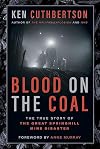
In 1959, Peggy Seeger and Ewan MacColl composed “The Ballad of Springhill.” In 1965, Peter, Paul and Mary performed the ballad on their album A Song Will Rise which is where I believe I first heard it. Its haunting retelling of the disaster and the miracle—for there were both—in the DOSCO Mine #2 on 23 October 1958 ensures the song's longevity, and its performance by numerous popular folk musicians has ensured its wide acquaintance among enthusiasts of the folk music genre. Despite show more having been pulled into the siren call of the song many years ago, I never knew much about the events of the fateful day in Springhill, Nova Scotia, when, as the song reminds us, the earth was restless and miners died. I must have always wondered about it somewhat, for, when I saw mention of Ken Cuthbertson's book Blood on the Coal: The True Story of the Great Springhill Mine Disaster, I eagerly added it to my to-be-read list.
There is much to be gleaned from Cuthbertson's book, including the fact that a few of the song stanzas reflect more of the composers' creativity than historical accuracy. Yes, a few were indeed rescued even after hope had vanished, but the dead were not left “to lie alone.” Both bare-faced miners and draegermen (both terms being clearly explained and differentiated in the book) continued to labor in the devastated mine until all 74 bodies were recovered and brought to the surface for burial in the sunshine, as was a 75th miner who had died in hospital. Another revelation in the book took me by surprise. As many others likely assume, according to Cuthbertson, I always envisioned collapsing walls and roofs brought down by a “restless” earth, but no, that was not the case at all. Conversely, the floors in the mine levels sprang upward as removal of tons of material from the upper layers lightened the weight pressing down on lower strata.
Using only a few miners as his focus, the author conveys quite a bit of sociological and psychological information about the society of a single-industry mining town and the culture of a close-knit group of colliers. Readers are also shown the expanding conflict between Springhillers and the news reporters and photographers that descended upon the small, isolated community as word spread of trapped miners. We also see the effects of racial bigotry in play both in Canada and especially in the United States as the governor of Georgia, who had invited the rescued miners and their families to his state for an all-expense-paid visit, realized that one of the miners and his family were Black. There is a great deal more in this book than the “Bump” in the mine, tragic as the event was.
One of the author's objectives, however, unfortunately remains unfulfilled for me, although for a miner or mining engineer it is most likely clear enough, and that is the underground structure of the mine itself. Cuthbertson devotes a bit of the “Introduction” to an explanation of how the mine was worked, but I remain rather confused. Page 7 tells us that the “mine's vertical depth from the pithead down to its nethermost reaches was 4,600 feet.” However, page 29 tells us that “the operating levels in the No. 2 mine at Springhill were at slope depths of 12,600, 13,000, 13,400, and 13,800 feet.” Page 33 states that “when mining operations descended below 10,000 feet . . . underground working conditions became more precarious than ever.” A simplified drawing of the mine layout on page 31 fails to clarify the structure entirely, probably because it is by necessity a two-dimensional attempt to portray a three-dimensional space. Were it a three-dimensional map, I suspect that levels appearing to be stacked vertically were actually offset horizontally. This would also explain the slope “depths” since horizontal in addition to vertical travel would be required to reach them. However, this attempt to reconcile the depth given on page 7 and the depths from pages 29 and 31 is only my surmise and not the author's hoped-for clarification.
To return for a brief moment to the song that inspired me to read this book, the musical references to “living and the dead men two miles down” and “two miles of earth for a marking stone” are obviously the result of artistic creativity. Two miles of earth equate to 10,560 feet. If the mine was, in fact, dug to the depth of 4,600 feet, it was less than one mile deep. The two pockets of survivors were discovered at the 13,000 foot level, but, as discussed in the previous paragraph, this was seemingly not the vertical depth. We'll consider the two miles mentioned in the song as poetically illustrative of great depth, shall we?
Only one other question niggles at me. This is not the only book to have been written about the Springhill mine disaster (which, by the way, was not the only disaster occurring in Nova Scotia coal mines nor the deadliest, but which was covered by the new media of on-scene television). The bibliography cites at least six published books whose titles indicate that they deal with the same subject matter as Cuthbertson's book. Inasmuch as his is the only one that I have yet read, I cannot say whether or not his is the one to read. I can say that, despite some lack of clarity as to the mine's structure, I found his Blood on the Coal informative, instructive, and quite readable. I am pleased to have devoted some time to its reading and may have even been inspired to seek out one or two of the bibliographical entries for comparison. The details in this book do give me a new appreciation for the song that inspired it (as well as an understanding that the song should not be taken too literally). show less
There is much to be gleaned from Cuthbertson's book, including the fact that a few of the song stanzas reflect more of the composers' creativity than historical accuracy. Yes, a few were indeed rescued even after hope had vanished, but the dead were not left “to lie alone.” Both bare-faced miners and draegermen (both terms being clearly explained and differentiated in the book) continued to labor in the devastated mine until all 74 bodies were recovered and brought to the surface for burial in the sunshine, as was a 75th miner who had died in hospital. Another revelation in the book took me by surprise. As many others likely assume, according to Cuthbertson, I always envisioned collapsing walls and roofs brought down by a “restless” earth, but no, that was not the case at all. Conversely, the floors in the mine levels sprang upward as removal of tons of material from the upper layers lightened the weight pressing down on lower strata.
Using only a few miners as his focus, the author conveys quite a bit of sociological and psychological information about the society of a single-industry mining town and the culture of a close-knit group of colliers. Readers are also shown the expanding conflict between Springhillers and the news reporters and photographers that descended upon the small, isolated community as word spread of trapped miners. We also see the effects of racial bigotry in play both in Canada and especially in the United States as the governor of Georgia, who had invited the rescued miners and their families to his state for an all-expense-paid visit, realized that one of the miners and his family were Black. There is a great deal more in this book than the “Bump” in the mine, tragic as the event was.
One of the author's objectives, however, unfortunately remains unfulfilled for me, although for a miner or mining engineer it is most likely clear enough, and that is the underground structure of the mine itself. Cuthbertson devotes a bit of the “Introduction” to an explanation of how the mine was worked, but I remain rather confused. Page 7 tells us that the “mine's vertical depth from the pithead down to its nethermost reaches was 4,600 feet.” However, page 29 tells us that “the operating levels in the No. 2 mine at Springhill were at slope depths of 12,600, 13,000, 13,400, and 13,800 feet.” Page 33 states that “when mining operations descended below 10,000 feet . . . underground working conditions became more precarious than ever.” A simplified drawing of the mine layout on page 31 fails to clarify the structure entirely, probably because it is by necessity a two-dimensional attempt to portray a three-dimensional space. Were it a three-dimensional map, I suspect that levels appearing to be stacked vertically were actually offset horizontally. This would also explain the slope “depths” since horizontal in addition to vertical travel would be required to reach them. However, this attempt to reconcile the depth given on page 7 and the depths from pages 29 and 31 is only my surmise and not the author's hoped-for clarification.
To return for a brief moment to the song that inspired me to read this book, the musical references to “living and the dead men two miles down” and “two miles of earth for a marking stone” are obviously the result of artistic creativity. Two miles of earth equate to 10,560 feet. If the mine was, in fact, dug to the depth of 4,600 feet, it was less than one mile deep. The two pockets of survivors were discovered at the 13,000 foot level, but, as discussed in the previous paragraph, this was seemingly not the vertical depth. We'll consider the two miles mentioned in the song as poetically illustrative of great depth, shall we?
Only one other question niggles at me. This is not the only book to have been written about the Springhill mine disaster (which, by the way, was not the only disaster occurring in Nova Scotia coal mines nor the deadliest, but which was covered by the new media of on-scene television). The bibliography cites at least six published books whose titles indicate that they deal with the same subject matter as Cuthbertson's book. Inasmuch as his is the only one that I have yet read, I cannot say whether or not his is the one to read. I can say that, despite some lack of clarity as to the mine's structure, I found his Blood on the Coal informative, instructive, and quite readable. I am pleased to have devoted some time to its reading and may have even been inspired to seek out one or two of the bibliographical entries for comparison. The details in this book do give me a new appreciation for the song that inspired it (as well as an understanding that the song should not be taken too literally). show less

Emily Hahn was educated as a mining engineer in the 1920s but her real love was living life to the fullest and writing about it. She was an eclectic writer with over 50 books to her credit ranging in topics from angels to zoology. She lived in a variety of intriguing and sometimes dangerous places. Her uninhibited way of life and plain-spoken writing style assured that her travel memoirs on China, England, and Africa were eagerly read.
Emily was born as Amelia in St. Louis in 1905 where she show more had an “unfashionably happy” childhood. She changed her name to Emily as a young girl but was more commonly known as Mickey because of her resemblance to the popular cartoon character Mickey Dooley. She asserted her independent nature at an early age and gravitated to a Bohemian lifestyle that her readers relished as she traveled the world and reported back to her homeland through the pages of The New Yorker.
It was hard for me to identify with this cigar-smoking exhibitionist who so nonchalantly defied social conventions, but the account of her life was always fascinating. I was on the edge of my chair as I read about her eight years in China, some of them spent in Hong Kong under a sort of house arrest by the Japanese invaders. Who knows, I might even search out some of her writing to learn more about this remarkable woman. show less
Emily was born as Amelia in St. Louis in 1905 where she show more had an “unfashionably happy” childhood. She changed her name to Emily as a young girl but was more commonly known as Mickey because of her resemblance to the popular cartoon character Mickey Dooley. She asserted her independent nature at an early age and gravitated to a Bohemian lifestyle that her readers relished as she traveled the world and reported back to her homeland through the pages of The New Yorker.
It was hard for me to identify with this cigar-smoking exhibitionist who so nonchalantly defied social conventions, but the account of her life was always fascinating. I was on the edge of my chair as I read about her eight years in China, some of them spent in Hong Kong under a sort of house arrest by the Japanese invaders. Who knows, I might even search out some of her writing to learn more about this remarkable woman. show less

Fairly well-organized look at the state of Canada in the last months of World War II, looking at the various problems faced by the country. The author does have a slightly annoying tendency to be patronizing regarding the society of Canada as of '45, but there are some interesting insights. The author is NOT a fan of long-serving PM William King; on the other hand, he seems to be a fan of Rocket Richard, the hockey player whose spectacular 1945 season is covered in the book's most show more entertaining chapter. Also an interesting chapter on a V-E Day riot that took place in Halifax. show less

This book tells the story of the December, 1917 explosion in Halifax harbour. This collision between two ships, one loaded with explosives, remains Canada's worst disaster. The explosion destroyed much of the city and killed over 2,000 people, wounding many others.
Historian Ken Cuthbertson explains in detail what led to the collision. He paints a vivid picture of the people involved, including some of the ordinary citizens who were killed, or saw their families and homes destroyed by the show more blaze. He also describes the resulting inquiry, set in the context of the politics of the day and the ongoing war. I like the way the author highlighted specific individuals, making the book a page-turner as I wanted to know who survived. I also like the way he told us how many of the main actors lived and died after the explosion.
A thorough, well written description of this sad event in our history. show less
Historian Ken Cuthbertson explains in detail what led to the collision. He paints a vivid picture of the people involved, including some of the ordinary citizens who were killed, or saw their families and homes destroyed by the show more blaze. He also describes the resulting inquiry, set in the context of the politics of the day and the ongoing war. I like the way the author highlighted specific individuals, making the book a page-turner as I wanted to know who survived. I also like the way he told us how many of the main actors lived and died after the explosion.
A thorough, well written description of this sad event in our history. show less
Awards


You May Also Like


Statistics
- Works
- 7
- Also by
- 1
- Members
- 264
- Popularity
- #87,285
- Rating
- 3.9
- Reviews
- 17
- ISBNs
- 22