
Rahul Bhattacharya
Author of The Sly Company of People Who Care
About the Author
Image credit: Rahul Bhattacharya
Works by Rahul Bhattacharya
Tagged
Common Knowledge
- Birthdate
- 1979
- Gender
- male
- Occupations
- journalist
- Birthplace
- Bombay, India
- Map Location
- India
Members
Reviews

Guyana had the feel of an accidental place. Partly it was the epic indolence. Partly it was the ethnic composition. In the slang of the street there were chinee, putagee, buck, coolie, blackman, and the combinations emanating from these, a separate and large lexicon. On the ramble in such a land you could encounter a story every day.
The twenty-something Indian narrator returns to Guyana, where he once spent a week, seeking relief from his restlessness. He plans to spend a year there and then show more return to India. He doesn't have a goal other than to observe the culture and see as much of the country as possible. Over the course of the year he forms loose partnerships with a string of individuals who become short-term traveling companions.
Parts of the book are very good, and the rest is either over my head or ineffective. Most of the conversations are written in Guyanese street slang and it makes very difficult reading. There are frequent references to alternative music genres that are completely unfamiliar to me. The book has won some literary prizes and been shortlisted for others, so maybe it's just me. I know I'm not the right audience for the book. However, I'm having trouble deciding who would be in the target audience. I'm not certain that even readers who read mostly from among the short- or long-lists for literary prizes will have the patience for this one. I stuck it out because of its descriptions of Guyana, which is why I wanted to read it in the first place. I couldn't help wondering why the author chose to write this as a novel when it would have made a very good literary travel book. Guyana is a very small nation, with a population of less than 1 million. Perhaps the author thought it would be safer to distance himself from his Guyanese acquaintances through fiction. show less
The twenty-something Indian narrator returns to Guyana, where he once spent a week, seeking relief from his restlessness. He plans to spend a year there and then show more return to India. He doesn't have a goal other than to observe the culture and see as much of the country as possible. Over the course of the year he forms loose partnerships with a string of individuals who become short-term traveling companions.
Parts of the book are very good, and the rest is either over my head or ineffective. Most of the conversations are written in Guyanese street slang and it makes very difficult reading. There are frequent references to alternative music genres that are completely unfamiliar to me. The book has won some literary prizes and been shortlisted for others, so maybe it's just me. I know I'm not the right audience for the book. However, I'm having trouble deciding who would be in the target audience. I'm not certain that even readers who read mostly from among the short- or long-lists for literary prizes will have the patience for this one. I stuck it out because of its descriptions of Guyana, which is why I wanted to read it in the first place. I couldn't help wondering why the author chose to write this as a novel when it would have made a very good literary travel book. Guyana is a very small nation, with a population of less than 1 million. Perhaps the author thought it would be safer to distance himself from his Guyanese acquaintances through fiction. show less
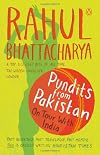
This book would not appeal to those who do not know the game of cricket. But again it may. As this book is not a typical tour diary. It talks about the game and not in terms of statistics but that of a viewers observations. And what an observation. It adds humour, fun and imbues the whole narrative with the fragrance, taste and ethos of the city and its people. How in this divided subcontinent (it's tour of Inda to Pakistan after ages) we still love the game, have same pallete and shared way show more of celebration. The food, the vistas are so much part of shared past.
This book stands out in that respect. Its a tour diary at the same time a time of discovery of lands and places, which still resides in our memory, our cuisines, our culture ; all made distant by the politics of time current and past. It was like visiting cousins during summer holidays and enjoying each and every moment of it, including ofcourse the games and the performances of the stars. I highly recommend this. show less
This book stands out in that respect. Its a tour diary at the same time a time of discovery of lands and places, which still resides in our memory, our cuisines, our culture ; all made distant by the politics of time current and past. It was like visiting cousins during summer holidays and enjoying each and every moment of it, including ofcourse the games and the performances of the stars. I highly recommend this. show less

Like many other readers, I read this book hoping to learn more about Guyana. I am particularly interested in the fascinating mix of nationalities that thrive in the Caribbean world, including Guyana. If this book is read as an ethnographic study, it provides some information but not enough. If this book is read as a novel, it fails.
Rahul Bhattacharya is an Indian national. His narrator seems to stand in for himself, making this novel seem autobiographical. The book is divided into three show more parts. In the first part, the author pals about Georgetown. He lives in something like a hostel and befriends a few people, and visits a mining settlement. In the second part, he travels to the border and enters Brazil. He contrasts Brazil's development with Guyana's lack thereof. In the third part, he travels to Venezuela with his lover. There is not much of a traditional plot. The only real conflict comes toward the end when he has trouble getting back to Guyana.
Throughout the book, Bhattacharya expounds on his love of music. He seems to truly love reggae genres. He also mentions several authors, like Naipaul and Mittelholzer. It is clear that Bhattacharya is a person of arts and letters. There are frequent scenes in bars with alcohol and drugs.
Perhaps of most interest to me was the ten-page tangent about Guyanese history. Although he glossed over the Amerindians, Bhattacharya had an easy-to-understand chronicle of slavery through the indentured servitude area. Here there was some discussion of the rift between Asian Indian descendants and African descendants that touched on some current political trends. I wish that throughout the book, the author identified who was a descendant of which group, although he may have avoided this on purpose in order to show either his interest in multiculturalism or that such classifications of people are pointless.
There is quite a bit of fun in the book when the author breaks into dialect or explains Guyanese idioms.
In the end, I had no particular attachment to the narrator who simply floated through all three sections without a purpose. It was never explained why he traveled to Guyana, why he lived in the Kitty neighborhood of Georgetown, why he went to Brazil, or why he went to Venezuela. He seemed to be just a rich person enjoying purposeless travels. show less
Rahul Bhattacharya is an Indian national. His narrator seems to stand in for himself, making this novel seem autobiographical. The book is divided into three show more parts. In the first part, the author pals about Georgetown. He lives in something like a hostel and befriends a few people, and visits a mining settlement. In the second part, he travels to the border and enters Brazil. He contrasts Brazil's development with Guyana's lack thereof. In the third part, he travels to Venezuela with his lover. There is not much of a traditional plot. The only real conflict comes toward the end when he has trouble getting back to Guyana.
Throughout the book, Bhattacharya expounds on his love of music. He seems to truly love reggae genres. He also mentions several authors, like Naipaul and Mittelholzer. It is clear that Bhattacharya is a person of arts and letters. There are frequent scenes in bars with alcohol and drugs.
Perhaps of most interest to me was the ten-page tangent about Guyanese history. Although he glossed over the Amerindians, Bhattacharya had an easy-to-understand chronicle of slavery through the indentured servitude area. Here there was some discussion of the rift between Asian Indian descendants and African descendants that touched on some current political trends. I wish that throughout the book, the author identified who was a descendant of which group, although he may have avoided this on purpose in order to show either his interest in multiculturalism or that such classifications of people are pointless.
There is quite a bit of fun in the book when the author breaks into dialect or explains Guyanese idioms.
In the end, I had no particular attachment to the narrator who simply floated through all three sections without a purpose. It was never explained why he traveled to Guyana, why he lived in the Kitty neighborhood of Georgetown, why he went to Brazil, or why he went to Venezuela. He seemed to be just a rich person enjoying purposeless travels. show less
Lists
Awards


You May Also Like


Statistics
- Works
- 4
- Members
- 207
- Popularity
- #106,919
- Rating
- 3.6
- Reviews
- 5
- ISBNs
- 18