

Tina Rosenberg
Author of The Haunted Land: Facing Europe's Ghosts After Communism
About the Author
Tina Rosenberg, the winner of a MacArthur grant, is a cowriter of the New York Times online column Fixes, which examines solutions to social problems. Her last book, The Haunted Land: Facing Europe's Ghosts After Communism, won the Pulitzer Prize and the National Book Award. She lives in New York show more City. show less
Image credit: Courtesy of the Pulitzer Prizes.
Works by Tina Rosenberg
Associated Works
Booknotes: America's Finest Authors on Reading, Writing, and the Power of Ideas (1997) — Contributor — 458 copies, 5 reviews
Tagged
Common Knowledge
- Birthdate
- 1960
- Gender
- female
- Organizations
- The New York Times
- Awards and honors
- MacArthur Fellowship (1987)
- Nationality
- USA
- Birthplace
- Brooklyn, New York, USA
- Places of residence
- New York, New York, USA
- Associated Place (for map)
- New York, USA
Members
Reviews
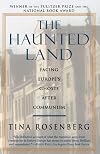
I struggled to read the first part of the book on Czechoslovakia, thoroughly enjoyed the second part on Poland, and again struggled with the last part on East Germany. I think the differences between the parts for me was familiarity with key players. For Czechoslovakia, much was kept from the Western media. For East Germany, it seemed clear Gorbachov's USSR was crumbling, like the wall and as much attention was paid to Gorbachov's fall, if not more. For Poland, the efforts of Solidarity show more played out on the nightly news and Lech Wałęsa was portrayed as a mythic hero. Even those of us in little Idaho were enchanted with this modern patriot fighting for God, Liberty, Democracy, Mom and Apple Pie. Well, maybe not apple pie, Jabłecznik.
Rosenberg did an excellent job examining ordinary individuals and their perceived roles in their countries before and after communism. She did make the individuals come alive as people, looking at their whole backgrounds. And they played out against the backdrop of the history they were living through. Had either been left out, the book would have been far less illuminating.
For me, the best part of the book was the final chapter analyzing the moves away from Communism toward a democracy or at least mostly democratic philosophy. She also identified the differences between the totalitarianism of Eastern Europe and Asia vs the dictatorships of Latin America - the first being based on liberalist left-extremists and the other on conservative right-extremists. For the US today, we are facing these battling perspectives play out in real time. For the first time in my life, I truly fear for the liberties our country has espoused and fear that the election in less than a month will either save us for a time or doom us for who knows how long. show less
Rosenberg did an excellent job examining ordinary individuals and their perceived roles in their countries before and after communism. She did make the individuals come alive as people, looking at their whole backgrounds. And they played out against the backdrop of the history they were living through. Had either been left out, the book would have been far less illuminating.
For me, the best part of the book was the final chapter analyzing the moves away from Communism toward a democracy or at least mostly democratic philosophy. She also identified the differences between the totalitarianism of Eastern Europe and Asia vs the dictatorships of Latin America - the first being based on liberalist left-extremists and the other on conservative right-extremists. For the US today, we are facing these battling perspectives play out in real time. For the first time in my life, I truly fear for the liberties our country has espoused and fear that the election in less than a month will either save us for a time or doom us for who knows how long. show less
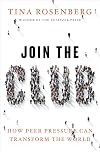
I thought the title seemed a bit overreaching when I first read about this book, but I was hopeful. Wouldn’t it be lovely to discover that something as simple as peer pressure could actually transform the world?
Of course, as I had anticipated, the title was too good to be true. Rosenberg offers up story after story of ways that peer pressure is working to improve the world. Reducing rates of smoking. Cutting AIDS levels. Improving calculus scores in African-American men. Improving rates of show more infant mortality. All happy stories.
A good book, yes. A cure-all? No.
I suppose by now I should approach any book that offers quick fixes with skepticism instead of starry-eyed eagerness. As should we all. Still one can always dream…. show less
Of course, as I had anticipated, the title was too good to be true. Rosenberg offers up story after story of ways that peer pressure is working to improve the world. Reducing rates of smoking. Cutting AIDS levels. Improving calculus scores in African-American men. Improving rates of show more infant mortality. All happy stories.
A good book, yes. A cure-all? No.
I suppose by now I should approach any book that offers quick fixes with skepticism instead of starry-eyed eagerness. As should we all. Still one can always dream…. show less
Interesting book about how social groups affect society - for worse or better - with surprising results. Makes one think about how to apply these techniques to one's own life.
Essentlially a collection of stories that show how peer pressure - or changes in social norms - bring about change in society. Fun, but nothing unexpected.
Awards


You May Also Like


Associated Authors
Statistics
- Works
- 9
- Also by
- 3
- Members
- 674
- Popularity
- #37,467
- Rating
- 4.0
- Reviews
- 9
- ISBNs
- 18
- Languages
- 2
- Favorited
- 2
