
K Arsenault Rivera
Author of The Tiger's Daughter
About the Author
Series
Works by K Arsenault Rivera
Sixteen Swords 1 copy
The Warrior Moon 1 copy
Associated Works
From a Certain Point of View: 40 Stories Celebrating 40 Years of Return of the Jedi (2023) — Contributor — 211 copies, 6 reviews
Fearless Women Fall Sampler: Excerpts of Science Fiction and Fantasy Novels by Fearless Women (2018) — Contributor — 2 copies
Tagged
Common Knowledge
- Gender
- female
- Agent
- Sara Megibow (KT Literary)
- Nationality
- USA
- Birthplace
- Mayaguez, Puerto Rico, USA
- Places of residence
- New York, New York, USA
- Associated Place (for map)
- USA
Members
Reviews
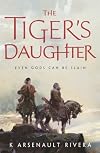
This was beautiful and I loved it.
It won't necessarily be everyone's cup of tea. It's very epic fantasy: two heroes are born, destined to greatness together, they grow through early challenges, they slay demons, they are struck with hardships, they fight through, they confound the Powers That Be.
But at the same time, it is very not your standard epic fantasy. It is thick with style, told in an achingly intimate first-and-second person (as a letter written from one hero to the other) and show more simmered to a richness of emotional depth that I've rarely encountered in epic fantasy.
Bonus: a wonderful north-Asian setting, rife with details that felt very Chinese and Mongolian.
Double bonus: our two heroes are princesses, strong of will and striking in character.
So it might not be everyone's cup of tea, but I loved it outrageously and I suspect that for people who enjoy--who yearn for--that congruence of epic fantasy and emotional/style depth, it's going to be an enjoyable read at the very least.
If you're still wavering, Tor.com sampled the first four chapters, so you can try it out. show less
It won't necessarily be everyone's cup of tea. It's very epic fantasy: two heroes are born, destined to greatness together, they grow through early challenges, they slay demons, they are struck with hardships, they fight through, they confound the Powers That Be.
But at the same time, it is very not your standard epic fantasy. It is thick with style, told in an achingly intimate first-and-second person (as a letter written from one hero to the other) and show more simmered to a richness of emotional depth that I've rarely encountered in epic fantasy.
Bonus: a wonderful north-Asian setting, rife with details that felt very Chinese and Mongolian.
Double bonus: our two heroes are princesses, strong of will and striking in character.
So it might not be everyone's cup of tea, but I loved it outrageously and I suspect that for people who enjoy--who yearn for--that congruence of epic fantasy and emotional/style depth, it's going to be an enjoyable read at the very least.
If you're still wavering, Tor.com sampled the first four chapters, so you can try it out. show less

This book is seeing a lot of negativity, primarily on account of two looming issues, which is a shame because otherwise there's a lot going for it. The author did a fine job at aiming for a more serious literary effort in the genre by making this a character-driven story rather than using the typical plot-driven approach. Episodic action is sprinkled throughout and the story has legs, but what clearly matters most are Shizuka, Shefali and their relationship. I wish more fantasy novels were show more written with this emphasis. The human condition is as much the province of genre fiction as any, if we're to buy George Martin's defence/description of fantasy as simply 'different furniture'. It's a focus that should be used more often.
Whether that's what the typical fantasy reader wants is the real question, when most expect a quick outline of world-threatening stakes, dense plotting, forward momentum, brisk action and light escapism. This particular orange should not be compared with apples while it so skillfully explores inner lives, provides just the right amount of descriptive detail, and features well chosen metaphors and similes for the characters using them. The author has yet to master her craft such that her prose will flow effortlessly, but none of the content feels too heavy-handed or too lightly considered.
The first issue is her contentious mix of Chinese, Mongolian and Japanese elements. Reviewers more in the know than myself have indicated a clear lack of research, and a problematic mirroring of actual history between these cultures without addressing its depth and complexities. It's an interesting case study in the danger of too closely echoing real-world cultures. The result is liable to offend people who possess more knowledge than the author does about them. More seriously, it may perpetuate stereotypes and prejudices when the mirrored culture can be easily deduced. I don't believe the author crossed the line of appropriation, but she ought to have found a beta reader who knew these cultures intimately and could identify sensitive content (e.g. "rice eater", "flat faced", etc.). It's unfortunate she committed herself to making this a series, as I'm not sure what she can do now to address these problems while maintaining consistency with what's established.
The second issue is that most of the book is taken up by the letter from Shefali. She is transparently relating a shared history for the reader's benefit instead of the letter's recipient, effectively turning the novel into one giant As-You-Know-Bob trope. I found it a distraction from Shefali's otherwise well-told story to be constantly aware of this, and I can't understand why it wasn't presented in some other way.
Compartmentalizing these macro-level drawbacks, I mostly appreciated the rest of what's here on the micro-level. I found some inconsistencies, and I'm not a fan of some elements, not to say they weren't done well. It's not as good as I wanted it to be, but it's maybe better than you've heard. show less
Whether that's what the typical fantasy reader wants is the real question, when most expect a quick outline of world-threatening stakes, dense plotting, forward momentum, brisk action and light escapism. This particular orange should not be compared with apples while it so skillfully explores inner lives, provides just the right amount of descriptive detail, and features well chosen metaphors and similes for the characters using them. The author has yet to master her craft such that her prose will flow effortlessly, but none of the content feels too heavy-handed or too lightly considered.
The first issue is her contentious mix of Chinese, Mongolian and Japanese elements. Reviewers more in the know than myself have indicated a clear lack of research, and a problematic mirroring of actual history between these cultures without addressing its depth and complexities. It's an interesting case study in the danger of too closely echoing real-world cultures. The result is liable to offend people who possess more knowledge than the author does about them. More seriously, it may perpetuate stereotypes and prejudices when the mirrored culture can be easily deduced. I don't believe the author crossed the line of appropriation, but she ought to have found a beta reader who knew these cultures intimately and could identify sensitive content (e.g. "rice eater", "flat faced", etc.). It's unfortunate she committed herself to making this a series, as I'm not sure what she can do now to address these problems while maintaining consistency with what's established.
The second issue is that most of the book is taken up by the letter from Shefali. She is transparently relating a shared history for the reader's benefit instead of the letter's recipient, effectively turning the novel into one giant As-You-Know-Bob trope. I found it a distraction from Shefali's otherwise well-told story to be constantly aware of this, and I can't understand why it wasn't presented in some other way.
Compartmentalizing these macro-level drawbacks, I mostly appreciated the rest of what's here on the micro-level. I found some inconsistencies, and I'm not a fan of some elements, not to say they weren't done well. It's not as good as I wanted it to be, but it's maybe better than you've heard. show less
 This review was written for LibraryThing Early Reviewers.
K. Arsenault Rivera's sweeping fantasy epic, The Tiger's Daughter, avoids overwhelming readers with too much exposition. Rather, it pulls you in with a deliberate approach and reveals a world molded by legendary currents and tradition that churn under the surface. Fundamentally, the relationship between two heroines, created in childhood and tested by challenges both human and otherworldly, is the link.
Rivera's depiction of their evolving relationship is the foundation of the book, firmly show more anchoring many of the most substantial obstacles in their personal loyalty. This is an investigation of how deep trust may sustain—even haunt—individuals in a volatile world, not merely another story of great powers colliding. The work does not waver in its slower, introspective periods; it frames the hopes and worries of the characters as absolutely vital components of the larger struggle.
The form could itself be an obstacle for some readers. If you would rather have a clear chronology, much of the story runs through letters and shifting memories may be confusing. As you separate out what is happening now from what occurred in the past, there is an adjustment period. Still, this method fosters intimacy as well. You feel as though you are rummaging through half-remembered letters and heartfelt missives of layers of meaning.
The Tiger's Daughter stands out, at the end, for skillful blending of personal stakes with major drama. It unfolds gently, allowing characters space to breathe and flourish rather than racing to the finish. You will discover a narrative aching with the echoes of a bond that defies fate long after the final page, if you are open to a deliberate pace and the occasional narrative oddity. show less
Rivera's depiction of their evolving relationship is the foundation of the book, firmly show more anchoring many of the most substantial obstacles in their personal loyalty. This is an investigation of how deep trust may sustain—even haunt—individuals in a volatile world, not merely another story of great powers colliding. The work does not waver in its slower, introspective periods; it frames the hopes and worries of the characters as absolutely vital components of the larger struggle.
The form could itself be an obstacle for some readers. If you would rather have a clear chronology, much of the story runs through letters and shifting memories may be confusing. As you separate out what is happening now from what occurred in the past, there is an adjustment period. Still, this method fosters intimacy as well. You feel as though you are rummaging through half-remembered letters and heartfelt missives of layers of meaning.
The Tiger's Daughter stands out, at the end, for skillful blending of personal stakes with major drama. It unfolds gently, allowing characters space to breathe and flourish rather than racing to the finish. You will discover a narrative aching with the echoes of a bond that defies fate long after the final page, if you are open to a deliberate pace and the occasional narrative oddity. show less
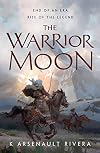
As the final chapter of a tale that began with The Tiger's Daughter and continued in The Phoenix Empress, The Warrior Moon's grand climax to the sequence balances the contemplative tone of its predecessor with the broad scale that defined the first novel. Where the middle book focused on internal turmoil and the cost of a deep romantic bond under tension, this volume pushes those same individuals into an all-encompassing conflict that feels both urgent and intimate.
One of the most remarkable show more aspects of this trilogy is how the plot balances the intimate core with its larger-than-life conflicts. Originally established with a slow, measured touch, the two primary figures now face challenges requiring them to stand at the center of an approaching storm. The story finally finds its footing by keeping an unflinching focus on the emotional journeys of the two women, even if some sections can feel densely packed—occasionally even risking an overdose of plot events.
Given the rush toward conclusion, readers who valued the introspection of The Phoenix Empress might find this installment to be somewhat brisk, despite its greater page count. Still, the book puts aside time for the heroines to consider the strains they have carried across all three books. Rivera's writing really connects with us in these more intimate passages, where questions, loyalties, and old wounds collide to remind us why this story is more than just a clash of armies and monsters.
That said, occasionally the juggling act between epic confrontation and private reckoning stumbles. Some of the storylines might have benefited from softer transitions or more breathing room. Still, the emotional foundation of the trilogy stays constant, providing long-time fans with the payback they probably expected.
Considering everything, The Warrior Moon provides a solid sense of climax to a series that began with a muted, gently paced opening. Despite our protagonists being considered gods, the closure is fundamentally human. Though not every thread links together perfectly, the last impression is of a universe that—like its characters—has been tested and altered by what it has experienced. For those who have journeyed this far, the ending seems like a suitable homage to the commitment, uncertainty, and will at the core of the story. show less
One of the most remarkable show more aspects of this trilogy is how the plot balances the intimate core with its larger-than-life conflicts. Originally established with a slow, measured touch, the two primary figures now face challenges requiring them to stand at the center of an approaching storm. The story finally finds its footing by keeping an unflinching focus on the emotional journeys of the two women, even if some sections can feel densely packed—occasionally even risking an overdose of plot events.
Given the rush toward conclusion, readers who valued the introspection of The Phoenix Empress might find this installment to be somewhat brisk, despite its greater page count. Still, the book puts aside time for the heroines to consider the strains they have carried across all three books. Rivera's writing really connects with us in these more intimate passages, where questions, loyalties, and old wounds collide to remind us why this story is more than just a clash of armies and monsters.
That said, occasionally the juggling act between epic confrontation and private reckoning stumbles. Some of the storylines might have benefited from softer transitions or more breathing room. Still, the emotional foundation of the trilogy stays constant, providing long-time fans with the payback they probably expected.
Considering everything, The Warrior Moon provides a solid sense of climax to a series that began with a muted, gently paced opening. Despite our protagonists being considered gods, the closure is fundamentally human. Though not every thread links together perfectly, the last impression is of a universe that—like its characters—has been tested and altered by what it has experienced. For those who have journeyed this far, the ending seems like a suitable homage to the commitment, uncertainty, and will at the core of the story. show less
Lists
Awards


You May Also Like


Associated Authors
Statistics
- Works
- 15
- Also by
- 4
- Members
- 1,065
- Popularity
- #24,175
- Rating
- 3.8
- Reviews
- 35
- ISBNs
- 18
- Favorited
- 1
