
Mark Danner
Author of The Massacre at El Mozote
About the Author
Mark Danner has written about foreign affairs and American politics for three decades. For many years a staff writer at The New Yorker, he contributes frequently to the New York Review of Books and many other publications. He teaches at the University of California, Berkeley, and at Bard College, show more and speaks widely about America's role in the world. He is the author of Stripping Bare the Body, Torture and Truth, and The Massacre at El Mozote. show less
Works by Mark Danner
The Road to Illegitimacy: One Reporter's Travels Throught the 2000 Florida Vote Re-Count (2004) 7 copies, 1 review
Associated Works
What Orwell Didn't Know: Propaganda and the New Face of American Politics (2007) — Contributor — 132 copies, 1 review
The World According to Tomdispatch: America In The New Age of Empire (2008) — Contributor — 31 copies
Tagged
Common Knowledge
- Birthdate
- 1958-11-10
- Gender
- male
- Organizations
- Council on Foreign Relations
- Short biography
- Mark Danner is a writer, journalist and professor who has written for three decades on foreign affairs and international conflict. He has covered Central America, Haiti, Balkans, Iraq and the greater Middle East, among many other stories, and has written extensively about the development of American foreign policy during the late Cold War and afterward, with a focus on human rights violations during that time. His books include Torture and the Forever War (forthcoming, 2014), Stripping Bare the Body: Politics Violence War (2009), The Secret Way to War: The Downing Street Memo and the Iraq War's Buried History (2006), Torture and Truth: America, Abu Ghraib and the War on Terror (2004), The Road to Illegitimacy: One Reporter's Travel's Through the 2000 Florida Vote Recount (2004) and The Massacre at El Mozote: A Parable of the Cold War (1994). Danner was a longtime staff writer for The New Yorker and is a regular contributor to The New York Review of Books. Danner is Chancellor's Professor of English and Journalism at the University of California at Berkeley, and the James Clarke Chace Professor of Foreign Affairs and Humanities at Bard College.
http://www.markdanner.com/living/biog... - Nationality
- USA
- Birthplace
- Utica, New York, USA
- Associated Place (for map)
- New York, USA
Members
Reviews
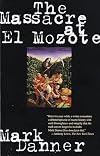
In December 1981, during the fierce civil war in El Salvador, members of an elite strike force of the Salvadoran Army arrived at the village of El Mazote in a mountainous section of the country mostly controlled by leftist rebel forces and proceeded to murder somewhere around 800 villagers: men, women and children in the most horrible ways imaginable. The point was to demonstrate to the surrounding areas that the consequences of supporting for the rebels could be dire, even though even the show more most cursory investigation of El Mazote would have shown the army leaders that these villagers were doing their best to have nothing to do with either the rebels or the government's armed forces. Cruelty and viciousness was the point.
New Yorker reporter Mark Danner does an excellent job of setting up the background of the atrocity, geopolitically and internally. And then, using survivor testimony as well as the testimony of those few soldiers who were willing to talk to Danner anonymously, he walks readers step by step and atrocity by atrocity through that horrible afternoon. Then comes the aftermath, as the Reagan Administration, desperate to secure new funding for the Salvadoran army's fight against "Communist forces," did their best to obfuscate and to discredit as "biased" the first-hand (a couple of weeks after the fact) reporting by journalists from both the New York Times (including photographs) and the Washington Post.
Danner's subtitle for his book is "A Parable of the Cold War," and he does a very good job of setting up the pressure put on Congressmen, including Democrats who should have known better, not to cut funding and thus be responsible to "losing" El Salvador to Communism, especially coming so soon after the victory of the Sandinistas in Nicaragua. Although the term is never used in the book, "plausible deniability" was the dominant paradigm as far as the U.S. administration was concerned. Reports of the massacre, or of the horrifying number killed "could not be confirmed."
Danner's writing is clear and concise, and his reporting (the book is an expanded version of his writing for the New Yorker) is excellent. He has clearly spoken with everybody who would speak to him, including members of the U.S. Embassy in the country who know something bad had happened but had to couch their reports in very careful language to be sure they didn't run afoul of U.S. policy. The book proper is only around 150 pages long, but Danner then includes every document he was able to lay his hands on (the book was first published in 1994) including Embassy cables, State Department and Diplomatic Corps testimony before Congress, and pages-long reports by the Argentinian forensic team that finally exhumed the remains of the victims over a decade after the events. It's not really necessary to pour through all that (I mostly skimmed), as Danner does a very good job of describing those documents' contents throughout his narrative. show less
New Yorker reporter Mark Danner does an excellent job of setting up the background of the atrocity, geopolitically and internally. And then, using survivor testimony as well as the testimony of those few soldiers who were willing to talk to Danner anonymously, he walks readers step by step and atrocity by atrocity through that horrible afternoon. Then comes the aftermath, as the Reagan Administration, desperate to secure new funding for the Salvadoran army's fight against "Communist forces," did their best to obfuscate and to discredit as "biased" the first-hand (a couple of weeks after the fact) reporting by journalists from both the New York Times (including photographs) and the Washington Post.
Danner's subtitle for his book is "A Parable of the Cold War," and he does a very good job of setting up the pressure put on Congressmen, including Democrats who should have known better, not to cut funding and thus be responsible to "losing" El Salvador to Communism, especially coming so soon after the victory of the Sandinistas in Nicaragua. Although the term is never used in the book, "plausible deniability" was the dominant paradigm as far as the U.S. administration was concerned. Reports of the massacre, or of the horrifying number killed "could not be confirmed."
Danner's writing is clear and concise, and his reporting (the book is an expanded version of his writing for the New Yorker) is excellent. He has clearly spoken with everybody who would speak to him, including members of the U.S. Embassy in the country who know something bad had happened but had to couch their reports in very careful language to be sure they didn't run afoul of U.S. policy. The book proper is only around 150 pages long, but Danner then includes every document he was able to lay his hands on (the book was first published in 1994) including Embassy cables, State Department and Diplomatic Corps testimony before Congress, and pages-long reports by the Argentinian forensic team that finally exhumed the remains of the victims over a decade after the events. It's not really necessary to pour through all that (I mostly skimmed), as Danner does a very good job of describing those documents' contents throughout his narrative. show less
This is an excellent book about a horrendous event. It made me ache for humanity and feel sick at the evil humans can do to each other. The writing and sources are very high quality, but I don't recommend this book for those with a sensitive spirit or who don't have a strong stomach for violence.
This book looks at a forgotten bit of the Cold War in 1980s Central America. In December, 1981, a US-trained battalion of the army of El Salvador entered the town of El Mozote, and surrounding hamlets, and systematically murdered everyone; over 700 people were killed.
In the 1970s and 1980s, the Salvadoran army was in bad shape. There were numerous examples of guerrillas joining the army to get some military training, then intentionally deserting to join the rebels. The army was show more poorly-trained and poorly-led, except the US-trained Atlacatl battalion. In late 1981, an army operation was planned in Morazan province (where El Mozote was located) to squeeze the rebels out of the area, once and for all.
El Mozote, a town of evangelicals, barely tolerated the rebels. The townspeople were willing to sell corn or chickens to the rebels, but, when it came to joining the rebels, the people of El Mozote were not interested. When the rebels got word that the army was coming, they urged the people to head into the jungle until the army left. One of El Mozote's leading citizens said that he was assured, by the army, that the people were safe. The army was interested only in the rebels.
That day, several helicopters full of Atlacatl soldiers landed at El Mozote. The soldiers went from house to house, dragging everyone into the town square, and forcing them to lay flat on the ground. After a couple of hours of interrogation, accompanied by kicks and rifle butts, regarding rebel membership among the townspeople, the men were taken to the local church, and women and children were taken to one of the houses. The men were taken out of the church, a few at a time, into the nearby jungle, where they were all shot or decapitated. After all the men were dead, the soldiers came for the women and children. The younger women were taken into the jungle and gang-raped, by the soldiers, before being murdered. The small children were thrown into the air, and impaled on bayonets. When it was over, everyone was dead.
When word got out about what had happened, helped by front page stories in the Washington Post and New York Times, the reaction of the Salvadoran army and Reagan Administration was to dismiss the reports as nothing more than enemy propaganda. Congress was in the middle of debating further aid for the Salvadoran government, so the timing of the articles was hardly convenient for the Reagan Administration. A pair of officials from the US Embassy in San Salvador tried to go there to investigate, and got within a mile or two of El Mozote, before being turned back by the army (supposedly, guerrillas were in the area). They couldn't confirm reports of several hundred dead (the people from the area were hardly willing to talk), but it was pretty obvious to them that something huge had happened at El Mozote. The Reagan Administration used inconsistencies in the death toll, and the fact that it was first reported by Radio Venceremos, the rebel's radio station, as "proof" that it was not as bad as reported. The army said that there was a major gun battle with the rebels in El Mozote (untrue), so some townspeople got killed, but nowhere the reported number of several hundred. Was this massacre big enough to get the US Congress to reduce, or eliminate, funding for the Salvadoran military to continue their war against the people? No one in Washington wanted to "lose" El Salvador the same way that China was "lost" after World War II.
This is a first rate piece of investigative journalism. It contains nearly 100 pages of US Government documents about what happened to El Mozote. This may seem like an "old" book, but to bring a forgotten bit of the Cold War back into the collective memory, it is very much recommended. show less
In the 1970s and 1980s, the Salvadoran army was in bad shape. There were numerous examples of guerrillas joining the army to get some military training, then intentionally deserting to join the rebels. The army was show more poorly-trained and poorly-led, except the US-trained Atlacatl battalion. In late 1981, an army operation was planned in Morazan province (where El Mozote was located) to squeeze the rebels out of the area, once and for all.
El Mozote, a town of evangelicals, barely tolerated the rebels. The townspeople were willing to sell corn or chickens to the rebels, but, when it came to joining the rebels, the people of El Mozote were not interested. When the rebels got word that the army was coming, they urged the people to head into the jungle until the army left. One of El Mozote's leading citizens said that he was assured, by the army, that the people were safe. The army was interested only in the rebels.
That day, several helicopters full of Atlacatl soldiers landed at El Mozote. The soldiers went from house to house, dragging everyone into the town square, and forcing them to lay flat on the ground. After a couple of hours of interrogation, accompanied by kicks and rifle butts, regarding rebel membership among the townspeople, the men were taken to the local church, and women and children were taken to one of the houses. The men were taken out of the church, a few at a time, into the nearby jungle, where they were all shot or decapitated. After all the men were dead, the soldiers came for the women and children. The younger women were taken into the jungle and gang-raped, by the soldiers, before being murdered. The small children were thrown into the air, and impaled on bayonets. When it was over, everyone was dead.
When word got out about what had happened, helped by front page stories in the Washington Post and New York Times, the reaction of the Salvadoran army and Reagan Administration was to dismiss the reports as nothing more than enemy propaganda. Congress was in the middle of debating further aid for the Salvadoran government, so the timing of the articles was hardly convenient for the Reagan Administration. A pair of officials from the US Embassy in San Salvador tried to go there to investigate, and got within a mile or two of El Mozote, before being turned back by the army (supposedly, guerrillas were in the area). They couldn't confirm reports of several hundred dead (the people from the area were hardly willing to talk), but it was pretty obvious to them that something huge had happened at El Mozote. The Reagan Administration used inconsistencies in the death toll, and the fact that it was first reported by Radio Venceremos, the rebel's radio station, as "proof" that it was not as bad as reported. The army said that there was a major gun battle with the rebels in El Mozote (untrue), so some townspeople got killed, but nowhere the reported number of several hundred. Was this massacre big enough to get the US Congress to reduce, or eliminate, funding for the Salvadoran military to continue their war against the people? No one in Washington wanted to "lose" El Salvador the same way that China was "lost" after World War II.
This is a first rate piece of investigative journalism. It contains nearly 100 pages of US Government documents about what happened to El Mozote. This may seem like an "old" book, but to bring a forgotten bit of the Cold War back into the collective memory, it is very much recommended. show less
Danner's writing quickly draws you in to the world of the oppressed, making it impossible not to empathize with them. As a journalist he knows how to get the facts to the reader - frequently providing us with both sides to the story - while also creating a fascinating tale. This book also serves to get the word out on an important event in U.S. and Central American history that didn't get much coverage at the time it happened.
Lists
Lost History (1)
Awards

You May Also Like


Associated Authors
Statistics
- Works
- 9
- Also by
- 7
- Members
- 679
- Popularity
- #37,220
- Rating
- 3.9
- Reviews
- 9
- ISBNs
- 20
- Languages
- 1
