
Lester Faigley
Author of The Brief Penguin Handbook
Works by Lester Faigley
Good Reasons with Contemporary Arguments: Reading, Designing, and Writing Effective Arguments, Second Edition (1999) 135 copies, 1 review
The Penguin handbook 1 copy
Tagged
Common Knowledge
Members
Reviews
Fragments of Rationality: Postmodernity and the Subject of Composition (Composition, Literacy, and Culture) by Lester Faigley
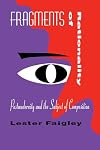
In Faigley's 1992 book, he addresses the lack of attention to postmodern theory in composition studies, with particular attention to composition studies' "belief in the writer as an autonomous self" (15). While composition studies has developed as a discipline concurrently with the development of postmodernity, postmodern theory (as of 1992) had little influence on the development of composition theory, with the exception of process theory.
Faigley begins his book with one of the most show more accessible and coherent descriptions of postmodern theory I've read (which I greatly appreciated). While postmodernism is hard to define because of the proliferation of conflicting theories, Faigley outlines "three metadiscourses: (1) aesthetic discussions of postmodernism; (2) philosophical discussions of postmodern theory; and (3) sociohistorical assertions that Western nations, if not indeed all the world, have entered an era of postmodernity" (6).
Faigley argues "that many of the fault lines in composition studies are disagreements over the subjectivities that teachers of writing want students to occupy" (17) and uses postmodern theory throughout the book to critique the concept of "authentic" writing with a coherent, authentic writer. While Faigley tackles a number of other issues in the book, I think this is the strongest contribution of the book. By looking at scholarship and textbooks in composition, Faigley shows the rather consistent value by teachers of "an identifiable 'true' self . . . [that:] can be expressed in discourse" in student writing (122). In textbooks, Faigley argues, students are not given strategies that can be used in all writing, or in specific writing assignments: "Instead, they are supplied with confidence in their own rationality, a confidence made visible by translating rationality into a set of prescribed behaviors" (155). Thus, many textbooks attempt to maintain "the author as a rational, knowing subject" (162).
Faigley then moves into discussing networked writing, arguing that composition studies needs the theorize more about classrooms in postmodern and networked contexts. His last two chapters largely take up ethics, discussing students and student writing in the context of postmodernism, especially in regards to Baudrillard's concept of hyperreality and Lyotard's concepts of situated, rhetorical ethics.
I appreciate Faigley's book for its clear discussion of postmodernism, his own ambivalence about postmodernism, and his grounded discussion of student writing and classroom activities. One of my favorite reads in composition theory. show less
Faigley begins his book with one of the most show more accessible and coherent descriptions of postmodern theory I've read (which I greatly appreciated). While postmodernism is hard to define because of the proliferation of conflicting theories, Faigley outlines "three metadiscourses: (1) aesthetic discussions of postmodernism; (2) philosophical discussions of postmodern theory; and (3) sociohistorical assertions that Western nations, if not indeed all the world, have entered an era of postmodernity" (6).
Faigley argues "that many of the fault lines in composition studies are disagreements over the subjectivities that teachers of writing want students to occupy" (17) and uses postmodern theory throughout the book to critique the concept of "authentic" writing with a coherent, authentic writer. While Faigley tackles a number of other issues in the book, I think this is the strongest contribution of the book. By looking at scholarship and textbooks in composition, Faigley shows the rather consistent value by teachers of "an identifiable 'true' self . . . [that:] can be expressed in discourse" in student writing (122). In textbooks, Faigley argues, students are not given strategies that can be used in all writing, or in specific writing assignments: "Instead, they are supplied with confidence in their own rationality, a confidence made visible by translating rationality into a set of prescribed behaviors" (155). Thus, many textbooks attempt to maintain "the author as a rational, knowing subject" (162).
Faigley then moves into discussing networked writing, arguing that composition studies needs the theorize more about classrooms in postmodern and networked contexts. His last two chapters largely take up ethics, discussing students and student writing in the context of postmodernism, especially in regards to Baudrillard's concept of hyperreality and Lyotard's concepts of situated, rhetorical ethics.
I appreciate Faigley's book for its clear discussion of postmodernism, his own ambivalence about postmodernism, and his grounded discussion of student writing and classroom activities. One of my favorite reads in composition theory. show less
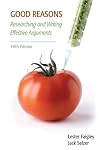
How to write the antithesis to a well crafted, logically constructed argument. I strongly recommend reading this book not to make use of its methods, but to become aware that its methods are in use such that one be less often taken in by them.
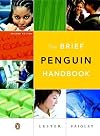
I find this book to be incredibly helpful. Rarely a week passes where I don't use it to look up some rule or convention that I've forgotten or always wondered about. It's indexed with colorful and tactile tabs to help locate topics quickly and easily.

Awards


You May Also Like


Associated Authors
Statistics
- Works
- 33
- Members
- 673
- Popularity
- #37,520
- Rating
- 3.2
- Reviews
- 4
- ISBNs
- 118