
Paul Watson (2) (1959–)
Author of Ice Ghosts: The Epic Hunt for the Lost Franklin Expedition
For other authors named Paul Watson, see the disambiguation page.
Works by Paul Watson
Tagged
Common Knowledge
- Birthdate
- 1959-07-13
- Gender
- male
- Education
- Columbia University
- Occupations
- journalist
- Organizations
- Toronto Star
Los Angeles Times - Nationality
- Canada
- Birthplace
- Weston, Ontario, Canada
- Places of residence
- Los Angeles, California, USA
Jakarta, Indonesia
Members
Reviews

I've been on a Franklin Expedition kick lately (more books I need to add, coming soon), so you'd think I'd be well and truly burnt out on the subject. I'm not, in part, because of this engaging book. Watson covers a *lot* of ground, from the expedition to seances to racism to modern science, but it all ties together to form a coherent picture of the search for Franklin's ships. Some readers have found the diverse kinds of information confusing, but it does not seem so to me. Perhaps it show more simply fits my own way of thinking. Certainly, I found myself interrupting my reading to follow a tangent far less often than I normally do. Watson filled in what I wanted to know without my having to ask. Brilliant.
The (relatively) brief coverage of the expedition itself provides sufficient background for readers not already obsessed with the search, but the real meat of the book is Watson's recounting of the various rescue expeditions and recovery searches that followed, many of which were just as daring as the original.
Two areas I wish were handled differently were Lady Franklin's resort to spiritualism and the ultimate discovery of the HMS Erebus and HMS Terror. To my mind, it would have sufficed to say that Lady Franklin was desperate enough to resort to seers and to allow them to influence the planning of search missions she funded. I didn't need to know about the various charlatans who preyed on her or which ones guessed closest. I'm also a Victorianist, so spiritualism is not a new subject to me. It might be more interesting to readers not jaded by long exposure.
The final chapters detailing the discovery of the ships seemed short and rushed. To be fair, there wasn't much released about the exploration of the ships at the time this book was published, a mere six months after HMS Terror was found. And I'm sure Watson was in a hurry to get the book out before the public's attention flagged. That said, perhaps a new, updated edition is called for now that issues of stewardship have been resolved and now that divers and unmanned craft have visited both vessels. It seems a lot of relics from the Terror were lost in a storm that struck soon after its discovery, but there surely must be new ideas about the fate of the expedition arising from what has been found.
Now, onward to discover Franklin's grave and perhaps even identify more of the remains found.
Mild spoiler alert:
If you have not yet given up the desire to like Charles Dickens (the man, not his novels), his comments, quoted by Watson, about the Indigenous peoples of the Arctic will do the trick. There's nothing quite as embarrassing as having to face the other people in the pick-up line at school when you've exclaimed - with the windows down - "Oh, fuck off Charles!" show less
The (relatively) brief coverage of the expedition itself provides sufficient background for readers not already obsessed with the search, but the real meat of the book is Watson's recounting of the various rescue expeditions and recovery searches that followed, many of which were just as daring as the original.
Two areas I wish were handled differently were Lady Franklin's resort to spiritualism and the ultimate discovery of the HMS Erebus and HMS Terror. To my mind, it would have sufficed to say that Lady Franklin was desperate enough to resort to seers and to allow them to influence the planning of search missions she funded. I didn't need to know about the various charlatans who preyed on her or which ones guessed closest. I'm also a Victorianist, so spiritualism is not a new subject to me. It might be more interesting to readers not jaded by long exposure.
The final chapters detailing the discovery of the ships seemed short and rushed. To be fair, there wasn't much released about the exploration of the ships at the time this book was published, a mere six months after HMS Terror was found. And I'm sure Watson was in a hurry to get the book out before the public's attention flagged. That said, perhaps a new, updated edition is called for now that issues of stewardship have been resolved and now that divers and unmanned craft have visited both vessels. It seems a lot of relics from the Terror were lost in a storm that struck soon after its discovery, but there surely must be new ideas about the fate of the expedition arising from what has been found.
Now, onward to discover Franklin's grave and perhaps even identify more of the remains found.
Mild spoiler alert:
If you have not yet given up the desire to like Charles Dickens (the man, not his novels), his comments, quoted by Watson, about the Indigenous peoples of the Arctic will do the trick. There's nothing quite as embarrassing as having to face the other people in the pick-up line at school when you've exclaimed - with the windows down - "Oh, fuck off Charles!" show less
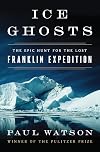
For some time now, I've been thinking about Paul Watson's book about the Franklin search, which has been published under the title Ice Ghosts. People have asked me about it, and as I'm generally reluctant to say unkind things about someone whose book might be seen as competing with mine, I've usually demurred. But now that the book is coming out in paperback, and is therefore likely to reach even more readers than before, I feel that it's my obligation to speak out.
As the founding editor of show more the Arctic Book Review, now in its nineteenth year, I've had occasion to read, and often to review, all the many new books about the Franklin expedition that have been published since 1999. My personal library has nearly every book ever written on the subject, which runs to well over a hundred volumes. Some are rather silly -- a book by a woman in Florida who had psychic "conversations" with Sir John and Lady Franklin; the late Jeffrey Blair Latta's The Franklin Conspiracy, which marks the far outpost of what one reviewer dubbed the "Franklin lunatic fringe"; or the small self-published leaflets of homespun enthusiasts.
But even among all these, Ice Ghosts stands out. It's one of those books that tries to beef up personal reportage with a large dollop of historical background, and turn the author's journey into a combination whodunit and adventure yarn. It's an approach that can work well for a writer with a journalistic background, and there's nothing wrong with the basic idea. However, not all journalists are as good at handling historical narratives that stretch over centuries as they are at dramatically retelling events of the present, and that's the case with Mr. Watson. The sort of "potted history" he has written is big and dramatic on the surface, but wanting in the kind of substance that can only be gained by longer study and the consideration of multiple sources.
If these were the only issues with the book, though, I wouldn't feel as strongly as I do about it. Its inaccuracies may be due to mere carelessness, but it seems Mr. Watson's editor did no fact-checking. The errors are both numerous and substantive, such as having Lady Franklin pass through the Panama Canal (it wasn't completed until more than forty years after her death); James Fitzjames's letters to his sister-in-law are referred to as letters to his "wife" (he was unmarried); Parry's crucial 1819 expedition is missing from the book's chronology; winter and summer are confused with one another. Any book, of course, had some errors -- cataloging them is not necessarily criticism -- but Watson's are so numerous as to erode the confidence of any well-informed reader in what he has to say. The author's tendency to drift into purple prose doesn't help matters, nor does his decision to personify the Arctic as female ("That was the plan. The Arctic, as she usually does, decided otherwise"). Yet these, though they will doubtless frustrate many readers, aren't the real problems with the book either.
As part of the story, Mr. Watson rightly wished to include the Inuit role in the search for Franklin's ships, and like many such, he decided to speak with Louie Kamookak, who's certainly the most important Inuk historian of all matters Franklin. Watson apparently interviewed him at length, and ultimately decided to make the results of the interview into a centerpiece of the book, dubbing Louie his "Inuk detective" and devoting most of two chapters to him. Unfortunately, Watson's tendency to expand and gussy-up the story got the better of him, and he ended up putting in material -- such his a story of Louie playing with a polar bear paw as an infant -- that was completely inaccurate, and untrue to Inuit culture generally. To make things worse, he never gave Mr. Kamookak a chance to look over what he'd written, so that by the time he saw it, the page proofs were already printed. Louie wrote a letter to Watson, asking him in the strongest terms to remove this material, and Watson flatly refused. It's an odd way to try to honor Inuit oral history by misrepresenting, and then insulting, one of its leading historians.
And then there's the matter of the discovery of HMS "Terror" in 2016. Watson, as many at the time will recall, published an exclusive news story with The Guardian about the find. Why was it exclusive? Well, because Watson had been given the story several days (at least) before the Arctic Research Foundation, whose vessel the Martin Bergmann made the discovery, had notified either its partners at Parks Canada (under whose permit they were operating) or the government. During that time -- nearly eight days in all -- the crew of the Bergmann first dispatched several cameras in a net (which snagged on the wreck, possibly damaging it, and was lost) and later, having doubled back to Cambridge Bay on the pretense of engine repairs, dispatched a ROV with which they made and edited a substantial video, at one point directing the ROV below decks and capturing imagery of a cook's pantry or storeroom.
It's shameful that the ARF failed to notify its partners for so long -- and it's criminal that they depoloyed a camera bag and a ROV on the wreck, since they had no permit to conduct such a search. In fact, the permit, issued to Parks, specifically excluded Terror Bay as a search site. At the behest of the Government of Nunavut, the RCMP launched a months-long investigation, which ended without charges being filed. Nevertheless, the language of the Nunavut Act is quite clear that to approach within 20 meters of an underwater site without a permit is forbidden. And, as the chronicler of this act, who was aware of it (and should have been aware that it was illegal), Watson is, I believe, complicit in it. And this is the most serious problem of all with his book: no one reading it will know anything about the above issues, as Watson simply omits them.
Watson's book, and the fact that it has been taken as somehow authoritative, has something in common with ARF's deployment of cameras and a ROV -- it actually damages the thing it claims to protect. Yet unlike those actions back in 2016, Ice Ghosts will continue its damage every time someone reads it, likely for years to come. It's especially frustrating, given that it appears under the imprint of W.W. Norton in the United States, a publisher whose textbook arm is known as authoritative, and which has a (deservedly) high reputation for quality publications. And so, in the interests of placing the full facts in the hands of its present and potential readers, I've decided to make my view public. show less
As the founding editor of show more the Arctic Book Review, now in its nineteenth year, I've had occasion to read, and often to review, all the many new books about the Franklin expedition that have been published since 1999. My personal library has nearly every book ever written on the subject, which runs to well over a hundred volumes. Some are rather silly -- a book by a woman in Florida who had psychic "conversations" with Sir John and Lady Franklin; the late Jeffrey Blair Latta's The Franklin Conspiracy, which marks the far outpost of what one reviewer dubbed the "Franklin lunatic fringe"; or the small self-published leaflets of homespun enthusiasts.
But even among all these, Ice Ghosts stands out. It's one of those books that tries to beef up personal reportage with a large dollop of historical background, and turn the author's journey into a combination whodunit and adventure yarn. It's an approach that can work well for a writer with a journalistic background, and there's nothing wrong with the basic idea. However, not all journalists are as good at handling historical narratives that stretch over centuries as they are at dramatically retelling events of the present, and that's the case with Mr. Watson. The sort of "potted history" he has written is big and dramatic on the surface, but wanting in the kind of substance that can only be gained by longer study and the consideration of multiple sources.
If these were the only issues with the book, though, I wouldn't feel as strongly as I do about it. Its inaccuracies may be due to mere carelessness, but it seems Mr. Watson's editor did no fact-checking. The errors are both numerous and substantive, such as having Lady Franklin pass through the Panama Canal (it wasn't completed until more than forty years after her death); James Fitzjames's letters to his sister-in-law are referred to as letters to his "wife" (he was unmarried); Parry's crucial 1819 expedition is missing from the book's chronology; winter and summer are confused with one another. Any book, of course, had some errors -- cataloging them is not necessarily criticism -- but Watson's are so numerous as to erode the confidence of any well-informed reader in what he has to say. The author's tendency to drift into purple prose doesn't help matters, nor does his decision to personify the Arctic as female ("That was the plan. The Arctic, as she usually does, decided otherwise"). Yet these, though they will doubtless frustrate many readers, aren't the real problems with the book either.
As part of the story, Mr. Watson rightly wished to include the Inuit role in the search for Franklin's ships, and like many such, he decided to speak with Louie Kamookak, who's certainly the most important Inuk historian of all matters Franklin. Watson apparently interviewed him at length, and ultimately decided to make the results of the interview into a centerpiece of the book, dubbing Louie his "Inuk detective" and devoting most of two chapters to him. Unfortunately, Watson's tendency to expand and gussy-up the story got the better of him, and he ended up putting in material -- such his a story of Louie playing with a polar bear paw as an infant -- that was completely inaccurate, and untrue to Inuit culture generally. To make things worse, he never gave Mr. Kamookak a chance to look over what he'd written, so that by the time he saw it, the page proofs were already printed. Louie wrote a letter to Watson, asking him in the strongest terms to remove this material, and Watson flatly refused. It's an odd way to try to honor Inuit oral history by misrepresenting, and then insulting, one of its leading historians.
And then there's the matter of the discovery of HMS "Terror" in 2016. Watson, as many at the time will recall, published an exclusive news story with The Guardian about the find. Why was it exclusive? Well, because Watson had been given the story several days (at least) before the Arctic Research Foundation, whose vessel the Martin Bergmann made the discovery, had notified either its partners at Parks Canada (under whose permit they were operating) or the government. During that time -- nearly eight days in all -- the crew of the Bergmann first dispatched several cameras in a net (which snagged on the wreck, possibly damaging it, and was lost) and later, having doubled back to Cambridge Bay on the pretense of engine repairs, dispatched a ROV with which they made and edited a substantial video, at one point directing the ROV below decks and capturing imagery of a cook's pantry or storeroom.
It's shameful that the ARF failed to notify its partners for so long -- and it's criminal that they depoloyed a camera bag and a ROV on the wreck, since they had no permit to conduct such a search. In fact, the permit, issued to Parks, specifically excluded Terror Bay as a search site. At the behest of the Government of Nunavut, the RCMP launched a months-long investigation, which ended without charges being filed. Nevertheless, the language of the Nunavut Act is quite clear that to approach within 20 meters of an underwater site without a permit is forbidden. And, as the chronicler of this act, who was aware of it (and should have been aware that it was illegal), Watson is, I believe, complicit in it. And this is the most serious problem of all with his book: no one reading it will know anything about the above issues, as Watson simply omits them.
Watson's book, and the fact that it has been taken as somehow authoritative, has something in common with ARF's deployment of cameras and a ROV -- it actually damages the thing it claims to protect. Yet unlike those actions back in 2016, Ice Ghosts will continue its damage every time someone reads it, likely for years to come. It's especially frustrating, given that it appears under the imprint of W.W. Norton in the United States, a publisher whose textbook arm is known as authoritative, and which has a (deservedly) high reputation for quality publications. And so, in the interests of placing the full facts in the hands of its present and potential readers, I've decided to make my view public. show less
In 1847 Sir John Franklin left England and his adoring wife Lady Jane to seek the fabled Northwest Passage. He was 59 years old and it was his fourth journey to the Arctic. He had survived starvation on his second journey. This expedition was prepared with three years of food, included new-fangled canned foods. He had powerful, heated ships. The explorer Ross promised to rescue Franklin if he did not come home.
Nothing went as planned. Extreme ice stranded the ships. Their canned food was show more tainted. Their maritime boots and clothing were inadequate. Franklin died and his men left the boats encased in ice, journeyed on foot, and died of exposure and starvation.
Lady Jane pressed for a search and rescue mission and spent her fortune in the quest to find her husband. For over a hundred years, enthralled by the mysterious disappearance, men went on the hazardous journey to the Arctic, hoping to solve the mystery of the lost Franklin Expedition.
My interest in polar exploration dates to junior high when I read The Great White South about the lost Scott Expedition. Over the years I've read books including Frances Spufford's I Shall Be Some Time: Ice and the English Imagination and Knud Rasmussen's biography White Eskimo by Stephen Bown. I loved the historical fiction book based on Franklin Voyage of the Narwhal by Andrea Barrett and Dan Simmons' supernatural take in The Terror.
The first part of Ice Ghosts recounts the history of the expedition and the early rescue attempts, presenting the historical facts. The second part of the book is a wonderful examination of the the modern search for Franklin, including Inuit culture and history and their contribution of new information about Franklin.
Watson vividly describes the experience of the Arctic--the initial thrill followed by the freezing that can take mere minutes. The months of darkness and isolation. This environment demands cooperation to survive. I loved learning about the Inuit culture and people and their contribution to the knowledge of Franklin through their oral histories.
Louie Kamookak is the great-grandson of an Inuk storyteller and respected shaman who assisted the the Inuit anthropologist Knud Rasmussen. Rasmussen recorded the Inuit way of life as it was before being disrupted by Europeans, including enforced separation of children into mission schools where they faced abuse, resulting in 4,100 deaths.
Kamookak also had a grandfather who was an Irish trader, Gibson, who had found a marker left by an 1859 search party, and who found skeletons in another location. Kamookak's grandmother had told him that as a girl she had seen Franklin artifacts; she had taken a blunt metal knife and refashioned it into an ice chisel.
A history of tragedy and bad luck shared by Franklin searchers did not prevent Kamookak from an obsession to learn more. He recorded oral histories from his elders to understand what had happened to the expedition. The native people knew where Franklin's men had died and where the ships settled.
The search for the Terror, Erebus, and Franklin's grave has become an international battleground. Artifacts left in situ can be disturbed by a storm and lost. But if they are collected they will soon decay. As climate change melts the ice it turns the land into swamps. Oil companies hope to drill in the Arctic, which would endanger the environment; they have funded researchers whose knowledge and new equipment are helpful to their goal.
The ships have now been found and some artifacts collected. But the grave of Franklin is yet to be discovered. The 'epic hunt' remains, as does our fascination. Watson's book is an important contribution and is sure to help another generation fall under the thrall of the tragic story of the Franklin Expedition.
I received a free ebook from the publisher through NetGalley in exchange for a fair and unbiased review. show less
Nothing went as planned. Extreme ice stranded the ships. Their canned food was show more tainted. Their maritime boots and clothing were inadequate. Franklin died and his men left the boats encased in ice, journeyed on foot, and died of exposure and starvation.
Lady Jane pressed for a search and rescue mission and spent her fortune in the quest to find her husband. For over a hundred years, enthralled by the mysterious disappearance, men went on the hazardous journey to the Arctic, hoping to solve the mystery of the lost Franklin Expedition.
My interest in polar exploration dates to junior high when I read The Great White South about the lost Scott Expedition. Over the years I've read books including Frances Spufford's I Shall Be Some Time: Ice and the English Imagination and Knud Rasmussen's biography White Eskimo by Stephen Bown. I loved the historical fiction book based on Franklin Voyage of the Narwhal by Andrea Barrett and Dan Simmons' supernatural take in The Terror.
The first part of Ice Ghosts recounts the history of the expedition and the early rescue attempts, presenting the historical facts. The second part of the book is a wonderful examination of the the modern search for Franklin, including Inuit culture and history and their contribution of new information about Franklin.
Watson vividly describes the experience of the Arctic--the initial thrill followed by the freezing that can take mere minutes. The months of darkness and isolation. This environment demands cooperation to survive. I loved learning about the Inuit culture and people and their contribution to the knowledge of Franklin through their oral histories.
Louie Kamookak is the great-grandson of an Inuk storyteller and respected shaman who assisted the the Inuit anthropologist Knud Rasmussen. Rasmussen recorded the Inuit way of life as it was before being disrupted by Europeans, including enforced separation of children into mission schools where they faced abuse, resulting in 4,100 deaths.
Kamookak also had a grandfather who was an Irish trader, Gibson, who had found a marker left by an 1859 search party, and who found skeletons in another location. Kamookak's grandmother had told him that as a girl she had seen Franklin artifacts; she had taken a blunt metal knife and refashioned it into an ice chisel.
A history of tragedy and bad luck shared by Franklin searchers did not prevent Kamookak from an obsession to learn more. He recorded oral histories from his elders to understand what had happened to the expedition. The native people knew where Franklin's men had died and where the ships settled.
The search for the Terror, Erebus, and Franklin's grave has become an international battleground. Artifacts left in situ can be disturbed by a storm and lost. But if they are collected they will soon decay. As climate change melts the ice it turns the land into swamps. Oil companies hope to drill in the Arctic, which would endanger the environment; they have funded researchers whose knowledge and new equipment are helpful to their goal.
The ships have now been found and some artifacts collected. But the grave of Franklin is yet to be discovered. The 'epic hunt' remains, as does our fascination. Watson's book is an important contribution and is sure to help another generation fall under the thrall of the tragic story of the Franklin Expedition.
I received a free ebook from the publisher through NetGalley in exchange for a fair and unbiased review. show less
A compelling read that nevertheless has a few issues. This type of book, a popular narrative history, is always fraught with a number of pitfalls. Watson plays fast and loose with the facts in the historical first half of the book. As many historians do, he gets to pick and choose which facts to emphasize in order to make his read more exciting and make the failures more tragic. A particular example is of the many crackpot psychic explorations of the expedition's fate, Watson focuses on the show more Weezy episode that happened to accurately locate the disaster. He ignores the scores of wrong examples of clairvoyance.
He does however hit the mark in noting that the Inuit oral tradition indicated where the ships were all along and the Europeans and Americans ignored, misconstrued, or discarded the information because of cultural bias. So-called savages couldn't possibly know what they were talking about.
Watson is on firmer ground when he gets to the modern era of search and discovery.
The sad fact is that the earliest rescue missions might have had a chance of actually saving someone if the focus had been on meeting and interrogating the native peoples instead of relying on their own resources. Nobody ever seems to want to state this explicitly. Instead early rescue efforts often falsely accused the Inuit of murdering and cannibalizing the stranded sailors.
The same sort of bias probably kept the Franklin survivors from asking the Inuit for help that could
have improved their chances of finding food or even just finding their way. Still, it is unclear whether there might be other factors such as weather, bad food (or both), or something else that conspired to hinder their chances of survival. Future research may shed more light on this remaining mystery. show less
He does however hit the mark in noting that the Inuit oral tradition indicated where the ships were all along and the Europeans and Americans ignored, misconstrued, or discarded the information because of cultural bias. So-called savages couldn't possibly know what they were talking about.
Watson is on firmer ground when he gets to the modern era of search and discovery.
The sad fact is that the earliest rescue missions might have had a chance of actually saving someone if the focus had been on meeting and interrogating the native peoples instead of relying on their own resources. Nobody ever seems to want to state this explicitly. Instead early rescue efforts often falsely accused the Inuit of murdering and cannibalizing the stranded sailors.
The same sort of bias probably kept the Franklin survivors from asking the Inuit for help that could
have improved their chances of finding food or even just finding their way. Still, it is unclear whether there might be other factors such as weather, bad food (or both), or something else that conspired to hinder their chances of survival. Future research may shed more light on this remaining mystery. show less
Lists
TLS 6009 (1)
Awards


You May Also Like


Statistics
- Works
- 2
- Members
- 340
- Popularity
- #70,095
- Rating
- 3.5
- Reviews
- 10
- ISBNs
- 78
- Languages
- 6
