
G. E. R. Lloyd
Author of Early Greek Science: Thales to Aristotle
About the Author
Geoffrey E. R. Lloyd is Professor Emeritus of Ancient Philosophy and Science at the University of Cambridge, where he was Master of Darwin College from 1989 to 2000. He has published over thirty books, most recently Being, Humanity and Understanding (Oxford University Press, 2012) and The show more Ambivalences of Rationality: Ancient and Modern Cross-Cultural Explorations (Cambridge University Press, 2018). Aparecida Vilaa is Professor of Social Anthropology at the National Museum. Federal University of Rio de Janeiro. She is the author of Strange Enemies: Indigenous Agency and Scenes of Encounters in Amazonia (Duke University Press, 2010) and Praying and Preying: Christianity in Indigenous Amazonia (University of California Press, 2016), among others. show less
Works by G. E. R. Lloyd
Magic, Reason and Experience: Studies in the Origin and Development of Greek Science (1979) 72 copies
The Revolutions of Wisdom: Studies in the Claims and Practice of Ancient Greek Science (1987) 34 copies
The Ambitions of Curiosity: Understanding the World in Ancient Greece and China (2002) 33 copies, 1 review
Adversaries and Authorities: Investigations into Ancient Greek and Chinese Science (1996) 23 copies, 1 review
Disciplines in the Making: Cross-Cultural Perspectives on Elites, Learning, and Innovation (2009) 21 copies
Ancient Worlds, Modern Reflections: Philosophical Perspectives on Greek and Chinese Science and Culture (2004) 21 copies
Delusions of Invulnerability: Wisdom and Morality in Ancient Greece,China and Today (Classical Inter/Faces) (2005) 11 copies
Analogical Investigations: Historical and Cross-cultural Perspectives on Human Reasoning (2015) 6 copies
Aristotle on mind and the senses : proceedings of the seventh Symposium Aristotelicum (1978) 4 copies
Principles and Practices in Ancient Greek and Chinese Science (Variorum Collected Studies) (2006) 1 copy
Hyppocratic Writings 1 copy
HLa Iscienza dei greci 1 copy
Associated Works
The Oxford History of Historical Writing: Volume 1: Beginnings to AD 600 (2011) — Contributor — 25 copies
The Scientific Enterprise in Antiquity and Middle Ages: Readings from Isis (1996) — Contributor — 14 copies
Metaphor, Allegory, and the Classical Tradition: Ancient Thought and Modern Revisions (2003) — Contributor — 11 copies
Tagged
Common Knowledge
- Legal name
- Lloyd, Geoffrey Ernest Richard
- Birthdate
- 1933-01-25
- Gender
- male
- Education
- King's College, Cambridge
Charterhouse - Occupations
- historian of ancient science and medicine
university professor - Organizations
- Cambridge University
- Awards and honors
- British Academy (Fellow)
Learned Society of Wales (Fellow)
Knight Bachelor
George Sarton Medal
American Academy of Arts and Sciences, Honorary Foreign Membership
International Academy for the History of Science (show all 8)
Dan David Prize
International Prize Fyssen Foundation - Relationships
- Noyce, Wilfrid (teacher)
Raven, John (teacher)
Leach, Edmund (teacher)
Finley, Moses (mentor) - Nationality
- Wales
UK - Places of residence
- London, UK
Wales, UK
Athens, Greece
Cyprus
Cambridge, England, UK - Associated Place (for map)
- UK
Members
Reviews
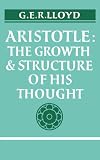
I think it’s nice that I’m writing this review of Sir Geoffrey Ernest Richard Lloyd’s book the day before he turns 93 years old. For perspective, he was born five days before Adolf Hitler became chancellor of Germany, and Lloyd is still turning out books today. Over the decades, he has incorporated structural anthropology and classical Chinese into his repertoire, and his most recent book is a joint effort with an Amazonian anthropologist in a conversation on how we perceive reality show more across cultures.
Lloyd is the perfect man to write an intellectual biography of the Greek philosopher Aristotle, who wrote, “If reason is divine in comparison with man, then life according to reason is divine in comparison with human life…we must, so far as we are able, make ourselves immortal, and live in accordance with the best thing in us” (Nicomachean Ethics 1177b30ff.). Lloyd has lived the life of reason that Aristotle made possible, and I don’t make this latter assertion lightly. We can speculate that other thinkers eventually would’ve found the same path, but we can’t deny that Aristotle actually did it.
If that bold proclamation is enough to sharpen your interest but not enough to tempt you into 2500 pages of Aristotle’s complete works, then Lloyd’s compact and accessible summary might be for you. He breaks his book into two parts corresponding to its title, with four chapters that chart the historical circumstances and broad outlines of Aristotle’s philosophical growth; seven chapters that dig into the structure of his thought in the categories of logic, metaphysics, physics, psychology, ethics, politics, and literary criticism; and an extended conclusion.
Having read Aristotle, I naturally find Lloyd’s interpretation great since it parallels my own untutored reception of the philosopher. In a nutshell, Aristotle’s most important contribution to humanity was a rational method of investigation: “The key methodological doctrine that stimulated and guided Aristotle’s own researches and those of the Lyceum after him was that in dealing with a problem one must first examine both the particular data and the common opinions before attempting to resolve the issues….And it was this that ensured a measure of objectivity in the investigations that were carried out, a willingness to let theory wait on evidence, to consider alternative solutions to a problem and to criticise each of them in the light of both reason and the findings of research.”
This was a big deal. Like a bat that only knows how to be a bat, we’re so immersed in the world Aristotle built that we don’t see how revolutionary his method was: “These [rules of logic] seem obvious enough to us, but it is worth bearing in mind that…it was Aristotle himself who invented the science of formal logic.” His study of animal biology was so unusual “that Aristotle saw his role as that of a pioneer in biology and felt the need to justify his study of the subject.” Without questioning the existence of gods, whom he saw as inhabiting the higher end of the spectrum of soul-ish existence, Aristotle opened nature to empirical investigation by severing natural phenomena from divine control: “But he makes it plain that he does not postulate a divine mind controlling natural changes from the outside. On the contrary, natural objects have their ‘ends’ within themselves.”
Throughout Lloyd’s book, he situates this methodological earthquake partly in the fault lines of Aristotle’s dissatisfaction at the theories of his master in Plato’s academy: “Aristotle’s doctrine of substance can be seen as a rival to Plato’s theory of Forms, and in particular it suggests that we should adopt a different tactic in our pursuit of knowledge.” Aristotle’s eventual founding of the competing Lyceum, which “concentrated together under a common leadership a body of individuals who were to carry out more extensive investigations over a wider range of scientific, historical and social subjects than had ever [before] been imagined, let alone attempted,” lends support to Lloyd’s view that Aristotle’s fertile mental journey owed much to his reaction against the abstract and impractical theories of Plato.
Indeed, you could say that practicality is the hallmark of Aristotelian science. I’ve noted elsewhere that Aristotle rejected the theory of Democritus that reality is composed of microscopic atoms, a theory we today would recognize as closer to truth. What I hadn’t considered is the point Lloyd raises: “Whereas the atomic theory of Democritus was of little use so far as practical research into the constitution of natural substances was concerned, Aristotle’s qualitative theory served as a working hypothesis” that could be weighed empirically. Sometimes a bad idea you can test is better than a good idea you can’t.
I could say much more, from Aristotle’s theory of the mind-body connection (“Aristotle may legitimately be considered the first major exponent of the…monistic view”) to his thoughts on politics (“He believes that the stability of states depends much more on the character of the citizens than on constitutional or economic factors”). I’ll leave you to discover these on your own should your soul move in that direction, closing instead with this quote from Lloyd: “[The] chapter in ‘de Caelo’ in which he discusses the size of the earth provided a stimulus to the voyage of Columbus….[Aristotle] reported that there were some who believed ‘that the region around the Pillars of Heracles joins on to that round India, and so the ocean is one’, and he expressed the cautious opinion that this view ‘is not entirely incredible’.” Chew on that if you didn’t think that reading philosophy could change the world. show less
Lloyd is the perfect man to write an intellectual biography of the Greek philosopher Aristotle, who wrote, “If reason is divine in comparison with man, then life according to reason is divine in comparison with human life…we must, so far as we are able, make ourselves immortal, and live in accordance with the best thing in us” (Nicomachean Ethics 1177b30ff.). Lloyd has lived the life of reason that Aristotle made possible, and I don’t make this latter assertion lightly. We can speculate that other thinkers eventually would’ve found the same path, but we can’t deny that Aristotle actually did it.
If that bold proclamation is enough to sharpen your interest but not enough to tempt you into 2500 pages of Aristotle’s complete works, then Lloyd’s compact and accessible summary might be for you. He breaks his book into two parts corresponding to its title, with four chapters that chart the historical circumstances and broad outlines of Aristotle’s philosophical growth; seven chapters that dig into the structure of his thought in the categories of logic, metaphysics, physics, psychology, ethics, politics, and literary criticism; and an extended conclusion.
Having read Aristotle, I naturally find Lloyd’s interpretation great since it parallels my own untutored reception of the philosopher. In a nutshell, Aristotle’s most important contribution to humanity was a rational method of investigation: “The key methodological doctrine that stimulated and guided Aristotle’s own researches and those of the Lyceum after him was that in dealing with a problem one must first examine both the particular data and the common opinions before attempting to resolve the issues….And it was this that ensured a measure of objectivity in the investigations that were carried out, a willingness to let theory wait on evidence, to consider alternative solutions to a problem and to criticise each of them in the light of both reason and the findings of research.”
This was a big deal. Like a bat that only knows how to be a bat, we’re so immersed in the world Aristotle built that we don’t see how revolutionary his method was: “These [rules of logic] seem obvious enough to us, but it is worth bearing in mind that…it was Aristotle himself who invented the science of formal logic.” His study of animal biology was so unusual “that Aristotle saw his role as that of a pioneer in biology and felt the need to justify his study of the subject.” Without questioning the existence of gods, whom he saw as inhabiting the higher end of the spectrum of soul-ish existence, Aristotle opened nature to empirical investigation by severing natural phenomena from divine control: “But he makes it plain that he does not postulate a divine mind controlling natural changes from the outside. On the contrary, natural objects have their ‘ends’ within themselves.”
Throughout Lloyd’s book, he situates this methodological earthquake partly in the fault lines of Aristotle’s dissatisfaction at the theories of his master in Plato’s academy: “Aristotle’s doctrine of substance can be seen as a rival to Plato’s theory of Forms, and in particular it suggests that we should adopt a different tactic in our pursuit of knowledge.” Aristotle’s eventual founding of the competing Lyceum, which “concentrated together under a common leadership a body of individuals who were to carry out more extensive investigations over a wider range of scientific, historical and social subjects than had ever [before] been imagined, let alone attempted,” lends support to Lloyd’s view that Aristotle’s fertile mental journey owed much to his reaction against the abstract and impractical theories of Plato.
Indeed, you could say that practicality is the hallmark of Aristotelian science. I’ve noted elsewhere that Aristotle rejected the theory of Democritus that reality is composed of microscopic atoms, a theory we today would recognize as closer to truth. What I hadn’t considered is the point Lloyd raises: “Whereas the atomic theory of Democritus was of little use so far as practical research into the constitution of natural substances was concerned, Aristotle’s qualitative theory served as a working hypothesis” that could be weighed empirically. Sometimes a bad idea you can test is better than a good idea you can’t.
I could say much more, from Aristotle’s theory of the mind-body connection (“Aristotle may legitimately be considered the first major exponent of the…monistic view”) to his thoughts on politics (“He believes that the stability of states depends much more on the character of the citizens than on constitutional or economic factors”). I’ll leave you to discover these on your own should your soul move in that direction, closing instead with this quote from Lloyd: “[The] chapter in ‘de Caelo’ in which he discusses the size of the earth provided a stimulus to the voyage of Columbus….[Aristotle] reported that there were some who believed ‘that the region around the Pillars of Heracles joins on to that round India, and so the ocean is one’, and he expressed the cautious opinion that this view ‘is not entirely incredible’.” Chew on that if you didn’t think that reading philosophy could change the world. show less
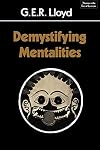
A slightly repetitive book, but packed with great insights. The author argues that any talk about distinct mentalities among historical or primitive peoples is misguided. Human thought is much more complex than such a simple concept allows. He discusses at length the diversity of ancient scientific thought and draws some parallels to the social and political conditions of the time. As an added bonus he also frequently refers to anthropological studies to illustrate his points. He also show more emphasizes how little we can know for sure about other peoples' thought. You will learn a lot from this book. show less
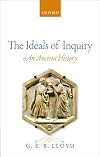
This book is a short treatise about scientifically inclined thought in ancient Greece and China. Indian and Mesopotamian explorations are also discussed occasionally. The author has already written many books on this subject, but this might be the first one where his comparisons extend all the way to the political systems which were prevailing when research was conducted, and to the values which may have motivated ancient investigators. He argues that ancient sciences were idiosyncratic, and show more they should not be compared or judged based on modern science. Somewhat unnecessarily, he also emphasizes that modern science is a more multifaceted enterprise than many of us realize.
This book is a bit too short for its topic. The number of pages devoted to each subtopic is very limited, just enough to arouse your curiosity and interest but not to investigate any question at depth. I would therefore recommend the author's earlier books before this one. He has produced a unique corpus on ancient societies, but this one is only a supplementary work, not the main course. show less
This book is a bit too short for its topic. The number of pages devoted to each subtopic is very limited, just enough to arouse your curiosity and interest but not to investigate any question at depth. I would therefore recommend the author's earlier books before this one. He has produced a unique corpus on ancient societies, but this one is only a supplementary work, not the main course. show less
Adversaries and Authorities: Investigations into Ancient Greek and Chinese Science (Ideas in Context) by G. E. R. Lloyd
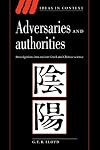
This book has one flaw: it's too short. The author emphasizes that it is pointless to evaluate ancient conceptions of science on any other criteria than those accepted by ancient scientists themselves. He points to some interesting aspects of Chinese which had no counterparts in the Greek tradition, and vice versa. But it's all presented very briefly and it seems like much is left unsaid.
Lists
You May Also Like


Associated Authors
Statistics
- Works
- 40
- Also by
- 19
- Members
- 1,386
- Popularity
- #18,546
- Rating
- 3.7
- Reviews
- 15
- ISBNs
- 126
- Languages
- 8
- Favorited
- 1