
Elise Hooper
Author of The Other Alcott
Works by Elise Hooper
Learning to See: A Novel of Dorothea Lange, the Woman Who Revealed the Real America (2019) 177 copies, 23 reviews
Tagged
Common Knowledge
- Birthdate
- 20th century
- Gender
- female
- Occupations
- teacher
- Nationality
- USA
- Places of residence
- Seattle, Washington, USA
- Map Location
- USA
Members
Reviews
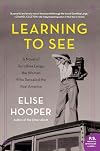
If you've seen stark, weary portraits of unemployed and homeless people during the Great Depression, chances are you've seen a Dorothea Lange photograph. She captured the poverty, the hardship, the despair, and the resignation like no other artist working at the time. Her most famous photograph is probably the Migrant Mother. But who was the woman who saw right to the tired, downtrodden hearts of the people she was photographing, who exposed the truth and reality of their lives? Elise show more Hopper's newest novel, Learning to See, is a fascinating fictionalization of this skilled photographer's life, the hardships and happinesses of her own remarkable life.
Dorothea Lange had an eye. She saw and captured things in people and their circumstances that others missed. She was focused and driven, first to succeed and then to make a difference in the hardship and injustice she saw around her. Her own life had its share of hardship as well, from polio at seven that left her with a permanent limp and a disfigured foot, her father's unexplained abandonment that meant she and her younger brother accompanied their social worker mother to scenes they shouldn't have seen, to losing her entire life savings when the dear friend she was supposed to travel around the world with was pick-pocketed on their first day in San Francisco. Lange pushed through each setback, disappointment, heartbreak, and personal sacrifice to persevere, to emerge from the ashes and create the photography that documented the social failings of the mid-twentieth century, even as it took a toll on her family and her own health.
But Hooper's book captures and expands on Lange personally, in addition to professionally. Lange struggled to balance her life as a celebrated portrait photographer to the wealthy with her life as a wife to Western artist Maynard Dixon and mother to their two boys. She was already the family's chief breadwinner when the Great Depression hit and she became their sole support. But her heart was not in portraiture, it was in social documentation and activism so when portrait photography was no longer financially viable, she made the shift to documenting migration and the growing economic disaster of the 30s for the government. Doing so led her to make hard personal decisions that changed the very face of her family.
Told in the first person, the narrative starts when Lange is a brash and forthright 22 year old, newly arrived in San Francisco from New York. As it weaves through the story of her life moving forward, there are occasional chapters interspersed that are set in the 1960s as Lange ruminates on what is clearly a tense and fragile relationship with her oldest son Dan and the plans for a MoMA retrospective of her work, including that from her time working for the FSA (and its predecessor) but still not yet including the impounded photographs she took of the Japanese internment camps. These chapters from late in her life show her to be a woman still and always learning to truly see herself and those whom she loved. They interrupted the smooth flow of the otherwise chronological narrative but did so in such a way to emphasize that although Lange's work loomed large over her entire life, she suffered and her family suffered because of some of the decisions she made in the service of her art. The story is well done and engaging and the reader is swept along with it, seeing the dichotomy of working mother and home life, the treatment of and dismissiveness shown to women, the cost of divorce, and the power and threat of social justice. Learning about Dorothea Lange, the woman and the photographer was fascinating and the novel will appeal to historical fictions readers of all sorts, especially those who enjoy reading about trailblazing women and the work of their lives. show less
Dorothea Lange had an eye. She saw and captured things in people and their circumstances that others missed. She was focused and driven, first to succeed and then to make a difference in the hardship and injustice she saw around her. Her own life had its share of hardship as well, from polio at seven that left her with a permanent limp and a disfigured foot, her father's unexplained abandonment that meant she and her younger brother accompanied their social worker mother to scenes they shouldn't have seen, to losing her entire life savings when the dear friend she was supposed to travel around the world with was pick-pocketed on their first day in San Francisco. Lange pushed through each setback, disappointment, heartbreak, and personal sacrifice to persevere, to emerge from the ashes and create the photography that documented the social failings of the mid-twentieth century, even as it took a toll on her family and her own health.
But Hooper's book captures and expands on Lange personally, in addition to professionally. Lange struggled to balance her life as a celebrated portrait photographer to the wealthy with her life as a wife to Western artist Maynard Dixon and mother to their two boys. She was already the family's chief breadwinner when the Great Depression hit and she became their sole support. But her heart was not in portraiture, it was in social documentation and activism so when portrait photography was no longer financially viable, she made the shift to documenting migration and the growing economic disaster of the 30s for the government. Doing so led her to make hard personal decisions that changed the very face of her family.
Told in the first person, the narrative starts when Lange is a brash and forthright 22 year old, newly arrived in San Francisco from New York. As it weaves through the story of her life moving forward, there are occasional chapters interspersed that are set in the 1960s as Lange ruminates on what is clearly a tense and fragile relationship with her oldest son Dan and the plans for a MoMA retrospective of her work, including that from her time working for the FSA (and its predecessor) but still not yet including the impounded photographs she took of the Japanese internment camps. These chapters from late in her life show her to be a woman still and always learning to truly see herself and those whom she loved. They interrupted the smooth flow of the otherwise chronological narrative but did so in such a way to emphasize that although Lange's work loomed large over her entire life, she suffered and her family suffered because of some of the decisions she made in the service of her art. The story is well done and engaging and the reader is swept along with it, seeing the dichotomy of working mother and home life, the treatment of and dismissiveness shown to women, the cost of divorce, and the power and threat of social justice. Learning about Dorothea Lange, the woman and the photographer was fascinating and the novel will appeal to historical fictions readers of all sorts, especially those who enjoy reading about trailblazing women and the work of their lives. show less
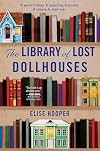
I am enjoying all the stories that are being written about overlooked women in world history, whether real or fictional. Elise Hooper's The Library of Lost Dollhouses is another strong addition to this category, and her Author's Note at the end explains the people who inspired her characters.
The story spans a century and is told by two women, one, head curator Tildy Barrows who is passionate about saving the Belva Curtis LeFarge Library in San Francisco. As she described it, I wished I could show more go there and wander through all the rooms-- marvelous! The second is Cora Hale, extraordinary artist and creator of the most exquisite dollhouses I've ever read about. (I love the Thorne Rooms in the Phoenix Art Museum and have visited them many times, so this is a subject that's interested me for a long time.) I love how Cora was able to incorporate women's secrets into the houses she created for them.
Another strong point in this book was the descriptions of how difficult it is to keep a place like the LeFarge Library afloat, especially after the pandemic. As the book traveled from one place to the next, from Tildy's life and then back to Cora's, I couldn't wait until all was revealed. All in all, this is a heart-warming read that's well worth your time.
(Review copy courtesy of the publisher and Net Galley) show less
The story spans a century and is told by two women, one, head curator Tildy Barrows who is passionate about saving the Belva Curtis LeFarge Library in San Francisco. As she described it, I wished I could show more go there and wander through all the rooms-- marvelous! The second is Cora Hale, extraordinary artist and creator of the most exquisite dollhouses I've ever read about. (I love the Thorne Rooms in the Phoenix Art Museum and have visited them many times, so this is a subject that's interested me for a long time.) I love how Cora was able to incorporate women's secrets into the houses she created for them.
Another strong point in this book was the descriptions of how difficult it is to keep a place like the LeFarge Library afloat, especially after the pandemic. As the book traveled from one place to the next, from Tildy's life and then back to Cora's, I couldn't wait until all was revealed. All in all, this is a heart-warming read that's well worth your time.
(Review copy courtesy of the publisher and Net Galley) show less
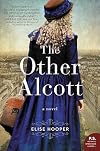
First, let me confess that I’ve never read LITTLE WOMEN, though I’ve seen every one of the movies. I am therefore familiar with the March family and the Alcotts lived in my home town of Concord, MA. I picked up this book specifically to learn more about May Alcott, the youngest of the four daughters and the sister on which Amy March was based.
I enjoyed getting to know May and her two older sisters (the fourth is already deceased when this book begins) and appreciated this author’s show more effort to explore a professional rivalry between Louisa the writer and May the artist. I also enjoyed getting a sense of what it was like for a woman to want to be a artist in the later 1800s, when marriage with children was the expected life path. I also enjoyed the way the author integrated stories of other artists in May’s studies in Boston, France, England, and Italy.
But I felt disappointed with the writing of the book which seemed to wander. It seemed at times like a book about May’s struggle to realize her artistic ambitions. Other times it seemed much more about her competitive relationship with Louisa. There were rivalries with fellow women artists thrown in. And, of course, a romance or two. But I had the sense that the author couldn’t quite decide what the focus of the book should be. Or perhaps, it was more an issue of not joining together all these disparate elements in a cohesive whole. The result was that I finished the book feeling unsatisfied. I hope your experience is better. show less
I enjoyed getting to know May and her two older sisters (the fourth is already deceased when this book begins) and appreciated this author’s show more effort to explore a professional rivalry between Louisa the writer and May the artist. I also enjoyed getting a sense of what it was like for a woman to want to be a artist in the later 1800s, when marriage with children was the expected life path. I also enjoyed the way the author integrated stories of other artists in May’s studies in Boston, France, England, and Italy.
But I felt disappointed with the writing of the book which seemed to wander. It seemed at times like a book about May’s struggle to realize her artistic ambitions. Other times it seemed much more about her competitive relationship with Louisa. There were rivalries with fellow women artists thrown in. And, of course, a romance or two. But I had the sense that the author couldn’t quite decide what the focus of the book should be. Or perhaps, it was more an issue of not joining together all these disparate elements in a cohesive whole. The result was that I finished the book feeling unsatisfied. I hope your experience is better. show less
Best for:
Anyone interested in how women have had to fight against sexism, misogyny, and racism to do simple things like run really fast.
In a nutshell:
Three women’s stories are told starting in the late 1920s through to the 1936 Berlin Olympic.
Worth quoting:
“Getting a taste of what it felt like to be good at something and then having it taken away still left her feeling crushed when she allowed herself to think about it.”
“Rules could be broken. Judges could be wrong. People did not show more always do the fair thing. Final results were only as reliable as the system that produced them.”
“It is well documented that women cannot be subjected to the same mental and physical strains that men can withstand … It is important not to overburden this developing young feminine mind with the distractions of sport and competition.”
Why I chose it:
It was a birthday gift from my mother-in-law, who knows I have a strong interests in women in sports and women’s rights overall.
Review:
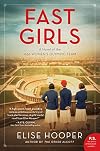
If you’re mostly interested in reading about the 1936 Berlin Olympics, this is not the book for you, despite the title and cover. It’s definitely in there at the end, but takes up maybe 15% of the whole book. But if you’re interested in reading fictionalized accounts of real women athletes, fighting for their rights to compete and perform and receive anything close to the same treatment as men athletes, this is a good book to pick up.
Author Hooper follows three athletes primarily - Betty, a white woman who wins gold at the inaugural women’s 100 track event at the 1928 Olympics; Helen, a young white outcast who discovers she is an excellent runner while dealing with understanding her sexuality, and Louise, a Black woman who has to deal with both the sexism and racism of the athletic world.
These women, along with nearly every other athlete mentioned, are historic figures, and the major life events they encounter (including a plane crash that Betty survives, and sexual abuse of Helen) are all real. As the author shares at the end, unfortunately Louise is the woman she was able to find the least about in her research, though all are discussed in an afterward that shares how their lives went after the Berlin Olympics.
The author intersperses point of view chapters with letters and newspaper articles and oh MY gosh do you want to get angry? That last quote from up above, about women not being able to handle mental / physical strains, and how they shouldn’t be distracted? Flames on the side of my face. I’ve been an athlete (mostly soccer) since I was about six, and while most of the time I’ve had support and the ability to play when and where I want, the reality is I’ve faced sexism individually (when I played on a co-ed team — not from my teammates, but from opposition) and collectively (I now play in women’s soccer leagues here in England and the refs are shit and both make way too many technical calls like foul throws and then offer no protection from dirty play).
I also appreciate how the author spends time specifically focusing on the ways that Louise, as one of the two Black women who is on the women’s team during the Los Angeles and Berlin Olympics, deals with overt and casual racism all the time, from not being selected for the relay in Los Angeles despite having faster times, to being forced to sleep in lesser accommodations on the way to the Olympics. Betty, Helen, and the other white women athletes are definitely facing a ton of misogyny and sexism, but for Louise and her teammate Tidye, they have racism added on top.
As I mentioned, the book is more about the lives of the women in the eight years leading to the Berlin Olympics, but they do definitely talk about the proposed boycott, and the treatment the Nazis showed to their own athletes and to athletes from other nations. I’d say it’s hard to imagine being willing to compete at those games, but like, people went to the 2014 Olympics in Socchi, where Russia has horrible laws against people who are not straight. As I get older and more informed, the way the Olympics are run makes me less and less interested in supporting them at all (I mean, did you see the comments by the now former head of the Toyko games just, like, this month? https://www.theguardian.com/sport/2021/feb/12/tokyo-olympics-chief-resigns-over-..., but I do still want to support the individual athletes and teams who work so hard to complete these amazing feats of athleticism.
Keep it / Pass to a Friend / Donate it / Toss it:
Donate it show less
Anyone interested in how women have had to fight against sexism, misogyny, and racism to do simple things like run really fast.
In a nutshell:
Three women’s stories are told starting in the late 1920s through to the 1936 Berlin Olympic.
Worth quoting:
“Getting a taste of what it felt like to be good at something and then having it taken away still left her feeling crushed when she allowed herself to think about it.”
“Rules could be broken. Judges could be wrong. People did not show more always do the fair thing. Final results were only as reliable as the system that produced them.”
“It is well documented that women cannot be subjected to the same mental and physical strains that men can withstand … It is important not to overburden this developing young feminine mind with the distractions of sport and competition.”
Why I chose it:
It was a birthday gift from my mother-in-law, who knows I have a strong interests in women in sports and women’s rights overall.
Review:
If you’re mostly interested in reading about the 1936 Berlin Olympics, this is not the book for you, despite the title and cover. It’s definitely in there at the end, but takes up maybe 15% of the whole book. But if you’re interested in reading fictionalized accounts of real women athletes, fighting for their rights to compete and perform and receive anything close to the same treatment as men athletes, this is a good book to pick up.
Author Hooper follows three athletes primarily - Betty, a white woman who wins gold at the inaugural women’s 100 track event at the 1928 Olympics; Helen, a young white outcast who discovers she is an excellent runner while dealing with understanding her sexuality, and Louise, a Black woman who has to deal with both the sexism and racism of the athletic world.
These women, along with nearly every other athlete mentioned, are historic figures, and the major life events they encounter (including a plane crash that Betty survives, and sexual abuse of Helen) are all real. As the author shares at the end, unfortunately Louise is the woman she was able to find the least about in her research, though all are discussed in an afterward that shares how their lives went after the Berlin Olympics.
The author intersperses point of view chapters with letters and newspaper articles and oh MY gosh do you want to get angry? That last quote from up above, about women not being able to handle mental / physical strains, and how they shouldn’t be distracted? Flames on the side of my face. I’ve been an athlete (mostly soccer) since I was about six, and while most of the time I’ve had support and the ability to play when and where I want, the reality is I’ve faced sexism individually (when I played on a co-ed team — not from my teammates, but from opposition) and collectively (I now play in women’s soccer leagues here in England and the refs are shit and both make way too many technical calls like foul throws and then offer no protection from dirty play).
I also appreciate how the author spends time specifically focusing on the ways that Louise, as one of the two Black women who is on the women’s team during the Los Angeles and Berlin Olympics, deals with overt and casual racism all the time, from not being selected for the relay in Los Angeles despite having faster times, to being forced to sleep in lesser accommodations on the way to the Olympics. Betty, Helen, and the other white women athletes are definitely facing a ton of misogyny and sexism, but for Louise and her teammate Tidye, they have racism added on top.
As I mentioned, the book is more about the lives of the women in the eight years leading to the Berlin Olympics, but they do definitely talk about the proposed boycott, and the treatment the Nazis showed to their own athletes and to athletes from other nations. I’d say it’s hard to imagine being willing to compete at those games, but like, people went to the 2014 Olympics in Socchi, where Russia has horrible laws against people who are not straight. As I get older and more informed, the way the Olympics are run makes me less and less interested in supporting them at all (I mean, did you see the comments by the now former head of the Toyko games just, like, this month? https://www.theguardian.com/sport/2021/feb/12/tokyo-olympics-chief-resigns-over-..., but I do still want to support the individual athletes and teams who work so hard to complete these amazing feats of athleticism.
Keep it / Pass to a Friend / Donate it / Toss it:
Donate it show less
Lists
Awards


You May Also Like


Statistics
- Works
- 5
- Members
- 1,054
- Popularity
- #24,449
- Rating
- 3.8
- Reviews
- 82
- ISBNs
- 48
- Languages
- 1
- Favorited
- 1
