
Cherise Wolas
Author of The Resurrection of Joan Ashby
Works by Cherise Wolas
Associated Works
Frankly Feminist: Short Stories by Jewish Women from Lilith Magazine (HBI Series on Jewish Women) (2022) — Contributor — 9 copies, 1 review
Tagged
Common Knowledge
- Birthdate
- 20th century
- Gender
- female
- Nationality
- USA
- Associated Place (for map)
- USA
Members
Reviews
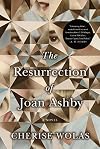
In this rich and superbly written novel, Joan Ashby, literary wunderkind, is on the fast track to cementing her name in the pantheons of great literature. Then she gets pregnant, something she swore and made her husband swear, they would not allow to happen. Can she be a great writer and a great mother simultaneously? Will she be able to forge her literary destiny while burdened with the title "mother"? Can she overcome the obstacles to her own independence of mind, thought, profession, with show more two little ones pulling at her skirts? Will her husband fulfill his promise of allowing her the space to write?
These are the questions Joan asks herself and of her life as she faces a life she never wanted, a role she shudders at and shies from.
The book is about the choices we make and the choices that make us, the roles that define us, and the definitions we carve out for ourselves.
In large part it's about the conflict all women face, the different parts of ourselves that war for dominance, space and time, the different parts of us that clamor for our attention and vie for our affections, like children asking to be heard over the voices of other children. Does motherhood preclude other activities or self-definitions? Do all other identities get subsumed under "mother"? Joan seems to believe so. Is it always going to take first place in our lives, demand full-time attentions? "What happens to a dream deferred" springs to mind, here due to conflicting selves, desires, loyalties, etc. There's a big "room of one's own" element as Joan struggles to find a place to call her own that can accommodate her talent and drive.
The age-old question "can women have it all" takes center stage here, as a backdrop of Joan's life.
This book is so much larger, though, than just the question of this particular woman, or womanhood in general. It speaks a universal language. In a larger sense, the novel is about a universal arc of life, one that looks forward in hope in youth, goals, plans and dreams lit up like a firework in front of our eyes, and the inevitable failure of living up to our ideals of ourselves, the sadness of the impossibility of realizing our dreams the way we configure them in our youth.
The character of Joan is intricately drawn, so much so that I feel I would recognize her on the street if I overheard her speaking. When the book finished, I could not help wondering about her future, as if she were a friend that had just confided to me about her hopes and dreams. Wolas invests us completely in Joan's life, which in the novel spans several decades, and as a result, we know her intimately. I felt fully invested in her sorrows, her joys, her challenges, disappointments, angers, and conflicts.
I don't know if I buy 100% the idea that Joan is a passive victim of her life. She does make certain choices all the way along the trajectory of her life, and I don't know if the character takes sufficient responsibility for those choices.
A word about length: Wolas goes to great trouble to present us with several samples of Joan's "actual" writing, several of her short stories, and parts of her novel. Wolas' virtuosity in creating stories within stories aside, I don't know if the reader benefits greatly from these extended looks at the kind of writer Joan is. I would have taken it at face value that she is fantastic. And I get that the stories give us insight into Joan's personality, as well as provide some foreshadowing and parallel storytelling. However, at over 500 pages, the book could have left out some of this.
Thank you to the author and publisher for a review copy. This was a very memorable novel. show less
These are the questions Joan asks herself and of her life as she faces a life she never wanted, a role she shudders at and shies from.
The book is about the choices we make and the choices that make us, the roles that define us, and the definitions we carve out for ourselves.
In large part it's about the conflict all women face, the different parts of ourselves that war for dominance, space and time, the different parts of us that clamor for our attention and vie for our affections, like children asking to be heard over the voices of other children. Does motherhood preclude other activities or self-definitions? Do all other identities get subsumed under "mother"? Joan seems to believe so. Is it always going to take first place in our lives, demand full-time attentions? "What happens to a dream deferred" springs to mind, here due to conflicting selves, desires, loyalties, etc. There's a big "room of one's own" element as Joan struggles to find a place to call her own that can accommodate her talent and drive.
The age-old question "can women have it all" takes center stage here, as a backdrop of Joan's life.
This book is so much larger, though, than just the question of this particular woman, or womanhood in general. It speaks a universal language. In a larger sense, the novel is about a universal arc of life, one that looks forward in hope in youth, goals, plans and dreams lit up like a firework in front of our eyes, and the inevitable failure of living up to our ideals of ourselves, the sadness of the impossibility of realizing our dreams the way we configure them in our youth.
The character of Joan is intricately drawn, so much so that I feel I would recognize her on the street if I overheard her speaking. When the book finished, I could not help wondering about her future, as if she were a friend that had just confided to me about her hopes and dreams. Wolas invests us completely in Joan's life, which in the novel spans several decades, and as a result, we know her intimately. I felt fully invested in her sorrows, her joys, her challenges, disappointments, angers, and conflicts.
I don't know if I buy 100% the idea that Joan is a passive victim of her life. She does make certain choices all the way along the trajectory of her life, and I don't know if the character takes sufficient responsibility for those choices.
A word about length: Wolas goes to great trouble to present us with several samples of Joan's "actual" writing, several of her short stories, and parts of her novel. Wolas' virtuosity in creating stories within stories aside, I don't know if the reader benefits greatly from these extended looks at the kind of writer Joan is. I would have taken it at face value that she is fantastic. And I get that the stories give us insight into Joan's personality, as well as provide some foreshadowing and parallel storytelling. However, at over 500 pages, the book could have left out some of this.
Thank you to the author and publisher for a review copy. This was a very memorable novel. show less
It's not often that halfway through a book I know I will be giving it 5 stars no matter where it goes or how the story ends.
It's even less often I will run straight to the Internet to follow the author on social media everywhere.
This book and this author are just that good.
Don't let the 544-page count fool you. The pages breeze along and the writing feels effortless. It is one of those books that draws you in and makes you feel as though you are a part of the story. Joan Asby is a living, show more breathing character and I didn't want my time with her to end. Anyone who appreciates character-driven fiction and well-crafted sentences needs to read this book! I'm usually put off by stories within stories, or anything like a dream sequence that takes away from the main narrative, but I even enjoyed those parts – a lot.
I received a complimentary copy in exchange for an honest review and I've got to say that this is what I love most about the Goodreads 'first reads' program. Based solely on book description alone I might not have otherwise picked this one up, at least not right away. While the synopsis is fitting, Joan Ashby is just So. Much. More.
...Which brings me to the thing I dislike about the first reads program: having to try to write a review of such a fantastic book. Other readers may be able to describe with more clarity and insight than I can, so I will leave the rehash to those readers. Just know that it is an amazing journey that you don't want to miss! show less
It's even less often I will run straight to the Internet to follow the author on social media everywhere.
This book and this author are just that good.
Don't let the 544-page count fool you. The pages breeze along and the writing feels effortless. It is one of those books that draws you in and makes you feel as though you are a part of the story. Joan Asby is a living, show more breathing character and I didn't want my time with her to end. Anyone who appreciates character-driven fiction and well-crafted sentences needs to read this book! I'm usually put off by stories within stories, or anything like a dream sequence that takes away from the main narrative, but I even enjoyed those parts – a lot.
I received a complimentary copy in exchange for an honest review and I've got to say that this is what I love most about the Goodreads 'first reads' program. Based solely on book description alone I might not have otherwise picked this one up, at least not right away. While the synopsis is fitting, Joan Ashby is just So. Much. More.
...Which brings me to the thing I dislike about the first reads program: having to try to write a review of such a fantastic book. Other readers may be able to describe with more clarity and insight than I can, so I will leave the rehash to those readers. Just know that it is an amazing journey that you don't want to miss! show less
When I was nine years old my best friend asked me what I wanted to be when I grew up. I told her I wanted to be an author. In a few years, I was writing stories and then poetry. I tried to get published for a while, then didn't try but kept writing. Then the poems dried up.
What happened? Life. Marriage, jobs because we needed money, a child.
"If I told you the whole story it would never end...What's happened to me has happened to a thousand woman."--Ferderico Garcia Lorca, Dona Rosita la show more Soltera: The Language of Flowers
This quote appears at the beginning of The Resurrection of Joan Ashby, along with a quote from Olive Schreiner advising "live for that one thing" which is your aim in life. I recognized the story. I am one of the thousands who did not 'live for one thing.' But I do not regret my decision to put love first.
Joan Ashby, the heroine of Cherise Wolas' novel, was sidetracked away from her 'one thing,' that which she was born to be, which she had single-mindedly worked for and achieved before she allowed her life to be claimed by others and their needs.
This is the story of how Joan allowed love to determine who she was, and how love betrayed her, and the journey that brought her back to herself.
Within pages, I was mesmerized by Wolas' writing. The beginning of the novel recalled to mind an old movie, like Citizen Kane, with clips of news stories giving one an idea of the person they are going to explore. The novel begins with an article in Literature Magazine entitled "(Re)Introducing Joan Ashby" in which we learn that Joan was a prize-winning writer in her early twenties, a genius, but that it has been three decades since she last published. Next, we read several of Ashby's stories and excerpts from an interview with Joan.
"Love was more than simply inconvenient; it's consumptive nature always a threat to serious women." Joan Ashby
When Joan meets Martin Manning she tells him right away that her writing will always come first and that she has no need to be a mother. Martin is smitten and appears to support her wholeheartedly. But when two months after their marriage Joan finds she is pregnant, Martin tells her, "I've never been so happy."
Martin makes her happy. Does Joan grant him this baby, which obviously will lead to another child? Or should she hold fast to her commitment and dedication to her art, have an abortion, even if it means losing her newly wed husband?
The decisions Joan makes over the next thirty years put her husband and children's needs before her own artistic life. She does love them, but they take everything she has and offer back little.
She feels a kinship with quiet Daniel and his love of books and story telling, but who opts for an unsuitable career. Eric is brilliant, testing the limits, achieving early success which he cannot handle. She is drained by their need, while longing to return to the one thing she wanted and needed above all else: the solitude of the creative life.
After a horrible betrayal, Joan packs up and leaves her life behind to find out who she is and what it is she wants. In India, practicing yoga, Joan contemplates her marriage and her children, and the role of motherhood in all its manifestations, slowly growing into an understanding of how she wants to spend the rest of her life. The 500+ page book, for me, slows in this last third as Joan goes on an internal journey, including sections of the novel she is writing.
Joan's passivity and inability to carve out what she needed is a great part of her failed life. She is not completely a likable character when she accuses her husband of selfishness, for she did not stand up for herself and give him a chance to accommodate her needs. Their lack of communication indicates a flawed marriage. And Joan's need for secrecy about her writing life, novels and stories written in hours when she was alone, ends up harmful.
The Resurrection of Joan Ashby is an outstanding debut. I adored the nontraditional story telling which incorporated Joan's stories. The theme of the female artist's struggle to combine love and work will appeal to many women. I will be thinking about this book for a long time, and expect I will return to read portions as I grapple with my understanding of Joan.
I thank the publisher for a free ARC in exchange for a fair and unbiased review. show less
What happened? Life. Marriage, jobs because we needed money, a child.
"If I told you the whole story it would never end...What's happened to me has happened to a thousand woman."--Ferderico Garcia Lorca, Dona Rosita la show more Soltera: The Language of Flowers
This quote appears at the beginning of The Resurrection of Joan Ashby, along with a quote from Olive Schreiner advising "live for that one thing" which is your aim in life. I recognized the story. I am one of the thousands who did not 'live for one thing.' But I do not regret my decision to put love first.
Joan Ashby, the heroine of Cherise Wolas' novel, was sidetracked away from her 'one thing,' that which she was born to be, which she had single-mindedly worked for and achieved before she allowed her life to be claimed by others and their needs.
This is the story of how Joan allowed love to determine who she was, and how love betrayed her, and the journey that brought her back to herself.
Within pages, I was mesmerized by Wolas' writing. The beginning of the novel recalled to mind an old movie, like Citizen Kane, with clips of news stories giving one an idea of the person they are going to explore. The novel begins with an article in Literature Magazine entitled "(Re)Introducing Joan Ashby" in which we learn that Joan was a prize-winning writer in her early twenties, a genius, but that it has been three decades since she last published. Next, we read several of Ashby's stories and excerpts from an interview with Joan.
"Love was more than simply inconvenient; it's consumptive nature always a threat to serious women." Joan Ashby
When Joan meets Martin Manning she tells him right away that her writing will always come first and that she has no need to be a mother. Martin is smitten and appears to support her wholeheartedly. But when two months after their marriage Joan finds she is pregnant, Martin tells her, "I've never been so happy."
Martin makes her happy. Does Joan grant him this baby, which obviously will lead to another child? Or should she hold fast to her commitment and dedication to her art, have an abortion, even if it means losing her newly wed husband?
The decisions Joan makes over the next thirty years put her husband and children's needs before her own artistic life. She does love them, but they take everything she has and offer back little.
She feels a kinship with quiet Daniel and his love of books and story telling, but who opts for an unsuitable career. Eric is brilliant, testing the limits, achieving early success which he cannot handle. She is drained by their need, while longing to return to the one thing she wanted and needed above all else: the solitude of the creative life.
After a horrible betrayal, Joan packs up and leaves her life behind to find out who she is and what it is she wants. In India, practicing yoga, Joan contemplates her marriage and her children, and the role of motherhood in all its manifestations, slowly growing into an understanding of how she wants to spend the rest of her life. The 500+ page book, for me, slows in this last third as Joan goes on an internal journey, including sections of the novel she is writing.
Joan's passivity and inability to carve out what she needed is a great part of her failed life. She is not completely a likable character when she accuses her husband of selfishness, for she did not stand up for herself and give him a chance to accommodate her needs. Their lack of communication indicates a flawed marriage. And Joan's need for secrecy about her writing life, novels and stories written in hours when she was alone, ends up harmful.
The Resurrection of Joan Ashby is an outstanding debut. I adored the nontraditional story telling which incorporated Joan's stories. The theme of the female artist's struggle to combine love and work will appeal to many women. I will be thinking about this book for a long time, and expect I will return to read portions as I grapple with my understanding of Joan.
I thank the publisher for a free ARC in exchange for a fair and unbiased review. show less
UPDATED REVIEW 9/26/17:
This is a brilliantly written (debut!) literary novel at 500 pages that reads both like an intimate memoir and a sweeping epic. The language dazzles as we become infatuated with, invested in, and infuriated with Joan Ashby: The Writer. Her craft is the single most important thing to her, and her ambition never wanes as she begrudgingly accepts motherhood. Reading her stories and knowing her sacrifices makes an eventual betrayal that much more painful. I’m halfway show more convinced that Joan Ashby is the real writer here, and Cherise Wolas is her literary agent. Wolas has an immense talent for storytelling and I will gladly read anything else she writes.
ORIGINAL REVIEW 8/29/17:
I received an eGalley from the publisher in exchange for an honest review.
I almost didn't read this book. The description and the cover art definitely grabbed my eye, and I have a weakness for all protagonists named Joan, but I don't read "women's fiction" or much "contemporary family life" at all. Give me gritty realism and raw facts; even my taste in poetry tends to hit hard. I didn't want to read about another woman coming to realize that motherhood was a blessing in disguise, despite her sacrifices along the way.
I could not be more happy to be entirely wrong about this novel.
I am besotted with the way Wolas writes. I would read and reread entire paragraphs, languishing in their beauty before I was ready to move onward to the next delicious sentence. I, too, have fallen under Ashby's spell and would be delighted if any of HER writing were published today. I would read anything Ashby wrote, and the same now goes for Cherise Wolas, even if I have to wait 28 years in the meantime. I know it will be worth it. show less
This is a brilliantly written (debut!) literary novel at 500 pages that reads both like an intimate memoir and a sweeping epic. The language dazzles as we become infatuated with, invested in, and infuriated with Joan Ashby: The Writer. Her craft is the single most important thing to her, and her ambition never wanes as she begrudgingly accepts motherhood. Reading her stories and knowing her sacrifices makes an eventual betrayal that much more painful. I’m halfway show more convinced that Joan Ashby is the real writer here, and Cherise Wolas is her literary agent. Wolas has an immense talent for storytelling and I will gladly read anything else she writes.
ORIGINAL REVIEW 8/29/17:
I received an eGalley from the publisher in exchange for an honest review.
I almost didn't read this book. The description and the cover art definitely grabbed my eye, and I have a weakness for all protagonists named Joan, but I don't read "women's fiction" or much "contemporary family life" at all. Give me gritty realism and raw facts; even my taste in poetry tends to hit hard. I didn't want to read about another woman coming to realize that motherhood was a blessing in disguise, despite her sacrifices along the way.
I could not be more happy to be entirely wrong about this novel.
I am besotted with the way Wolas writes. I would read and reread entire paragraphs, languishing in their beauty before I was ready to move onward to the next delicious sentence. I, too, have fallen under Ashby's spell and would be delighted if any of HER writing were published today. I would read anything Ashby wrote, and the same now goes for Cherise Wolas, even if I have to wait 28 years in the meantime. I know it will be worth it. show less
Lists
Awards

You May Also Like


Associated Authors
Statistics
- Works
- 2
- Also by
- 1
- Members
- 324
- Popularity
- #73,084
- Rating
- 4.0
- Reviews
- 29
- ISBNs
- 25
- Languages
- 1