

Edith Eva Eger (1927–2026)
Author of The Choice
About the Author
Dr. Edith Eva Eger maintains a busy clinical practice in La Jolla, California, and holds a faculty appointment at the University of California, San Diego. She also serves as a consultant for the U.S. Army and Navy in resiliency training and the treatment of PTSD. Edie is still dancing-and ends her show more talks with a ballet high kick. show less
Works by Edith Eva Eger
The Gift 12 Lessons to Save Your Life & The Choice By Edith Eger 2 Books Collection Set (2020) 3 copies
De ballerina van Auschwitz 1 copy
Coping and Growth: A Theoretical and Empirical Study of Groups Under Moderate to Severe Stress (1977) 1 copy
Associated Works
Tagged
Common Knowledge
- Canonical name
- Eger, Edith Eva
- Birthdate
- 1927-09-29
- Date of death
- 2026-04-27
- Gender
- female
- Education
- University of Texas, El Paso
- Occupations
- therapist
author
public speaker
Holocaust survivor
memoirist
clinical psychologist - Agent
- Doug Abrams
- Short biography
- Edith Eva Eger was born to a family of Hungarian Jews living in Košice, Czechoslovakia (present-day Slovakia). Her parents were Lajos and Ilona Elefánt; her father was a tailor and her mother a civil servant. Her two older sisters, Clara and Magda, were talented musicians. Edith attended gymnasium (high school) and took ballet lessons. In 1942, Hungary, which had annexed the region, enacted anti-Jewish laws, and their whole world changed. In March 1944, when Edith was 17, the family was forced with other Jews into the Košice ghetto; Clara was hidden by her music teacher. In May of that year, they were deported to the Nazi death camp at Auschwitz. Her parents were sent to the gas chambers immediately, but Edith and Magda were selected to work.
Later, the girls were sent to other camps, including Mauthausen in Austria. In 1945, as the Red Army approached, the sisters were sent on a death march to the Gunskirchen subcamp. Edith nearly collapsed from disease and starvation along the way but other girls helped to carry her. When the U.S. military liberated the camp in May 1945, according to Edith, she was left for dead among a number of bodies. A soldier is said to have rescued her after seeing her hand move.
After World War II ended, Edith recovered in her native city; there she met and married Béla (Albert) Éger, a fellow survivor, with whom she would have three children. In 1949, they emigrated to the USA. She received her PhD degree in clinical psychology from the University of Texas, El Paso
in 1978 and opened a practice in La Jolla, California. She holds a faculty appointment at the University of California, San Diego. She is a frequently-invited speaker throughout the USA and abroad, and has appeared on many television programs. The documentary film I Danced for the Angel of Death: The Dr. Edith Eva Eger Story aired on public television in 2015. Her memoir The Choice: Embrace the Possible was published in 2017. Her second book The Gift: 12 Lessons to Save Your Life appeared in 2020. - Nationality
- Czechoslovakia (birth)
USA - Birthplace
- Czechoslovakia
Košice, Slovakia - Places of residence
- Hungary
Czechoslovakia
Auschwitz-Birkenau concentration camp
La Jolla, California, USA - Map Location
- USA
Members
Reviews
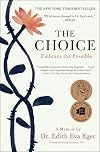
Dr. Edith Eva Eger picked up where Frankl left off, literally. Her personal story, about surviving the Holocaust and then using the experience to deeply understand and help people, is moving, then shockingly sad, and then inspiring. In the last few chapters she adds just enough pragmatic insights and case studies to help the reader grasp and apply the lessons. This is one of those books that you won’t be able to put down until you’re done, and then you’ll sit for a while, or a day, to show more continue taking it in. show less

This is one of the most gripping and inspiring books I have read for many years. Edith Eger was a Hungarian-American Holocaust survivor and life-affirmingly inspirational psychiatrist, who died a week or two ago at the age of 98. As a teenager, after the mass deportations of Hungarian Jews in summer 1944, she and her sister Magda survived a year in Auschwitz and on Death Marches, relying totally on each other materially and psychologically to keep themselves alive, after the gassing of their show more parents immediately upon their arrival at Auschwitz. Their determination to survive brought them through, though at the end they were rescued in May 1945 by a GI barely alive from a pile of corpses. They returned to their home city now in Czechoslovakia, where Edith married and had a daughter, but soon they had to flee when her husband was arrested by the Communist authorities. They planned to flee to Israel, but fortuitously they had a family visa for the US arranged by a distant relative before the war, so moved to America.
Like many survivors, Edith is traumatised by her experiences and cannot bear to talk about it to anyone, even with her husband, another Holocaust survivor, and certainly not their growing family of three children by the late 1950s. But over time Edith meets a famous camp survivor, the Austrian psychiatrist Viktor Frankl, author of the wonderful book Man's Search for Meaning, and founder of the Logotherapy school of psychiatry. Through him she reaches the conclusion that she must come to terms with her trauma and use the lessons of it to help others deal with trauma in their own lives, whether that be Vietnam War veterans, betrayed spouses or teenage girls with eating disorders. She develops and demonstrates a seemingly limitless capacity for empathy and reaching the most psychologically scarred people.
Eventually she makes the ultimate step towards coming to terms with her past by accepting an invitation to speak at a conference of military chaplains in Berchtesgaden, Hitler's old home base, and then returns to Auschwitz itself, despite the pleadings of some family members and other survivors. This is unbelievably painful for her, but with the support of her husband, she managed it: " I went back to Auschwitz searching for the feel of death so that I could finally exorcise it. What I found was my inner truth, the self I wanted to reclaim, my strength and my innocence". Her ultimate conclusion is that "the biggest prison is in your own mind, and in your pocket you already hold the key: the willingness to take absolute responsibility for your life; the willingness to risk; the willingness to release yourself from judgment and reclaim your innocence, accepting and loving yourself for who you really are—human, imperfect, and whole." Edith Eger is a very strong willed and reflective person, and very human in all its multi-various colours and dimensions, and this is a wonderful book. show less
Like many survivors, Edith is traumatised by her experiences and cannot bear to talk about it to anyone, even with her husband, another Holocaust survivor, and certainly not their growing family of three children by the late 1950s. But over time Edith meets a famous camp survivor, the Austrian psychiatrist Viktor Frankl, author of the wonderful book Man's Search for Meaning, and founder of the Logotherapy school of psychiatry. Through him she reaches the conclusion that she must come to terms with her trauma and use the lessons of it to help others deal with trauma in their own lives, whether that be Vietnam War veterans, betrayed spouses or teenage girls with eating disorders. She develops and demonstrates a seemingly limitless capacity for empathy and reaching the most psychologically scarred people.
Eventually she makes the ultimate step towards coming to terms with her past by accepting an invitation to speak at a conference of military chaplains in Berchtesgaden, Hitler's old home base, and then returns to Auschwitz itself, despite the pleadings of some family members and other survivors. This is unbelievably painful for her, but with the support of her husband, she managed it: " I went back to Auschwitz searching for the feel of death so that I could finally exorcise it. What I found was my inner truth, the self I wanted to reclaim, my strength and my innocence". Her ultimate conclusion is that "the biggest prison is in your own mind, and in your pocket you already hold the key: the willingness to take absolute responsibility for your life; the willingness to risk; the willingness to release yourself from judgment and reclaim your innocence, accepting and loving yourself for who you really are—human, imperfect, and whole." Edith Eger is a very strong willed and reflective person, and very human in all its multi-various colours and dimensions, and this is a wonderful book. show less
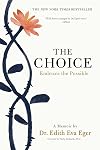
"The Choice," by Edith Eva Eger and Esme Schwall Weigand, is a searing memoir of loss, survival, and rebirth. Edie, who was born in Hungary, was a talented gymnast and ballet dancer who looked forward to a bright future. Tragically, she, her sister Magda, and their parents were deported to Auschwitz in 1944. From that time until she was liberated in May 1945, Edie clung to Magda, and fantasized about the boy she loved and hoped to marry after the war. Edie, Magda, and their fellow inmates show more were starved, forced to work at grueling tasks, sent on death marches, and were ordered to sit on top of train cars in order to discourage aerial bombardment by the Allies.
Where did Edie find the strength to keep going when it would have been so much easier to give up? She believes that her mother's words helped to keep her sane: "No one can take away from you what you put in your own mind." This remains Edie's mantra and it has sustained her to this day. At ninety, she is still going strong. Eger has a Phd in clinical psychology, is a consultant for the United States Army and Navy (she specializes in treating PTSD and teaches soldiers "how to deal with the adversity, trauma, and chaos of war"), has a private practice, and is an accomplished public speaker.
Edie candidly shares details of her sometimes troubled marriage, celebrates the joys of motherhood, and amazes us with her determination to pursue a doctorate. She admits that she has suffered from depression, anxiety, and survivor's guilt. In addition, she shares anecdotes (details are changed to insure confidentiality) about her interactions with patients who are so emotionally distraught that they can barely function. In addition, she touches on her friendship with the great Viktor Frankl who became her mentor. Like a mother speaking to her children, she comforts and reassures us. Our choice is to use the tools that can help us deal with emotional pain rather than live in the past and wallow in our misery. This is a powerful memoir that may give solace to readers struggling with feelings of hurt, rage, and sorrow. show less
Where did Edie find the strength to keep going when it would have been so much easier to give up? She believes that her mother's words helped to keep her sane: "No one can take away from you what you put in your own mind." This remains Edie's mantra and it has sustained her to this day. At ninety, she is still going strong. Eger has a Phd in clinical psychology, is a consultant for the United States Army and Navy (she specializes in treating PTSD and teaches soldiers "how to deal with the adversity, trauma, and chaos of war"), has a private practice, and is an accomplished public speaker.
Edie candidly shares details of her sometimes troubled marriage, celebrates the joys of motherhood, and amazes us with her determination to pursue a doctorate. She admits that she has suffered from depression, anxiety, and survivor's guilt. In addition, she shares anecdotes (details are changed to insure confidentiality) about her interactions with patients who are so emotionally distraught that they can barely function. In addition, she touches on her friendship with the great Viktor Frankl who became her mentor. Like a mother speaking to her children, she comforts and reassures us. Our choice is to use the tools that can help us deal with emotional pain rather than live in the past and wallow in our misery. This is a powerful memoir that may give solace to readers struggling with feelings of hurt, rage, and sorrow. show less
I knew from the start this book would touch me. I generally avoid books about WWII and concentrations camps, their horrors too much for me to contemplate. Yet, I felt compelled to read this book. The reason being that from the description I gathered this was about a woman who had survived and gone on to use her strength to help others with their trauma.
No, this was not an easy read. When she takes us into Auschwitz and tells us about the horrors she had seen and experienced there, my heart show more shrank in compassion and shame that humanity can be so cruel. But I also felt her courage and that of her sister, of the hardships and mental strength they must have had to survive when it may have been easier to give up.
I realised that being liberated from a prison does not mean the prison is gone. It can live on inside us. Dr Eger’s story of finally recognising and battling the prison in her mind is incredibly brave. I greatly respect and admire her for using her strength and harrowing experiences to help others deal with the prisons they had created for themselves, whatever the reason. She helps without judging.
Yes, this books tells of a survivor’s story, but it tells so much more about the strength and power that lives inside all of us and that we can help ourselves with the right guidance.
I would thoroughly recommend this book to everyone, whether you are struggling with your own demons or not. show less
No, this was not an easy read. When she takes us into Auschwitz and tells us about the horrors she had seen and experienced there, my heart show more shrank in compassion and shame that humanity can be so cruel. But I also felt her courage and that of her sister, of the hardships and mental strength they must have had to survive when it may have been easier to give up.
I realised that being liberated from a prison does not mean the prison is gone. It can live on inside us. Dr Eger’s story of finally recognising and battling the prison in her mind is incredibly brave. I greatly respect and admire her for using her strength and harrowing experiences to help others deal with the prisons they had created for themselves, whatever the reason. She helps without judging.
Yes, this books tells of a survivor’s story, but it tells so much more about the strength and power that lives inside all of us and that we can help ourselves with the right guidance.
I would thoroughly recommend this book to everyone, whether you are struggling with your own demons or not. show less
Lists
Awards


You May Also Like


Associated Authors
Statistics
- Works
- 11
- Also by
- 2
- Members
- 1,915
- Popularity
- #13,437
- Rating
- 4.3
- Reviews
- 50
- ISBNs
- 96
- Languages
- 15