
Jeremy Dronfield
Author of The Boy Who Followed His Father into Auschwitz: A True Story of Family and Survival
About the Author
Works by Jeremy Dronfield
The Boy Who Followed His Father into Auschwitz: A True Story of Family and Survival (2018) 767 copies, 10 reviews
Beyond The Call: The True Story of One World War II Pilot's Covert Mission to Rescue POWs on the Eastern Front (2015) 157 copies, 10 reviews
A Very Dangerous Woman: The Lives, Loves and Lies of Russia's Most Seductive Spy (2015) 81 copies, 14 reviews
The Boy Who Followed His Father into Auschwitz: A True Story Retold for Young Readers (2023) 33 copies, 2 reviews
Associated Works
Tagged
Common Knowledge
Members
Reviews
Crying is not something a non-fiction book evokes in me. The horrors of Auschwitz and other Nazi death camps is enough to drive one to tears. But Jeremy Dronfield’s writing is as compelling and moving as a novel.
This is the story of Gustav Kleinmann and his son, Fritz. Gustav was a decorated soldier who had fought for Germany’s ally, Austria, in World War One. Gustav and one of his sons, Fritz, were arrested in 1938 for being Jewish. They’d been betrayed by neighbours.
Gustav kept a show more diary throughout the five years he and Fritz were incarcerated. The Nazi’s monstrous murderous and mendacious behaviour contrasts with the Kleinmanns’ steadfast resistance which is inspiring.
They were sent separately to the Buchenwald concentration camp where they were reunited. A fluke of fate had Fritz stripped of his star, that denoted Jewish prisoners. His sudden change of status to Aryan is an astonishing act of hypocrisy that reveals the insanity of the Nazi’s idiotic racist ideology.
This is a story of horror but also hope and testament to extraordinary human endurance. And it’s the story of love and loyalty. But it’s also the story of what can happen when power is unchecked and where what starts as vilifying those different to us can lead.
This book is a must-read for anyone interested in where humanity’s future and for those interested in 20th century history. Jeremy Dronfield has honoured Gustav and Fritz Kleinmann in a fitting and compelling way. We must never forget. show less
This is the story of Gustav Kleinmann and his son, Fritz. Gustav was a decorated soldier who had fought for Germany’s ally, Austria, in World War One. Gustav and one of his sons, Fritz, were arrested in 1938 for being Jewish. They’d been betrayed by neighbours.
Gustav kept a show more diary throughout the five years he and Fritz were incarcerated. The Nazi’s monstrous murderous and mendacious behaviour contrasts with the Kleinmanns’ steadfast resistance which is inspiring.
They were sent separately to the Buchenwald concentration camp where they were reunited. A fluke of fate had Fritz stripped of his star, that denoted Jewish prisoners. His sudden change of status to Aryan is an astonishing act of hypocrisy that reveals the insanity of the Nazi’s idiotic racist ideology.
This is a story of horror but also hope and testament to extraordinary human endurance. And it’s the story of love and loyalty. But it’s also the story of what can happen when power is unchecked and where what starts as vilifying those different to us can lead.
This book is a must-read for anyone interested in where humanity’s future and for those interested in 20th century history. Jeremy Dronfield has honoured Gustav and Fritz Kleinmann in a fitting and compelling way. We must never forget. show less
Beyond The Call: The True Story of One World War II Pilot's Covert Mission to Rescue POWs on the Eastern Front by Lee Trimble
Beyond The Call concerns an aspect of WWII that is not well known. In the final months of the war, an American airbase was established in Ukraine(!) from which technicians would travel to Poland and Ukraine to salvage downed American airplanes and rescue pilots who had ditched while on bombing runs from bases in England. Reasonable enough, but some of these salvage crews were acting as covert operatives under the auspices of the OSS, their mission to rescue thousands of American POWs freed show more from German prison camps who had been left by the Soviets to wonder around Eastern Europe without food or shelter. Now, it doesn't make sense the Soviets would mistreat their allies former POWs, but they did for reasons explained in the book. And it doesn't make sense that American covert operatives were traveling around Russia during the war rescuing other Americans on the run from KGB, but there it was. It foreshadowed the Cold War and growing hostility between the USSR and the west. This is a first hand account that reads like a thriller with one foot in WWII and the other in the Cold War. show less
A Very Dangerous Woman: The Lives, Loves and Lies of Russia's Most Seductive Spy by Deborah McDonald

In the Postscript to his autobiography, H. G. Wells discusses when his long-running affair with the Baroness Moura Budberg (1891-1974) should have come on an end. He had met Moura in Russia, while visiting the writer Maxim Gorky. Many years later, she and he were lovers, and he had proposed marriage after the death of his second wife-- which she rejected. She also refused to come back to Russia with him, saying it was impossible but refusing to elaborate. When Wells went to Russia, with his show more son Gip instead, Wells was chatting with Gorky and his interpreter. Wells said something about how Moura couldn't be there, and the interpreter said it was a shame, because Wells had just missed her-- she'd been by the previous week. And, indeed, had been in Russia multiple times in recent years.
It's a sort of lurching moment: Wells's world drops away from him. The woman he was in love with enough to propose marriage to (and remember, Wells slept with lots of women) had been systematically lying to him for years. Wells can't take it, especially when she can't or won't explain, and he tries to break up with her. Except that every time she comes back into his life, he accepts her again. The end of the Postscript is a sporadically updated diary from the last decade of Wells's life, and Moura keeps on returning, and despite it all, Wells takes her back, and she was with him until the end of his life.
Wells died not knowing the whole truth of Moura Budberg, but I did a little research upon finishing the Postscript and discovered that she was a Russian spy, and that in 2015, there'd been a biography of her published, collating previously unaccessible letters and archives. It's a fascinating read.
Moura wasn't a spy in the James Bond sense-- she didn't go on undercover missions in foreign countries for the Kremlin. Rather, she was a popular social presence, and that was occasionally mined for the advantage of various parties with whom she needed to curry favor. Through her first husband's family, she had ties to the Germanophile Russian community; after the Bolshevik Revolution, she threw tons of parties for them and funneled information she acquired back to the Russian government. This is the kind of spying she did for most of her life.
Her life is pretty fascinating. She was a member of the upper classes, but managed to survive the rise of Communism by being useful to the new government-- not just through spying, as she became the lover of Alexander Kerensky, leader of the provisional Russian revolutionary government. McDonald and Dronfield paint a bleak and terrifying picture of revolutionary Russia, showing just how dangerous and desolate it was, as well as how politically fraught, as various political factions moved to consolidate power. Moura was both spied on by the Cheka (the counter-counterrevolutionary police) and spied for them.
Moura had connections to the U.K. from her youth, and fell in with Bruce Lockhart, the unofficial British ambassador in Russia. (The U.K. recalled its embassy staff because it couldn't be seen to officially endorse Bolshevism, but it dearly needed Russia on its side against Germany, so Lockhart was sent to do what he could unofficially.) The two became lovers (even though both were married), just another of Moura's significant lovers, which would go on to include Wells and Gorky.*
McDonald and Dronfield cover all the extant facts about Moura, weaving them together into a compelling narrative that goes from the Revolutionary days (1916-19 get a whole 280 pages to themselves in a 340-page narrative), to the mysterious death of her husband, from her time spent selling Russian treasures abroad to obtain funds for the Soviet government to her second marriage (one of convenience, to an Estonian baron), from her time working for the BBC's propaganda department during World War II to her postwar career as a screenwriter and script doctor for Alexander Korda. There is a lot of information packed into here, extensively endnoted. I didn't always always read the endnotes, but they show that McDonald and Dronfield worked hard to sift through the many disparate accounts of Moura's life. (Moura being one of the most unreliable sources of all, given her propensity for storytelling.) Many of the endnotes are devoted to criticizing the previous biography of Moura, by Nina Berberova.
Once I adjusted to the density of the book (I always find biographies slow going, but in a sort of good way), I found the book incredibly interesting-- but I don't know that I understand Moura as a person. Perhaps no one can, given how prone she was to exaggeration, and how much she kept secret. What did she think of her time spying? The key moment, it seems to me, is almost completely skipped over, I assume because we just don't know anything about it. Suddenly she is spying on the Germanophiles for the Soviet government. But how was she recruited, and did she feel bad about the deceit this entailed? Moura never said, and neither did anyone else, so we have no way of knowing. There were similar moments like this throughout the book. At one point the authors speculate that she may have had a role in the death of her first husband... but there's no way we can ever really know, just as we will never know what role she played in the death of Gorky and its aftermath.
Moura kept so much of herself hidden-- except from Lockhart, for whom she threw a lavish Russian Orthodox funeral that no one else attended-- that even when we know what she did, it's difficult to know what she thought and felt of it. But that's a problem beyond McDonald and Dronfield's capacity to solve, I suspect, and not a dint on this well-researched tome.
* That isn't it for Moura's relations to famous folk: her niece/adopted daughter was the grandmother of Nick Clegg, Deputy Prime Minister of the U.K. from 2010 to 2015. show less
It's a sort of lurching moment: Wells's world drops away from him. The woman he was in love with enough to propose marriage to (and remember, Wells slept with lots of women) had been systematically lying to him for years. Wells can't take it, especially when she can't or won't explain, and he tries to break up with her. Except that every time she comes back into his life, he accepts her again. The end of the Postscript is a sporadically updated diary from the last decade of Wells's life, and Moura keeps on returning, and despite it all, Wells takes her back, and she was with him until the end of his life.
Wells died not knowing the whole truth of Moura Budberg, but I did a little research upon finishing the Postscript and discovered that she was a Russian spy, and that in 2015, there'd been a biography of her published, collating previously unaccessible letters and archives. It's a fascinating read.
Moura wasn't a spy in the James Bond sense-- she didn't go on undercover missions in foreign countries for the Kremlin. Rather, she was a popular social presence, and that was occasionally mined for the advantage of various parties with whom she needed to curry favor. Through her first husband's family, she had ties to the Germanophile Russian community; after the Bolshevik Revolution, she threw tons of parties for them and funneled information she acquired back to the Russian government. This is the kind of spying she did for most of her life.
Her life is pretty fascinating. She was a member of the upper classes, but managed to survive the rise of Communism by being useful to the new government-- not just through spying, as she became the lover of Alexander Kerensky, leader of the provisional Russian revolutionary government. McDonald and Dronfield paint a bleak and terrifying picture of revolutionary Russia, showing just how dangerous and desolate it was, as well as how politically fraught, as various political factions moved to consolidate power. Moura was both spied on by the Cheka (the counter-counterrevolutionary police) and spied for them.
Moura had connections to the U.K. from her youth, and fell in with Bruce Lockhart, the unofficial British ambassador in Russia. (The U.K. recalled its embassy staff because it couldn't be seen to officially endorse Bolshevism, but it dearly needed Russia on its side against Germany, so Lockhart was sent to do what he could unofficially.) The two became lovers (even though both were married), just another of Moura's significant lovers, which would go on to include Wells and Gorky.*
McDonald and Dronfield cover all the extant facts about Moura, weaving them together into a compelling narrative that goes from the Revolutionary days (1916-19 get a whole 280 pages to themselves in a 340-page narrative), to the mysterious death of her husband, from her time spent selling Russian treasures abroad to obtain funds for the Soviet government to her second marriage (one of convenience, to an Estonian baron), from her time working for the BBC's propaganda department during World War II to her postwar career as a screenwriter and script doctor for Alexander Korda. There is a lot of information packed into here, extensively endnoted. I didn't always always read the endnotes, but they show that McDonald and Dronfield worked hard to sift through the many disparate accounts of Moura's life. (Moura being one of the most unreliable sources of all, given her propensity for storytelling.) Many of the endnotes are devoted to criticizing the previous biography of Moura, by Nina Berberova.
Once I adjusted to the density of the book (I always find biographies slow going, but in a sort of good way), I found the book incredibly interesting-- but I don't know that I understand Moura as a person. Perhaps no one can, given how prone she was to exaggeration, and how much she kept secret. What did she think of her time spying? The key moment, it seems to me, is almost completely skipped over, I assume because we just don't know anything about it. Suddenly she is spying on the Germanophiles for the Soviet government. But how was she recruited, and did she feel bad about the deceit this entailed? Moura never said, and neither did anyone else, so we have no way of knowing. There were similar moments like this throughout the book. At one point the authors speculate that she may have had a role in the death of her first husband... but there's no way we can ever really know, just as we will never know what role she played in the death of Gorky and its aftermath.
Moura kept so much of herself hidden-- except from Lockhart, for whom she threw a lavish Russian Orthodox funeral that no one else attended-- that even when we know what she did, it's difficult to know what she thought and felt of it. But that's a problem beyond McDonald and Dronfield's capacity to solve, I suspect, and not a dint on this well-researched tome.
* That isn't it for Moura's relations to famous folk: her niece/adopted daughter was the grandmother of Nick Clegg, Deputy Prime Minister of the U.K. from 2010 to 2015. show less
A Very Dangerous Woman: The Lives, Loves and Lies of Russia's Most Seductive Spy by Deborah McDonald
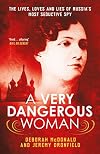
Baroness Moura Budberg was born Maria Zakrevsky, a child of the landed gentry in the Ukraine - her father was a high-level lawyer for the Tsar. Early on she decided she liked the life of wealth and nobility, so she married into a large Estonian aristocratic family - the von Benkendorfs. Moura, though, loved the life in Petrograd, and because she was raised by an English governess, became intimately involved in the affairs of British diplomats and spies, even finding her lifelong love there. show more
But in 1918, the Russian Revolution brought all this luxury and privilege crashing down. Moura survived, often by playing the British and the Soviets off each other, spying for each side against the other. And here her seductiveness came into play as she used her sexuality to integrate into powerful society. And basically, that's how she lived her life from then on - always with a lover to take care of her, always surrounded by society people, always trading on the information and gossip she gathered.
McDonald and Dronfield have written a pretty good biography of a very interesting woman found at the intersection of some very interesting times. I'm not sure I'd go so far as to call her a "very dangerous woman" - though this is a quote from a British intelligence report on her later in life - as she seemed to trade in gossip and rumor more than anything else. (In fairness, there's some indication she may have had her hand in at least a few deaths, including her first husband.) But for a different sort of view on the events of the early to mid-20th century Europe, this is highly recommended. show less
But in 1918, the Russian Revolution brought all this luxury and privilege crashing down. Moura survived, often by playing the British and the Soviets off each other, spying for each side against the other. And here her seductiveness came into play as she used her sexuality to integrate into powerful society. And basically, that's how she lived her life from then on - always with a lover to take care of her, always surrounded by society people, always trading on the information and gossip she gathered.
McDonald and Dronfield have written a pretty good biography of a very interesting woman found at the intersection of some very interesting times. I'm not sure I'd go so far as to call her a "very dangerous woman" - though this is a quote from a British intelligence report on her later in life - as she seemed to trade in gossip and rumor more than anything else. (In fairness, there's some indication she may have had her hand in at least a few deaths, including her first husband.) But for a different sort of view on the events of the early to mid-20th century Europe, this is highly recommended. show less
 This review was written for LibraryThing Early Reviewers.
Lists
Awards


You May Also Like


Associated Authors
Statistics
- Works
- 12
- Also by
- 1
- Members
- 1,192
- Popularity
- #21,563
- Rating
- 4.0
- Reviews
- 41
- ISBNs
- 80
- Languages
- 9
