
Caitlin Davies (1) (1964–)
Author of Place of Reeds: A True African Love Story
For other authors named Caitlin Davies, see the disambiguation page.
About the Author
Image credit: Caitlin Davies
Works by Caitlin Davies
Tagged
Common Knowledge
- Canonical name
- Davies, Caitlin
- Birthdate
- 1964-03-06
- Gender
- female
- Education
- Clark University (MA)
Sussex University (BA) - Occupations
- journalist
memoirist
novelist
teacher - Organizations
- The Independent
Society of Authors
Crime Writers' Association - Relationships
- Davies, Hunter (father)
Forster, Margaret (mother) - Nationality
- UK
- Birthplace
- London, England, UK
- Places of residence
- Maun, Botswana
London, England, UK - Associated Place (for map)
- UK
Members
Reviews
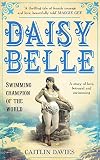
Historical fiction isn't always my bag but certain books in the genre do tend to catch my eye and I think the fact that Daisy Belle is inspired by many real life events really captured my imagination. I ended up being completely captivated by Daisy's story and absolutely loved the book.
Daisy is four when she is first introduced to the pleasures of swimming by her father. Straightaway she feels an affinity with the water, be it at the swimming baths or in the wide open space of the sea. show more Telling her life story to an unknown person who she is watching in the prologue, Daisy puts across in a matter of fact way the many life-changing events she goes through.
Her father is pushy and exploits Daisy, whereas her mother is horrified that Daisy loves swimming. The descriptions of the knitted swimming costumes made me smile but they must have been so uncomfortable to swim in.
I adored Daisy. For a woman in the mid 1800s she was incredibly forward-thinking and held back by convention and by men! I found some of those men difficult to like, such as her father at times, and a man who later on in the story comes to be a major part of Daisy's life. But for all that there were men trying to hold her back (and let's not forget her mother who was totally bound by the conventions of the day and the belief that men should practically think for their womenfolk) there were also men encouraging her along the way, her brother being one of them and another man later on who, again, becomes really important to Daisy.
I couldn't help reading with a sense of awe as Daisy scored achievement after achievement, sticking a metaphorical two fingers up to anyone who tried to stop her.
This is a book that completely put me back into the 1800s. There's a very strong sense of place and I was easily able to imagine, from the beautiful descriptions, the way that Daisy felt whilst in the water, what it was like to be constrained and also to be free.
It's an incredibly evocative read. It's uplifting and moving and in fact I felt like my emotions were thrown up and down as surely as if I myself was out on the ocean wave. It was fascinating to read at the end about the author's research and inspiration, the real-life swimmers on whom Daisy was based, and so good to hear that there were some trail-blazing lady swimmers in the past.
I think Daisy is a character that you cannot help but like. I thought she was wonderful and the story brilliantly written. Caitlin Davies has produced a fantastic novel with Daisy Belle. show less
Daisy is four when she is first introduced to the pleasures of swimming by her father. Straightaway she feels an affinity with the water, be it at the swimming baths or in the wide open space of the sea. show more Telling her life story to an unknown person who she is watching in the prologue, Daisy puts across in a matter of fact way the many life-changing events she goes through.
Her father is pushy and exploits Daisy, whereas her mother is horrified that Daisy loves swimming. The descriptions of the knitted swimming costumes made me smile but they must have been so uncomfortable to swim in.
I adored Daisy. For a woman in the mid 1800s she was incredibly forward-thinking and held back by convention and by men! I found some of those men difficult to like, such as her father at times, and a man who later on in the story comes to be a major part of Daisy's life. But for all that there were men trying to hold her back (and let's not forget her mother who was totally bound by the conventions of the day and the belief that men should practically think for their womenfolk) there were also men encouraging her along the way, her brother being one of them and another man later on who, again, becomes really important to Daisy.
I couldn't help reading with a sense of awe as Daisy scored achievement after achievement, sticking a metaphorical two fingers up to anyone who tried to stop her.
This is a book that completely put me back into the 1800s. There's a very strong sense of place and I was easily able to imagine, from the beautiful descriptions, the way that Daisy felt whilst in the water, what it was like to be constrained and also to be free.
It's an incredibly evocative read. It's uplifting and moving and in fact I felt like my emotions were thrown up and down as surely as if I myself was out on the ocean wave. It was fascinating to read at the end about the author's research and inspiration, the real-life swimmers on whom Daisy was based, and so good to hear that there were some trail-blazing lady swimmers in the past.
I think Daisy is a character that you cannot help but like. I thought she was wonderful and the story brilliantly written. Caitlin Davies has produced a fantastic novel with Daisy Belle. show less
This is a lovely, delightful and inspiring story paying homage to champion women swimmers of the Victorian era. Daisy Belle has an ambition to be the best female swimmer in the world and under the tutelage of her father, Professor Belle, she becomes the star attraction, a rare thing during this era.
Daisy, nick-named the tadpole amongst her ‘family of frogs’, is a brilliant character. She is so determined, fearless and single minded. I loved following Daisy’s story from her very show more beginnings in Margate, to when she started learning her skills at Lambeth Baths, to swimming in the Thames and to her journey to New York with all her trials and tribulations. There is a real sense of time and place, you almost feel like you are there with Daisy. It’s so atmospheric. There are some great photos of swimmers gone by - the costumes were something else! How on earth they swam in them beats me! I think Daisy deserved a medal just for wearing one.
It’s a beautifully written, absorbing and well paced story combining fact with fiction. It was a pleasure to read from beginning to end. I can highly recommend it for all you mermaids and mermen out there, as well as us land mammals. Go on, dive in and submerge yourself in this wonderful tale! You won’t be out of your depth as I’m sure this book is going to make a big splash. show less
Daisy, nick-named the tadpole amongst her ‘family of frogs’, is a brilliant character. She is so determined, fearless and single minded. I loved following Daisy’s story from her very show more beginnings in Margate, to when she started learning her skills at Lambeth Baths, to swimming in the Thames and to her journey to New York with all her trials and tribulations. There is a real sense of time and place, you almost feel like you are there with Daisy. It’s so atmospheric. There are some great photos of swimmers gone by - the costumes were something else! How on earth they swam in them beats me! I think Daisy deserved a medal just for wearing one.
It’s a beautifully written, absorbing and well paced story combining fact with fiction. It was a pleasure to read from beginning to end. I can highly recommend it for all you mermaids and mermen out there, as well as us land mammals. Go on, dive in and submerge yourself in this wonderful tale! You won’t be out of your depth as I’m sure this book is going to make a big splash. show less
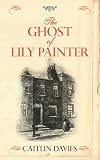
Despite its title, The Ghost of Lily Painter is not really a ghost story; there is a ghost and sections of the story are told from her viewpoint, but it is a story about the various people who have lived in the same house in Holloway, North London, over the years.
In the present, Annie is determined to stay in the house she bought with her husband before they broke up, but doesn't know financially how she is going to do it. Her day to day activities and worries are observed by the resident show more ghost, Lily. These include taking her young daughter Molly to auditions for various acting jobs. She starts researching the history of the house in the local library and uncovering its secrets.
I found Annie as an impecunious middle class single mother quite easy to identify with, and I liked the portrayal of the mother-daughter relationship through the changes of Annie's husband Ben moving out and Molly growing up, no longer being a small child, becoming her own, more independent person with ideas of her own. Then there are the strange ghostly happenings in the house.
The most interesting story though was the one set in 1901, the turn of the century and the end of an era. Lily and her parents lodge with a policeman, Inspector William George and his family. His investigation into baby farmers, women who took in babies for money, often from mother who couldn't keep them for reasons of money and/or the disgrace of illegitimacy, coincides horribly and tragically with the story of Lily Painter, and we learn why she is a restless ghost.
Baby farmers often took a small lump sum to take in a baby, but wouldn't keep them indefinitely, and babies were often allowed to die or deliberately murdered. Caitlin Davies draws on the true story of Amelia Sach and Annie Walters, who were hanged for baby farming in 2003.
I found this story to be an absorbing read, drawing on a very sad piece of women's history. I quite liked the idea of ghostly Lily watching Annie and her daughter, and other occupants of the house, though there was a point when Lily in the first person comments on Annie using her computer, and I wondered how Lily would know what the computer is - I was amused to be thinking about realism in a ghost story! All the characters seemed quite convincing and I was interested in reading about their lives.
The plot is a bit weaker than the characterisation, particularly towards the end when its resolution and tying up involves far too many coincidences, and the story would have been complete and satisfying without at least one of the final revelations.
I would still recommend this book to anyone who likes stories about the links between past and present, and social/London/women's history.
Reviewed through Amazon Vine, 22 June 2011 show less
In the present, Annie is determined to stay in the house she bought with her husband before they broke up, but doesn't know financially how she is going to do it. Her day to day activities and worries are observed by the resident show more ghost, Lily. These include taking her young daughter Molly to auditions for various acting jobs. She starts researching the history of the house in the local library and uncovering its secrets.
I found Annie as an impecunious middle class single mother quite easy to identify with, and I liked the portrayal of the mother-daughter relationship through the changes of Annie's husband Ben moving out and Molly growing up, no longer being a small child, becoming her own, more independent person with ideas of her own. Then there are the strange ghostly happenings in the house.
The most interesting story though was the one set in 1901, the turn of the century and the end of an era. Lily and her parents lodge with a policeman, Inspector William George and his family. His investigation into baby farmers, women who took in babies for money, often from mother who couldn't keep them for reasons of money and/or the disgrace of illegitimacy, coincides horribly and tragically with the story of Lily Painter, and we learn why she is a restless ghost.
Baby farmers often took a small lump sum to take in a baby, but wouldn't keep them indefinitely, and babies were often allowed to die or deliberately murdered. Caitlin Davies draws on the true story of Amelia Sach and Annie Walters, who were hanged for baby farming in 2003.
I found this story to be an absorbing read, drawing on a very sad piece of women's history. I quite liked the idea of ghostly Lily watching Annie and her daughter, and other occupants of the house, though there was a point when Lily in the first person comments on Annie using her computer, and I wondered how Lily would know what the computer is - I was amused to be thinking about realism in a ghost story! All the characters seemed quite convincing and I was interested in reading about their lives.
The plot is a bit weaker than the characterisation, particularly towards the end when its resolution and tying up involves far too many coincidences, and the story would have been complete and satisfying without at least one of the final revelations.
I would still recommend this book to anyone who likes stories about the links between past and present, and social/London/women's history.
Reviewed through Amazon Vine, 22 June 2011 show less
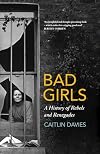
This was very interesting and very readable. A history of Holloway prison might be a bit dry, but it is also a history of the people who were incarcerated there and those who worked there. The case studies of both the prisoners and the staff made this a particularly well balanced piece, it would have been too easy to just focus on the one side of the story. Divided into parts based on time, there are then a number of chapters dealing with different elements at play during that perios. As an show more example, during WW2 there were incarcerated foreign nationals, spies and concientious objectors. All of them had different experiences of the same time period, meaning that there is a quite rounded view of the time presented. The case studies of the prisoners tends to avoid the cause celebres and instead to look at the experience of other women at the time. It makes for a very interesting book, as this is not necessarily what you thought you knew.
the author provides an acknowledgement in which she says her first draft was 3 times as long, and I can imagine it. It was a good length, not so long as to be repetitive, but it felt that there was sufficient detail to be informative. I found this an enjoyable read. show less
the author provides an acknowledgement in which she says her first draft was 3 times as long, and I can imagine it. It was a good length, not so long as to be repetitive, but it felt that there was sufficient detail to be informative. I found this an enjoyable read. show less
Lists
Awards

You May Also Like


Statistics
- Works
- 14
- Members
- 246
- Popularity
- #92,612
- Rating
- 3.7
- Reviews
- 14
- ISBNs
- 53
- Languages
- 3