
Essie Fox
Author of The Somnambulist
Works by Essie Fox
Tagged
Common Knowledge
- Birthdate
- unknown
- Gender
- female
- Short biography
- http://www.essiefox.com/about.html
- Nationality
- UK
- Places of residence
- London, England, UK
Windsor, England, UK - Associated Place (for map)
- England, UK
Members
Reviews
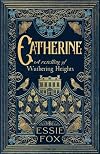
I hesitated to read this book because I read and studied Wuthering Heights, albeit many years ago, and really did not like this tale of obsessive love and revenge. I didn’t like either Catherine or Heathcliff and was just impatient and annoyed with their histrionics. Essie Fox’s version I enjoyed so much more.
Emily Brontë’s novel is told from the perspectives of Nelly Dean, a servant, and Mr. Lockwood, a tenant at Thrushcross Grange. Fox’s version is narrated by Catherine. Eighteen show more years after her death she is freed to roam as a ghost. She speaks of her formative years, especially her childhood friendship with Heathcliff that evolves into an intense romantic love; her marriage to Edgar Linton; and the return of Heathcliff, his marriage to Isabella Linton and his jealousy and obsessive desire for revenge. She also recounts what happened after her death, especially as concerns her daughter Cathy, Linton Heathcliff, and Hareton Earnshaw.
This novel is faithful to the original so anyone familiar with Wuthering Heights will not be surprised with the major events. What is different is that Catherine is able to provide information about events of which Nelly is not cognizant. Both Nelly and Mr. Lockwood are observers and so limited in their knowledge; giving the more intimate perspective of a participant means that Catherine’s behaviour becomes more understandable. Though she remains the impulsive, obsessive and passionate character of Wuthering Heights and though I was still frustrated with some of her choices, I felt I understood her better because I was made aware of her motivations and, later, her regrets. What emerges is a more sympathetic portrait of Catherine.
I’m not always a fan of ghost narration, but it works in this case because of references to spirits in the original. The supernatural element is strong in the Gothic novel. Mr. Lockwood, during a visit at Wuthering Heights, has a strange dream about a weeping, unseen presence begging to be let into the house. And at the end of the book, shepherds and travelers at night claim to have seen Catherine and Heathcliff roaming the dark moors as they did many years earlier.
The author certainly creates the brooding, gloomy atmosphere of the original. There’s the isolated house, with its claustrophobic aura, surrounded by the wild, desolate moors often visited by wind and rain. The turbulent weather just adds an extra chill to one’s reading. I also appreciated the author’s use of language which evokes Brontë’s novel.
Of course there are also some plot additions. For example, Heathcliff’s life during his three-year absence is described; Brontë doesn’t ever explain how he returns so much more refined and so much wealthier. Many readers have speculated about Heathcliff’s background and Fox offers a clarification, though admittedly it relies on a theory suggested by others.
This book, though respectfully faithful to its source, provides a fresh perspective, including a redemptive twist. I found myself more engaged and feeling more sympathy for the characters. Perhaps the subtitle of the novel should use the word enrichment rather than retelling?
Note: Please check out my reader's blog: https://schatjesshelves.blogspot.com/ show less
Emily Brontë’s novel is told from the perspectives of Nelly Dean, a servant, and Mr. Lockwood, a tenant at Thrushcross Grange. Fox’s version is narrated by Catherine. Eighteen show more years after her death she is freed to roam as a ghost. She speaks of her formative years, especially her childhood friendship with Heathcliff that evolves into an intense romantic love; her marriage to Edgar Linton; and the return of Heathcliff, his marriage to Isabella Linton and his jealousy and obsessive desire for revenge. She also recounts what happened after her death, especially as concerns her daughter Cathy, Linton Heathcliff, and Hareton Earnshaw.
This novel is faithful to the original so anyone familiar with Wuthering Heights will not be surprised with the major events. What is different is that Catherine is able to provide information about events of which Nelly is not cognizant. Both Nelly and Mr. Lockwood are observers and so limited in their knowledge; giving the more intimate perspective of a participant means that Catherine’s behaviour becomes more understandable. Though she remains the impulsive, obsessive and passionate character of Wuthering Heights and though I was still frustrated with some of her choices, I felt I understood her better because I was made aware of her motivations and, later, her regrets. What emerges is a more sympathetic portrait of Catherine.
I’m not always a fan of ghost narration, but it works in this case because of references to spirits in the original. The supernatural element is strong in the Gothic novel. Mr. Lockwood, during a visit at Wuthering Heights, has a strange dream about a weeping, unseen presence begging to be let into the house. And at the end of the book, shepherds and travelers at night claim to have seen Catherine and Heathcliff roaming the dark moors as they did many years earlier.
The author certainly creates the brooding, gloomy atmosphere of the original. There’s the isolated house, with its claustrophobic aura, surrounded by the wild, desolate moors often visited by wind and rain. The turbulent weather just adds an extra chill to one’s reading. I also appreciated the author’s use of language which evokes Brontë’s novel.
Of course there are also some plot additions. For example, Heathcliff’s life during his three-year absence is described; Brontë doesn’t ever explain how he returns so much more refined and so much wealthier. Many readers have speculated about Heathcliff’s background and Fox offers a clarification, though admittedly it relies on a theory suggested by others.
This book, though respectfully faithful to its source, provides a fresh perspective, including a redemptive twist. I found myself more engaged and feeling more sympathy for the characters. Perhaps the subtitle of the novel should use the word enrichment rather than retelling?
Note: Please check out my reader's blog: https://schatjesshelves.blogspot.com/ show less

Phoebe is 17 and has lived a fairly sheltered life in the Victorian East End. Her father is dead and her mother, an avowed member of a religious group, shares her house with her sister Cissy, a former singer. Phoebe is close to Cissy and accompanies her to Wilton's Music Hall where Cissy comes out of retirement to perform once more and Phoebe is ropes in to help out. After this Cissy dies and Phoebe is forced to become a 'companion' to Mrs Samuels, a rich but sickly woman. Life for Phoebe is show more never the same again.
Without giving away too much of the plot, this is a pastiche of a high-Victorian gothic novel which links madness, death and the supernatural very well. The only discordant note for me was the continued emphasis on sex, and the consequences. Others have claimed the book as dull, I enjoyed the creation of a strong sense of atmosphere. Whilst the plot seems obvious and a little overwrought, it mirrors the convoluted plots and motifs of the genre it is trying to emulate. Essie Fox is obviously a devotee of the Victorian and that makes this book both a true homage and also a great read on its own. show less
Without giving away too much of the plot, this is a pastiche of a high-Victorian gothic novel which links madness, death and the supernatural very well. The only discordant note for me was the continued emphasis on sex, and the consequences. Others have claimed the book as dull, I enjoyed the creation of a strong sense of atmosphere. Whilst the plot seems obvious and a little overwrought, it mirrors the convoluted plots and motifs of the genre it is trying to emulate. Essie Fox is obviously a devotee of the Victorian and that makes this book both a true homage and also a great read on its own. show less
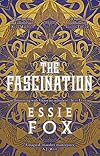
Here's how the publisher's blurb for Essie Fox's The Fascination ends: "Exploring universal themes of love and loss, the power of redemption and what it means to be unique, The Fascination is an evocative, glittering and bewitching gothic novel that brings alive Victorian London and darkness and deception that lies beneath..."
That description nails it. Of course, on its own it doesn't tell you much about the plot or specific characters, but it offers an apt description of what readers can show more experience with this novel. So let me share some of those details in a way that avoid ruining any of the many surprises the novel offers.
The Fascination, set in Victorian England, is built around two communities, each very different from the other, but also with surprising areas of overlap. One community is comprised of a family of outcasts. The Captain, serves as the gentle patriarch of the group, and has gathered around himself an assortment of waifs and outsiders, including people with physical differences that make them a form of entertainment for others. The second community is formed of the wealthy and powerful, mostly men, who are collectors of human oddities with jar after jar filled with nonviable fetuses, anatomical specimens, and strange creatures concocted from mixes of human and animal remains.
At the novel's start, nearly identical twins Keziah and Tilly serve as "models" of the effects of their unscrupulous father's quack remedy. The one way in which the girls aren't identical? Tilly stopped growing at age five. Their father tells his eager audiences that Keziah has always willingly taken his remedy, leading to her obvious good health, while Tilly has always refused to take it, which explains her her small size. This of course is nowhere near the truth, but it makes for a good sales pitch. When their father, in a fit of rage, sells the girls to the Captain, they become part of the family that forms one of the book's communities.
Theo begins his life in the novel's second community. He's bastard whose mother died giving birth to him. Now he's being raised by his wealthy grandfather, who blames the boy for his mother's death and whose real pleasure in life comes from collecting those human and semi-human preserved creatures—which he considers science and sees as proof of his intellectual superiority. When Theo's grandfather fathers a son of his own, Theo is cast out, no longer the heir, no longer afforded the cruel but luxurious home he's been raised in.
You can see the overlap in the Venn diagram of these two communities.
If you enjoy Gothic tales with unexpected heroes and dastardly villains and sudden swings between triumphs and tragedies, you're going to find The Fascination a—well, yes—fascinating read.
I received a free electronic review copy of this title from the publisher via Edelweiss; the opinions are my own. show less
That description nails it. Of course, on its own it doesn't tell you much about the plot or specific characters, but it offers an apt description of what readers can show more experience with this novel. So let me share some of those details in a way that avoid ruining any of the many surprises the novel offers.
The Fascination, set in Victorian England, is built around two communities, each very different from the other, but also with surprising areas of overlap. One community is comprised of a family of outcasts. The Captain, serves as the gentle patriarch of the group, and has gathered around himself an assortment of waifs and outsiders, including people with physical differences that make them a form of entertainment for others. The second community is formed of the wealthy and powerful, mostly men, who are collectors of human oddities with jar after jar filled with nonviable fetuses, anatomical specimens, and strange creatures concocted from mixes of human and animal remains.
At the novel's start, nearly identical twins Keziah and Tilly serve as "models" of the effects of their unscrupulous father's quack remedy. The one way in which the girls aren't identical? Tilly stopped growing at age five. Their father tells his eager audiences that Keziah has always willingly taken his remedy, leading to her obvious good health, while Tilly has always refused to take it, which explains her her small size. This of course is nowhere near the truth, but it makes for a good sales pitch. When their father, in a fit of rage, sells the girls to the Captain, they become part of the family that forms one of the book's communities.
Theo begins his life in the novel's second community. He's bastard whose mother died giving birth to him. Now he's being raised by his wealthy grandfather, who blames the boy for his mother's death and whose real pleasure in life comes from collecting those human and semi-human preserved creatures—which he considers science and sees as proof of his intellectual superiority. When Theo's grandfather fathers a son of his own, Theo is cast out, no longer the heir, no longer afforded the cruel but luxurious home he's been raised in.
You can see the overlap in the Venn diagram of these two communities.
If you enjoy Gothic tales with unexpected heroes and dastardly villains and sudden swings between triumphs and tragedies, you're going to find The Fascination a—well, yes—fascinating read.
I received a free electronic review copy of this title from the publisher via Edelweiss; the opinions are my own. show less
Gothic fiction is not my usual genre, but this book, set in late-Victorian England, kept me entertained.
Keziah and Tilly Lovell are identical twins, except that Tilly has not grown since the age of 5. The girls’ father, a charlatan, sells his 15-year-old daughters to a man known as Captain who accepts them into his “family” of outcasts. Meanwhile, Theo, grandson of Lord Seabrook, a man who has an obsession with “freaks,” is evicted from his childhood home when Lord Seabrook show more remarries. His hopes of becoming a doctor are thereby ended, but he finds employment in Dr. Summerwell’s Museum of Anatomy in London. When Theo meets Captain and the twins, their lives become entwined in surprising ways, but also in ways that put them all in danger.
Chapters alternate between Keziah and Theo’s perspectives. As a result, the reader comes to know them the best because their thoughts are given. There is a diverse cast of other characters, several of whom are considered freaks because they are little people, have a cleft palate, or are excessively hirsute. Their backstories are gradually revealed, and each emerges as a sympathetic character. It is the characters who are “normal” in appearance who prove to be the real monsters; some of them are personifications of pure evil. The morally depraved behaviour of some of these latter characters is almost unbelievable.
The theme examines what it means to be different, other than what is considered “normal.” In Victorian England, physical differences marked a person as a curiousity which made him/her both grotesque and fascinating. Differences also made a person vulnerable to exploitation. All the characters in the novel who are considered oddities face prejudice and injustice.
The novel shows the darker underworld of Victorian entertainment, exposing the grim realities beneath the glamour; one character describes a fair: “’that fair looks very tawdry in the cold ‘ard light of day . . . Like some old whore, all painted up, she shines as bright as Christmas glitter in the hours of the night, but come the dawn she drops her drawers and what is lying underneath is not the most alluring sight.’” In this world, full of deception and squalor, “freaks” are used to titillate the audience.
The contrast to this world is the community which Captain has established. In this chosen family, people receive understanding and support and friendship and love. Members have a sense of trust, belonging and security. Obviously this community is intended to illustrate what happens when people are accepted.
Though the novel is set in a different time period, its theme is relevant to our time. There seems to be an increasing tendency for people to judge and exclude those who are different in some way. It is a good time to be reminded that, despite superficial differences, we are all humans who long to be accepted.
Lovers of gothic fiction will find the typical characteristics of the genre: an atmosphere of mystery and suspense, omens and visions, events that suggest a supernatural connection, and women in distress. The number of coincidences, unexpected connections between a small number of people, bothered me, but the prominence of coincidence in Victorian novels (including those of Charles Dickens, Miss Miller’s hero) influences me to be more accepting of them in this novel set in the Victorian era.
One element that surprised me is the big reveal on the last page. Was this really supposed to be a shock to the reader? I suspected this from the fourth page, and there are many hints throughout so there seems undue emphasis on this revelation. Perhaps it’s just a narrative device to emphasize the blindness of shallow people?
The book is well-researched so has a great sense of time and place. Though it includes some difficult topics like emotional and physical abuse, drug dependency, dark secrets and deceptions, moral corruption, sexual perversion, and violence, the novel suggests a better world is possible.
Note: Please check out my reader's blog (https://schatjesshelves.blogspot.com/) and follow me on Twitter (@DCYakabuski). show less
Keziah and Tilly Lovell are identical twins, except that Tilly has not grown since the age of 5. The girls’ father, a charlatan, sells his 15-year-old daughters to a man known as Captain who accepts them into his “family” of outcasts. Meanwhile, Theo, grandson of Lord Seabrook, a man who has an obsession with “freaks,” is evicted from his childhood home when Lord Seabrook show more remarries. His hopes of becoming a doctor are thereby ended, but he finds employment in Dr. Summerwell’s Museum of Anatomy in London. When Theo meets Captain and the twins, their lives become entwined in surprising ways, but also in ways that put them all in danger.
Chapters alternate between Keziah and Theo’s perspectives. As a result, the reader comes to know them the best because their thoughts are given. There is a diverse cast of other characters, several of whom are considered freaks because they are little people, have a cleft palate, or are excessively hirsute. Their backstories are gradually revealed, and each emerges as a sympathetic character. It is the characters who are “normal” in appearance who prove to be the real monsters; some of them are personifications of pure evil. The morally depraved behaviour of some of these latter characters is almost unbelievable.
The theme examines what it means to be different, other than what is considered “normal.” In Victorian England, physical differences marked a person as a curiousity which made him/her both grotesque and fascinating. Differences also made a person vulnerable to exploitation. All the characters in the novel who are considered oddities face prejudice and injustice.
The novel shows the darker underworld of Victorian entertainment, exposing the grim realities beneath the glamour; one character describes a fair: “’that fair looks very tawdry in the cold ‘ard light of day . . . Like some old whore, all painted up, she shines as bright as Christmas glitter in the hours of the night, but come the dawn she drops her drawers and what is lying underneath is not the most alluring sight.’” In this world, full of deception and squalor, “freaks” are used to titillate the audience.
The contrast to this world is the community which Captain has established. In this chosen family, people receive understanding and support and friendship and love. Members have a sense of trust, belonging and security. Obviously this community is intended to illustrate what happens when people are accepted.
Though the novel is set in a different time period, its theme is relevant to our time. There seems to be an increasing tendency for people to judge and exclude those who are different in some way. It is a good time to be reminded that, despite superficial differences, we are all humans who long to be accepted.
Lovers of gothic fiction will find the typical characteristics of the genre: an atmosphere of mystery and suspense, omens and visions, events that suggest a supernatural connection, and women in distress. The number of coincidences, unexpected connections between a small number of people, bothered me, but the prominence of coincidence in Victorian novels (including those of Charles Dickens, Miss Miller’s hero) influences me to be more accepting of them in this novel set in the Victorian era.
One element that surprised me is the big reveal on the last page. Was this really supposed to be a shock to the reader? I suspected this from the fourth page, and there are many hints throughout so there seems undue emphasis on this revelation. Perhaps it’s just a narrative device to emphasize the blindness of shallow people?
The book is well-researched so has a great sense of time and place. Though it includes some difficult topics like emotional and physical abuse, drug dependency, dark secrets and deceptions, moral corruption, sexual perversion, and violence, the novel suggests a better world is possible.
Note: Please check out my reader's blog (https://schatjesshelves.blogspot.com/) and follow me on Twitter (@DCYakabuski). show less
Lists
Awards


You May Also Like


Associated Authors
Statistics
- Works
- 7
- Members
- 533
- Popularity
- #46,707
- Rating
- 3.5
- Reviews
- 40
- ISBNs
- 34
- Languages
- 2
