
Victoria Clayton
Author of The Winter of Enchantment
About the Author
Disambiguation Notice:
Victoria Clayton is the married name of Victoria Walker.
Works by Victoria Clayton
Associated Works
6 prachtige romans 2 copies
Tagged
Common Knowledge
- Legal name
- Clayton, Victoria (married name)
Walker, Victoria (birth name) - Birthdate
- 1947
- Gender
- female
- Education
- Cambridge Tech
University of Cambridge - Occupations
- novelist
stay-at-home mom - Nationality
- UK
- Birthplace
- Cambridgeshire, England, UK
- Places of residence
- London, England, UK
Wales
Skye, Scotland, UK - Disambiguation notice
- Victoria Clayton is the married name of Victoria Walker.
- Associated Place (for map)
- England, UK
Members
Reviews
21 Mar 2009 - Oxfam shop
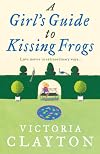
Clayton's novels are always delightful, with this one no exception; her lovely acerbic voice, reminiscent of Barbara Comyns', always lifts her out of the chick-lit canon. The usual scatty heroine, unusual hero, loopy secondary characters and mouldering old houses, mixed with gorgeous descriptions of clothes and food are all here, along with a jolly storyline and lots of atmospheric detail, in this case about the ballet world. Marigold spends the book agonising about show more putting her dancing before her parents, her love life and, in fact, her self, and is a lovely heroine we can root for as she comes to terms with the richer family her family has always been bound to, her mature feelings for her childhood crush and the injury that causes her to lose her greatest love, dancing, for a while. Add in a delightful and very much alive at the end pet rabbit, and there's a recipe for a lovely, escapist and enoyable read. show less
Clayton's novels are always delightful, with this one no exception; her lovely acerbic voice, reminiscent of Barbara Comyns', always lifts her out of the chick-lit canon. The usual scatty heroine, unusual hero, loopy secondary characters and mouldering old houses, mixed with gorgeous descriptions of clothes and food are all here, along with a jolly storyline and lots of atmospheric detail, in this case about the ballet world. Marigold spends the book agonising about show more putting her dancing before her parents, her love life and, in fact, her self, and is a lovely heroine we can root for as she comes to terms with the richer family her family has always been bound to, her mature feelings for her childhood crush and the injury that causes her to lose her greatest love, dancing, for a while. Add in a delightful and very much alive at the end pet rabbit, and there's a recipe for a lovely, escapist and enoyable read. show less

Eons ago, when I was about seven or eight years old, I pulled a very dusty, battered copy of The Winter of Enchantment from the shelves of my tiny school library. The novel was, I remember, the most exciting, magical story I had ever encountered, and I fell in love with it immediately. After finishing it, I felt airy, optimistic, and aglow with the belief that magical things could happen at any given moment.
It's a feeling that has never left me.
For some reason, however, I didn't demand show more that my mother and I rush out to our local children's bookshop (back in the day when those still existed...) and buy a copy of The Winter of Enchantment for my very own. Instead, I chose to believe that the library book was the last remaining copy in existence. I adored the idea that another child, with similar literary tastes, would eventually pull it out and step into the secret world of Sebastian, Melissa, and Mantari. And then, we would be bonded by our wonderful, magical experience. It was an idea that seemed very, very romantic to me, and I was quite pleased with it.
Much later, at the cusp of adulthood, the memory of the magical tale popped into my head. I remembered flashes of the plot, something about a cat, and the fact that the cover of the library copy had been very, very purple. And that was it. The title of the novel had left me; the name of the author had long since been forgotten. Even with the help of the internet, I had no way of finding this novel. My hopes of rereading this masterpiece had been dashed.
And then, somehow, a miracle occurred. A friend, whose googling abilities were much more powerful than my own, somehow managed to track down both of Victoria Walker's works - The Winter of Enchantment and The House Called Hadlows. A small, Scottish publisher by the name of Fidra Books, which specializes in out of print works, had revived them. Joy reigned supreme! Astonishment overwhelmed me! And, most of all, magic was restored to my own, personal realm.
And, I hope, it will never leave. show less
It's a feeling that has never left me.
For some reason, however, I didn't demand show more that my mother and I rush out to our local children's bookshop (back in the day when those still existed...) and buy a copy of The Winter of Enchantment for my very own. Instead, I chose to believe that the library book was the last remaining copy in existence. I adored the idea that another child, with similar literary tastes, would eventually pull it out and step into the secret world of Sebastian, Melissa, and Mantari. And then, we would be bonded by our wonderful, magical experience. It was an idea that seemed very, very romantic to me, and I was quite pleased with it.
Much later, at the cusp of adulthood, the memory of the magical tale popped into my head. I remembered flashes of the plot, something about a cat, and the fact that the cover of the library copy had been very, very purple. And that was it. The title of the novel had left me; the name of the author had long since been forgotten. Even with the help of the internet, I had no way of finding this novel. My hopes of rereading this masterpiece had been dashed.
And then, somehow, a miracle occurred. A friend, whose googling abilities were much more powerful than my own, somehow managed to track down both of Victoria Walker's works - The Winter of Enchantment and The House Called Hadlows. A small, Scottish publisher by the name of Fidra Books, which specializes in out of print works, had revived them. Joy reigned supreme! Astonishment overwhelmed me! And, most of all, magic was restored to my own, personal realm.
And, I hope, it will never leave. show less
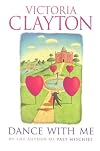
Narrated by Viola Otway who feels herself to be undereducated after quite a privileged upbringing, but wants to earn her own living. She’s taken a job with a charitable group in London that renovates old houses, and lives in shared accommodation with some rather caricatured but interesting people. It’s set in the 1960s, although that’s not immediately obvious.
It’s a character-based novel, with a large cast of intriguing people, many of them somewhat caricatured. There’s some mild show more humour in the interactions, and in Viola’s accident-prone nature, but there are also some serious issues that are touched upon: unexpected pregnancies, class consciousness, post-natal depression, and more.
It’s light reading on the whole, despite these darker themes. Victoria Clayton has a very readable style, peppered with literary (and, in this book, artistic) allusions. I found myself liking Viola very much: she’s willing to learn, and has a warm heart.
The 1960s are remembered for their permissiveness, reflected in this book where discussion of intimacies seems commonplace. I found parts of that a bit sordid, even shocking at times; some, I thought, was unnecessary to the story-line. While I very much enjoyed the book, there were elements that made it start to feel like a soap rather than a novel.
The ending, as with the author’s earlier books, is a bit abrupt, but entirely satisfactory. Recommended, and probably best after the author's earlier books since reference is made to some of the storylines and people concerned. show less
It’s a character-based novel, with a large cast of intriguing people, many of them somewhat caricatured. There’s some mild show more humour in the interactions, and in Viola’s accident-prone nature, but there are also some serious issues that are touched upon: unexpected pregnancies, class consciousness, post-natal depression, and more.
It’s light reading on the whole, despite these darker themes. Victoria Clayton has a very readable style, peppered with literary (and, in this book, artistic) allusions. I found myself liking Viola very much: she’s willing to learn, and has a warm heart.
The 1960s are remembered for their permissiveness, reflected in this book where discussion of intimacies seems commonplace. I found parts of that a bit sordid, even shocking at times; some, I thought, was unnecessary to the story-line. While I very much enjoyed the book, there were elements that made it start to feel like a soap rather than a novel.
The ending, as with the author’s earlier books, is a bit abrupt, but entirely satisfactory. Recommended, and probably best after the author's earlier books since reference is made to some of the storylines and people concerned. show less
Marigold, who narrates this story, is a talented and highly ambitious ballet dancer. But, as we learn in the first sentence, she has broken some bones... this leads to her recuperating in her family home in Northumberland, and that's where most of the novel takes place.
Supposedly a social comedy, this book touches on some quite deep and controversial issues. There's certainly some humour, and quite a few caricatured people, but the writing is excellent and the main characters realistic and show more likeable. I found some of the early scenes rather sordid, but that's not uncommon with Victoria Clayton. By the time I was a few chapters in, I could barely put the book down.
Plenty of references to literature, music and the world of ballet, and some nicely intertwined subplots. A few surprises, some of which I anticipated, but not all of them. All in all, I enjoyed this book very much. show less
Supposedly a social comedy, this book touches on some quite deep and controversial issues. There's certainly some humour, and quite a few caricatured people, but the writing is excellent and the main characters realistic and show more likeable. I found some of the early scenes rather sordid, but that's not uncommon with Victoria Clayton. By the time I was a few chapters in, I could barely put the book down.
Plenty of references to literature, music and the world of ballet, and some nicely intertwined subplots. A few surprises, some of which I anticipated, but not all of them. All in all, I enjoyed this book very much. show less
Lists
You May Also Like


Associated Authors
Statistics
- Works
- 12
- Also by
- 1
- Members
- 861
- Popularity
- #29,720
- Rating
- 3.9
- Reviews
- 26
- ISBNs
- 94
- Languages
- 9
- Favorited
- 5