
Miranda Kaufmann
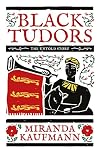
Author of Black Tudors: The Untold Story
About the Author
Works by Miranda Kaufmann
Tagged
Common Knowledge
- Birthdate
- 20th century
- Gender
- female
- Education
- University of Oxford (Christ Church|History)
- Occupations
- historian
journalist - Nationality
- UK
- Places of residence
- London, England, UK
- Associated Place (for map)
- England, UK
Members
Reviews
*I received this book through LibraryThing Early Reviewers.*
I had never really given much thought to Africans living in Tudor England, but I'm glad this book introduced me to a few of their incredibly varied lives. In addition to highlighting less prominent historical figures, this book teases out plenty of details which histories focused on politics often miss. I particularly liked the chapter on the divers who salvaged items from the sunken Mary Rose. I had no idea this had been done in show more the 16th century, let alone that African divers had been recruited for the task. This book is filled with such details and this along with the strong challenge to my preconceived notions about the period made this book a great read. show less
I had never really given much thought to Africans living in Tudor England, but I'm glad this book introduced me to a few of their incredibly varied lives. In addition to highlighting less prominent historical figures, this book teases out plenty of details which histories focused on politics often miss. I particularly liked the chapter on the divers who salvaged items from the sunken Mary Rose. I had no idea this had been done in show more the 16th century, let alone that African divers had been recruited for the task. This book is filled with such details and this along with the strong challenge to my preconceived notions about the period made this book a great read. show less
 This review was written for LibraryThing Early Reviewers.
For most people, Black British history beings with the Windrush. Miranda Kaufmann's book shows that it extends much further back into history—not just into the earlier twentieth century, or even into the nineteenth, but into the sixteenth and seventeenth centuries. There was a small but detectable population of people of African descent in Britain: west African royalty travelling to England for education, trumpeters at Scottish courts, divers and seamstresses and servants and sailors. They show more weren't slaves, but rather free people, who worked for others or owned their own small businesses; they were baptised into the Church of England and intermarried with English people. In both the big picture and the fine details, Kaufmann presents a history sure to undermine many assumptions about what the distant past looked like.
Black Tudors is not a set of conventional biographies. The book is as much about the contexts, the moment in history, within which these people lived as it is about them. As with the case with the vast majority of the inhabitants of early modern Britain, we have only scraps of knowledge about them and their lives. This may frustrate some readers, as may the fact that Kaufmann sometimes roams quite far from the subjects of her book. Despite that, however, this is still a fine, well-written book which adds appreciably to our knowledge of Britain's past. show less
Black Tudors is not a set of conventional biographies. The book is as much about the contexts, the moment in history, within which these people lived as it is about them. As with the case with the vast majority of the inhabitants of early modern Britain, we have only scraps of knowledge about them and their lives. This may frustrate some readers, as may the fact that Kaufmann sometimes roams quite far from the subjects of her book. Despite that, however, this is still a fine, well-written book which adds appreciably to our knowledge of Britain's past. show less

I have read several outstanding books about everyday Tudor lives recently, and I'm delighted to add this one to my bookshelf. Solid and exhaustive research that makes excellent arguments not only for the presence of Africans in the everyday Tudor landscape but also their status as free persons who were ordinary members of the community. I also particularly love that each chapter is devoted to a person of a different social standing, so in addition to presenting the breadth of diversity in show more circumstances that the different subjects enjoyed, we also get a slice of many different sorts of Tudor lives.
Kaufmann also does an excellent job modeling how one researches very specific subjects, and how much information can (and cannot) be inferred from something as brief as a will or a baptismal record. Her contextualization of the information she presents is a real pleasure to read.
Advanced Reader's Copy provided by Edelweiss. show less
Kaufmann also does an excellent job modeling how one researches very specific subjects, and how much information can (and cannot) be inferred from something as brief as a will or a baptismal record. Her contextualization of the information she presents is a real pleasure to read.
Advanced Reader's Copy provided by Edelweiss. show less
Kaufmann has searched through "parish registers of baptisms, marriages and burials; other church and municipal records; tax returns; household accounts; legal records; voyage accounts; wills and inventories; diaries and letters" for her copious evidence of the presence of Africans in Tudor England. This is an essential text for anyone who's interested in - obviously - Tudor England and black history, but also the practice of constructing history, and the interaction of history with show more literature.
The account of each person's life is rigorously contextualized (so, when reading about the prostitute Anne Cobbie, we learn about the practice of prostitution in Tudor times, the history of the word "Moor" as a racial category as well as the additional designation "tawny," interracial relationships, and the history of Africans in Westminster, among other topics). Although we know little about the specific people Kaufmann profiles, we can imagine roughly what their lives might have been like by learning about their professions and their world. This method of bringing hard-to-reach existences to life may annoy some readers, but the details build a new picture of English history that adds up to something pretty important. On the independent singlewoman Cattelena, Kaufmann writes, "Cattelena's small-scale existence . . . does not have the excitement of adventure on the high seas or in the bustling streets of London. Nor can we picture her at the royal court. Yet her very ordinary presence, with her cow, on an English village common, is extraordinary. Imagining her darker face in the pastoral scene forces us to reimagine rural life in this period."
Fascinating, well-written, meticulously researched, and paradigm-shifting. Highly recommended. show less
The account of each person's life is rigorously contextualized (so, when reading about the prostitute Anne Cobbie, we learn about the practice of prostitution in Tudor times, the history of the word "Moor" as a racial category as well as the additional designation "tawny," interracial relationships, and the history of Africans in Westminster, among other topics). Although we know little about the specific people Kaufmann profiles, we can imagine roughly what their lives might have been like by learning about their professions and their world. This method of bringing hard-to-reach existences to life may annoy some readers, but the details build a new picture of English history that adds up to something pretty important. On the independent singlewoman Cattelena, Kaufmann writes, "Cattelena's small-scale existence . . . does not have the excitement of adventure on the high seas or in the bustling streets of London. Nor can we picture her at the royal court. Yet her very ordinary presence, with her cow, on an English village common, is extraordinary. Imagining her darker face in the pastoral scene forces us to reimagine rural life in this period."
Fascinating, well-written, meticulously researched, and paradigm-shifting. Highly recommended. show less
This review was written for LibraryThing Early Reviewers.Awards


You May Also Like


Associated Authors
Statistics
- Works
- 3
- Members
- 442
- Popularity
- #55,391
- Rating
- 3.7
- Reviews
- 22
- ISBNs
- 10
