
Celeste Headlee
Author of Do Nothing: How to Break Away from Overworking, Overdoing, and Underliving
Works by Celeste Headlee
Do Nothing: How to Break Away from Overworking, Overdoing, and Underliving (2020) 333 copies, 10 reviews
Speaking of Race: Why Everybody Needs to Talk About Racism―and How to Do It (2021) 49 copies, 1 review
Associated Works
Tagged
Common Knowledge
- Birthdate
- 1969-12-30
- Gender
- female
- Education
- University of Michigan (MMus|Vocal performance)
Northern Arizona University (BA|Vocal performance) - Occupations
- journalist
speaker
musician - Nationality
- USA
- Birthplace
- Whittier, California, USA
- Associated Place (for map)
- California, USA
Members
Reviews
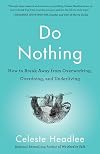
Our cult of ”busy” makes no sense on the surface. We have every convenience, microwaves, fast food, washing machines, and cell phones, but instead of having more time, consumerism increased in a parallel rise and so people worked longer hours just to pay for things they didn't need. We are in constant contact through social media, but we don't have time to meet friends for coffee, much less devote hours to a quilting circle or community club. It's a strange paradox and one that is show more leading to increased loneliness and suicide. The idea that multitasking is bad for you was so interesting. It's horrible for you brain because you're not giving anything your full attention. And women are taught that they should be "good" at it, so we work harder to constantly split our focus.
On tech creators like Steve Jobs not allowing his own children to use iPads, "Would you eat a meal that the chef wouldn't serve to his own family?"
We need to put our devices down & remember that work is not life. Such a good book!
TAKE AWAY POINTS
Increase time perception
Create your ideal schedule
Stop comparing at a distance
Work fewer hours
Schedule leisure
Schedule social
Work in teams
Commit small, selfless acts
Focus on ends not means
“The idea is not that everything should be slower, but that not everything needs to be fast.” show less
On tech creators like Steve Jobs not allowing his own children to use iPads, "Would you eat a meal that the chef wouldn't serve to his own family?"
We need to put our devices down & remember that work is not life. Such a good book!
TAKE AWAY POINTS
Increase time perception
Create your ideal schedule
Stop comparing at a distance
Work fewer hours
Schedule leisure
Schedule social
Work in teams
Commit small, selfless acts
Focus on ends not means
“The idea is not that everything should be slower, but that not everything needs to be fast.” show less
If you've ever wished people were better at actually talking to each other, this book hits the mark. It's packed with practical advice on how to improve the quality of our conversations-& why that matters more than ever.
Headlee draws on her experience as a journalist to explain why we've become terrible at talking to each other & how to fix it. It's not just about communication; it's about connection.
She explores what makes a conversation meaningful, when to speak up, & when it's okay to show more walk away. Her insights feel refreshingly honest & so relevant in a world of constant noise.
This isn't a fluffy self-help book-it's direct, useful, & genuinely makes you want to become a better communicator.
If you want to stop small-talking your way through life & actually connect with people, this one's for you. show less
Headlee draws on her experience as a journalist to explain why we've become terrible at talking to each other & how to fix it. It's not just about communication; it's about connection.
She explores what makes a conversation meaningful, when to speak up, & when it's okay to show more walk away. Her insights feel refreshingly honest & so relevant in a world of constant noise.
This isn't a fluffy self-help book-it's direct, useful, & genuinely makes you want to become a better communicator.
If you want to stop small-talking your way through life & actually connect with people, this one's for you. show less
Journalist and radio host Celeste Headlee, in her well-organized and nicely researched work of non-fiction, "We Need to Talk," suggests that too many of us do not listen attentively or communicate effectively. In an age of instant messaging, surfing the Web, Facebook, and email, how often do we have more than a cursory chat with our relatives, friends, neighbors, and colleagues? Although superficial exchanges are the stuff of everyday life, there are instances when hearing what someone else show more has to say and conveying what you think and feel can be significant. The words you speak and how you express yourself matter when, for example, you meet with your employer about an important work-related issue, discuss a health problem with your medical practitioner, or try to comfort someone who is bereaved. In her introduction, the author relates the tragic story of a plane that crashed, partly because a first officer was too timid to convince his captain that they should delay takeoff because of dangerous icing conditions. Seventy-eight people perished.
Furthermore, Headlee believes that "our world has become so fractured by politics and distracted by technology that having a meaningful conversation can become a challenge." Too often we become irritated when others express contrary opinions. Civility, respect, and tact may go out the window when people get on their soapboxes. In "We Need to Talk," the author offers excellent strategies for improving the quality of our verbal interactions. She touches on such techniques as avoiding distractions; empathizing; acknowledging that we all have biases; disagreeing without becoming disagreeable; getting to the point rather than going off on long-winded tangents; staying in the moment; postponing a conversation gracefully when you are exhausted or out of sorts; admitting that you are wrong and that you don't know all the answers; and listening with an open mind.
This book, based on a well-received TED talk, is breezy, intimate, honest (the author admits her mistakes and tells us what she learned from them), and includes relevant and lively anecdotes that nicely illustrate Headlee's points. Alas, nothing will bring back the lost art of letter-writing--and what a shame that is--but perhaps this well-written and entertaining book will help restore civil dialogue which, these days, appears to be on the brink of extinction. Let's put away our electronic devices and, as Headlee advises, "go talk to someone. Better yet, go listen to someone. People will surprise you." show less
Furthermore, Headlee believes that "our world has become so fractured by politics and distracted by technology that having a meaningful conversation can become a challenge." Too often we become irritated when others express contrary opinions. Civility, respect, and tact may go out the window when people get on their soapboxes. In "We Need to Talk," the author offers excellent strategies for improving the quality of our verbal interactions. She touches on such techniques as avoiding distractions; empathizing; acknowledging that we all have biases; disagreeing without becoming disagreeable; getting to the point rather than going off on long-winded tangents; staying in the moment; postponing a conversation gracefully when you are exhausted or out of sorts; admitting that you are wrong and that you don't know all the answers; and listening with an open mind.
This book, based on a well-received TED talk, is breezy, intimate, honest (the author admits her mistakes and tells us what she learned from them), and includes relevant and lively anecdotes that nicely illustrate Headlee's points. Alas, nothing will bring back the lost art of letter-writing--and what a shame that is--but perhaps this well-written and entertaining book will help restore civil dialogue which, these days, appears to be on the brink of extinction. Let's put away our electronic devices and, as Headlee advises, "go talk to someone. Better yet, go listen to someone. People will surprise you." show less
Journalist and radio host Celeste Headlee, in her well-organized and nicely researched work of non-fiction, "We Need to Talk," suggests that too many of us do not listen attentively or communicate effectively. In an age of instant messaging, surfing the Web, Facebook, and email, how often do we have more than a cursory chat with our relatives, friends, neighbors, and colleagues? Although superficial exchanges are the stuff of everyday life, there are instances when hearing what someone else show more has to say and conveying what you think and feel can be significant. The words you speak and how you express yourself matter when, for example, you meet with your employer about an important work-related issue, discuss a health problem with your medical practitioner, or try to comfort someone who is bereaved. In her introduction, the author relates the tragic story of a plane that crashed, partly because a first officer was too timid to convince his captain that they should delay takeoff because of dangerous icing conditions. Seventy-eight people perished.
Furthermore, Headlee believes that "our world has become so fractured by politics and distracted by technology that having a meaningful conversation can become a challenge." Too often we become irritated when others express contrary opinions. Civility, respect, and tact may go out the window when people get on their soapboxes. In "We Need to Talk," the author offers excellent strategies for improving the quality of our verbal interactions. She touches on such techniques as avoiding distractions; empathizing; acknowledging that we all have biases; disagreeing without becoming disagreeable; getting to the point rather than going off on long-winded tangents; staying in the moment; postponing a conversation gracefully when you are exhausted or out of sorts; admitting that you are wrong and that you don't know all the answers; and listening with an open mind.
This book, based on a well-received TED talk, is breezy, intimate, honest (the author admits her mistakes and tells us what she learned from them), and includes relevant and lively anecdotes that nicely illustrate Headlee's points. Alas, nothing will bring back the lost art of letter-writing--and what a shame that is--but perhaps this well-written and entertaining book will help restore civil dialogue which, these days, appears to be on the brink of extinction. Let's put away our electronic devices and, as Headlee advises, "go talk to someone. Better yet, go listen to someone. People will surprise you." show less
Furthermore, Headlee believes that "our world has become so fractured by politics and distracted by technology that having a meaningful conversation can become a challenge." Too often we become irritated when others express contrary opinions. Civility, respect, and tact may go out the window when people get on their soapboxes. In "We Need to Talk," the author offers excellent strategies for improving the quality of our verbal interactions. She touches on such techniques as avoiding distractions; empathizing; acknowledging that we all have biases; disagreeing without becoming disagreeable; getting to the point rather than going off on long-winded tangents; staying in the moment; postponing a conversation gracefully when you are exhausted or out of sorts; admitting that you are wrong and that you don't know all the answers; and listening with an open mind.
This book, based on a well-received TED talk, is breezy, intimate, honest (the author admits her mistakes and tells us what she learned from them), and includes relevant and lively anecdotes that nicely illustrate Headlee's points. Alas, nothing will bring back the lost art of letter-writing--and what a shame that is--but perhaps this well-written and entertaining book will help restore civil dialogue which, these days, appears to be on the brink of extinction. Let's put away our electronic devices and, as Headlee advises, "go talk to someone. Better yet, go listen to someone. People will surprise you." show less
Lists
Awards

You May Also Like


Associated Authors
Statistics
- Works
- 8
- Also by
- 1
- Members
- 649
- Popularity
- #38,890
- Rating
- 3.9
- Reviews
- 23
- ISBNs
- 31
- Languages
- 3