
Michelle Kuo (2)
Author of Reading with Patrick: A Teacher, a Student, and a Life-Changing Friendship
For other authors named Michelle Kuo, see the disambiguation page.
About the Author
Image credit: Amazon.Com Author Page
Works by Michelle Kuo
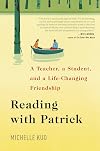
Reading with Patrick: A Teacher, a Student, and a Life-Changing Friendship (2017) — Narrator, some editions — 354 copies, 51 reviews
Tagged
Common Knowledge
- Canonical name
- Kuo, Michelle
- Birthdate
- 19??
- Gender
- female
- Education
- Harvard College (Social Studies and Gender Studies)
Harvard Law School - Occupations
- teacher
lawyer - Organizations
- Teach for America
- Nationality
- USA
- Birthplace
- Kalamazoo, Michigan, USA
- Places of residence
- Helena, Arkansas, USA
- Map Location
- USA
Members
Reviews
This was a better ER book than I skeptically first expected (I thought I'd requested a different book about teaching). This is Michelle Kuo's memoir about teaching difficult black students (ones kicked out of the other schools) in small Helena, Arkansas, and particularly her personal tutoring of Patrick Browning.
In Patrick she sees a bright, talented student who gets lost and regresses unless she stays on him - when he stops coming to school, she goes to his home and cajoles him to come show more back. In protecting his mentally slow sister from an aggressive drunk, he stabs him and the man ends up dying. Kuo goes into prison to tutor Patrick, and there some remarkable progress is made. She gives him books to read and homework, and he takes to books like Frederick Douglas's Narrative of his life, and Marilynne Robinson's Gilead, with thoughtful reactions. But he particularly loves poetry, and begins to learn meter and rhyme and imitate what he's reading, often with surprisingly moving results. An early one: I am red like the sun as it rises/I hear a dog barking as I try to fall asleep/I pretend I don't feel anything/I wonder if I am going to live to be eighteen. He progresses from misspelling everything and knowing few vocabulary words, to increasing and surprising sophistication, until his last poem in the book had me wondering whether Kuo had helped him write it. She was so forthright along the way that she had credibility in presenting this last one.
The book made me think of Flowers for Algernon, particularly with his regressions when she's not pushing him. Along the way, she develops some hard-won and useful ideas about teaching. She's interesting in her own right, a Harvard grad and then a Harvard Law School grad who for a while represents the needy. Her bio discloses that she currently teaches at the American University in Paris and just won a Distinguished Teaching award.
I'm not really sure of the book's overall message, but it was an interesting read. Patrick's acquired love of reading, which he passes onto his daughter, certainly will appeal to bibliophiles. When asked by a NY Times interviewer what she would say to persuade people to read Reading with Patrick, Kuo answered:
"It’s an intimate story about the failure of the education and criminal justice systems and the legacy of slavery; about how literature is for everyone, how books connect people, and the hope that with enough openness and generosity we can do the hard work of knowing each other and ourselves." show less
In Patrick she sees a bright, talented student who gets lost and regresses unless she stays on him - when he stops coming to school, she goes to his home and cajoles him to come show more back. In protecting his mentally slow sister from an aggressive drunk, he stabs him and the man ends up dying. Kuo goes into prison to tutor Patrick, and there some remarkable progress is made. She gives him books to read and homework, and he takes to books like Frederick Douglas's Narrative of his life, and Marilynne Robinson's Gilead, with thoughtful reactions. But he particularly loves poetry, and begins to learn meter and rhyme and imitate what he's reading, often with surprisingly moving results. An early one: I am red like the sun as it rises/I hear a dog barking as I try to fall asleep/I pretend I don't feel anything/I wonder if I am going to live to be eighteen. He progresses from misspelling everything and knowing few vocabulary words, to increasing and surprising sophistication, until his last poem in the book had me wondering whether Kuo had helped him write it. She was so forthright along the way that she had credibility in presenting this last one.
The book made me think of Flowers for Algernon, particularly with his regressions when she's not pushing him. Along the way, she develops some hard-won and useful ideas about teaching. She's interesting in her own right, a Harvard grad and then a Harvard Law School grad who for a while represents the needy. Her bio discloses that she currently teaches at the American University in Paris and just won a Distinguished Teaching award.
I'm not really sure of the book's overall message, but it was an interesting read. Patrick's acquired love of reading, which he passes onto his daughter, certainly will appeal to bibliophiles. When asked by a NY Times interviewer what she would say to persuade people to read Reading with Patrick, Kuo answered:
"It’s an intimate story about the failure of the education and criminal justice systems and the legacy of slavery; about how literature is for everyone, how books connect people, and the hope that with enough openness and generosity we can do the hard work of knowing each other and ourselves." show less
 This review was written for LibraryThing Early Reviewers.
“As I pulled open the door to the courtroom, I notice with surprise, that every word on the sign was spelled correctly.” Reading with Patrick by Michelle Kuo p. 210
Even after leaving her students to attend Harvard Law School, as it would turn out at a time when Patrick, the focus of her time in “the Delta” needed her most; and even after discovering she has been used as “weed” mule by Patrick and his father, Ms. Kuo still has enough self-righteousness to look down upon those show more around her. Ms. Kuo is clueless to how similar she is to the residents of Helena who mock her with “Chinese” sounds. Prejudice is not defined by the color of one’s skin, or even status and power attained in one’s community. Prejudice is born when one’s heart is closed towards others, and it makes no difference who the others are. show less
Even after leaving her students to attend Harvard Law School, as it would turn out at a time when Patrick, the focus of her time in “the Delta” needed her most; and even after discovering she has been used as “weed” mule by Patrick and his father, Ms. Kuo still has enough self-righteousness to look down upon those show more around her. Ms. Kuo is clueless to how similar she is to the residents of Helena who mock her with “Chinese” sounds. Prejudice is not defined by the color of one’s skin, or even status and power attained in one’s community. Prejudice is born when one’s heart is closed towards others, and it makes no difference who the others are. show less
This review was written for LibraryThing Early Reviewers.
This page-turner about race, class, educational opportunity and the legacies of American slavery and Jim Crow still playing out in our public schools is exciting as a personal story and engaging as a study of American public education.
Michelle Kuo's memoir, James Baldwin's Notes of a Native Son, and Eula Biss's essay on teaching in a Harlem public school (including on the morning of September 11, 2001) in her collection Notes from No Man's Land all talk about the pivotal role a teacher is show more expected to have, did have, and/or could have had in their students' lives. Michelle Kuo's nuanced writing about her student's awakening--which he reaches because she patiently even doggedly provided him the mentoring and the voices he needed to read, well beyond the time of her employment in Teach For America--evokes a spectrum of responses in me: anger, admiration, grief, recognition and shame. It's a plus that she is a writer honest and skilled enough to delineate her own misgivings and bouts of egotism. She doesn't display her young student's trauma for the sake of spectacle. show less
This review was written for LibraryThing Early Reviewers.I entered the drawing for this book because I thought my friend would like it; I didn't expect to like it. However, as I began skimming for the purposes of review, I quickly became engrossed by Kuo's clear, expressive writing and insightful empathy (on why Christianity has taken hold in the small Arkansas town where she teaches for two years, she says, "You want to believe that your town's decay is not a mirror of your own prospects, that its dirtiness cannot dirty your inner life, that its show more emptiness does not contradict your own ambitions - that in fact you were born linked to beauty, to the joyous power of resurrection").
I LOVED this book. I was afraid, reading the description, that it would contribute to the cliché of the well-to-do and well-meaning outsider "saving" someone from a different race and a lower class (think Dangerous Minds). But Kuo is aware of that stereotype, and avoids putting her book in this category through rigorously honest self-reflection and a willingness to share times of failure, misunderstanding, and just plain awkwardness - she's not the hero of this story, and neither, really, is her student Patrick Browning. He's messy and human just like everyone else. There's no hero because the story is really about society's failure to take care of its citizens, about missed opportunities, and about literature's ability to make our human frailty bearable.
Yes, Kuo is aware of the cliché, but she writes that during times of self-laceration for thinking she could be important in Patrick's life and maybe even alter its outcome, she nevertheless asks herself, "But then what is a human for? A person must matter to another, it must mean something for two people to have passed time together, to have put work into each other and into becoming more fully themselves. So even if I am wrong, if my dreaming is wrong, the alternative, to not dream at all, seems wrong too." show less
I LOVED this book. I was afraid, reading the description, that it would contribute to the cliché of the well-to-do and well-meaning outsider "saving" someone from a different race and a lower class (think Dangerous Minds). But Kuo is aware of that stereotype, and avoids putting her book in this category through rigorously honest self-reflection and a willingness to share times of failure, misunderstanding, and just plain awkwardness - she's not the hero of this story, and neither, really, is her student Patrick Browning. He's messy and human just like everyone else. There's no hero because the story is really about society's failure to take care of its citizens, about missed opportunities, and about literature's ability to make our human frailty bearable.
Yes, Kuo is aware of the cliché, but she writes that during times of self-laceration for thinking she could be important in Patrick's life and maybe even alter its outcome, she nevertheless asks herself, "But then what is a human for? A person must matter to another, it must mean something for two people to have passed time together, to have put work into each other and into becoming more fully themselves. So even if I am wrong, if my dreaming is wrong, the alternative, to not dream at all, seems wrong too." show less
This review was written for LibraryThing Early Reviewers.Lists
Awards


You May Also Like


Statistics
- Works
- 1
- Members
- 354
- Popularity
- #67,647
- Rating
- 4.0
- Reviews
- 51
- ISBNs
- 19
- Languages
- 1
- Favorited
- 1

