
Stuart Turton
Author of The Seven Deaths of Evelyn Hardcastle
About the Author
Stuart Turton is a freelance travel journalist, born in the United Kingdom. He holds degrees in English and Philosophy. His career has included working in a bookshop, teaching English in Shanghai, working for a technology magazine in London, and writing various travel articles. He is the author of show more The Seven Deaths of Evelyn Hardcastle. The title in the U.S. is, The 7 ½ Deaths of Evelyn Hardcastle. It won the Costa Book Award 2018 category, First Novel. (Bowker Author Biography) show less
Works by Stuart Turton
Associated Works
Tagged
Common Knowledge
- Legal name
- Turton, Stuart
- Birthdate
- 1980
- Gender
- male
- Education
- University of Liverpool (BA|English and Philosophy)
- Occupations
- tech journalist
travel writer
novelist - Agent
- Harry Illingworth (DHH Literary)
- Nationality
- UK
- Birthplace
- Widnes, Cheshire, England, UK
- Places of residence
- Widnes, Cheshire, England, UK
London, England, UK
Shanghai, China
Dubai, United Arab Emirates - Associated Place (for map)
- UK
Members
Reviews
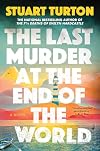
90 years ago the world suffered a catastrophic event. Sinkholes appeared from nowhere and a fog began to blanket the Earth causing most of the population to perish. A small number of people were able to escape to an island where the fog surrounded but did not reach.
Run by the "Elders" - three people who were around when the world collapsed and now don't seem to age - the island operates like a machine. Everyone has something they contribute to the overall wellbeing of the people and the show more island. Although some, like Emory, would say that the villagers trust too much in the Elders. After all, her husband was one such casualty of the Elder's demanding experiments.
Plus, in order to keep the population under control, no one lives past sixty years old (barring of course the aforementioned Elders). So it is on the eve of her grandfather's death that Emory finds a revived sense of wariness where the Elders are concerned. Truthfully, she's always been curious and not one to let a question go unasked - even though she rarely gets a straight answer. This sense of curiosity has made Emory somewhat of an outlier within the village. No one wants to look too hard at their situation, they just want to continue living their lives.
So maybe it's fitting that when one of the Elders is discovered brutally murdered, Emory is the perfect one to lead the investigation. But she's on the clock as the surrounding fog is slowly starting to encroach upon the island.
This book took a bit for me to get into. To the point where I picked it up and started and just wasn't connecting with it so I put it down. When I started listening to the audiobook, that made it unfold better for me, and then once we get to a certain point, I'd say maybe about 15 to 20 percent into the story is when you realize that everything going on has more depth than people simply surviving and rebuilding after collapse of civilization.
Adding to all this is the fact that the story is told to us from the perspective of Abi. An omniscient presence who is able to speak into the villagers' minds and know their thoughts and whereabouts. This presence is always a little ominous. You don't know what Abi is and what her true function is within this society. Therefore, you don't know if you can fully trust her.
Trust is a big thing in this book. Not only trust, but the blind trust we often place upon people in positions of authority willing that they have our best interests at heart. This is not to be a scary allegory of trust and faith, but I think more of a don't be afraid to ask questions kind of thing. Don't be afraid to learn and be curious. Because it quickly becomes apparent that there are things the Elders have been keeping from the villagers.
I thought that Stuart Turton lead us on a wonderful unfolding of this society. Each chapter revealed another layer or another piece of the puzzle working toward putting together the big picture. I never felt like there were too many twists and turns, which to be honest there are a lot. Instead each turn leads nicely along to the next and the next in a way that makes sense. I was rapt by how everything was unfolding.
Now, I think this also sets a pretty high bar that's difficult to top. Meaning, the ending wasn't as revelatory as I was expecting. To be fair, though, I think this says a lot about it being more about the journey than the destination. It also doesn't negate the fact that the book kept me wanting to read on, wanting to find out what was happening next. I wanted to put the pieces together with Emory to see where it lead. Overall, it was very satisfying.
Speaking of the listening aspect of the book as mentioned above, I think an audiobook really works because it leans into the idea that we're being told this story (via Abi). The telling makes sense then if we are literally being read the story aloud. I think it's an interesting choice to have a male narrator essentially speaking for a female entity as Abi is referred to as she throughout the book. I don't think it takes anything away or adds anything, I simply think it's an interesting choice and makes me wonder about the process of choosing narrators for audiobooks. I do feel like there were times it was difficult to know which character was speaking. There was not enough distinction between the differing voices used for each character in some cases, but I'd say Emory is definitely the main protagonist of the book and she does stand out.
Overall, I know that Stuart Turton is known for the clever twists and turns in his stories. Reflecting on this one, I truly was surprised in quite a few places, but not only that, I'm left very curious about the world and left thinking on what the world was like. I appreciated that it's set in an unknown time so we have no idea what year the fog came and overtook everything in relation to our own real world which gives it a timelessness. As though this could all really happen at any moment. So again with that ominous feeling.
Any book that can make me continue to think about it for days going on weeks afterwards is a book worth spending time on. show less
Run by the "Elders" - three people who were around when the world collapsed and now don't seem to age - the island operates like a machine. Everyone has something they contribute to the overall wellbeing of the people and the show more island. Although some, like Emory, would say that the villagers trust too much in the Elders. After all, her husband was one such casualty of the Elder's demanding experiments.
Plus, in order to keep the population under control, no one lives past sixty years old (barring of course the aforementioned Elders). So it is on the eve of her grandfather's death that Emory finds a revived sense of wariness where the Elders are concerned. Truthfully, she's always been curious and not one to let a question go unasked - even though she rarely gets a straight answer. This sense of curiosity has made Emory somewhat of an outlier within the village. No one wants to look too hard at their situation, they just want to continue living their lives.
So maybe it's fitting that when one of the Elders is discovered brutally murdered, Emory is the perfect one to lead the investigation. But she's on the clock as the surrounding fog is slowly starting to encroach upon the island.
This book took a bit for me to get into. To the point where I picked it up and started and just wasn't connecting with it so I put it down. When I started listening to the audiobook, that made it unfold better for me, and then once we get to a certain point, I'd say maybe about 15 to 20 percent into the story is when you realize that everything going on has more depth than people simply surviving and rebuilding after collapse of civilization.
Adding to all this is the fact that the story is told to us from the perspective of Abi. An omniscient presence who is able to speak into the villagers' minds and know their thoughts and whereabouts. This presence is always a little ominous. You don't know what Abi is and what her true function is within this society. Therefore, you don't know if you can fully trust her.
Trust is a big thing in this book. Not only trust, but the blind trust we often place upon people in positions of authority willing that they have our best interests at heart. This is not to be a scary allegory of trust and faith, but I think more of a don't be afraid to ask questions kind of thing. Don't be afraid to learn and be curious. Because it quickly becomes apparent that there are things the Elders have been keeping from the villagers.
I thought that Stuart Turton lead us on a wonderful unfolding of this society. Each chapter revealed another layer or another piece of the puzzle working toward putting together the big picture. I never felt like there were too many twists and turns, which to be honest there are a lot. Instead each turn leads nicely along to the next and the next in a way that makes sense. I was rapt by how everything was unfolding.
Now, I think this also sets a pretty high bar that's difficult to top. Meaning, the ending wasn't as revelatory as I was expecting. To be fair, though, I think this says a lot about it being more about the journey than the destination. It also doesn't negate the fact that the book kept me wanting to read on, wanting to find out what was happening next. I wanted to put the pieces together with Emory to see where it lead. Overall, it was very satisfying.
Speaking of the listening aspect of the book as mentioned above, I think an audiobook really works because it leans into the idea that we're being told this story (via Abi). The telling makes sense then if we are literally being read the story aloud. I think it's an interesting choice to have a male narrator essentially speaking for a female entity as Abi is referred to as she throughout the book. I don't think it takes anything away or adds anything, I simply think it's an interesting choice and makes me wonder about the process of choosing narrators for audiobooks. I do feel like there were times it was difficult to know which character was speaking. There was not enough distinction between the differing voices used for each character in some cases, but I'd say Emory is definitely the main protagonist of the book and she does stand out.
Overall, I know that Stuart Turton is known for the clever twists and turns in his stories. Reflecting on this one, I truly was surprised in quite a few places, but not only that, I'm left very curious about the world and left thinking on what the world was like. I appreciated that it's set in an unknown time so we have no idea what year the fog came and overtook everything in relation to our own real world which gives it a timelessness. As though this could all really happen at any moment. So again with that ominous feeling.
Any book that can make me continue to think about it for days going on weeks afterwards is a book worth spending time on. show less
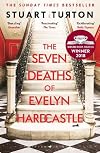
“If this isn’t hell, the devil is surely taking notes.”
Couldn’t have said it better myself. If, after reading the first few chapters, you find yourself feeling a bit discombobulated don’t worry. You’re in good company. Even the MC doesn’t know what the hell is going on.
Imagine you’re playing a real life game of Clue. You wake up one day as Col. Mustard & find yourself sequestered in a decaying old manor full of strangers. All you’ve been told is tonight someone will murder show more Miss Scarlet & your job is to identify the killer. Oh, and you have 24 hours. Because if you fail, tomorrow the whole day will play out again in exactly the same sequence. Except this time you’ll be Prof. Plum. Fail again & you’ll relive the same day as Mr. Green.
Now take this scenario & transfer it to Blackheath, home of the Hardcastles who’ve invited a throng of bickering, scheming guests for a special occasion. The plot & structure of the story is too complex to be reduced to a few sentences here. In this mash-up of Agatha Christie & Groundhog Day, the story centres around daughter Evelyn. And yes, she does die…a lot.
Our narrator & MC is Aiden Bishop although it takes a while before he (and we) know his true identity. There is a deliberate lack of the kind of information that gives a story context such as date & location that leaves you feeling uneasy & slightly uncomfortable. This bonds the reader with Aiden as we both struggle to make sense of his predicament. But eventually the reality of his situation is revealed & it’s a doozy. HIs first task each day is to figure out who he is & then continue his investigation. Luckily, he retains his memories as he jumps from one character to the next. This enables him to slowly put together the pieces as he sees the same events through different eyes. But it’s complicated by a wealth of suspects. With few exceptions, these are despicable people who have cornered the market on lying, cheating, stealing & blackmail. They don’t even seem to like each other & it’s not ’til the end that we understand why they ended up here.
This is not a lazy beach read. It’s a book that requires patience & attention to detail if you want to nail the killer. Hang in there, the payoff comes at the end when all is revealed & the true scope of the story takes shape.
It’s a clever, ambitious mind bender of a story that will test your memory skills. Hats off to the author, I truly don’t know how he managed to keep it all straight & avoid errors in continuity (I can’t help but picture him writing this in a room wallpapered with spreadsheets connected by strings). Ingenious, tense, mystical & haunting…this is a book you’ll think about long after you’ve finished. show less
Couldn’t have said it better myself. If, after reading the first few chapters, you find yourself feeling a bit discombobulated don’t worry. You’re in good company. Even the MC doesn’t know what the hell is going on.
Imagine you’re playing a real life game of Clue. You wake up one day as Col. Mustard & find yourself sequestered in a decaying old manor full of strangers. All you’ve been told is tonight someone will murder show more Miss Scarlet & your job is to identify the killer. Oh, and you have 24 hours. Because if you fail, tomorrow the whole day will play out again in exactly the same sequence. Except this time you’ll be Prof. Plum. Fail again & you’ll relive the same day as Mr. Green.
Now take this scenario & transfer it to Blackheath, home of the Hardcastles who’ve invited a throng of bickering, scheming guests for a special occasion. The plot & structure of the story is too complex to be reduced to a few sentences here. In this mash-up of Agatha Christie & Groundhog Day, the story centres around daughter Evelyn. And yes, she does die…a lot.
Our narrator & MC is Aiden Bishop although it takes a while before he (and we) know his true identity. There is a deliberate lack of the kind of information that gives a story context such as date & location that leaves you feeling uneasy & slightly uncomfortable. This bonds the reader with Aiden as we both struggle to make sense of his predicament. But eventually the reality of his situation is revealed & it’s a doozy. HIs first task each day is to figure out who he is & then continue his investigation. Luckily, he retains his memories as he jumps from one character to the next. This enables him to slowly put together the pieces as he sees the same events through different eyes. But it’s complicated by a wealth of suspects. With few exceptions, these are despicable people who have cornered the market on lying, cheating, stealing & blackmail. They don’t even seem to like each other & it’s not ’til the end that we understand why they ended up here.
This is not a lazy beach read. It’s a book that requires patience & attention to detail if you want to nail the killer. Hang in there, the payoff comes at the end when all is revealed & the true scope of the story takes shape.
It’s a clever, ambitious mind bender of a story that will test your memory skills. Hats off to the author, I truly don’t know how he managed to keep it all straight & avoid errors in continuity (I can’t help but picture him writing this in a room wallpapered with spreadsheets connected by strings). Ingenious, tense, mystical & haunting…this is a book you’ll think about long after you’ve finished. show less
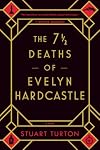
A new twist on the locked room murder mystery!
It’s a bit like Groundhog Day, but Aiden Bishop only has 8 days to solve a murder, or he’ll end up beginning all over again, with no memory of past loops. He wakes up in the same day over and over, but each time he inhabits a different person, and each day Evelyn Hardcastle dies. But figuring out the twists and turns isn’t his only concern, as it seems there’s someone else here determined to stop him at all costs.
This book is super show more unique and incredibly timey-wimey. What did Turton’s notes even look like? I imagine it’s like that scene from It’s Always Sunny where Charlie has his red string conspiracy board. The body swapping has the effect of keeping the narrator fresh as he gains traits from each of his hosts. It moved so fast I was shocked to realize this book was actually 400 pages, I flew through it like it was much shorter.
My only criticism is that I wanted a bit more at the end, which is the same way I felt after his more recent book, The Last Murder at the End of the World. I wanted to see some of the after effects on our characters, how this conclusion impacted them going forward. What do their lives become? I struggled on whether to give this a 4 or not because of that. In the end I decided this book was never meant to take us to a world outside of Blackheath; the focus is squarely on these characters and who they are at Blackheath, not who they are after. So I’m going to rate the book based on the quality of the writing and the wild ride it took me on, and the entirely unique premise. I think Turton absolutely accomplishes what he set out to do, and I think any thriller fans who like a twisty-turny upside-down plot are going to love this. show less
It’s a bit like Groundhog Day, but Aiden Bishop only has 8 days to solve a murder, or he’ll end up beginning all over again, with no memory of past loops. He wakes up in the same day over and over, but each time he inhabits a different person, and each day Evelyn Hardcastle dies. But figuring out the twists and turns isn’t his only concern, as it seems there’s someone else here determined to stop him at all costs.
This book is super show more unique and incredibly timey-wimey. What did Turton’s notes even look like? I imagine it’s like that scene from It’s Always Sunny where Charlie has his red string conspiracy board. The body swapping has the effect of keeping the narrator fresh as he gains traits from each of his hosts. It moved so fast I was shocked to realize this book was actually 400 pages, I flew through it like it was much shorter.
My only criticism is that I wanted a bit more at the end, which is the same way I felt after his more recent book, The Last Murder at the End of the World. I wanted to see some of the after effects on our characters, how this conclusion impacted them going forward. What do their lives become? I struggled on whether to give this a 4 or not because of that. In the end I decided this book was never meant to take us to a world outside of Blackheath; the focus is squarely on these characters and who they are at Blackheath, not who they are after. So I’m going to rate the book based on the quality of the writing and the wild ride it took me on, and the entirely unique premise. I think Turton absolutely accomplishes what he set out to do, and I think any thriller fans who like a twisty-turny upside-down plot are going to love this. show less
The Seven Deaths of Evelyn Hardcastle is a book in which twists and revelations play a large part; and while it undoubtedly will be great fun to re-read with the solution in mind in order to see how Stuart Turton placed all of his numerous puzzle pieces, for a first reading the less you know about what to expect, the better. The novel is an intricately crafted puzzle wrapped in a mystery story pervaded by a dense, creepy atmosphere and some elements of the supernatural or SFnal (we never show more really find out which). If this is something that appeals to you, I’d recommend you to skip this blog posts, skip reading any reviews of the book altogether, and, if at all possible, even avoid reading the back cover description, and instead that just grab the book and start reading. Chances are, you’ll be enjoying the experience a lot.
With that out of the way, I’m not going to hold back on spoilers in what follows, so if you have not read the novel yet, turn back now. The post will also very likely not make much sense to you unless you are somewhat familiar with the novel. You have been warned.
I came upon this novel by way of Leander’s – as always excellent – review, and was sufficiently intrigued to not only grab the book right away but also start reading is shortly afterwards. Seven Deaths (as I’m going to refer to it for the rest of this post) is frequently described as “Groundhog Day meets Agatha Christie” which I think somewhat misses the mark: In Groundhog Day there was a single consciousness re-living the same day over and over, trying to manipulate the day’s events in a way to lead to a different outcome than him returning to the beginning. Applied to Seven Days that would be events as experienced by the Plague Doctor, as he is the one who retains full memory (and, we are told, does indeed experiment with different variations).
With Aiden as our narrator, however, we get something entirely different – it is not so much about events repeating themselves, but rather about seeing them from a different point of view, thus putting them in perspective and revealing sides to them that were previously hidden. For example, right at the beginning of the novel, Aiden (as Dr. Bell) watches a woman named Anna being pursued by a man and being murdered. Later on, we learn the identity of the man, but we also find out that he did not murder the woman and that she wasn’t Anna, but someone else – only to learn even later on that she was not really the someone else we assumed her to be either. This is what make Seven Deaths an occasionally challenging read and the reason reading it requires some focus – events, people, things and their significance keep shifting constantly, pretty much nothing is what it appears to be at first sight but is revealed to be something else entirely or turns out to have a different meaning than first suspected.
While there is an element of repetition, then, it is never quite repetition of the same, as Aiden (and, of course, the reader’s) perspective on events keeps changing, and events appear differently the more knowledge about what is going in Blackheath House is accumulated. If I were to venture my own comparison, I’d go for Judex (the 1963 film by French director Georges Franju as well as the silent film serials by Louis Feuillade that inspired it – the latter interestingly created in roughly the same time period Seven Deaths is set in) as scripted by Steven Moffat.
Judex mainly for the mood (just check out the opening of Franju’s film or anything by Feuillade and you’ll see what I mean), an encroaching, slightly unreal atmosphere that becomes more and more pervasive and dreamlike as the central mystery deepens. There is a sense of things being not quite right from the very start of Seven Deaths, and that weirdness only increases as more and more strange characters appear and inexplicable events occur. It does not let off even when things start to fall in place and both Aiden and the reader begin to catch glimpses of what is really going on in Blackheath House, and does not quite dissolve even at the end, as several questions remain unanswered. It is very deftly Stuart Turton, who may not be the most brilliant stylist but certainly knows how to tell a good yarn and build as well as sustain a creepy atmosphere – it’s all very impressive for a debut novel, and I’m certainly be curious about where he will be going next.
Moffat, of course, for the puzzle box approach to story-telling for which he has become famous; and I can just imagine him reading Turton’s novel and nodding in approval at the way the story unfolds, or rather, unravels, like a complex knot being slowly picked apart strand by strand. This is not only related to the body-hopping part of the narrative, but already begins with there not being only one mystery to solve, but actually two – namely, who murdered Evelyn Hardcastle, and what is the deal with Aiden and his rivals and the Plague Doctor? And things get a lot more complicated before the novel ends, with many more corpses turning up all over the place, and the roles and characters of the – for lack of a better word – “detectives” constantly shifting. A lot of readers seem to have had problems following the plot with all its numerous twists on manifold levels, but for my part I had no such issues – Turton keeps all his balls up in the air and does a marvellous job of juggling all the reveals and surprises. I suppose, though, that it can’t harm to make a spreadsheet keeping track of who is who and is doing what at which time.
At its core, however Seven Deaths is a classic country house mystery (even the time it is set in – not too long after First World War, as indicated by a memory of the trenches from one of the hosts – is very Golden Age), but distorted into something weird. It is also far from cozy, but the utter lack of certainty about pretty much everything concerning both plot and characters is profoundly unsettling, and almost gives the impression of a horror novel. Indeed, if my theory about the mechanism behind events (see below for that) is correct, Seven Deaths could rightly be considered a ghost story. Turton obviously enjoys playing with the conventions and clichés of both genres, adding yet another level of enjoyment to what already is a superb novel.
There are some very minor flaws – mainly, that quite a few open questions and loose ends remain at the end of Seven Deaths. Some of them I think are intentional, some I suspect are not. The one that bugged me the most among the latter: How is it even possible that the people running Blackheath House missed three other murders besides the one in the title? Millicent may have looked like an accident, but Peter and Helena Hardcastle certainly did not – so how could they find out that Evelyn’s death was murder but not even notice the others? Also, how did the white envelope that Aiden uses to blackmail him get under Cunningham’s seat? I may have missed it, but I did not see any of Aiden’s later hosts write it and place it there.
The most glaring omission however, but one which I think is purposefully left open is that we are never told just how the whole mechanism of body-hopping and memory-resetting is supposed to work. True, there are some extremely obscure hints at the end, but they are so few and so vague that they do not even qualify as hand-waving. I do have a theory about that, however and think that we can infer some things from the course of the novel – namely that what is taking place here is not time-travel at all, but that Aiden, Anne and their rival are caught inside some kind of simulation, maybe something analogue to the holo deck from Star Trek, or maybe their consciousness has been transferred to a computer and is now running as a program (think Ubik or Matrix). Either way, I suspect that nothing they are experiencing at Blackheath House is actually real, but only an infinitely looped simulation, with all the other people basically NPCs. Which would also explain why the Plague Doctor – who we are told is basically a decent guy – is so unconcerned about saving Evelyn, and only interested in finding out who her killer is: The real Evelyn Hardcastle is long since dead, and there’d simply be no point in saving a simulation. show less
With that out of the way, I’m not going to hold back on spoilers in what follows, so if you have not read the novel yet, turn back now. The post will also very likely not make much sense to you unless you are somewhat familiar with the novel. You have been warned.
I came upon this novel by way of Leander’s – as always excellent – review, and was sufficiently intrigued to not only grab the book right away but also start reading is shortly afterwards. Seven Deaths (as I’m going to refer to it for the rest of this post) is frequently described as “Groundhog Day meets Agatha Christie” which I think somewhat misses the mark: In Groundhog Day there was a single consciousness re-living the same day over and over, trying to manipulate the day’s events in a way to lead to a different outcome than him returning to the beginning. Applied to Seven Days that would be events as experienced by the Plague Doctor, as he is the one who retains full memory (and, we are told, does indeed experiment with different variations).
With Aiden as our narrator, however, we get something entirely different – it is not so much about events repeating themselves, but rather about seeing them from a different point of view, thus putting them in perspective and revealing sides to them that were previously hidden. For example, right at the beginning of the novel, Aiden (as Dr. Bell) watches a woman named Anna being pursued by a man and being murdered. Later on, we learn the identity of the man, but we also find out that he did not murder the woman and that she wasn’t Anna, but someone else – only to learn even later on that she was not really the someone else we assumed her to be either. This is what make Seven Deaths an occasionally challenging read and the reason reading it requires some focus – events, people, things and their significance keep shifting constantly, pretty much nothing is what it appears to be at first sight but is revealed to be something else entirely or turns out to have a different meaning than first suspected.
While there is an element of repetition, then, it is never quite repetition of the same, as Aiden (and, of course, the reader’s) perspective on events keeps changing, and events appear differently the more knowledge about what is going in Blackheath House is accumulated. If I were to venture my own comparison, I’d go for Judex (the 1963 film by French director Georges Franju as well as the silent film serials by Louis Feuillade that inspired it – the latter interestingly created in roughly the same time period Seven Deaths is set in) as scripted by Steven Moffat.
Judex mainly for the mood (just check out the opening of Franju’s film or anything by Feuillade and you’ll see what I mean), an encroaching, slightly unreal atmosphere that becomes more and more pervasive and dreamlike as the central mystery deepens. There is a sense of things being not quite right from the very start of Seven Deaths, and that weirdness only increases as more and more strange characters appear and inexplicable events occur. It does not let off even when things start to fall in place and both Aiden and the reader begin to catch glimpses of what is really going on in Blackheath House, and does not quite dissolve even at the end, as several questions remain unanswered. It is very deftly Stuart Turton, who may not be the most brilliant stylist but certainly knows how to tell a good yarn and build as well as sustain a creepy atmosphere – it’s all very impressive for a debut novel, and I’m certainly be curious about where he will be going next.
Moffat, of course, for the puzzle box approach to story-telling for which he has become famous; and I can just imagine him reading Turton’s novel and nodding in approval at the way the story unfolds, or rather, unravels, like a complex knot being slowly picked apart strand by strand. This is not only related to the body-hopping part of the narrative, but already begins with there not being only one mystery to solve, but actually two – namely, who murdered Evelyn Hardcastle, and what is the deal with Aiden and his rivals and the Plague Doctor? And things get a lot more complicated before the novel ends, with many more corpses turning up all over the place, and the roles and characters of the – for lack of a better word – “detectives” constantly shifting. A lot of readers seem to have had problems following the plot with all its numerous twists on manifold levels, but for my part I had no such issues – Turton keeps all his balls up in the air and does a marvellous job of juggling all the reveals and surprises. I suppose, though, that it can’t harm to make a spreadsheet keeping track of who is who and is doing what at which time.
At its core, however Seven Deaths is a classic country house mystery (even the time it is set in – not too long after First World War, as indicated by a memory of the trenches from one of the hosts – is very Golden Age), but distorted into something weird. It is also far from cozy, but the utter lack of certainty about pretty much everything concerning both plot and characters is profoundly unsettling, and almost gives the impression of a horror novel. Indeed, if my theory about the mechanism behind events (see below for that) is correct, Seven Deaths could rightly be considered a ghost story. Turton obviously enjoys playing with the conventions and clichés of both genres, adding yet another level of enjoyment to what already is a superb novel.
There are some very minor flaws – mainly, that quite a few open questions and loose ends remain at the end of Seven Deaths. Some of them I think are intentional, some I suspect are not. The one that bugged me the most among the latter: How is it even possible that the people running Blackheath House missed three other murders besides the one in the title? Millicent may have looked like an accident, but Peter and Helena Hardcastle certainly did not – so how could they find out that Evelyn’s death was murder but not even notice the others? Also, how did the white envelope that Aiden uses to blackmail him get under Cunningham’s seat? I may have missed it, but I did not see any of Aiden’s later hosts write it and place it there.
The most glaring omission however, but one which I think is purposefully left open is that we are never told just how the whole mechanism of body-hopping and memory-resetting is supposed to work. True, there are some extremely obscure hints at the end, but they are so few and so vague that they do not even qualify as hand-waving. I do have a theory about that, however and think that we can infer some things from the course of the novel – namely that what is taking place here is not time-travel at all, but that Aiden, Anne and their rival are caught inside some kind of simulation, maybe something analogue to the holo deck from Star Trek, or maybe their consciousness has been transferred to a computer and is now running as a program (think Ubik or Matrix). Either way, I suspect that nothing they are experiencing at Blackheath House is actually real, but only an infinitely looped simulation, with all the other people basically NPCs. Which would also explain why the Plague Doctor – who we are told is basically a decent guy – is so unconcerned about saving Evelyn, and only interested in finding out who her killer is: The real Evelyn Hardcastle is long since dead, and there’d simply be no point in saving a simulation. show less
Lists
Awards


You May Also Like


Associated Authors
Statistics
- Works
- 6
- Also by
- 2
- Members
- 11,900
- Popularity
- #1,974
- Rating
- 3.8
- Reviews
- 502
- ISBNs
- 155
- Languages
- 17
- Favorited
- 2