

Grant Naylor
Author of Red Dwarf: Infinity Welcomes Careful Drivers
About the Author
Disambiguation Notice:
Grant Naylor is a collective author name used by Rob Grant and Doug Naylor for the books they wrote together (and should not be combined with either individual author).
The later book of scripts Son of Soup was compiled and annotated by Rob Grant who is credited as the author with Doug Naylor as other author. John Nazzaro wrote The Making of Red Dwarf.
As Grant Naylor is a gestalt entity, it should have no definitive gender.
Image credit: Rob Grant and Doug Naylor recording DVD commentaries
Series
Works by Grant Naylor
Tagged
Common Knowledge
- Gender
- n/a
- Relationships
- Grant, Rob (co-creator)
Naylor, Doug (co-creator) - Nationality
- UK
- Map Location
- England, UK
- Disambiguation notice
- Grant Naylor is a collective author name used by Rob Grant and Doug Naylor for the books they wrote together (and should not be combined with either individual author).
The later book of scripts Son of Soup was compiled and annotated by Rob Grant who is credited as the author with Doug Naylor as other author. John Nazzaro wrote The Making of Red Dwarf.
As Grant Naylor is a gestalt entity, it should have no definitive gender.
Members
Reviews
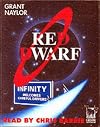
“Red Dwarf” is quite possibly the funniest novel I have ever read. I had never heard about the “Red Dwarf” tv show when I read this, so I was unencumbered by previous knowledge of the show and how the characters were displayed.
Indeed, when I watched a “Red Dwarf” episode a few years later I all but burst into tears at the thought of such a horrible adaption of a hilarious book. I eventually came to lose my hatred for the show but it never equalled the book.
The adventures of a show more slacker who comes to be the last human ever, sharing a vessel in deep space with a hologram of the man he hated with a passion, a robot, an inbred cat that acts like a human and the all but sentient vessel; a set up for laughs if I ever saw one, and not only does “Red Dwarf” hold the unique claim of being the only book I’ve read twice in a row, it was also my go to book whenever I needed a laugh. I’d just open a page at random and be laughing in moments.
The only drawback I have for “Red Dwarf” is its ending; it’s just too dark against the lighter tone of the rest of the book (if you can call humanity being reduced to just one person a lighter tone). show less
Indeed, when I watched a “Red Dwarf” episode a few years later I all but burst into tears at the thought of such a horrible adaption of a hilarious book. I eventually came to lose my hatred for the show but it never equalled the book.
The adventures of a show more slacker who comes to be the last human ever, sharing a vessel in deep space with a hologram of the man he hated with a passion, a robot, an inbred cat that acts like a human and the all but sentient vessel; a set up for laughs if I ever saw one, and not only does “Red Dwarf” hold the unique claim of being the only book I’ve read twice in a row, it was also my go to book whenever I needed a laugh. I’d just open a page at random and be laughing in moments.
The only drawback I have for “Red Dwarf” is its ending; it’s just too dark against the lighter tone of the rest of the book (if you can call humanity being reduced to just one person a lighter tone). show less
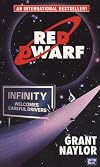
The origin of Red Dwarf is the 1944 play “No Exit” (“Huis Clos” in French), by Jean-Paul Sartre. This remains little known amongst its sci-fi comedy devotees, even though they do occasionally recognise it as existentialist thought.
The influence of this school of philosophy on British and Irish writers has snuck through on rare occasions, e.g. the television series “The Prisoner” and from, less surprisingly, Samuel Beckett, who was living in Paris and surrounded there by bubbling show more existential ideas. Red Dwarf isn’t just existential in the form of asking “what are the components of an individual?” or addressing questions of free will, decisions are not free choices etc., but it also takes its core theme from No Exit, Sartre’s play: Hell is being locked forever in a room with your friends. "L'enfer, c'est les autres" is the more quoted and detached angle, i.e. how your persona appears externally to other minds. Who goes mad first? As reflected in “The Prisoner”, individuality depends on challenge, defence, questioning and refusal to conform.
Although Dark Star also gave the writers a nudge, the prototype of Red Dwarf was the sketch "Dave Hollins: Space Cadet" in the Radio 4 show "Son of Cliche", by the same authors. Alone, the crew all dead, lost in space, only the computer to talk to and going crazy.
Just as in Sartre’s play, Red Dwarf begins with three characters who can’t escape each other’s company. There’s been a radioactive accident on a deep-space mining vessel, a several million year pause to let the half-life of that quarter, eighth and sixteenth-out to safe background levels, then three characters emerge as the last representatives of life from our planet (which is now a huge bundle of consumer garbage).
Character 1 is Dave Lister, a Liverpudlian slob who had no idea what to do with his life and spends most of it eating super-hot curry and drinking lager. He has depth of romantic soul, sarcastic wit and a few other attractive qualities like a warm smile and dreadlocks but his main attribute is a complete lack of respect for authority. Character 2 is Arnold Rimmer, who died and returned as a hologram. Psychiatrists and psychologists could unite their disciplines with this missing link of a mind. Aside from the projection aspect, he’s hardly corporeal at all because he’s built out of pre-silicon chips on his shoulders, prejudices, petty squabbles, false ego, an insane devotion to the chain of command (they’re all dead), obsessive compulsive disorder, need for control and some very immature hang-ups. Character 3 is Holly, the ship’s computer, who has brought Rimmer back as Dave’s companion (many other hologramatic crewmates were available) for a reason that makes perfect sense in existential logic: They are complete opposites, have nothing in common, will detest each other, focus each other’s attention as a rival or opponent and, therefore, this is a strategy to keep Dave Lister sane. Rimmer is already quite mad but Dave can be saved. Holly also pretends to be senile, so Dave has something else to adapt to and deal with. Grow up Dave, we’re all rooting for you.
After some time, Character 4 shows up – an irritatingly subservient mechanoid called Kryten, soon followed by a humanoid descended from the ship’s cat. Dave tries to teach Kryten to challenge authority (Rimmer) and refuse to conform, using existentialism to turn a paper or plastic man into a genuine individual, making him more human. The cat is a superficial being, preening, a contrast to any deep trends in these characters’ thinking. It plays out the characteristics of being a cat (disloyal, selfish, vain). It’s as if the writers wrote thirty character flaws and two assets on playing cards and divided them up amongst the characters. Rimmer got the epic tragic complexity, Lister is despondent that he won’t get any hearts and Holly pretends to forget the rules but is actually a secret Svengali who sees all, sits tight and knows everyone’s game.
T.S. Elliott, a fan of cats and hopelessness (Old Possum/Thomas Becket), produced the famous quote: “This is how the world ends; not with a bang, but with a whimper.” Other visions of the final scenes exist. In “Beyond the Thunderdome”, the world ended with no consumer products at all except, strangely, an awful lot of hair mousse. Red Dwarf (infinity welcomes careful drivers) is deliberately, shocklingly, devoid of all hope in this matter. Not only are the crew without a chance because they’re on a space ship approaching light-speed so far from Earth that they can’t even turn around but they are also all exclusively men, so that’s loneliness… to be followed unavoidably by the end of the species. I wonder, would they trade what’s left of our planet and species for a sympathetic hand job? Some questions should be left unanswered. In a black hole, even physics breaks down.
Sexual tension appears a lot in Red Dwarf, sometimes as the butt of the humour but usually it manifests as Dave’s yearning for the sassy girl he cannot be with, Christine Kochanski (Claire Grogan in the TV series, who is responsible for a version of “Happy Birthday” which will also outlive us). Dave would much prefer to talk to her than he would to Rimmer, but Holly, mortality, different ranks and about seven million years have intervened to keep them apart. This is a very unlikely love story across time and space, like falling in love with a dead person’s image. However, the inviable need for Kochanski is forged into how Dave defines himself as an individual and sum of his experiences (vindaloo, lager, making a rude crevice in a golf bunker, cartoons and the London Jets zero-g sports team). As Claire is kind of my doppelganger, it’s probably a good thing this is no longer on television.
Red Dwarf is designed to be a boys only club, which is necessary to twist the tension to have them bouncing off the walls with no way to release their pent up frustration, although when Norman Lovett (Holly) quit the TV series to go and live in Scotland he was replaced by an actress who tilted the gender balance whilst still being unavailable to Dave because, you’ve guessed it, Holly is short for hologram.
This book is really an amalgam of the first two television series. The first was the best of all, philosophically, then the second had a bigger budget, some outside locations and occasional pretty CGI. When converting it into a book though, the story was laid out in series one and the mind games come from there. There were also only two writers behind this. “Only two” seems odd for a book but ten TV series and one radio series came from just two minds, whereas Star Trek and The Simpsons are both written from a pool of up to three hundred contributors. That’s a feat of imaginative endurance, right there.
This is supposed to be fun but, structurally, the setting is a depressing image, so how does that work? It’s what the British call “black humour”, the wit and absurdity that exists on the brink of oblivion, skating around the plug hole of death. It brings out the best in us – not a clue why. Death concentrates existential ideas beautifully because there’s no more personal or individual thing than death, especially dying alone when the struggle is useless. Making jokes on the steps of the guillotine (the service around here is terrible) is not a very French thing to do, it’s a British thing, so that is the north’s contribution to this cross-channel spectacle.
The TV series might be sweet and sour, the book sad, entropy inevitable and the crew we’ve got to know fated to die but the fun they’ve made to keep them going in this vision of hell is the stuff eternal. That’s it, I’ve sussed it, this book is a failed vision of hell. It would work every time on left-bank intellectuals (now a reflection of their thoughtful forebears and sadly more often concerned with self-aggrandisement). The design flaw in this infernal design was incarcerating comedians because that’s the one unique sub-set of our species who would thrive and make the most of it. Red Dwarf is unmissable stuff. I would give it five stars if the mood at the end hadn’t been dragged down quite to my ankles. show less
The influence of this school of philosophy on British and Irish writers has snuck through on rare occasions, e.g. the television series “The Prisoner” and from, less surprisingly, Samuel Beckett, who was living in Paris and surrounded there by bubbling show more existential ideas. Red Dwarf isn’t just existential in the form of asking “what are the components of an individual?” or addressing questions of free will, decisions are not free choices etc., but it also takes its core theme from No Exit, Sartre’s play: Hell is being locked forever in a room with your friends. "L'enfer, c'est les autres" is the more quoted and detached angle, i.e. how your persona appears externally to other minds. Who goes mad first? As reflected in “The Prisoner”, individuality depends on challenge, defence, questioning and refusal to conform.
Although Dark Star also gave the writers a nudge, the prototype of Red Dwarf was the sketch "Dave Hollins: Space Cadet" in the Radio 4 show "Son of Cliche", by the same authors. Alone, the crew all dead, lost in space, only the computer to talk to and going crazy.
Just as in Sartre’s play, Red Dwarf begins with three characters who can’t escape each other’s company. There’s been a radioactive accident on a deep-space mining vessel, a several million year pause to let the half-life of that quarter, eighth and sixteenth-out to safe background levels, then three characters emerge as the last representatives of life from our planet (which is now a huge bundle of consumer garbage).
Character 1 is Dave Lister, a Liverpudlian slob who had no idea what to do with his life and spends most of it eating super-hot curry and drinking lager. He has depth of romantic soul, sarcastic wit and a few other attractive qualities like a warm smile and dreadlocks but his main attribute is a complete lack of respect for authority. Character 2 is Arnold Rimmer, who died and returned as a hologram. Psychiatrists and psychologists could unite their disciplines with this missing link of a mind. Aside from the projection aspect, he’s hardly corporeal at all because he’s built out of pre-silicon chips on his shoulders, prejudices, petty squabbles, false ego, an insane devotion to the chain of command (they’re all dead), obsessive compulsive disorder, need for control and some very immature hang-ups. Character 3 is Holly, the ship’s computer, who has brought Rimmer back as Dave’s companion (many other hologramatic crewmates were available) for a reason that makes perfect sense in existential logic: They are complete opposites, have nothing in common, will detest each other, focus each other’s attention as a rival or opponent and, therefore, this is a strategy to keep Dave Lister sane. Rimmer is already quite mad but Dave can be saved. Holly also pretends to be senile, so Dave has something else to adapt to and deal with. Grow up Dave, we’re all rooting for you.
After some time, Character 4 shows up – an irritatingly subservient mechanoid called Kryten, soon followed by a humanoid descended from the ship’s cat. Dave tries to teach Kryten to challenge authority (Rimmer) and refuse to conform, using existentialism to turn a paper or plastic man into a genuine individual, making him more human. The cat is a superficial being, preening, a contrast to any deep trends in these characters’ thinking. It plays out the characteristics of being a cat (disloyal, selfish, vain). It’s as if the writers wrote thirty character flaws and two assets on playing cards and divided them up amongst the characters. Rimmer got the epic tragic complexity, Lister is despondent that he won’t get any hearts and Holly pretends to forget the rules but is actually a secret Svengali who sees all, sits tight and knows everyone’s game.
T.S. Elliott, a fan of cats and hopelessness (Old Possum/Thomas Becket), produced the famous quote: “This is how the world ends; not with a bang, but with a whimper.” Other visions of the final scenes exist. In “Beyond the Thunderdome”, the world ended with no consumer products at all except, strangely, an awful lot of hair mousse. Red Dwarf (infinity welcomes careful drivers) is deliberately, shocklingly, devoid of all hope in this matter. Not only are the crew without a chance because they’re on a space ship approaching light-speed so far from Earth that they can’t even turn around but they are also all exclusively men, so that’s loneliness… to be followed unavoidably by the end of the species. I wonder, would they trade what’s left of our planet and species for a sympathetic hand job? Some questions should be left unanswered. In a black hole, even physics breaks down.
Sexual tension appears a lot in Red Dwarf, sometimes as the butt of the humour but usually it manifests as Dave’s yearning for the sassy girl he cannot be with, Christine Kochanski (Claire Grogan in the TV series, who is responsible for a version of “Happy Birthday” which will also outlive us). Dave would much prefer to talk to her than he would to Rimmer, but Holly, mortality, different ranks and about seven million years have intervened to keep them apart. This is a very unlikely love story across time and space, like falling in love with a dead person’s image. However, the inviable need for Kochanski is forged into how Dave defines himself as an individual and sum of his experiences (vindaloo, lager, making a rude crevice in a golf bunker, cartoons and the London Jets zero-g sports team). As Claire is kind of my doppelganger, it’s probably a good thing this is no longer on television.
Red Dwarf is designed to be a boys only club, which is necessary to twist the tension to have them bouncing off the walls with no way to release their pent up frustration, although when Norman Lovett (Holly) quit the TV series to go and live in Scotland he was replaced by an actress who tilted the gender balance whilst still being unavailable to Dave because, you’ve guessed it, Holly is short for hologram.
This book is really an amalgam of the first two television series. The first was the best of all, philosophically, then the second had a bigger budget, some outside locations and occasional pretty CGI. When converting it into a book though, the story was laid out in series one and the mind games come from there. There were also only two writers behind this. “Only two” seems odd for a book but ten TV series and one radio series came from just two minds, whereas Star Trek and The Simpsons are both written from a pool of up to three hundred contributors. That’s a feat of imaginative endurance, right there.
This is supposed to be fun but, structurally, the setting is a depressing image, so how does that work? It’s what the British call “black humour”, the wit and absurdity that exists on the brink of oblivion, skating around the plug hole of death. It brings out the best in us – not a clue why. Death concentrates existential ideas beautifully because there’s no more personal or individual thing than death, especially dying alone when the struggle is useless. Making jokes on the steps of the guillotine (the service around here is terrible) is not a very French thing to do, it’s a British thing, so that is the north’s contribution to this cross-channel spectacle.
The TV series might be sweet and sour, the book sad, entropy inevitable and the crew we’ve got to know fated to die but the fun they’ve made to keep them going in this vision of hell is the stuff eternal. That’s it, I’ve sussed it, this book is a failed vision of hell. It would work every time on left-bank intellectuals (now a reflection of their thoughtful forebears and sadly more often concerned with self-aggrandisement). The design flaw in this infernal design was incarcerating comedians because that’s the one unique sub-set of our species who would thrive and make the most of it. Red Dwarf is unmissable stuff. I would give it five stars if the mood at the end hadn’t been dragged down quite to my ankles. show less
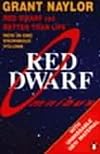
This is a collection containing the first two Red Dwarf novels with a couple of scripts at the end of some early versions of the show. It was published in 1992, though the original novels were first published in 89 and 90.
This is the first book for adults that I ever read. In junior school, I was a massive fan of the TV show because my family watched it, though half the jokes sailed over my head. By senior school, I was reading the novels and hugely influenced by them at the time. Many many show more years later I have come back to this very dogeared book.
My main reaction is that the first novel is a lot better than the second. The first novel has a clear 3-act structure while the second just feels like a list of stuff happening. I don't think a novel has to have a clear structure to be good, but it certainly makes a difference here. I've always just read them as one big story, but now I kind of wish I had them as separate books so I could more easily enjoy and digest them on their own.
Stuck on a mining space ship in deep deep space, our main characters are Lister (probably the last human alive) and Rimmer (a hologram of his dead roommate). Rimmer seems to get a lot more character development than Lister, and in fact I find it hard to really define Lister as a character at all, which is not great after reading two novels about him. The ship's computer Holly gets some definition before almost totally dropping out of the story. The Cat (a man evolved from cats) and Kryten (a mechanoid they pick up) are not much of characters at all, and the second book introduces Talkie Toaster who if anything has more of a presence than the other two. Both Lister and Rimmer are the architects of their own downfalls, but since they both clearly suffer from mental health issues, they are very sympathetic without having to be likeable. That's interesting. I think it is a shame that there is not much character development in the second novel, and what there is kind of happens 'off screen'. For a story about two characters who hate each other but are stuck together, they sure don't actually spend much time together and never really develop in front of us. It is suggested that they do, but we don't get to experience it.Also, not super keen on the 'woman as a reward' trope that we end on.
Book 1 - Red Dwarf: Infinity Welcomes Careful Drivers is hugely inventive and descriptive and shows great skill at setting up a science fiction world. It's so much more in depth and spectacular than the TV sitcom that inspired it and I'm kind of sad that the novels dwindled to nothing when the writing team of Grant and Naylor broke up. Part One is everything before the accident that wipes out the crew. Part Two is after the accident and does borrow heavily from the scripts, and weirdly feels like the weakest section because of it. A lot of quips here and a lot less description. Part Three is... well I guess that's too spoilery, but each of the three parts are very distinct and different from each other. (Episodes that share ideas with this novel are: The End, Future Echoes, Me2, Kryten, Better Than Life.)
Book 2 - Better Than Life starts off by dealing with how the first book ended. But the following parts don't feel like separate parts at all and are rather a series of events that each directly lead on to each other in a way that is so mixed up that it all just feels like a run-on sentence. It also either borrows more heavily from the TV show or has stuff that they later worked into the show , so it's a bit less interesting to read. (Episodes that share ideas with this novel are: Better Than Life, Backwards, Marooned, Polymorph, White Hole).
Where the first novel feels like its own entity that happens to share similarities to the sitcom, the second feels more like episodes sewn together. Weirdly the first book has much more depth than the sitcom but the sitcom seems to have more depth than the second book.Probably doesn't help that book 2 basically has the entire episode of Polymorph as the climax, so not exactly a surprise if you know the show, which if you're reading these novels you probably do. Essentially I think 1 is more character-driven and two is more action-driven and the change is very noticeable.
The most annoying thing is that both books refer to events in the future that never happen. Perhaps they were supposed to happen in the next books in the series, but that never happened due to the writing split, or perhaps it was supposed to be a joke, or it was just a hint at what would happen to the characters one day and the audience doesn't have to be there for it, but I find that a very unsatisfying thing to do to your reader.
At the end of this book is a radio skit which was an early idea for Red Dwarf and the original script for the TV pilot which is awfully similar to the actual script for the first episode. Mildly interesting for fans.
Anyway, although I would be interested to read these books in isolation at some point, I think Red Dwarf: Infinity Welcomes Careful Drivers is a cracking read, Better Than Life is fairly entertaining, and I have no interest in reading the other books that came later which I recall being much worse in quality. An enjoyable blast from the past. show less
This is the first book for adults that I ever read. In junior school, I was a massive fan of the TV show because my family watched it, though half the jokes sailed over my head. By senior school, I was reading the novels and hugely influenced by them at the time. Many many show more years later I have come back to this very dogeared book.
My main reaction is that the first novel is a lot better than the second. The first novel has a clear 3-act structure while the second just feels like a list of stuff happening. I don't think a novel has to have a clear structure to be good, but it certainly makes a difference here. I've always just read them as one big story, but now I kind of wish I had them as separate books so I could more easily enjoy and digest them on their own.
Stuck on a mining space ship in deep deep space, our main characters are Lister (probably the last human alive) and Rimmer (a hologram of his dead roommate). Rimmer seems to get a lot more character development than Lister, and in fact I find it hard to really define Lister as a character at all, which is not great after reading two novels about him. The ship's computer Holly gets some definition before almost totally dropping out of the story. The Cat (a man evolved from cats) and Kryten (a mechanoid they pick up) are not much of characters at all, and the second book introduces Talkie Toaster who if anything has more of a presence than the other two. Both Lister and Rimmer are the architects of their own downfalls, but since they both clearly suffer from mental health issues, they are very sympathetic without having to be likeable. That's interesting. I think it is a shame that there is not much character development in the second novel, and what there is kind of happens 'off screen'. For a story about two characters who hate each other but are stuck together, they sure don't actually spend much time together and never really develop in front of us. It is suggested that they do, but we don't get to experience it.
Book 1 - Red Dwarf: Infinity Welcomes Careful Drivers is hugely inventive and descriptive and shows great skill at setting up a science fiction world. It's so much more in depth and spectacular than the TV sitcom that inspired it and I'm kind of sad that the novels dwindled to nothing when the writing team of Grant and Naylor broke up. Part One is everything before the accident that wipes out the crew. Part Two is after the accident and does borrow heavily from the scripts, and weirdly feels like the weakest section because of it. A lot of quips here and a lot less description. Part Three is... well I guess that's too spoilery, but each of the three parts are very distinct and different from each other. (Episodes that share ideas with this novel are: The End, Future Echoes, Me2, Kryten, Better Than Life.)
Book 2 - Better Than Life starts off by dealing with how the first book ended. But the following parts don't feel like separate parts at all and are rather a series of events that each directly lead on to each other in a way that is so mixed up that it all just feels like a run-on sentence. It also either borrows more heavily from the TV show or has stuff that they later worked into the show , so it's a bit less interesting to read. (Episodes that share ideas with this novel are: Better Than Life, Backwards, Marooned, Polymorph, White Hole).
Where the first novel feels like its own entity that happens to share similarities to the sitcom, the second feels more like episodes sewn together. Weirdly the first book has much more depth than the sitcom but the sitcom seems to have more depth than the second book.
The most annoying thing is that both books refer to events in the future that never happen. Perhaps they were supposed to happen in the next books in the series, but that never happened due to the writing split, or perhaps it was supposed to be a joke, or it was just a hint at what would happen to the characters one day and the audience doesn't have to be there for it, but I find that a very unsatisfying thing to do to your reader.
At the end of this book is a radio skit which was an early idea for Red Dwarf and the original script for the TV pilot which is awfully similar to the actual script for the first episode. Mildly interesting for fans.
Anyway, although I would be interested to read these books in isolation at some point, I think Red Dwarf: Infinity Welcomes Careful Drivers is a cracking read, Better Than Life is fairly entertaining, and I have no interest in reading the other books that came later which I recall being much worse in quality. An enjoyable blast from the past. show less
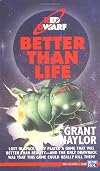
The first third of this book is fucking awesome. The Better Than Life bit. It's amazing. That's why I wanted to read this book. I saw that episode of Red Dwarf, and it was so good, I just had to read the book. And, that part of the book was great, but after that, it turns to complete horseshit.
Better Than Life is the most addictive game ever developed. It's a completely immersive virtual reality game, that allows you to create your own perfect world. Where Lister is living the perfect family show more life, in a small time, with the his lifelong love obsession Kristine. Where Rimmer is rich as balls, with all the hot bitches, and the biggest penis on the planet. Seriously, Rimmer goes to his Personal Body Tailor, because his current body had gotten a bit wrinkled. The tailor asked Rimmer how he likes his new body. "The penis could be a bit bigger," Rimmer says. "Sir, any bigger and it would be dragging on the ground," the tailor responds.
All this is great stuff. But, then they finally get out of the game, and the story turns to trying to rescue their spaceship from colliding with a rogue planet. Oh noes! Who the fuck cares?
Lister gets stranded on a garbage planet, and makes friends with 9 foot long cockroaches. Okay, that's a bit weird. But again, who the fuck cares?
So, here's some advice, if you want to read this book. Stop reading when they get out of Better Than Life. Because after that, you'll just want to kill yourself. show less
Better Than Life is the most addictive game ever developed. It's a completely immersive virtual reality game, that allows you to create your own perfect world. Where Lister is living the perfect family show more life, in a small time, with the his lifelong love obsession Kristine. Where Rimmer is rich as balls, with all the hot bitches, and the biggest penis on the planet. Seriously, Rimmer goes to his Personal Body Tailor, because his current body had gotten a bit wrinkled. The tailor asked Rimmer how he likes his new body. "The penis could be a bit bigger," Rimmer says. "Sir, any bigger and it would be dragging on the ground," the tailor responds.
All this is great stuff. But, then they finally get out of the game, and the story turns to trying to rescue their spaceship from colliding with a rogue planet. Oh noes! Who the fuck cares?
Lister gets stranded on a garbage planet, and makes friends with 9 foot long cockroaches. Okay, that's a bit weird. But again, who the fuck cares?
So, here's some advice, if you want to read this book. Stop reading when they get out of Better Than Life. Because after that, you'll just want to kill yourself. show less
Lists
You May Also Like


Associated Authors
Statistics
- Works
- 7
- Members
- 4,701
- Popularity
- #5,364
- Rating
- 3.9
- Reviews
- 55
- ISBNs
- 31
- Languages
- 4
- Favorited
- 5