
Hans Silvester
Author of Cats in the Sun
About the Author
Works by Hans Silvester
Camargue 2 copies
Andalusische Bilder 1 copy
Tagged
Common Knowledge
- Canonical name
- Silvester, Hans
- Birthdate
- 1938-10-02
- Gender
- male
- Nationality
- Germany (birth)
- Birthplace
- Lörrach, Baden-Württemberg, Deutschland
- Associated Place (for map)
- Lörrach, Baden-Württemberg, Deutschland
Members
Reviews
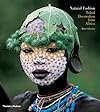
This book is a photographic study of the body ornamentation practices of the Surma and Mursi tribes, who live in the remote Omo valley at the border of Ethiopia, Kenya and Sudan. They make use of body paint and natural accessories such as jewelry and head coverings made of roots, gourds, grasses, flowers, fruits, feathers, shells and leaves. This is not a ritual practice undertaken for special occasions - rather it's something the Surma and Mursi do naturally and daily as an expression of show more creativity born of a close relationship with nature. The photographs in the book are quite beautiful and demonstrate the tribes' varied and playful use of ornamentation and body patterning.
Unfortunately, the text accompanying this book is entirely inadequate to situating this practice culturally. Four paltry pages discuss, in fairly sweeping terms, the materials deployed, the sculptural surface of the body, the social practice of painting one another, the role of body art in seduction, and the unfortunate impact of tourism in turning a natural practice into a self-conscious and paid industry.
Silvester's total lack of self-reflexivity is a bit troubling too. While complaining that these cultures are being destroyed by tourism, he expresses no hint of the book's role in this process - by exhibiting these art practices as spectacle in a glossy book of photographs (of bodies always in danger of being fetishized), does Silvester not participate in promoting tourism to the Omo valley? Likewise, when he describes the destructive economy of the foreign gaze (paying for photos of 'exotic' subjects), he fails to explain the context in which his own photographs were taken. What did his subjects understand of his purpose? Did he pay them? In some areas, payment for photos of tribal body ornamentation has become compulsory. Silvester suggests that threatened violence is not a rare occurrence when expected payment isn't tendered. Given this context, it seems likely that Silvester paid as well. Yet why does he represent commercial photography (his own) as outside of his critique of the destructive impact of these payments on the tribes - who, he argues, are losing touch with the naturalness of their practices and beginning to experience them as artificial performances for outsiders? These important questions are never addressed.
If Natural Fashion is meant to be a visual anthropological record, there really needs to be far more context for understanding the photographs as something more than objects of beauty for the western gaze. That said, the photographs in themselves are fascinating inasmuch as they demonstrate the ubiquity of fashion as a human practice and stunningly illustrate the power and breadth of ornamentation that can be quickly derived from nature. show less
Unfortunately, the text accompanying this book is entirely inadequate to situating this practice culturally. Four paltry pages discuss, in fairly sweeping terms, the materials deployed, the sculptural surface of the body, the social practice of painting one another, the role of body art in seduction, and the unfortunate impact of tourism in turning a natural practice into a self-conscious and paid industry.
Silvester's total lack of self-reflexivity is a bit troubling too. While complaining that these cultures are being destroyed by tourism, he expresses no hint of the book's role in this process - by exhibiting these art practices as spectacle in a glossy book of photographs (of bodies always in danger of being fetishized), does Silvester not participate in promoting tourism to the Omo valley? Likewise, when he describes the destructive economy of the foreign gaze (paying for photos of 'exotic' subjects), he fails to explain the context in which his own photographs were taken. What did his subjects understand of his purpose? Did he pay them? In some areas, payment for photos of tribal body ornamentation has become compulsory. Silvester suggests that threatened violence is not a rare occurrence when expected payment isn't tendered. Given this context, it seems likely that Silvester paid as well. Yet why does he represent commercial photography (his own) as outside of his critique of the destructive impact of these payments on the tribes - who, he argues, are losing touch with the naturalness of their practices and beginning to experience them as artificial performances for outsiders? These important questions are never addressed.
If Natural Fashion is meant to be a visual anthropological record, there really needs to be far more context for understanding the photographs as something more than objects of beauty for the western gaze. That said, the photographs in themselves are fascinating inasmuch as they demonstrate the ubiquity of fashion as a human practice and stunningly illustrate the power and breadth of ornamentation that can be quickly derived from nature. show less

Hans Silvester's Cats in the Sun has long been my favourite cat book - and probably will remain in that position for a long time, if not forever. The photos are amazing. They're set in Greece's Cycladic Islands, which is a gorgeous environment that I imagine must be ideal for cats. But what I love most about these photos is that they're not trying to be cute or clever or anything like that, but just show the cats being... cats - basking in the sun, walking on rooftops and down streets, show more perching in trees, cleaning themselves, begging for scraps from fishermen, hunting, and interacting with dogs, people, and other cats. Apart from the introduction, Cats in the Sun contains no text - and doesn't need it. Each photo (either alone, or as part of a series of photos) tells a story in itself. I highly recommend this book to anyone who loves cats, or as a gift to someone you know who loves them. show less
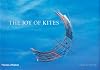
There are many things I did not know about the history of kites, and even ways that they are used today. I enjoyed learning some of this...but most of all I enjoyed the playful creatures and the quirky characters in the stunning photographs of this book. What a visual treat!

This book is the literary equivalent of a long bubble bath and a glass of wine, followed quickly by a Valium chaser and a warm, soft bed.
And at $2.99, it was a lot cheaper than therapy.
And at $2.99, it was a lot cheaper than therapy.
Awards

You May Also Like


Associated Authors
Statistics
- Works
- 57
- Members
- 910
- Popularity
- #28,189
- Rating
- 4.4
- Reviews
- 17
- ISBNs
- 107
- Languages
- 4