
Kirk Wallace Johnson
Author of The Feather Thief: Beauty, Obsession, and the Natural History Heist of the Century
About the Author
Image credit: Kirk Wallace Johnson, 01/03/2020
Works by Kirk Wallace Johnson
The Feather Thief: Beauty, Obsession, and the Natural History Heist of the Century (2018) 1,342 copies, 62 reviews
The Fishermen and the Dragon: Fear, Greed, and a Fight for Justice on the Gulf Coast (2022) 78 copies, 4 reviews
Associated Works
Tagged
Common Knowledge
- Other names
- Johnson, Kirk W.
- Birthdate
- 1970s or 1980s
- Gender
- male
- Education
- Université de Chicago (Diplôme, Langues et civilisations du Proche-Orient, 20 02)
Université américaine du Caire
College of DuPage - Relationships
- Johnson, Thomas L. (Père)
- Nationality
- USA
- Birthplace
- Chicago, Illinois, USA
- Associated Place (for map)
- Illinois, USA
Members
Reviews
The Fishermen and the Dragon: Fear, Greed, and a Fight for Justice on the Gulf Coast by Kirk Wallace Johnson
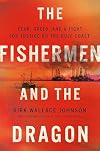
The Fishermen and the Dragon dives into the racist, polluted history of Texas's Gulf Coast. The book primarily deals with the relationship between Vietnamese refugees and racist white shrimpers/Klan members in the gulf, but it also sheds light on a fight against the chemical plants that have had a stranglehold on the economy there in recent decades. Both stories are intertwined in interesting ways, and the epilogue of the book shows the impact of both on the community in the "Cancer show more Belt."
Johnson's strength is in crafting a nonfiction narrative that feels not unlike reading a good novel - there are no dry, dense paragraphs to wade through to get a real understanding of the atmosphere or conditions at the time. With nonfiction, I sometimes find myself overwhelmed with the amount of information thrown at me at once, thus slowing down the read. Johnson balances the line perfectly between providing that information while also making the book unputdownable, despite the blatant and at times sickening displays of racism and violence on show. Although the two narrative threads diverge for a while, they are ultimately brought together in a way that demonstrates the long-lasting effect both have had on the community over the decades.
I'll read anything about Texas history that isn't just about licking the boot, and while I was aware of the pollution issues near the gulf, I had no idea about the disgustingly racist history between Klan-allied white fishermen and the Vietnamese community who just wanted to earn a living. I suppose it shouldn't be a surprise at this point, but I'm glad that Johnson is shedding light on this story, as I'm sure I'm not the only Texan who was unaware of or too young to have seen this part of our history. I'd highly recommend this book to anyone interested in Texas history, Gulf Coast history, or the fight for justice in the South.
Thank you to Viking and NetGalley for providing a copy for review. show less
Johnson's strength is in crafting a nonfiction narrative that feels not unlike reading a good novel - there are no dry, dense paragraphs to wade through to get a real understanding of the atmosphere or conditions at the time. With nonfiction, I sometimes find myself overwhelmed with the amount of information thrown at me at once, thus slowing down the read. Johnson balances the line perfectly between providing that information while also making the book unputdownable, despite the blatant and at times sickening displays of racism and violence on show. Although the two narrative threads diverge for a while, they are ultimately brought together in a way that demonstrates the long-lasting effect both have had on the community over the decades.
I'll read anything about Texas history that isn't just about licking the boot, and while I was aware of the pollution issues near the gulf, I had no idea about the disgustingly racist history between Klan-allied white fishermen and the Vietnamese community who just wanted to earn a living. I suppose it shouldn't be a surprise at this point, but I'm glad that Johnson is shedding light on this story, as I'm sure I'm not the only Texan who was unaware of or too young to have seen this part of our history. I'd highly recommend this book to anyone interested in Texas history, Gulf Coast history, or the fight for justice in the South.
Thank you to Viking and NetGalley for providing a copy for review. show less
The Feather Thief: Beauty, Obsession, and the Natural History Heist of the Century by Kirk Wallace Johnson
In 2009, a 20-year-old music student broke into a branch of the British Museum of Natural History in the small town of Tring and stole nearly 300 bird specimens, some of which had been collected 150 years before by the great naturalist Alfred Russel Wallace, the man co-credited with Charles Darwin as the discoverer of evolution by natural selection.
Why? To use their feathers in the practice of Victorian fly-tying, an artform based on fishing lures that was popularized at a time when exotic show more birds were enthusiastically being hunted to the brink of extinction for their feathers. These days, fly-tiers looking for an "authentic" and "historical" experience will pay fantastic sums for skins and feathers from now-protected species, often without asking any questions about where they come from.
Kirk Wallace Johnson writes here about the heist and its aftermath, the scientific importance of the specimens, the impressive and life-threatening lengths Wallace went to to collect and preserve them, the history of human greed for these birds' feathers, the painstaking and often beautiful hobby/art of fly-tying, the people and personalities involved, and the author's own growing obsession with the case and his somewhat irrational conviction that he could be the one to return the many still-missing skins and feathers to the museum (and never mind the fact that the museum didn't really care at this point, because their scientific value had already been irrecoverably destroyed).
I started this book thinking it would be interestingly quirky little story about an interestingly quirky little crime, but I ended up becoming much, much more engrossed in it than I expected. I think because, like many really good works of non-fiction, it touches on so many topics that reach far beyond its ostensible subject matter. In this case: the role of museums in preserving scientific knowledge through the centuries, colonialism, the human exploitation of nature, criminal justice, obsession, neurodiversity, and the way in which any odd hobby can turn into a dark little rabbit hole if you just dive into it far enough. Thoroughly fascinating stuff! show less
Why? To use their feathers in the practice of Victorian fly-tying, an artform based on fishing lures that was popularized at a time when exotic show more birds were enthusiastically being hunted to the brink of extinction for their feathers. These days, fly-tiers looking for an "authentic" and "historical" experience will pay fantastic sums for skins and feathers from now-protected species, often without asking any questions about where they come from.
Kirk Wallace Johnson writes here about the heist and its aftermath, the scientific importance of the specimens, the impressive and life-threatening lengths Wallace went to to collect and preserve them, the history of human greed for these birds' feathers, the painstaking and often beautiful hobby/art of fly-tying, the people and personalities involved, and the author's own growing obsession with the case and his somewhat irrational conviction that he could be the one to return the many still-missing skins and feathers to the museum (and never mind the fact that the museum didn't really care at this point, because their scientific value had already been irrecoverably destroyed).
I started this book thinking it would be interestingly quirky little story about an interestingly quirky little crime, but I ended up becoming much, much more engrossed in it than I expected. I think because, like many really good works of non-fiction, it touches on so many topics that reach far beyond its ostensible subject matter. In this case: the role of museums in preserving scientific knowledge through the centuries, colonialism, the human exploitation of nature, criminal justice, obsession, neurodiversity, and the way in which any odd hobby can turn into a dark little rabbit hole if you just dive into it far enough. Thoroughly fascinating stuff! show less
The Feather Thief: Beauty, Obsession, and the Natural History Heist of the Century by Kirk Wallace Johnson
A true crime story about the theft of hundreds of rare bird specimens from a British natural history museum by an American college student with an obsession with the art of fly tying. Now that is—if you will pardon the pun—a hook.
Of course, as intriguing as that hook is, I'm not convinced that it deserved book-length treatment—at least, not in the way that Kirk Wallace Johnson approaches the story of Edwin Rist, the felonious flautist. Johnson devotes much of the first half of The show more Feather Thief to exploring the Victorian origins of elaborate fly-tying and the career of the renowned naturalist Alfred Russel Wallace, who collected many of the specimens stolen by Rist. This is not necessarily uninteresting, but it seems to me not the most relevant context for understanding why Rist acted the way he did. For that, you need to think about entitlement.
A shorter, tighter exploration of Edwin Rist as a product of, and exploiter of, a system that privileges upper middle class white men would, I think, have been more successful. It's clearly not an obsessive hobby which drives Rist; it's a sense of entitlement. How else to explain how someone who, with premeditation, stole hundreds of thousands of pounds worth of rare items in order to profit from their destruction; who lied his way to a suspended sentence by pretending to be autistic (and using ableist slurs); who tried to set up someone else as a fall guy—how else to explain how he not only gets a suspended sentence and a reduced fine, but still gets to graduate from a prestigious musical programme, avoid deportation from the U.K., and then apparently secure a visa to work in the EU despite having a criminal record?
And all this while not only failing to show remorse, but demonstrating an active, selfish disdain for others! Perhaps he comes by this naturally. After all, Rist's parents also seem to be a piece of work, having last year landed on the American Humane Society’s “Horrible Hundred” list of puppy mills. But their business still seems to be in operation, just as Rist is still working as a musician in Germany. (Johnson refrains from saying where, but Rist's not that difficult to find—he intermittently uses his middle name as his surname.)
In other words, there's no reassuring, triumph-of-justice ending here. This makes reading The Feather Thief in 2020—when the global consequences of self-serving greed have never been more plain—an especially enraging experience, but maybe an even more fitting one. show less
Of course, as intriguing as that hook is, I'm not convinced that it deserved book-length treatment—at least, not in the way that Kirk Wallace Johnson approaches the story of Edwin Rist, the felonious flautist. Johnson devotes much of the first half of The show more Feather Thief to exploring the Victorian origins of elaborate fly-tying and the career of the renowned naturalist Alfred Russel Wallace, who collected many of the specimens stolen by Rist. This is not necessarily uninteresting, but it seems to me not the most relevant context for understanding why Rist acted the way he did. For that, you need to think about entitlement.
A shorter, tighter exploration of Edwin Rist as a product of, and exploiter of, a system that privileges upper middle class white men would, I think, have been more successful. It's clearly not an obsessive hobby which drives Rist; it's a sense of entitlement. How else to explain how someone who, with premeditation, stole hundreds of thousands of pounds worth of rare items in order to profit from their destruction; who lied his way to a suspended sentence by pretending to be autistic (and using ableist slurs); who tried to set up someone else as a fall guy—how else to explain how he not only gets a suspended sentence and a reduced fine, but still gets to graduate from a prestigious musical programme, avoid deportation from the U.K., and then apparently secure a visa to work in the EU despite having a criminal record?
And all this while not only failing to show remorse, but demonstrating an active, selfish disdain for others! Perhaps he comes by this naturally. After all, Rist's parents also seem to be a piece of work, having last year landed on the American Humane Society’s “Horrible Hundred” list of puppy mills. But their business still seems to be in operation, just as Rist is still working as a musician in Germany. (Johnson refrains from saying where, but Rist's not that difficult to find—he intermittently uses his middle name as his surname.)
In other words, there's no reassuring, triumph-of-justice ending here. This makes reading The Feather Thief in 2020—when the global consequences of self-serving greed have never been more plain—an especially enraging experience, but maybe an even more fitting one. show less
The Feather Thief: Beauty, Obsession, and the Natural History Heist of the Century by Kirk Wallace Johnson
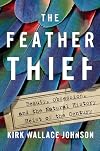
As a fly fisherman, fly tier, and former policeman, I found this book to be an absolute home run!
A young "savant", Edwin Rist, had everything going for him. A brilliant flautist, he and his brother (also a savant), discovered the art of tying Atlantic Salmon flies. Throwing themselves into the hobby, they soon discovered the extreme costs and rarity of some of the required feathers.
These feathers come from some of the rarest birds in the world, such as the Resplendent Quetzal, the King show more Bird of Paradise, the Flame Bowerbird, and the Blue Chatterer. Due to the rarity of the birds, the world came together and enacted a treaty to protect them, and other rare and endangered species. It became known as the "CITES" treaty (Convention on International Trade in Endangered Species of Wild Fauna and Flora). It's the basis for the laws prohibiting trade in ivory, for example, as well as many other animals and plants.
Rather than simply using substitute feathers (which the majority of us make do with), Edwin concocts a scheme to break into the British Natural History Museum. The museum housed a vast collection of the birds that Rist needed feathers from. The bird carcasses were collected over hundreds of years, and were being stored for scientific purposes.
To not give the entire book away, Rist burglarizes the museum, and makes away with hundreds of the rare birds. It seems that he has committed the perfect crime, as he gets away with it for quite a while. Eventually, people become suspicious of Rist, as he seems to have an unending suppy of the feathers for sale (the feathers can be sold, if it can be proven that they were obtained before the CITES treaty went into effect). He is arrested, but is given a slap on the wrist and released.
Along comes the author. A fascinating man in his own right, Johnson is a modern day Sherlock Holmes. He personifies the word persistent. Through an unending, multi-year investigation, Johnson uncovers much more information. The investigation, and it's revelations, really is quite a fascinating story in itself. Again, I don't want to spoil the book for any readers, so I will stop here!
Not only a story of Rist and his exploits, the book covers many other subjects. Early explorers searching for unknown species, the whole phenomenon of "feather fashion", the history of salmon fly tying, and the fly tying community itself. The author melds these subjects into the story seamlessly.
The entire book flows along very well. You cannot help but learn a great deal about many, varied subjects, painlessly. You will find yourself at times pulling for Rist, and yet at times disgusted by his greed. You wonder how the author found the willpower to keep going on in his investigation, when he hits so many dead ends.
All in all, I highly recommend this book. To sportsmen, to crime buffs, to pyschology students, and to anyone else who loves a good mystery.
Thank you to Edelweiss, who provided me a copy of this book in exchange for a fair review. show less
A young "savant", Edwin Rist, had everything going for him. A brilliant flautist, he and his brother (also a savant), discovered the art of tying Atlantic Salmon flies. Throwing themselves into the hobby, they soon discovered the extreme costs and rarity of some of the required feathers.
These feathers come from some of the rarest birds in the world, such as the Resplendent Quetzal, the King show more Bird of Paradise, the Flame Bowerbird, and the Blue Chatterer. Due to the rarity of the birds, the world came together and enacted a treaty to protect them, and other rare and endangered species. It became known as the "CITES" treaty (Convention on International Trade in Endangered Species of Wild Fauna and Flora). It's the basis for the laws prohibiting trade in ivory, for example, as well as many other animals and plants.
Rather than simply using substitute feathers (which the majority of us make do with), Edwin concocts a scheme to break into the British Natural History Museum. The museum housed a vast collection of the birds that Rist needed feathers from. The bird carcasses were collected over hundreds of years, and were being stored for scientific purposes.
To not give the entire book away, Rist burglarizes the museum, and makes away with hundreds of the rare birds. It seems that he has committed the perfect crime, as he gets away with it for quite a while. Eventually, people become suspicious of Rist, as he seems to have an unending suppy of the feathers for sale (the feathers can be sold, if it can be proven that they were obtained before the CITES treaty went into effect). He is arrested, but is given a slap on the wrist and released.
Along comes the author. A fascinating man in his own right, Johnson is a modern day Sherlock Holmes. He personifies the word persistent. Through an unending, multi-year investigation, Johnson uncovers much more information. The investigation, and it's revelations, really is quite a fascinating story in itself. Again, I don't want to spoil the book for any readers, so I will stop here!
Not only a story of Rist and his exploits, the book covers many other subjects. Early explorers searching for unknown species, the whole phenomenon of "feather fashion", the history of salmon fly tying, and the fly tying community itself. The author melds these subjects into the story seamlessly.
The entire book flows along very well. You cannot help but learn a great deal about many, varied subjects, painlessly. You will find yourself at times pulling for Rist, and yet at times disgusted by his greed. You wonder how the author found the willpower to keep going on in his investigation, when he hits so many dead ends.
All in all, I highly recommend this book. To sportsmen, to crime buffs, to pyschology students, and to anyone else who loves a good mystery.
Thank you to Edelweiss, who provided me a copy of this book in exchange for a fair review. show less
Lists
Unhinged History (1)
Awards


You May Also Like


Associated Authors
Statistics
- Works
- 3
- Also by
- 1
- Members
- 1,453
- Popularity
- #17,686
- Rating
- 4.1
- Reviews
- 66
- ISBNs
- 33
- Languages
- 7
