
Clive Hamilton
Author of Affluenza: When Too Much is Never Enough
About the Author
Clive Hamilton is professor of public ethics at Charles Sturt University in Canberra.
Image credit: Copyright Allen & Unwin.
Works by Clive Hamilton
Hidden Hand: Exposing How the Chinese Communist Party is Reshaping the World (2020) 122 copies, 3 reviews
Silencing Dissent: How the Australian government is controlling public opinion and stifling debate (2007) 62 copies, 3 reviews
The Anthropocene and the Global Environmental Crisis: Rethinking modernity in a new epoch (Routledge Environmental Humanities) (2015) — Editor — 16 copies
Associated Works
The Art of Frugal Hedonism: A Guide to Spending Less While Enjoying Everything More (2016) — Foreword, some editions — 147 copies, 5 reviews
Tagged
Common Knowledge
Members
Reviews
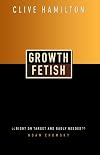
I found this book satisfying for a number of reasons. Firstly, it was lucidly written and clearly explained, with the structure but not the jargon of academia. An excellent combination. Secondly, it brought together a great many thoughts I’d seen articulated elsewhere and/or thought myself in a cohesive whole. Thirdly, I agreed with basically everything in it. The discussions of feminism could have been more nuanced, otherwise I think Hamilton got it right. It is incredibly unusual for a show more book about economics and politics to induce so little criticism on my part. How refreshing! I can’t believe that I hadn’t read this book before, as clearly I should have. It was first published in 2004, after all.
Although the ideas within ‘Growth Fetish’ weren’t new to me, the book synthesised them particularly well. The critique of neoliberal capitalism is a strong, evidence-based one grounded in measures of wellbeing and detriments to the environment and social fabric. As a synthesis, it fits neatly between books that have come before and after it, such as [b:No LOGO|647|No Logo|Naomi Klein|https://images.gr-assets.com/books/1441567914s/647.jpg|621375], [b:Feral: Rewilding the Land, the Sea, and Human Life|17160008|Feral Rewilding the Land, the Sea and Human Life|George Monbiot|https://images.gr-assets.com/books/1388690343s/17160008.jpg|23584322], [b:Combined and Uneven Apocalypse|10975527|Combined and Uneven Apocalypse|Evan Calder Williams|https://images.gr-assets.com/books/1440854195s/10975527.jpg|15893681], and [b:Alone Together: Why We Expect More from Technology and Less from Each Other|8694125|Alone Together Why We Expect More from Technology and Less from Each Other|Sherry Turkle|https://images.gr-assets.com/books/1328841533s/8694125.jpg|13566692]. The element that shows its age is the detailed dissection of Third Way politics, all mention of which seemed to vanish during the financial crisis. Austerity politics has dispensed with the platitudes of the Third Way, instead dismissing all considerations except The Markets and the great idol Growth. As such, the main thesis of the book has become more critical in the past six years.
As well as macroeconomic critique of economic growth as a government’s main policy aim, ‘Growth Fetish’ has much to say on the micro level. In particular, that neoclassical economics has no concept of ‘enough’. In order for firms to continue to grow, new wants must continually be created by marketing and consumers must never be satiated. As well as being ecologically destructive, this imperative is incredibly depressing for individuals. The world is so steeped in advertising for new things that it is very difficult to say, “I have enough”. It is nonetheless essential.
The last few chapters of the book try to set out the pathway to a new post-growth politics and steady state economy, based on individuals freeing their minds from the tyranny of compulsory consumption. This pathway is no detailed blueprint and wouldn’t be sufficient for a political party manifesto, but still provides a more useful outline than almost any other book I’ve read on the topic. There remain many difficult questions, of course. In particular, how to dislodge the massive companies enforcing this cycle of overconsumption. From a climate change perspective, the elephants in the room are energy companies. To avoid catastrophic climate change, such that human civilisation would be fundamentally undermined, these companies will have to abandon billions of pounds worth of coal and oil. Obviously, this goes against their legal duty to maximise stockholder value, as well as their business plans, management ethos, and basic reason to exist. So does climate change require a revision of the basic legal structure of private companies? I wonder. This book doesn’t discuss this specific point, although it does suggest very strict regulation of advertising.
In short, I highly recommend ‘Growth Fetish’ as a thorough, reasoned critique of neoliberal economic ideology and its political manifestations. Not only does the book challenge the tedious rhetoric of political parties, it also inspires self-reflection on our own habits of consumption and whether they actually make us happy. I spend quite a bit of time contemplating my own consumption habits anyway, so reading this encouraged a more detailed analysis. I also like the concept of eudemonism, although I am uncertain how to pronounce it correctly. I wish I could sent this book back in time to my undergraduate self of ten years ago, she would have found it so useful. show less
Although the ideas within ‘Growth Fetish’ weren’t new to me, the book synthesised them particularly well. The critique of neoliberal capitalism is a strong, evidence-based one grounded in measures of wellbeing and detriments to the environment and social fabric. As a synthesis, it fits neatly between books that have come before and after it, such as [b:No LOGO|647|No Logo|Naomi Klein|https://images.gr-assets.com/books/1441567914s/647.jpg|621375], [b:Feral: Rewilding the Land, the Sea, and Human Life|17160008|Feral Rewilding the Land, the Sea and Human Life|George Monbiot|https://images.gr-assets.com/books/1388690343s/17160008.jpg|23584322], [b:Combined and Uneven Apocalypse|10975527|Combined and Uneven Apocalypse|Evan Calder Williams|https://images.gr-assets.com/books/1440854195s/10975527.jpg|15893681], and [b:Alone Together: Why We Expect More from Technology and Less from Each Other|8694125|Alone Together Why We Expect More from Technology and Less from Each Other|Sherry Turkle|https://images.gr-assets.com/books/1328841533s/8694125.jpg|13566692]. The element that shows its age is the detailed dissection of Third Way politics, all mention of which seemed to vanish during the financial crisis. Austerity politics has dispensed with the platitudes of the Third Way, instead dismissing all considerations except The Markets and the great idol Growth. As such, the main thesis of the book has become more critical in the past six years.
As well as macroeconomic critique of economic growth as a government’s main policy aim, ‘Growth Fetish’ has much to say on the micro level. In particular, that neoclassical economics has no concept of ‘enough’. In order for firms to continue to grow, new wants must continually be created by marketing and consumers must never be satiated. As well as being ecologically destructive, this imperative is incredibly depressing for individuals. The world is so steeped in advertising for new things that it is very difficult to say, “I have enough”. It is nonetheless essential.
The last few chapters of the book try to set out the pathway to a new post-growth politics and steady state economy, based on individuals freeing their minds from the tyranny of compulsory consumption. This pathway is no detailed blueprint and wouldn’t be sufficient for a political party manifesto, but still provides a more useful outline than almost any other book I’ve read on the topic. There remain many difficult questions, of course. In particular, how to dislodge the massive companies enforcing this cycle of overconsumption. From a climate change perspective, the elephants in the room are energy companies. To avoid catastrophic climate change, such that human civilisation would be fundamentally undermined, these companies will have to abandon billions of pounds worth of coal and oil. Obviously, this goes against their legal duty to maximise stockholder value, as well as their business plans, management ethos, and basic reason to exist. So does climate change require a revision of the basic legal structure of private companies? I wonder. This book doesn’t discuss this specific point, although it does suggest very strict regulation of advertising.
In short, I highly recommend ‘Growth Fetish’ as a thorough, reasoned critique of neoliberal economic ideology and its political manifestations. Not only does the book challenge the tedious rhetoric of political parties, it also inspires self-reflection on our own habits of consumption and whether they actually make us happy. I spend quite a bit of time contemplating my own consumption habits anyway, so reading this encouraged a more detailed analysis. I also like the concept of eudemonism, although I am uncertain how to pronounce it correctly. I wish I could sent this book back in time to my undergraduate self of ten years ago, she would have found it so useful. show less

Power Without Wisdom
In the Preface to Defiant Earth, Clive Hamilton asks a hard question: if science says the climate is changing cataclysmically, why are we still making plans as if it weren’t? Why do we study the century of China, the future need for a 15 hour workweek, or life under the internet of things? Why are we whistling past the graveyard? This would make for a great book. Unfortunately, not this book. Instead, this book is about giving Homo Sapiens (HS) full “credit” for show more actually changing the Earth System itself. That is huge, he says, and makes HS outstanding. This is a book of philosophy, not science.
The Anthropocene began in 1945, when the chart began to look like a hockey stick. For a couple of hundred years before, HS polluted, but its numbers were so small and technology so minimal, it made no measurable difference to the Earth System. Hamilton’s argument is that the Anthropocene is a full rupture, not a continuation. It is too late to go back to the Holocene. That’s over, and spraying shrapnel into the atmosphere will not bring it back. From now on, everything HS does will result in an angry response. While HS tinkers with the balance of nature, the Earth System, which includes everything, responds with far more power.
Hamilton says HS deserves “credit” for its “agency” in the Anthropocene, because not only has it has caused this rupture, but HS could decide not to continue if it so desired. This is of course absurd and nothing in the book backs it up. HS had no idea what it was doing when it loused up the environment, and is and has always been out of control. HS could in no way stop this, and has never been able to even alter the course. Had HS had the simple decent courtesy to control its own numbers, then it could have remained inside the Earth System, and the system could have dealt with its effluent. But HS was too ignorant to do even that little.
Doubling down, two thirds through Defiant Earth, the real arrogance comes out, as Hamilton claims HS gives Earth meaning, and without HS Earth is nothing.
From what I see, Earth is like a wet dog, about to shake the annoying water out of its fur. When it has rid itself of the irritant, the violent storm will calm. It doesn’t matter to Earth or Earth System science that Homo Sapiens is the smartest thing it ever produced. It is an irritant, breaking the rules and operating outside the system. Credit is not a concept I would associate with these random, irresponsible and uncoordinated acts.
Hamilton argues thoroughly and I disagree with him totally.
David Wineberg show less
In the Preface to Defiant Earth, Clive Hamilton asks a hard question: if science says the climate is changing cataclysmically, why are we still making plans as if it weren’t? Why do we study the century of China, the future need for a 15 hour workweek, or life under the internet of things? Why are we whistling past the graveyard? This would make for a great book. Unfortunately, not this book. Instead, this book is about giving Homo Sapiens (HS) full “credit” for show more actually changing the Earth System itself. That is huge, he says, and makes HS outstanding. This is a book of philosophy, not science.
The Anthropocene began in 1945, when the chart began to look like a hockey stick. For a couple of hundred years before, HS polluted, but its numbers were so small and technology so minimal, it made no measurable difference to the Earth System. Hamilton’s argument is that the Anthropocene is a full rupture, not a continuation. It is too late to go back to the Holocene. That’s over, and spraying shrapnel into the atmosphere will not bring it back. From now on, everything HS does will result in an angry response. While HS tinkers with the balance of nature, the Earth System, which includes everything, responds with far more power.
Hamilton says HS deserves “credit” for its “agency” in the Anthropocene, because not only has it has caused this rupture, but HS could decide not to continue if it so desired. This is of course absurd and nothing in the book backs it up. HS had no idea what it was doing when it loused up the environment, and is and has always been out of control. HS could in no way stop this, and has never been able to even alter the course. Had HS had the simple decent courtesy to control its own numbers, then it could have remained inside the Earth System, and the system could have dealt with its effluent. But HS was too ignorant to do even that little.
Doubling down, two thirds through Defiant Earth, the real arrogance comes out, as Hamilton claims HS gives Earth meaning, and without HS Earth is nothing.
From what I see, Earth is like a wet dog, about to shake the annoying water out of its fur. When it has rid itself of the irritant, the violent storm will calm. It doesn’t matter to Earth or Earth System science that Homo Sapiens is the smartest thing it ever produced. It is an irritant, breaking the rules and operating outside the system. Credit is not a concept I would associate with these random, irresponsible and uncoordinated acts.
Hamilton argues thoroughly and I disagree with him totally.
David Wineberg show less
Silencing dissent : how the Australian government is controlling public opinion and stifling debate by Clive Hamilton
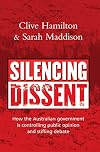
Gillian Leahy's movie Our Park has a special place in my heart because the park in question is _my_ park. Someone commented that in its portrayal of the struggles over what use should be made of a little patch of semi-derelict land we were watching something like true democracy in action. People disagreed passionately, at times (off camera) came to blows, and (on camera) declared intense animosity for each other. But things were thrashed out. Many points of view were heard. That's not how show more democracy works in Prime Minister John W Howard's Australia. People do get beaten up, of course, mostly off camera and with a legal requirement not to talk about it. But disagreement with government policies doesn't get much of a look-in. Silencing Dissent is a chilling look at the way dissenting voices have been systematically intimidated, bribed, excluded, or drowned out over the last decade or so. It lists the democratic institutions that have been undermined: the media, the senate, non-government organisations, intelligence and defence services, the public service, universities. Because it's a book of essays all making the same point, there's quite a bit of overlap and repetition, but for slow learners like me that's probably all to the good. There's not much in the book that I didn't already know in a vague way, but it's chilling to read it laid out like this. A young friend of mine is fond of saying that the Coalition are Fascists (he intends the term precisely) and that only cowardice stops people from saying so; the detail accumulated in this book makes him seem less hyperbolic. show less
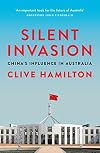
I'd heard of this book and its influence but I'd largely dismissed it as an over-reaction to growing Chinese influence. Now, having read it, my views have moved. I still think that Hamilton is slightly too paranoid.....but give him credit for raising a number of disturbing issues about the influence of the Chinese Communist Party on Australia and Australian politics. Though a lot of what Hamilton claims is baleful, clandestine undermining and seeking influence by the Chinese is exactly the show more sort of activity that our embassies around the world are engaged in doing. Identifying promising young politicians and cultivating them?: Check. Inviting journalists and other influencers to Australia to portray us favourably in their own country? Check. Encouraging defence and trade agreements between countries? Check.. I guess, the main difference (and Hamilton goes to great lengths to hammer this point home)......the Chinese state is not a democracy nor does it respect individual rights or even the laws of other countries if it impinges on their own views of history etc.
There is a lot of content in this book and I've extracted a number of quotes below din an attempt to capture some of the main lines of argument. But this only skims over the surface. Clive writes well and makes his points with vigour and clarity.
As the 1990s dawned, the Chinese Communist Party (CCP) had to confront the possibility of its imminent demise. After Chairman Mao's death in 1976, the people began to face up to the catastrophes of Mao's Great Leap Forward (1958-62) and the Cultural Revolution
(1965-75). As the truth spread and the people became restive, the legitimacy of communism and the Communist Party were shaken...... For a party that had lost its mandate to rule in the eyes of the people, pro-democracy thoughts represented a profound threat...... And so in the early 1990s, with remarkable speed, the CCP built a new ideology around a new narrative for the nation. Its essence is captured in the titles of two books: Never Forget National Humiliation by Zheng Wang and The Hundred-Year Marathon by Michael Pillsbury.
And so the CCP set out to create a generation of patriots through the teaching, from kindergarten to university, of the nation's history and its destiny..... In its 1994 planning document, the party declared that patriotic thoughts are to become the core themes of our society? Controlling people's thoughts obviates the need to control their behaviour and the party has striven constantly to implant patriotic thoughts into the minds of the people....... the audience included overseas Chinese. In Australia, as elsewhere, the new kind of patriotism has become more dangerous as China's economic power and wealth have grown. A powerful sense of national pride built on a belief in historical humiliation, combined with an inability to distinguish between the nation and its government, goes a long way towards explaining why many in the Chinese diaspora, including Chinese-Australian citizens, remain loyal to the PRC...... Today, in addition to the CCP's iron grip, it is nationalism that holds Chinese society together and justifies the rule of the Communist Party. The party has come to symbolise and represent the Chinese nation.
Under President Xi’s leadership, money and manpower have poured into building China's soft power, spearheaded by the Ministry of Culture, which has successfully multiplied Chinese New Year events around the world from 65 in 2010 to 900 in 119
nations in 2015.
In April 2016 a group named the Australian Action Committee for Protecting Peace and Justice called a meeting of sixty community leaders 'to bring together [in Sydney] forces which could protect the core interests of the Chinese nation', namely, Beijing's claim to islands in the South China Sea. The committee's head, Sydney-based businessman Qian Qiguo, is active in various United Front bodies.
Australia is now covered by a network of Chinese-language radio stations that never broadcast any criticism of China and carry stories following the party line on everything from the South China Sea to pro-democracy protests in Hong Kong and the Dalai Lama. The stations are owned by a Melbourne-based company, CAMG Media Group, which is controlled through a company owned by China Radio International and is probably heavily subsidised by it?
Some say China is just doing what other countries do in projecting a national image abroad. Yet as John Fitzgerald notes, this is a false equivalence: "The BBC doesn't seek monopoly control of information, it doesn't intimidate, extort, and silence critics, and it doesn't operate clandestinely through deception and subterfuge. As in China, patriotic media groups in Australia take their cues on what is acceptable and what is prohibited from the official Xinhua News Agency. Some Chinese language radio stations allow China Radio International to vet its guests for their political acceptability.
Those media outlets in Australia that do not toe the party line come under intense pressure. The consulate leans on Chinese-owned businesses to withdraw advertising. Businesses and community organisations are threatened if they stock noncompliant publications, including threats to their families in China."
For a quiet and thoughtful academic, Fitzgerald has lately been ringing the alarm bells loudly. 'Beijing seeks to penetrate and influence Australia's small, open and inclusive society,' he writes. 'It seeks to restrict Australias freedoms of speech, religion and assembly. It threatens social harmony. Where it succeeds, it breaches Australian sovereignty and security.
Zhu Minshen's role in organising a menacing and at times violent mass demonstration by foreign students in the heart of Australias democracy had no repercussions for him....... Quite the reverse, In 2012 Australia's newly minted foreign minister, Bob Carr, appointed Zhu to the federal Chinese Ministerial Consultative Committee.
In 2005 the university had come under direct pressure from the Chinese government over a student union art exhibition that referenced Falun Gong. Consular officials expressed their displeasure and insisted that the material be taken down. The university did not comply and soon after found that its website in China had been blocked, depriving it of its prime means of recruiting Chinese students. Enrolments from China collapsed causing 'very major damage, according to vice-chancellor Ross Milbourne. Other universities were reported as having been targeted and the sector had gone to ground'. UTS's website was blocked again after it was reported that Milbourne said UTS would have to suffer losses in order to take a principled stand..... John Fitzgerald said the incident sent a clear message: 'free and open critical inquiry is not necessary, perhaps even not wise, for a university planning to deepen its engagements with China.
I suggest here that the Australian government and export producers should be analysing our vulnerabilities and taking measures to eliminate them. Instead we have trade ministers and state governments who seem willing to do anything China wants in order to increase our exposure.
The 2015 China-Australia Free Trade Agreement... was not really about trade; it was about investment. It explicitly agreed to treat Chinese investments no differently to investments by Australians in Australia.? (This provision in article 9.3 was ostensibly reciprocated but only an innocent would believe that reciprocity will prevail. While the agreement will be enforced in this country by the courts, Australian investors in China have no guarantees at all.)...... According to a KPMG analysis, since 2007 the United States has received US$100 billion of accumulated new Chinese investment while Australia has accepted US$90 billion.'
But Chinese investment is different. Whatever their faults, American companies are not prone to act in ways dictated by Washington to suit America's strategic interests. And if they are tempted to do so, they must contend with a vigorous American civil society and an inquisitive media holding them to account. And of course US corporations have been prosecuted and fined heavily for engaging in bribery overseas. Howard's historical equivalence between anxiety over Japanese investment in the 1970s and Chinese investment today does not stack up. Discomfort with foreign influence is indeed part of the Australian character. But suspicion of Chinese investment is grounded in a political truth: it is subject to manipulation by a totalitarian regime bent on dominating Australia. That is entirely new....... Chinese capital is, without doubt, being employed as a strategic tool." British, American and Japanese investors do not hail from one-party states that habitually use overseas trade and investment to pressure and coerce other countries into policy positions sympathetic to their strategic interests.
If Australia became involved in a hot conflict between the United States and China, Beijing's capacity to shut down its enemy's power network would be a formidable weapon, one it would not hesitate to use if the stakes were high enough. We have now handed Beijing this weapon....... Energy Networks Australia is the peak body representing the companies that own this country's electricity and gas distribution networks. Half of those who sit on the board of Energy Networks Australia represent two Beijing-controlled or -linked corporations, State Grid and Cheung Kong
Infrastructure.
In May 2017 it emerged that China is interested in building the new international airport at Badgerys Creek to the west of Sydney.
Alarm bells should be ringing...... Would it, for example, be equipped with dozens of security cameras made by Hikvision, the world's largest CCTV manufacturer with links to the Chinese military?..... In China itself, the CCP is in the process of transforming the entire country into a kind of modern panopticon with every street, road and building under constant CCTV surveillance, and with masses of data, including facial images, being collected and analysed in a highly sophisticated computer system using cutting-edge artificial intelligence technology.
One Belt, One Road (OBOR)—also known as the Belt & Road Initiative (BRI)—is a grand strategic agenda designed to link China more closely with larger Eurasia as well as Africa and Oceania,....... Most of OBOR's emphasis is on building or acquiring infrastructure: ports, railways, roads, energy networks and telecommunications, all to promote connectivity. To date there has been a particular emphasis on the construction or acquisition of port facilities five dozen foreign ports, according to a 2017 Chinese state television report.
It was later revealed [by an insider from the Chinese Consulate] that the Guangdong government was about to award the [gas] contract to Indonesia, which tendered the lowest price, until the CCP's Central Committee in Beijing ordered it be given to Australia. They thought that Australia was really important,' said Chen.
One of China's most effective instruments of economic statecraft is the making of dire but vague threats of economic harm to a country that displeases it. It works because governments believe the threats.
China is willing to make countries suffer. In Australia, China's threats are amplified by a corporate fifth column........This cohort of business leaders and their advisers shuttle between the two countries doing deals and making 'friends' (with people whose backgrounds and motives they only think they know).
Stephen FitzGerald argues that Chinese influence in Australia is mostly benign and welcome. He then sets out the various ways the CCP is interfering in Australian society and politics..... For an example of this intellectual naivety we can't go past a report on the future of the Australia-China economic relationship published with great fanfare in August 2016. Touted as the first major independent study' of the relationship, Partnership for Change was prepared jointly by the ANU's East Asian Bureau of Economic Research and the China Centre for International Economic Exchanges (CCIEE)....... The report's 'co-editor' was Professor Peter Drysdale... the reports recommendation that Australia should give priority to unfettered Chinese investment in our most advanced scientific and technological research should be particularly worrying. The United States, Canada and the European Union are now recognising how dangerous this kind of Chinese investment can be.
For the CCP, Tibetan independence is one of the 'five poisons' (the others are Taiwanese independence, Uyghur separatism, Falun Gong's existence and pro-democracy activism). The Dalai Lama is denounced as a wolf in monk's clothing' and an 'anti-China splittist....... Among the many leaders reported to have been bullied into refusing to meet the Dalai Lama are those of South Africa, India, Denmark, Norway and Scotland. Under Chinese pressure, Pope Francis declined to meet him. Britain's prime minister, David Cameron, was rendered persona non grata in 2012 after he met with the Dalai Lama. In 2015 Cameron was still trying to make up with Beijing by refusing to meet the Tibetan leader.
Geoeconomics can be defined as the deployment of economic punishments and rewards to coerce nations to adopt preferred policies. Robert Blackwill and Jennifer Harris, experts from the US Council on Foreign Relations, identify seven leading instruments: trade policy, investment policy, economic sanctions, the cybersphere, aid, monetary policy, and energy and commodity policy....... China has become the world's master practitioner...... Australia has given way many times to Chinese threats of ill-defined economic retaliation. In 2016 the CCP's top leaders thought hard about punishing Australia for our stance on The Hague's ruling on China's illegal occupation of islands in the South China Sea. They held off, but it is only a matter of time before we receive the Taiwan or South Korea treatment. In January 2018 Beijing threatened Australia with economic harm via an article in the Global Times........ But our greatest vulnerabilities to Chinese economic blackmail are education and the tourism sector, which in 2016 respectively generated $7 billion and $9.2 billion in revenue from China. Tourism is especially susceptible because it is expected to grow very rapidly ($13 billion by
2020) and the tap can be turned off quickly.
Using a marketing budget to get close to influential figures is a tactic not unknown to Chinese (and other) companies. And who better to gain access to than Australias foreign affairs boss, also the former director-general of ASIO, and soon to become defence secretary? Presumably, when the whistle later blew for kick-offat Canberra Stadium, Richardson stood shoulder to shoulder with Huawei executives..... The Raiders were soon praising the benefits of the Huawei sponsor-ship, including the use of the company's 24/7 smartwatch monitoring of players, including their hydration, sleep, diet and wellness, as well as, with the help of Huaweis tablet computers, their location and movement speed.* Handy on a politician too.
Although its hardware was excluded from Australia's National Broadband Network, Huawei has successfully sold equipment to other communications networks, including those of Vodafone, Optus and Telstra,* aided by state subsidies that allow it to undercut the competition. In 2014 the South China Morning Post reported that the Home Office in London had scrapped video conferencing equipment supplied by Huawei because of security concerns.16 Acting on intelligence advice about the risks of eavesdropping, all departments were ordered to stop using Huawei equipment. No similar ban applies in Australian government departments.
It's important to make the following point in reference to all of the scientists of Chinese heritage mentioned in this book and who work at Australian universities or research institutes, including Yang Xiang. They may have no intention of benefiting the PRC's military or intelligence capabilities at the expense of Australia. There is, however, a risk of benefiting the PRC to the detriment of Australia by the fact of collaborating with PLA and intelligence-linked researchers in China. Their collaboration with PLA researchers does not mean they are disloyal to Australia, as they may see it as being part of common scientific practice in an international scientific culture.
When Deakin University's Xiang received his Xidian professorship, he said that he would actively offer his counsel and guidance in the areas of cyberspace security and talent cultivation, and strive to make newer and greater academic achievements at Xidian University........ CSRI (Deakin University’s centre for Cyber security research and innovation) director Yang Xiang has a PhD from Deakin. He is also the director of the Network Security and Computing Laboratory (NSCLab) at Deakin, which is part-funded by the Australian Research Council (ARC). It names as a research partner the Australian Bureau of Meteorology, which, as indicated, was targeted in 2015 in a cyber attack believed to have been launched from China.
I feel that Clive Hamilton is piling up a lot of “possibilities” here.....basically finding the guy guilty by association or “what he might do”. I get the same feeling reading “Holy Blood and holy Grail”. And frankly, I don’t put any weight on it. If he did his PhD at Deakin, presumably the University (and Australia) has gained the benefit of his research. The fact that he now knows stuff and can share that with China is a possibility but he can also share it with Japan or the USA or UK etc.,...as is the way with academic research and knowledge. It’s hard to keep the lid on it for too long. And whilst we are on the subject, the Chinese might remember that their technology for paper production, silk manufacture, tea growing and processing, gunpowder production were all “stolen” or leaked via migration/displacement etc., to the west. And I feel that Clive is hitting below the belt when he draws an implied link between the research partner (the BOM)..... a cyber attack on the BOM in 2015 and Director, Yang Xiang. This is a smear....plain and simple with no facts to back it up.
For some years China has sent students to enrol in PhDs and to work as post-doctoral fellows, [at ADFA] where they have access to the computer systems and, more importantly, can develop a network of contacts with the future leaders of Australia's armed forces and intelligence services. My comment: well isn’t that exactly what we do with sending our guys to US institutions and to UK institutions etc. And they certainly develop networks and contacts. Frankly, I’d like to see a lot more networks and contacts with the Chinese to balance up the inputs that we are getting from the Americans. (Our defence attaches spend far too much of their time playing golf with the Americans and adopting their thinking).
The large and growing number of highly qualified Chinese-Australians now working in science and technology labs around the country provide fertile recruiting grounds. These Chinese-Australians are perfect targets for the PRC's finely tuned techniques of influence and coercion.....[I agree that this is an issue....especially with the way the PRC operates]. .........Carrots and sticks are deployed. The carrots are promises of good jobs and houses when they return to China. The sticks include refusing visas and threats to harm their families. Graduate students may become sleeper' agents, only activated if they find themselves in jobs with access to desirable information.
As Fitzgerald bluntly puts it: Our university executives invite onto our campuses institutions and political representatives who profess to be at war with our values, including academic freedom.'....The ministry of Education’s guidelines include The banned thoughts........ set out in a party communiqué forwarded in 2013 to university presidents. The Seven Prohibitions' include constitutional democracy, freedom of the press, and 'universal values, covering human rights and academic freedom.
During my discussions with them, China scholars in Australia typically begin to ruminate on how Beijing could punish them if they cross the line. And they all know where the line is. They express their views cautiously in public because they know they will be refused a visa,
In reaction to an objection by a student about a common phrase in China, the Consulate applied pressure: Monash Business School deputy dean Robert Brooks moved fast. He suspended Wijeratne, had the quiz withdrawn, and said he would be reviewing the course. Soon after, he banned the "commonly used' textbook from the school's courses.'
The CCP has become so confident in its power that it is brazenly attempting to silence scholars in the West whom it deems unfriendly
The Australian Research Council (ARC) through its Linkage Program is funnelling Australian taxpayer funds into research with applications to China's advanced weapons capacity. The program aims to encourage national and international research collaborations between university researchers and partners in industry or other research centres, in this case with Chinese military scientists.
Accordingly, Confucius Institutes have attracted persistent international criticism in response to allegations that they curtail academic freedom and serve China's surveillance and propaganda objectives. Some Australian university leaders are oblivious, or don't care, welcoming the money and the additional links to the economic giant...... The NAS [American National Association of Scholars] report criticised the institutes for their erosion of academic freedom, the secrecy of their funding and operation, the biased presentation of Chinese culture and the pressure on the universities that host them 'to please China'.
Relative to population size, there are five times more Chinese students in Australia than in the United States. Around sixty per cent of ANU's international students are from China, mainly in the business, accounting and finance departments, contributing some fifteen per cent of its total income.
Through the CSSAs students can be mobilised to welcome VIPs from China or to drown out and intimidate any protesters. At times the students are organised with military precision.
Australian universities ought to be islands of freedom' where Chinese students and visiting Chinese scholars can practise the highest principles of free and open scholarship that are outlawed by China's one-party state.!" Instead, by controlling Chinese students, facilitating links with Chinese universities and encouraging donations by wealthy Chinese businessmen, the CCP is using our campuses to wage its propaganda battles against critics like the Dalai Lama, Falun Gong and pro-democracy activists in exile.
Friends of China are reinterpreting the place of Chinese immigrants in the nation's development. Important and undervalued as that history has been, these PRC sympathisers are attributing to them a much larger role than impartial historians do. The effect of these histories is to amplify the sense of grievance over the history of racism among Chinese-heritage people in Australia-and in China.
the social-credit system' being rolled out across China, described by one observer as 'the most ambitious attempt by any government in modern history to fuse technology with behavioural control'?
As for Hawke and Keating, when their political careers ended they went on to become reliable friends of China, shuttling between the two countries, mixing with the top cadres and tycoons....... for two decades the first objective of Chinese propaganda abroad has been to deflect criticism of torture and repression by highlighting the nation's extraordinary GDP growth, along with its political stability. One of the means by which this propaganda effort is prosecuted is to recruit eminent figures, through flattery and money, to echo the Beijing line. Our former prime minister is the most influential antipodean figure sucked in by this strategy to excuse repression.
For Hugh White, we have no choice but to back the economic winner, because if we don't then we will be forced to do so by China's sheer economic might. This is why he falls into the capitulationist camp.
Chinese ambassador, Cheng Jingye, who tried to persuade readers that other nations were to blame for the dispute in the South China Sea and that China had acted with 'utmost restraint." In case we think that the Philippines, Vietnam and Malaysia have been bullied, the PRC ambassador assured us that China is opposed to all provocation and only wants peace.
In short, relations are strained not because of China's aggression in the South China Sea or because of its subversion activities in Australia; it's our fault and we need to change. This is the view now propagated by the Lowy Institute.
So we pursue friendship and cooperation', accept the flood of money, sell our assets, jump when China's diplomats shout, look the other way when our technology is funnelled offshore, recruit Beijing's agents into our political system, stay silent on human rights abuses, and sacrifice basic values like free and open inquiry in our universities. In the nation's post-settlement history, has there ever been a greater betrayal by our elites?
it would be prudent to see past the self-interested or deluded demands of the China lobby and embark on sustained efforts to diversify our economy so that we become less reliant on China. In particular, forging stronger trade, investment, migration, student and tourist links with the other Asian giant, India,
When Australia pushes back, the CCP will apply pressure not only from outside through trade and investment. It will mobilise its forces already embedded in Australian society. PRC apologists will exploit our 'xenophobia-phobia, conflating the CCP with the Chinese people. It's here that Chinese-Australians fearful of Beijing's growing influence are essential to any pushback. Organisations like the Australian Values Alliance send the message that many Chinese-Australians are Australians who see the danger and want to protect the freedoms they came here to live by.
I contemplated five stars but on consideration I'm giving it four because, I think he draws a very long bow in many cases suggesting guilt by association. show less
There is a lot of content in this book and I've extracted a number of quotes below din an attempt to capture some of the main lines of argument. But this only skims over the surface. Clive writes well and makes his points with vigour and clarity.
As the 1990s dawned, the Chinese Communist Party (CCP) had to confront the possibility of its imminent demise. After Chairman Mao's death in 1976, the people began to face up to the catastrophes of Mao's Great Leap Forward (1958-62) and the Cultural Revolution
(1965-75). As the truth spread and the people became restive, the legitimacy of communism and the Communist Party were shaken...... For a party that had lost its mandate to rule in the eyes of the people, pro-democracy thoughts represented a profound threat...... And so in the early 1990s, with remarkable speed, the CCP built a new ideology around a new narrative for the nation. Its essence is captured in the titles of two books: Never Forget National Humiliation by Zheng Wang and The Hundred-Year Marathon by Michael Pillsbury.
And so the CCP set out to create a generation of patriots through the teaching, from kindergarten to university, of the nation's history and its destiny..... In its 1994 planning document, the party declared that patriotic thoughts are to become the core themes of our society? Controlling people's thoughts obviates the need to control their behaviour and the party has striven constantly to implant patriotic thoughts into the minds of the people....... the audience included overseas Chinese. In Australia, as elsewhere, the new kind of patriotism has become more dangerous as China's economic power and wealth have grown. A powerful sense of national pride built on a belief in historical humiliation, combined with an inability to distinguish between the nation and its government, goes a long way towards explaining why many in the Chinese diaspora, including Chinese-Australian citizens, remain loyal to the PRC...... Today, in addition to the CCP's iron grip, it is nationalism that holds Chinese society together and justifies the rule of the Communist Party. The party has come to symbolise and represent the Chinese nation.
Under President Xi’s leadership, money and manpower have poured into building China's soft power, spearheaded by the Ministry of Culture, which has successfully multiplied Chinese New Year events around the world from 65 in 2010 to 900 in 119
nations in 2015.
In April 2016 a group named the Australian Action Committee for Protecting Peace and Justice called a meeting of sixty community leaders 'to bring together [in Sydney] forces which could protect the core interests of the Chinese nation', namely, Beijing's claim to islands in the South China Sea. The committee's head, Sydney-based businessman Qian Qiguo, is active in various United Front bodies.
Australia is now covered by a network of Chinese-language radio stations that never broadcast any criticism of China and carry stories following the party line on everything from the South China Sea to pro-democracy protests in Hong Kong and the Dalai Lama. The stations are owned by a Melbourne-based company, CAMG Media Group, which is controlled through a company owned by China Radio International and is probably heavily subsidised by it?
Some say China is just doing what other countries do in projecting a national image abroad. Yet as John Fitzgerald notes, this is a false equivalence: "The BBC doesn't seek monopoly control of information, it doesn't intimidate, extort, and silence critics, and it doesn't operate clandestinely through deception and subterfuge. As in China, patriotic media groups in Australia take their cues on what is acceptable and what is prohibited from the official Xinhua News Agency. Some Chinese language radio stations allow China Radio International to vet its guests for their political acceptability.
Those media outlets in Australia that do not toe the party line come under intense pressure. The consulate leans on Chinese-owned businesses to withdraw advertising. Businesses and community organisations are threatened if they stock noncompliant publications, including threats to their families in China."
For a quiet and thoughtful academic, Fitzgerald has lately been ringing the alarm bells loudly. 'Beijing seeks to penetrate and influence Australia's small, open and inclusive society,' he writes. 'It seeks to restrict Australias freedoms of speech, religion and assembly. It threatens social harmony. Where it succeeds, it breaches Australian sovereignty and security.
Zhu Minshen's role in organising a menacing and at times violent mass demonstration by foreign students in the heart of Australias democracy had no repercussions for him....... Quite the reverse, In 2012 Australia's newly minted foreign minister, Bob Carr, appointed Zhu to the federal Chinese Ministerial Consultative Committee.
In 2005 the university had come under direct pressure from the Chinese government over a student union art exhibition that referenced Falun Gong. Consular officials expressed their displeasure and insisted that the material be taken down. The university did not comply and soon after found that its website in China had been blocked, depriving it of its prime means of recruiting Chinese students. Enrolments from China collapsed causing 'very major damage, according to vice-chancellor Ross Milbourne. Other universities were reported as having been targeted and the sector had gone to ground'. UTS's website was blocked again after it was reported that Milbourne said UTS would have to suffer losses in order to take a principled stand..... John Fitzgerald said the incident sent a clear message: 'free and open critical inquiry is not necessary, perhaps even not wise, for a university planning to deepen its engagements with China.
I suggest here that the Australian government and export producers should be analysing our vulnerabilities and taking measures to eliminate them. Instead we have trade ministers and state governments who seem willing to do anything China wants in order to increase our exposure.
The 2015 China-Australia Free Trade Agreement... was not really about trade; it was about investment. It explicitly agreed to treat Chinese investments no differently to investments by Australians in Australia.? (This provision in article 9.3 was ostensibly reciprocated but only an innocent would believe that reciprocity will prevail. While the agreement will be enforced in this country by the courts, Australian investors in China have no guarantees at all.)...... According to a KPMG analysis, since 2007 the United States has received US$100 billion of accumulated new Chinese investment while Australia has accepted US$90 billion.'
But Chinese investment is different. Whatever their faults, American companies are not prone to act in ways dictated by Washington to suit America's strategic interests. And if they are tempted to do so, they must contend with a vigorous American civil society and an inquisitive media holding them to account. And of course US corporations have been prosecuted and fined heavily for engaging in bribery overseas. Howard's historical equivalence between anxiety over Japanese investment in the 1970s and Chinese investment today does not stack up. Discomfort with foreign influence is indeed part of the Australian character. But suspicion of Chinese investment is grounded in a political truth: it is subject to manipulation by a totalitarian regime bent on dominating Australia. That is entirely new....... Chinese capital is, without doubt, being employed as a strategic tool." British, American and Japanese investors do not hail from one-party states that habitually use overseas trade and investment to pressure and coerce other countries into policy positions sympathetic to their strategic interests.
If Australia became involved in a hot conflict between the United States and China, Beijing's capacity to shut down its enemy's power network would be a formidable weapon, one it would not hesitate to use if the stakes were high enough. We have now handed Beijing this weapon....... Energy Networks Australia is the peak body representing the companies that own this country's electricity and gas distribution networks. Half of those who sit on the board of Energy Networks Australia represent two Beijing-controlled or -linked corporations, State Grid and Cheung Kong
Infrastructure.
In May 2017 it emerged that China is interested in building the new international airport at Badgerys Creek to the west of Sydney.
Alarm bells should be ringing...... Would it, for example, be equipped with dozens of security cameras made by Hikvision, the world's largest CCTV manufacturer with links to the Chinese military?..... In China itself, the CCP is in the process of transforming the entire country into a kind of modern panopticon with every street, road and building under constant CCTV surveillance, and with masses of data, including facial images, being collected and analysed in a highly sophisticated computer system using cutting-edge artificial intelligence technology.
One Belt, One Road (OBOR)—also known as the Belt & Road Initiative (BRI)—is a grand strategic agenda designed to link China more closely with larger Eurasia as well as Africa and Oceania,....... Most of OBOR's emphasis is on building or acquiring infrastructure: ports, railways, roads, energy networks and telecommunications, all to promote connectivity. To date there has been a particular emphasis on the construction or acquisition of port facilities five dozen foreign ports, according to a 2017 Chinese state television report.
It was later revealed [by an insider from the Chinese Consulate] that the Guangdong government was about to award the [gas] contract to Indonesia, which tendered the lowest price, until the CCP's Central Committee in Beijing ordered it be given to Australia. They thought that Australia was really important,' said Chen.
One of China's most effective instruments of economic statecraft is the making of dire but vague threats of economic harm to a country that displeases it. It works because governments believe the threats.
China is willing to make countries suffer. In Australia, China's threats are amplified by a corporate fifth column........This cohort of business leaders and their advisers shuttle between the two countries doing deals and making 'friends' (with people whose backgrounds and motives they only think they know).
Stephen FitzGerald argues that Chinese influence in Australia is mostly benign and welcome. He then sets out the various ways the CCP is interfering in Australian society and politics..... For an example of this intellectual naivety we can't go past a report on the future of the Australia-China economic relationship published with great fanfare in August 2016. Touted as the first major independent study' of the relationship, Partnership for Change was prepared jointly by the ANU's East Asian Bureau of Economic Research and the China Centre for International Economic Exchanges (CCIEE)....... The report's 'co-editor' was Professor Peter Drysdale... the reports recommendation that Australia should give priority to unfettered Chinese investment in our most advanced scientific and technological research should be particularly worrying. The United States, Canada and the European Union are now recognising how dangerous this kind of Chinese investment can be.
For the CCP, Tibetan independence is one of the 'five poisons' (the others are Taiwanese independence, Uyghur separatism, Falun Gong's existence and pro-democracy activism). The Dalai Lama is denounced as a wolf in monk's clothing' and an 'anti-China splittist....... Among the many leaders reported to have been bullied into refusing to meet the Dalai Lama are those of South Africa, India, Denmark, Norway and Scotland. Under Chinese pressure, Pope Francis declined to meet him. Britain's prime minister, David Cameron, was rendered persona non grata in 2012 after he met with the Dalai Lama. In 2015 Cameron was still trying to make up with Beijing by refusing to meet the Tibetan leader.
Geoeconomics can be defined as the deployment of economic punishments and rewards to coerce nations to adopt preferred policies. Robert Blackwill and Jennifer Harris, experts from the US Council on Foreign Relations, identify seven leading instruments: trade policy, investment policy, economic sanctions, the cybersphere, aid, monetary policy, and energy and commodity policy....... China has become the world's master practitioner...... Australia has given way many times to Chinese threats of ill-defined economic retaliation. In 2016 the CCP's top leaders thought hard about punishing Australia for our stance on The Hague's ruling on China's illegal occupation of islands in the South China Sea. They held off, but it is only a matter of time before we receive the Taiwan or South Korea treatment. In January 2018 Beijing threatened Australia with economic harm via an article in the Global Times........ But our greatest vulnerabilities to Chinese economic blackmail are education and the tourism sector, which in 2016 respectively generated $7 billion and $9.2 billion in revenue from China. Tourism is especially susceptible because it is expected to grow very rapidly ($13 billion by
2020) and the tap can be turned off quickly.
Using a marketing budget to get close to influential figures is a tactic not unknown to Chinese (and other) companies. And who better to gain access to than Australias foreign affairs boss, also the former director-general of ASIO, and soon to become defence secretary? Presumably, when the whistle later blew for kick-offat Canberra Stadium, Richardson stood shoulder to shoulder with Huawei executives..... The Raiders were soon praising the benefits of the Huawei sponsor-ship, including the use of the company's 24/7 smartwatch monitoring of players, including their hydration, sleep, diet and wellness, as well as, with the help of Huaweis tablet computers, their location and movement speed.* Handy on a politician too.
Although its hardware was excluded from Australia's National Broadband Network, Huawei has successfully sold equipment to other communications networks, including those of Vodafone, Optus and Telstra,* aided by state subsidies that allow it to undercut the competition. In 2014 the South China Morning Post reported that the Home Office in London had scrapped video conferencing equipment supplied by Huawei because of security concerns.16 Acting on intelligence advice about the risks of eavesdropping, all departments were ordered to stop using Huawei equipment. No similar ban applies in Australian government departments.
It's important to make the following point in reference to all of the scientists of Chinese heritage mentioned in this book and who work at Australian universities or research institutes, including Yang Xiang. They may have no intention of benefiting the PRC's military or intelligence capabilities at the expense of Australia. There is, however, a risk of benefiting the PRC to the detriment of Australia by the fact of collaborating with PLA and intelligence-linked researchers in China. Their collaboration with PLA researchers does not mean they are disloyal to Australia, as they may see it as being part of common scientific practice in an international scientific culture.
When Deakin University's Xiang received his Xidian professorship, he said that he would actively offer his counsel and guidance in the areas of cyberspace security and talent cultivation, and strive to make newer and greater academic achievements at Xidian University........ CSRI (Deakin University’s centre for Cyber security research and innovation) director Yang Xiang has a PhD from Deakin. He is also the director of the Network Security and Computing Laboratory (NSCLab) at Deakin, which is part-funded by the Australian Research Council (ARC). It names as a research partner the Australian Bureau of Meteorology, which, as indicated, was targeted in 2015 in a cyber attack believed to have been launched from China.
I feel that Clive Hamilton is piling up a lot of “possibilities” here.....basically finding the guy guilty by association or “what he might do”. I get the same feeling reading “Holy Blood and holy Grail”. And frankly, I don’t put any weight on it. If he did his PhD at Deakin, presumably the University (and Australia) has gained the benefit of his research. The fact that he now knows stuff and can share that with China is a possibility but he can also share it with Japan or the USA or UK etc.,...as is the way with academic research and knowledge. It’s hard to keep the lid on it for too long. And whilst we are on the subject, the Chinese might remember that their technology for paper production, silk manufacture, tea growing and processing, gunpowder production were all “stolen” or leaked via migration/displacement etc., to the west. And I feel that Clive is hitting below the belt when he draws an implied link between the research partner (the BOM)..... a cyber attack on the BOM in 2015 and Director, Yang Xiang. This is a smear....plain and simple with no facts to back it up.
For some years China has sent students to enrol in PhDs and to work as post-doctoral fellows, [at ADFA] where they have access to the computer systems and, more importantly, can develop a network of contacts with the future leaders of Australia's armed forces and intelligence services. My comment: well isn’t that exactly what we do with sending our guys to US institutions and to UK institutions etc. And they certainly develop networks and contacts. Frankly, I’d like to see a lot more networks and contacts with the Chinese to balance up the inputs that we are getting from the Americans. (Our defence attaches spend far too much of their time playing golf with the Americans and adopting their thinking).
The large and growing number of highly qualified Chinese-Australians now working in science and technology labs around the country provide fertile recruiting grounds. These Chinese-Australians are perfect targets for the PRC's finely tuned techniques of influence and coercion.....[I agree that this is an issue....especially with the way the PRC operates]. .........Carrots and sticks are deployed. The carrots are promises of good jobs and houses when they return to China. The sticks include refusing visas and threats to harm their families. Graduate students may become sleeper' agents, only activated if they find themselves in jobs with access to desirable information.
As Fitzgerald bluntly puts it: Our university executives invite onto our campuses institutions and political representatives who profess to be at war with our values, including academic freedom.'....The ministry of Education’s guidelines include The banned thoughts........ set out in a party communiqué forwarded in 2013 to university presidents. The Seven Prohibitions' include constitutional democracy, freedom of the press, and 'universal values, covering human rights and academic freedom.
During my discussions with them, China scholars in Australia typically begin to ruminate on how Beijing could punish them if they cross the line. And they all know where the line is. They express their views cautiously in public because they know they will be refused a visa,
In reaction to an objection by a student about a common phrase in China, the Consulate applied pressure: Monash Business School deputy dean Robert Brooks moved fast. He suspended Wijeratne, had the quiz withdrawn, and said he would be reviewing the course. Soon after, he banned the "commonly used' textbook from the school's courses.'
The CCP has become so confident in its power that it is brazenly attempting to silence scholars in the West whom it deems unfriendly
The Australian Research Council (ARC) through its Linkage Program is funnelling Australian taxpayer funds into research with applications to China's advanced weapons capacity. The program aims to encourage national and international research collaborations between university researchers and partners in industry or other research centres, in this case with Chinese military scientists.
Accordingly, Confucius Institutes have attracted persistent international criticism in response to allegations that they curtail academic freedom and serve China's surveillance and propaganda objectives. Some Australian university leaders are oblivious, or don't care, welcoming the money and the additional links to the economic giant...... The NAS [American National Association of Scholars] report criticised the institutes for their erosion of academic freedom, the secrecy of their funding and operation, the biased presentation of Chinese culture and the pressure on the universities that host them 'to please China'.
Relative to population size, there are five times more Chinese students in Australia than in the United States. Around sixty per cent of ANU's international students are from China, mainly in the business, accounting and finance departments, contributing some fifteen per cent of its total income.
Through the CSSAs students can be mobilised to welcome VIPs from China or to drown out and intimidate any protesters. At times the students are organised with military precision.
Australian universities ought to be islands of freedom' where Chinese students and visiting Chinese scholars can practise the highest principles of free and open scholarship that are outlawed by China's one-party state.!" Instead, by controlling Chinese students, facilitating links with Chinese universities and encouraging donations by wealthy Chinese businessmen, the CCP is using our campuses to wage its propaganda battles against critics like the Dalai Lama, Falun Gong and pro-democracy activists in exile.
Friends of China are reinterpreting the place of Chinese immigrants in the nation's development. Important and undervalued as that history has been, these PRC sympathisers are attributing to them a much larger role than impartial historians do. The effect of these histories is to amplify the sense of grievance over the history of racism among Chinese-heritage people in Australia-and in China.
the social-credit system' being rolled out across China, described by one observer as 'the most ambitious attempt by any government in modern history to fuse technology with behavioural control'?
As for Hawke and Keating, when their political careers ended they went on to become reliable friends of China, shuttling between the two countries, mixing with the top cadres and tycoons....... for two decades the first objective of Chinese propaganda abroad has been to deflect criticism of torture and repression by highlighting the nation's extraordinary GDP growth, along with its political stability. One of the means by which this propaganda effort is prosecuted is to recruit eminent figures, through flattery and money, to echo the Beijing line. Our former prime minister is the most influential antipodean figure sucked in by this strategy to excuse repression.
For Hugh White, we have no choice but to back the economic winner, because if we don't then we will be forced to do so by China's sheer economic might. This is why he falls into the capitulationist camp.
Chinese ambassador, Cheng Jingye, who tried to persuade readers that other nations were to blame for the dispute in the South China Sea and that China had acted with 'utmost restraint." In case we think that the Philippines, Vietnam and Malaysia have been bullied, the PRC ambassador assured us that China is opposed to all provocation and only wants peace.
In short, relations are strained not because of China's aggression in the South China Sea or because of its subversion activities in Australia; it's our fault and we need to change. This is the view now propagated by the Lowy Institute.
So we pursue friendship and cooperation', accept the flood of money, sell our assets, jump when China's diplomats shout, look the other way when our technology is funnelled offshore, recruit Beijing's agents into our political system, stay silent on human rights abuses, and sacrifice basic values like free and open inquiry in our universities. In the nation's post-settlement history, has there ever been a greater betrayal by our elites?
it would be prudent to see past the self-interested or deluded demands of the China lobby and embark on sustained efforts to diversify our economy so that we become less reliant on China. In particular, forging stronger trade, investment, migration, student and tourist links with the other Asian giant, India,
When Australia pushes back, the CCP will apply pressure not only from outside through trade and investment. It will mobilise its forces already embedded in Australian society. PRC apologists will exploit our 'xenophobia-phobia, conflating the CCP with the Chinese people. It's here that Chinese-Australians fearful of Beijing's growing influence are essential to any pushback. Organisations like the Australian Values Alliance send the message that many Chinese-Australians are Australians who see the danger and want to protect the freedoms they came here to live by.
I contemplated five stars but on consideration I'm giving it four because, I think he draws a very long bow in many cases suggesting guilt by association. show less
Lists
Wish List (1)
Awards


You May Also Like


Associated Authors
Statistics
- Works
- 22
- Also by
- 1
- Members
- 1,051
- Popularity
- #24,523
- Rating
- 3.8
- Reviews
- 17
- ISBNs
- 80
- Languages
- 6
