
Alexandra Diaz (1)
Author of The Only Road
For other authors named Alexandra Diaz, see the disambiguation page.
Works by Alexandra Diaz
Tagged
Common Knowledge
- Gender
- female
- Education
- Bath Spa University (MA|Writing for Young People)
- Occupations
- author
circus arts instructor - Nationality
- USA
- Places of residence
- Santa Fe, New Mexico, USA
- Associated Place (for map)
- New Mexico, USA
Members
Reviews
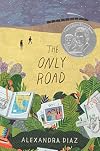
When Miguel's cousin is murdered by a local gang, his family scrounges together enough money to send Miguel and another cousin, Angela, to the United States where they will join his brother Tomas. Unfortunately, due to the family's desperate situation, this journey is not done through legal routes, forcing the children to make difficult and dangerous decisions as they pass through their home of Guatemala and into Mexico towards the United States.
This book starts with a shocking death and show more quickly moves to the children fleeing their hometown. Other books on this topic mean well but often sound rather didactic. This title walks that fine line between teaching about current events and having a thrilling story with compelling characters. While I generally had faith that Miguel and Angela would be alright, there were certainly moments that tested my belief. In addition, I knew that other characters might not fare as easily. In short, the tension was there to keep the reader engaged, flipping pages to see what will happen next.
That being said, the book doesn't get too into the gory details about the violence and desperation, although they are certainly frequent topics. There are several oblique mentions to sexual violence without naming it. I suppose this is all in keeping with a book designed for a young audience; the author doesn't necessarily shy away from the issues but she doesn't choose to grotesquely wallow in them either. show less
This book starts with a shocking death and show more quickly moves to the children fleeing their hometown. Other books on this topic mean well but often sound rather didactic. This title walks that fine line between teaching about current events and having a thrilling story with compelling characters. While I generally had faith that Miguel and Angela would be alright, there were certainly moments that tested my belief. In addition, I knew that other characters might not fare as easily. In short, the tension was there to keep the reader engaged, flipping pages to see what will happen next.
That being said, the book doesn't get too into the gory details about the violence and desperation, although they are certainly frequent topics. There are several oblique mentions to sexual violence without naming it. I suppose this is all in keeping with a book designed for a young audience; the author doesn't necessarily shy away from the issues but she doesn't choose to grotesquely wallow in them either. show less
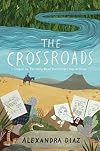
An excellent read for tweens/teens on the subject of contemporary immigration. Set in New Mexico, and following the continuing adventures of Jamie (12) and Angela (15), whose journey escaping Guatemala gang violence began in a previous book. Well written, from Jaime's point of view, and covers the complicated territory that the border represents, both physically (the relationships and community in border states which are being torn apart, navigating a new world in a different language) and show more mentally (dealing with the deaths of relatives who are far away, with bullying and language acquisition, with the fear of deportation and arrests). There's a huge amount packed into one boy's experience, but Diaz does a tremendous job addressing the subject. show less
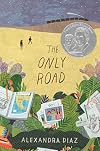
Retelling: Jaime and his cousin Angela embark on a perilous journey from their home in Guatemala after a violent gang murdered Angela's brother, Miguel. Their goal is to find sanctuary with Jaime's brother, Tomas, in los Estados Unidos. The author, Alexandra Diaz, hints at the true brutality of the journey for people with no other place to go as her heros witness the misfortune of their fellow travelers and narrowly escape the same fates themselves. Jaime is not known for his brawn, but uses show more the strength and talents he has as an artist to gain favor and support his cousin.
Thoughts and feelings: One good turn deserves another. My favorite moment in the book was when the scrappy dog they saved from a slow death turns out to be their salvation (I won't give it away). I also liked that Jaime's paternalism towards his cousin Angela was challenged when she stepped up to save them in unexpected ways. I would love to have read a little from her perspective, or from the perspective of Joaquin (who dressed like a boy to avoid unwanted attention on the road). show less
Thoughts and feelings: One good turn deserves another. My favorite moment in the book was when the scrappy dog they saved from a slow death turns out to be their salvation (I won't give it away). I also liked that Jaime's paternalism towards his cousin Angela was challenged when she stepped up to save them in unexpected ways. I would love to have read a little from her perspective, or from the perspective of Joaquin (who dressed like a boy to avoid unwanted attention on the road). show less
Jaime and his cousin Angela make the dangerous trip from Guatemala to El Norte after Angela's brother Miguel is killed by the Alphas after refusing to join their gang. Jaime and Angela's families scrape up the money to pay for part of their journey north, but it is neither smooth nor safe. They travel through Mexico, finding safe houses, surviving a train trip locked inside a hot boxcar (and another on top of a traincar), making and losing friends, facing their fears, and sticking together. show more
*Spoiler alert* This is a children's book, so they do make it to the U.S. (after a relatively uneventful - compared to other parts of the journey - river crossing at night) and Jaime's brother Tomas picks them up.
The text is sprinkled with Spanish, and there is a glossary in the back with definitions of the Spanish words; anyone with even a passable amount of Spanish won't need it, and most words are clear in context anyway. There are some awkward usages; on p. 201 a character says "usted" for no apparent reason, but a few pages later Angela uses that to identify him as being from somewhere other than he said. It makes sense after the fact but is peculiar to come across initially. Over all I felt there was more telling than showing, and I didn't particularly connect with the characters, though I empathized with their dilemma and their journey.
Quotes
Some people were barefoot...some looked like their soul had left their body and all that was left was a corpse operated by memory. (84)
But at what point do you stop helping people? ...Where would he draw the line between those he'd help, and those he'd let get abused and deported? (96)
They were locked in a pitch-black train car with no way of getting out, prisoners in their escape for freedom. (138)
He wished he could trust these people. They were all on the same journey - they should help each other...But when it came down to it, they were only going to look after themselves. (147)
"Is it worth going against your morals just to stay alive? I don't know." (Xavi to Angela and Jaime, 181)
"Look out your window because this is the last time you'll see your country." (Author's note; her mother left Cuba in 1960) show less
*Spoiler alert* This is a children's book, so they do make it to the U.S. (after a relatively uneventful - compared to other parts of the journey - river crossing at night) and Jaime's brother Tomas picks them up.
The text is sprinkled with Spanish, and there is a glossary in the back with definitions of the Spanish words; anyone with even a passable amount of Spanish won't need it, and most words are clear in context anyway. There are some awkward usages; on p. 201 a character says "usted" for no apparent reason, but a few pages later Angela uses that to identify him as being from somewhere other than he said. It makes sense after the fact but is peculiar to come across initially. Over all I felt there was more telling than showing, and I didn't particularly connect with the characters, though I empathized with their dilemma and their journey.
Quotes
Some people were barefoot...some looked like their soul had left their body and all that was left was a corpse operated by memory. (84)
But at what point do you stop helping people? ...Where would he draw the line between those he'd help, and those he'd let get abused and deported? (96)
They were locked in a pitch-black train car with no way of getting out, prisoners in their escape for freedom. (138)
He wished he could trust these people. They were all on the same journey - they should help each other...But when it came down to it, they were only going to look after themselves. (147)
"Is it worth going against your morals just to stay alive? I don't know." (Xavi to Angela and Jaime, 181)
"Look out your window because this is the last time you'll see your country." (Author's note; her mother left Cuba in 1960) show less
Lists
Awards


You May Also Like


Associated Authors
Statistics
- Works
- 5
- Members
- 525
- Popularity
- #47,376
- Rating
- 3.8
- Reviews
- 25
- ISBNs
- 51
- Languages
- 2