
Lulu Delacre
Author of Salsa Stories
About the Author
Lulu Delacre was born in Puerto Rico, where she grew up catching lizards, drawing pictures, and listening to the evening song of the coqui. She studied art first at the University of Puerto Rico and later at L'Ecole Superieure d'Arts Graphiques, in Paris, France. She lives in Maryland with her show more husband and two daughters show less
Works by Lulu Delacre
Associated Works
Tagged
Common Knowledge
- Birthdate
- 1957-12-20
- Gender
- female
- Education
- Ecole Supérieure d'Arts Graphiques
- Occupations
- children's book author
illustrator
artist
lecturer - Awards and honors
- Pura Belpré Award
- Nationality
- Puerto Rico
- Birthplace
- Rio Piedras, Puerto Rico
- Places of residence
- Puerto Rico
Paris, France
Silver Spring, Maryland, USA - Associated Place (for map)
- Puerto Rico
Members
Reviews
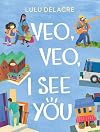
Mami is the best cook at Rosita’s Café but right now she’s not working because the restaurant had to close due to a bad, easy-to-catch virus going around. Marisol asks her mother if other people are working and Mami says yes, los muy necesarios, the essential ones. Inspired, Marisol plays Veo Veo with Mami and Pepito to find the essential workers they encounter while on their way to deliver food to Cousin Johnny and Tia Olga. Among them are trash collectors, nurses, chicken plant show more workers, bus drivers, and firefighters. Bilingual approach: Mami’s Spanish introduces the job names of the essential workers and Marisol calls out the name in English, punctuating each with “Essential”! Almost all the essential workers depicted have brown skin/are BIPOC as the author points out happened during covid. Uses a fun game familiar to kids to introduce and highlight the essential work that happens around us show less
Olinguito, de la A a la Z! : descubriendo el bosque nublado = Olinguito, from A to Z! : unveiling the cloud forest by Lulu Delacre
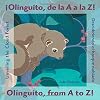
Frustrating as I did not know about the Olinguito, but the large letters faded into the illustrations and highlighted letters did not align with the large letter the page focused on. The English translation was also a bit rough because it could not follow the alliterative style of its Spanish counterpart. Great concept, wonky execution.
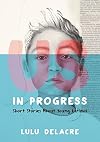
This title contains 12 short stories about Latino children in a variety of situations. Some are the children of immigrants whereas others were smuggled across the border; some fear deportation while others are concerned about bullying older siblings; some worry about physical violence whereas others are concerned about parents arguing; and so forth. The author sets out and clearly displays how Latinos are not one big bloc but individuals with different goals, lifestyles, etc. (This seems show more like a self-evident point, but given the too-large number of grown adults who don't seem to understand this, it is fair to want to show that to children.) My concern is that only Latino children might pick up this book; while that would not be a bad thing by itself, children from other racial backgrounds who would benefit from reading this book might think it's not "for them" and miss its lessons entirely.
Back to the stories themselves, they are all fictional but based on some kernel of truth, whether that was a personal story told to the author or an article she read in the news. Each story is illustrated with a pencil sketch by the author (although they are more involved than that; read her introduction for the meaning behind her process), all of which are stunning. My particular favorite stories were "Güera," "Firstborn," "Peacemaker," and "The Secret," although there isn't a bad story in the bunch. Occasionally, it felt like some bits of narrative were a little jumpy or too quickly resolved, but that is often true in short stories. In fact, I liked this book much more than I thought I would considering how I'm not usually the hugest fan of short story collections. I'd recommend it for those readers who enjoy character portraits and "slice of life" stories. show less
Back to the stories themselves, they are all fictional but based on some kernel of truth, whether that was a personal story told to the author or an article she read in the news. Each story is illustrated with a pencil sketch by the author (although they are more involved than that; read her introduction for the meaning behind her process), all of which are stunning. My particular favorite stories were "Güera," "Firstborn," "Peacemaker," and "The Secret," although there isn't a bad story in the bunch. Occasionally, it felt like some bits of narrative were a little jumpy or too quickly resolved, but that is often true in short stories. In fact, I liked this book much more than I thought I would considering how I'm not usually the hugest fan of short story collections. I'd recommend it for those readers who enjoy character portraits and "slice of life" stories. show less
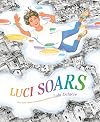
Luci is born into a grim, black-and-white urban landscape and she was born with no shadow. At first it doesn't seem to matter. Her mama loves her, the neighbors call her "Que linda!" or "so cute!" but as she gets older people begin to notice that she's different. She begins to walk in the shadows of others until one day when she's brave enough to try to join the other children on the playground and is taunted and excluded.
As she cries, she begins to wonder why she needs a shadow anyways. show more "Does a shadow keep you on the ground?" and she begins to float. As she soars into the air, her clothes begin to light up with colors, as does her skin and then her hair. Colors float around her and she soars in a sea of blue, returning home to their small house that is now tinged with color, as is her loving mother. She can now see things from a different perspective and the book ends with a joyful, colorful picture of Lucy smiling and bold, looking directly at the reader.
This is a lovely fable with stunning illustrations and a Latinx flair with Spanish phrases and names sprinkled throughout. However, I'm disappointed that Luci claiming her difference implies putting down the other kids, not because of their unkindness but because of their shadows. The character Luci also shifts oddly in age, from a baby to looking like a teenager when she's floating, to a child with her mother, and then a teen or adult on the last page.
I don't think I'd use this in storytime, but I can see reading it and discussing it in a classroom or with an adult, talking about how people handle differences, about excluding and including people, and looking at things with a different perspective.
Verdict: Not a required purchase perhaps, but an interesting and thought-provoking book with lovely illustrations.
ISBN: 9781984812889; Published August 2020 by Philomel; Review copy provided by the publisher; Donated to the library show less
As she cries, she begins to wonder why she needs a shadow anyways. show more "Does a shadow keep you on the ground?" and she begins to float. As she soars into the air, her clothes begin to light up with colors, as does her skin and then her hair. Colors float around her and she soars in a sea of blue, returning home to their small house that is now tinged with color, as is her loving mother. She can now see things from a different perspective and the book ends with a joyful, colorful picture of Lucy smiling and bold, looking directly at the reader.
This is a lovely fable with stunning illustrations and a Latinx flair with Spanish phrases and names sprinkled throughout. However, I'm disappointed that Luci claiming her difference implies putting down the other kids, not because of their unkindness but because of their shadows. The character Luci also shifts oddly in age, from a baby to looking like a teenager when she's floating, to a child with her mother, and then a teen or adult on the last page.
I don't think I'd use this in storytime, but I can see reading it and discussing it in a classroom or with an adult, talking about how people handle differences, about excluding and including people, and looking at things with a different perspective.
Verdict: Not a required purchase perhaps, but an interesting and thought-provoking book with lovely illustrations.
ISBN: 9781984812889; Published August 2020 by Philomel; Review copy provided by the publisher; Donated to the library show less
Lists
Awards


You May Also Like


Associated Authors
Statistics
- Works
- 40
- Also by
- 6
- Members
- 4,350
- Popularity
- #5,765
- Rating
- 3.8
- Reviews
- 75
- ISBNs
- 177
- Languages
- 2
- Favorited
- 1