
Kikori Morino
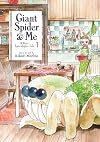
Author of Giant Spider & Me: A Post-Apocalyptic Tale, Vol. 1
About the Author
Series
Works by Kikori Morino
Lecții de vals 2 1 copy
Lecții de vals 1 1 copy
Tagged
Common Knowledge
- Canonical name
- Morino, Kikori
- Legal name
- 森野きこり
- Gender
- female
- Nationality
- Japan
- Associated Place (for map)
- Japan
Members
Reviews
5 out of 5 stars
You know, I’m really beginning to love the ‘end of the world slice of life’ manga and anime that have been released recently. The latest in this wonderful vein is a manga called Giant Spider & Me: A Post-Apocalyptic Tale Vol. 1 by Kikori Morino, released in English for the first time on February 20, 2018.
Nagi is a young girl living in a post-apocalyptic world. While her father is out exploring, she stays home caring for the house. One day while out gathering vegetables show more she meets an enormous giant spider who follows her home. What ensues is a tale of friendship, of family, and of understanding one another despite a sea of differences.
The story takes place in the post apocalypse. The world as we know it has ended. Everything has changed. And, nothing has changed. Life goes on, sometimes much the same as it does now. There may not be large cities anymore. The ruins of the cities that are left might be largely underwater. But towns still exist. People still make friends, help one another, and care for each other.
That is what Giant Spider & Me is about – friendship and understanding, even in the face of such vast differences.
Both Nagi and her giant spider friend are absolutely adorable. ‘Cute’ might not be the first word that comes to mind when the term giant spider comes up, but this isn’t Shelob or some other nightmare creature. It’s an overly large spider covered in leaves and soft fur that behaves somewhat like a huge, eight legged puppy. It wants company, likes cooked food best, and protects Nagi from the very real dangers that lurk beyond the immediate safety of her home.
The chapters are episodic in nature. There is no overarching plot beyond Nagi’s day to day life. There are questions as to where her father is and if he’s alright. And of course there is plenty of room to explore what caused the end of the world and why. But those things aren’t necessarily the focus of the story. Nagi herself reinforces this when she brings her giant spider with her to a cliff which overlooks the ruins of a once great city swallowed by the sea. The two page spread is beautiful, yet haunting, bringing up many questions as to why this occurred. But Nagi isn’t interested in that; what she wants are the chestnuts that grow in the area and redirects both the spider and ourselves back to the task at hand.
The art in this manga is lovely. Certain sections feel hand drawn in a way that not all manga feels these days. The main characters are cute as a button. What could turn into many arachniphobe’s worst nightmare is somehow rendered downright adorable, which isn’t something I really ever expected to say of giant end-of-the-world spiders.
The ending of the manga does have tension, and there is a cliffhanger. Though the manga is rather light hearted and doesn’t have a lot of tension, it isn’t as though tension doesn’t exist. The stakes are risen as the manga goes along, maybe not risen very high or very quickly at first, but it is present nonetheless. The change in seasons means a change of diet with all of the summer crops dying out. An increase in the wild dog population makes scavenging in the forest quite dangerous. A leaky roof isn’t always an easy fix, and finding lodging doesn’t seem to be quite as simple as it once was. With this, the cliffhanger ending doesn’t seem as out of place as it otherwise would.
One of the things I love the most about this manga are the recipes. A great deal of the story is focused on Nagi learning about her new spider friend and bonding over shared meals. Nagi talks her way through the cooking, explaining to the spider and the reader what she’s making and how she’s doing it, and a recipe for that meal is included within the chapter. Unlike, say, Food Wars, which also includes recipes, these feel very easy, are made with pretty simple ingredients, and feel like something that even I could make. Which, for someone whose burned boiled eggs and made inedible rice balls, is really pretty important.
I really love Giant Spider & Me: A Post-Apocalyptic Tale Vol 1 by Kikori Morino. It’s a quite tale about friendship, a happier, mundane look at the post apocalypse. This series has tremendous potential, and I look forward to more in this series.
I received this book from the publisher in exchange for an honest review.
This review and more can be found on Looking Glass Reads. show less
You know, I’m really beginning to love the ‘end of the world slice of life’ manga and anime that have been released recently. The latest in this wonderful vein is a manga called Giant Spider & Me: A Post-Apocalyptic Tale Vol. 1 by Kikori Morino, released in English for the first time on February 20, 2018.
Nagi is a young girl living in a post-apocalyptic world. While her father is out exploring, she stays home caring for the house. One day while out gathering vegetables show more she meets an enormous giant spider who follows her home. What ensues is a tale of friendship, of family, and of understanding one another despite a sea of differences.
The story takes place in the post apocalypse. The world as we know it has ended. Everything has changed. And, nothing has changed. Life goes on, sometimes much the same as it does now. There may not be large cities anymore. The ruins of the cities that are left might be largely underwater. But towns still exist. People still make friends, help one another, and care for each other.
That is what Giant Spider & Me is about – friendship and understanding, even in the face of such vast differences.
Both Nagi and her giant spider friend are absolutely adorable. ‘Cute’ might not be the first word that comes to mind when the term giant spider comes up, but this isn’t Shelob or some other nightmare creature. It’s an overly large spider covered in leaves and soft fur that behaves somewhat like a huge, eight legged puppy. It wants company, likes cooked food best, and protects Nagi from the very real dangers that lurk beyond the immediate safety of her home.
The chapters are episodic in nature. There is no overarching plot beyond Nagi’s day to day life. There are questions as to where her father is and if he’s alright. And of course there is plenty of room to explore what caused the end of the world and why. But those things aren’t necessarily the focus of the story. Nagi herself reinforces this when she brings her giant spider with her to a cliff which overlooks the ruins of a once great city swallowed by the sea. The two page spread is beautiful, yet haunting, bringing up many questions as to why this occurred. But Nagi isn’t interested in that; what she wants are the chestnuts that grow in the area and redirects both the spider and ourselves back to the task at hand.
The art in this manga is lovely. Certain sections feel hand drawn in a way that not all manga feels these days. The main characters are cute as a button. What could turn into many arachniphobe’s worst nightmare is somehow rendered downright adorable, which isn’t something I really ever expected to say of giant end-of-the-world spiders.
The ending of the manga does have tension, and there is a cliffhanger. Though the manga is rather light hearted and doesn’t have a lot of tension, it isn’t as though tension doesn’t exist. The stakes are risen as the manga goes along, maybe not risen very high or very quickly at first, but it is present nonetheless. The change in seasons means a change of diet with all of the summer crops dying out. An increase in the wild dog population makes scavenging in the forest quite dangerous. A leaky roof isn’t always an easy fix, and finding lodging doesn’t seem to be quite as simple as it once was. With this, the cliffhanger ending doesn’t seem as out of place as it otherwise would.
One of the things I love the most about this manga are the recipes. A great deal of the story is focused on Nagi learning about her new spider friend and bonding over shared meals. Nagi talks her way through the cooking, explaining to the spider and the reader what she’s making and how she’s doing it, and a recipe for that meal is included within the chapter. Unlike, say, Food Wars, which also includes recipes, these feel very easy, are made with pretty simple ingredients, and feel like something that even I could make. Which, for someone whose burned boiled eggs and made inedible rice balls, is really pretty important.
I really love Giant Spider & Me: A Post-Apocalyptic Tale Vol 1 by Kikori Morino. It’s a quite tale about friendship, a happier, mundane look at the post apocalypse. This series has tremendous potential, and I look forward to more in this series.
I received this book from the publisher in exchange for an honest review.
This review and more can be found on Looking Glass Reads. show less

Volume 1 ended with Nagi, Asa, and a traveling peddler (does he have a name yet?) facing off against an armed stranger. In volume 2, the armed "stranger" turns out to be the peddler's daughter, Belle. Once Belle calms down, Nagi goes looking for a carpenter to fix her roof and finds herself up against the townspeople's perceptions of Asa. Somehow, Nagi has to convince everyone that Asa isn't a dangerous monster. And as usual, good meals play an important part in the story.
This is the coziest show more post-apocalyptic story ever. There are minor moments of distrust and fear, but mostly everyone is nice and willing to be won over by a plate of good food or bowl of warm soup. Speaking of which, although some foods are clearly limited or seasonal, no one seems to be starving or desperately trying to come up with ingredient substitutions. I think the closest we've gotten to that is when Belle asks for a meal with meat, which Nagi doesn't have on hand, and Nagi makes something similar to what Belle asked for using a few blocks of freeze-dried tofu instead.
Once again, there are hints of possible ominous developments, but since both volumes so far have been primarily gentle and cozy, I doubt volume 3 is going to wrap things up with doom and gloom. I'm honestly kind of surprised that volume 3 is going to be the last one, since this feels like the kind of series that could go into the double digits just hyper-focusing on everyone's daily lives. This volume has only just introduced the community Nagi lives near, and both the traveling peddler and the cafe owner (if he has a name, I missed it) could provide a peek into what life is like in other areas of the world.
Speaking of the cafe owner...how's that going to work in this post-apocalyptic world? It sounds like money is no longer a thing, and folks operate on a bartering system. Will customers purchase meals with ingredients? I suppose one service the cafe could provide is a meeting space for people to talk and unwind, but since the community seems to have been around for a while and is fairly small, theoretically they already have a place for those activities that suits their needs. Maybe I'm answering my own question about this series' length - it's possible that Morino didn't want to have to deal with some of the inevitable questions about how society functions.
I agree with Belle that Nagi's a little too trusting. At the very least, Nagi should have worked out slightly more detailed terms and conditions for her arrangement with the cafe owner. That said, she's well-known in the community and people seem to like her, so maybe they'd back her up if things went badly.
The meals made in this volume: tofu karaage, walnut soup, cream stew (which uses 350 grams of chicken - a little hard to believe considering the earlier info and the chicken coop developments), sea bream sashimi, and simmered sea bream carcass. Although the preparation of each meal is depicted in some detail, and the author lists ingredients and approximate amounts, most of the meals aren't something I'd want to attempt with my weak cooking skills. Sashimi has never sounded particularly tempting to me, and making it based solely on the instructions in this manga sounds like a bad idea all around. I'd definitely try the walnut soup or tofu karaage if someone made them for me, though.
I'm looking forward to seeing how this wraps up.
Extras:
Two full-color illustrations (one of them is used for the cover art), a one-page comic-style afterword by the author, and a two-page bonus comic showing how Belle's night at Nagi's place went.
(Original review posted on A Library Girl's Familiar Diversions.) show less
This is the coziest show more post-apocalyptic story ever. There are minor moments of distrust and fear, but mostly everyone is nice and willing to be won over by a plate of good food or bowl of warm soup. Speaking of which, although some foods are clearly limited or seasonal, no one seems to be starving or desperately trying to come up with ingredient substitutions. I think the closest we've gotten to that is when Belle asks for a meal with meat, which Nagi doesn't have on hand, and Nagi makes something similar to what Belle asked for using a few blocks of freeze-dried tofu instead.
Once again, there are hints of possible ominous developments, but since both volumes so far have been primarily gentle and cozy, I doubt volume 3 is going to wrap things up with doom and gloom. I'm honestly kind of surprised that volume 3 is going to be the last one, since this feels like the kind of series that could go into the double digits just hyper-focusing on everyone's daily lives. This volume has only just introduced the community Nagi lives near, and both the traveling peddler and the cafe owner (if he has a name, I missed it) could provide a peek into what life is like in other areas of the world.
Speaking of the cafe owner...how's that going to work in this post-apocalyptic world? It sounds like money is no longer a thing, and folks operate on a bartering system. Will customers purchase meals with ingredients? I suppose one service the cafe could provide is a meeting space for people to talk and unwind, but since the community seems to have been around for a while and is fairly small, theoretically they already have a place for those activities that suits their needs. Maybe I'm answering my own question about this series' length - it's possible that Morino didn't want to have to deal with some of the inevitable questions about how society functions.
I agree with Belle that Nagi's a little too trusting. At the very least, Nagi should have worked out slightly more detailed terms and conditions for her arrangement with the cafe owner. That said, she's well-known in the community and people seem to like her, so maybe they'd back her up if things went badly.
The meals made in this volume: tofu karaage, walnut soup, cream stew (which uses 350 grams of chicken - a little hard to believe considering the earlier info and the chicken coop developments), sea bream sashimi, and simmered sea bream carcass. Although the preparation of each meal is depicted in some detail, and the author lists ingredients and approximate amounts, most of the meals aren't something I'd want to attempt with my weak cooking skills. Sashimi has never sounded particularly tempting to me, and making it based solely on the instructions in this manga sounds like a bad idea all around. I'd definitely try the walnut soup or tofu karaage if someone made them for me, though.
I'm looking forward to seeing how this wraps up.
Extras:
Two full-color illustrations (one of them is used for the cover art), a one-page comic-style afterword by the author, and a two-page bonus comic showing how Belle's night at Nagi's place went.
(Original review posted on A Library Girl's Familiar Diversions.) show less

Twelve-year-old Nagi lives alone in the little house she and her father moved into three years ago. Her father likes to go exploring, but it's been longer than usual since Nagi last heard from him. Still, she tries to stay cheerful, taking care of her garden, making good food, and occasionally going to the nearby village market.
Then one day she encounters an enormous spider. She's scared at first, but it seems friendly, so she feeds it, names it "Asa," and begins trying to learn more about show more it and communicate with it.
This was one of my impulse purchases from a while back. I'm always on the lookout for short series that are actually decent, and this seemed like it had potential. It's only three volumes long, and so far it's a gentle story that's three parts "cooking yummy meals for my new spider friend" and one part "post-apocalyptic world-building."
At some point in the past, something happened that killed off a large chunk of the population (climate change? There's a city mostly underwater, so the sea level has risen). Big urban cities are now little more than empty ruins. Nagi was born after whatever happened, so all she knows is her current life, although her dad has told her stories about how things used to be.
All readers see in this volume is Nagi's solitary existence, although we're told that there's a village somewhere nearby with a market. The villagers occasionally band together to kill off aggressive feral dogs. So far, Nagi hasn't gone to the village because she's worried about how they'll react to her new friend Asa, but I'm guessing a village visit will be happening in the near future. It'll be interesting to see what others' lives are like. Although she's definitely lonely, Nagi seems to deal with it by living in the present as much as possible. Her life and her meals are governed by the seasons, and she seems to be doing very well, considering.
Asa's arrival gives Nagi an opportunity to cook for someone besides herself again, and a good portion of the volume is devoted to detailed cooking scenes, complete with lists of ingredients and amounts at the end. A confident and competent cook (aka not me) could probably make each of the three meals featured in this volume (pumpkin dumplings, Japanese-style ratatouille with miso paste, and turnip soup).
The end of the volume adds a couple new human characters to the mix. It'll be interesting to see where the author goes with that. Will it continue to be a gentle series with lots of cooking scenes, or will there be more conflict?
Extras:
A couple full-color images (one of which is the front and back cover art), a cute extra comic on the inside of the front and back covers, and a 2-page comic-style afterword by the author.
(Original review posted on A Library Girl's Familiar Diversions.) show less
Then one day she encounters an enormous spider. She's scared at first, but it seems friendly, so she feeds it, names it "Asa," and begins trying to learn more about show more it and communicate with it.
This was one of my impulse purchases from a while back. I'm always on the lookout for short series that are actually decent, and this seemed like it had potential. It's only three volumes long, and so far it's a gentle story that's three parts "cooking yummy meals for my new spider friend" and one part "post-apocalyptic world-building."
At some point in the past, something happened that killed off a large chunk of the population (climate change? There's a city mostly underwater, so the sea level has risen). Big urban cities are now little more than empty ruins. Nagi was born after whatever happened, so all she knows is her current life, although her dad has told her stories about how things used to be.
All readers see in this volume is Nagi's solitary existence, although we're told that there's a village somewhere nearby with a market. The villagers occasionally band together to kill off aggressive feral dogs. So far, Nagi hasn't gone to the village because she's worried about how they'll react to her new friend Asa, but I'm guessing a village visit will be happening in the near future. It'll be interesting to see what others' lives are like. Although she's definitely lonely, Nagi seems to deal with it by living in the present as much as possible. Her life and her meals are governed by the seasons, and she seems to be doing very well, considering.
Asa's arrival gives Nagi an opportunity to cook for someone besides herself again, and a good portion of the volume is devoted to detailed cooking scenes, complete with lists of ingredients and amounts at the end. A confident and competent cook (aka not me) could probably make each of the three meals featured in this volume (pumpkin dumplings, Japanese-style ratatouille with miso paste, and turnip soup).
The end of the volume adds a couple new human characters to the mix. It'll be interesting to see where the author goes with that. Will it continue to be a gentle series with lots of cooking scenes, or will there be more conflict?
Extras:
A couple full-color images (one of which is the front and back cover art), a cute extra comic on the inside of the front and back covers, and a 2-page comic-style afterword by the author.
(Original review posted on A Library Girl's Familiar Diversions.) show less
A post-apocalyptic world and a giant spider, and yet about the most exciting thing in this book is finding a pumpkin. Recipes and cooking take up most of the space in this book, which is firmly in the slice-of-life genre. The spider is basically a large cat and the girl is a bit of a Pollyanna, but I'm almost willing to try another volume to see how the last-second cliffhanger plays out, though I'm pretty sure I know...
Lists
Awards


You May Also Like


Associated Authors
Statistics
- Works
- 5
- Members
- 223
- Popularity
- #100,549
- Rating
- 3.9
- Reviews
- 6
- ISBNs
- 10
- Languages
- 1