
David W. Blight
Author of Frederick Douglass: Prophet of Freedom
About the Author
David W. Blight is Sterling Professor of History at Yale University and Director of the Gilder Lehrman Center for the Study of Slavery, Resistance, and Abolition at Yale. He is the author of annotated editions of two of Frederick Douglass's autobiographies, The Narrative of the Life of Frederick show more Douglass and My Bondage and My Freedom. He is also the author of A Slave No More: Two Men Who Escaped to Freedom, Including Their Own Narratives of Emancipation and the prize-winning Race and Reunion: The Civil War in American Memory, among other works. Visit David W. Blight at www.davidwblight.com. show less
Image credit: David W. Blight
Works by David W. Blight
A Slave No More: Two Men Who Escaped to Freedom, Including their own Narratives of Emancipation (2007) 374 copies, 9 reviews
Frederick Douglass and Abraham Lincoln: A Relationship in Language, Politics, and Memory (Frank L. Klement Lectures) (2001) 13 copies
When This Cruel War Is Over: The Civil War Letters of Charles Harvey Brewster (1992) 10 copies, 1 review
Hope is the First Great Blessing: Africa: Leaves from the African Free School Presentation Book 1812-1826 (New-York Historical Society) (2008) 7 copies
Associated Works
Narrative of the Life of Frederick Douglass, an American Slave (1845) — Editor, some editions — 10,997 copies, 133 reviews
A Narrative of the Captivity and Restoration of Mrs. Mary Rowlandson (1682) — Foreword, some editions — 535 copies, 13 reviews
Tagged
Common Knowledge
- Canonical name
- Blight, David W.
- Legal name
- Blight, David William
- Other names
- Blight, David
- Birthdate
- 1949-03-21
- Gender
- male
- Education
- University of Wisconsin-Madison (Ph.D. | 1985)
Michigan State University (BA | 1971 | MA | 1976) - Occupations
- professor
historian
film consultant
author - Organizations
- Yale University
Amherst College
Harvard University
North Central College
American Historical Association
Organization of American Historians (show all 10)
Society of American Historians
New York Historical Society (Board of Trustees)
Abraham Lincoln Bicentennial Commission
Gilder Lehrman Center for the Study of Slavery, Resistance, & Abolition (Director) - Awards and honors
- Pulitzer Prize (2019)
American Academy of Arts and Sciences (2012)
American Academy of Arts and Letters Gold Medal in History (2020)
Bancroft Prize (2002, 2019)
Merle Curti Award (2002)
Ellis W. Hawley Prize (2002) (show all 13)
James A. Rawley Prize (2002)
Lincoln Prize (2002, 2019)
Frederick Douglass Prize (2001)
American Academy of Achievement's Golden Plate Award (2022)
PEN Oakland Josephine Miles Literary Award (2019)
Gilder Lehrman Lincoln Prize (2019)
Richard Nelson Current Award of Achievement (2018) - Nationality
- USA
- Birthplace
- Flint, Michigan, USA
- Places of residence
- New Haven, Connecticut, USA
- Associated Place (for map)
- USA
Members
Reviews
A Slave No More: Two Men Who Escaped to Freedom, Including Their Own Narratives of Emancipation by David W. Blight
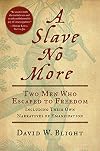
In 2003, two separate, unconnected manuscripts were found, both featuring the personal memoirs of a slave who escaped to freedom during the Civil War and later settled in the North. One was by a man called John Washington, who joined up with the Union army when it reached Fredericksburg (his white masters having all run off and hid). The other is by one Wallace Turnage who, as a teenager, ran away no fewer than five times to escape beatings, finally achieving success on the fifth attempt. show more
Both are included in this book... although not until the end. First, historian David Blight starts off by telling us the story of how the manuscripts came to light, then goes through the main events of each narrative, providing historical context for everything. He also, as much as is possible, traces the later histories of the two men and their families, and describes the times and places they lived in after the war. Then he concludes with some more general historical details about the emancipation of the slaves and its immediate consequences. After all that, I was starting to get a little tired of listening to Blight and eager to finally hear these two men speak for themselves. But all of that background was interesting, and ultimately very useful for properly understanding and appreciating these personal narratives.
The narratives themselves are included unedited, complete with the idiosyncratic spelling and grammar of people who had no access to formal education. (Both of these men, it seems, essentially taught themselves to read and write, with the haphazard help of whoever they could enlist to teach them. So, far from disparaging their spelling, I'm deeply impressed that they managed to attain literacy at all.) They're predictably fascinating pieces of writing, in that they provide a very human, very personal glimpse into a particularly awful, and particularly important, bit of American history. But they're also surprisingly engaging stories. Turnage describes his as an account of his "adventures and persecutions," and it is indeed full of both of those things. Washington's story is a bit more sedate, but features a wonderfully sly sense of humor that makes me think he must have been the kind of guy who the grandkids would actually ask to ramble on about his life for them.
It's definitely a worthwhile read for anyone interested in the Civil War or the history of slavery in America. Or for Americans in general, really, as we should all be aware of the presence of stories like this in our past. show less
Both are included in this book... although not until the end. First, historian David Blight starts off by telling us the story of how the manuscripts came to light, then goes through the main events of each narrative, providing historical context for everything. He also, as much as is possible, traces the later histories of the two men and their families, and describes the times and places they lived in after the war. Then he concludes with some more general historical details about the emancipation of the slaves and its immediate consequences. After all that, I was starting to get a little tired of listening to Blight and eager to finally hear these two men speak for themselves. But all of that background was interesting, and ultimately very useful for properly understanding and appreciating these personal narratives.
The narratives themselves are included unedited, complete with the idiosyncratic spelling and grammar of people who had no access to formal education. (Both of these men, it seems, essentially taught themselves to read and write, with the haphazard help of whoever they could enlist to teach them. So, far from disparaging their spelling, I'm deeply impressed that they managed to attain literacy at all.) They're predictably fascinating pieces of writing, in that they provide a very human, very personal glimpse into a particularly awful, and particularly important, bit of American history. But they're also surprisingly engaging stories. Turnage describes his as an account of his "adventures and persecutions," and it is indeed full of both of those things. Washington's story is a bit more sedate, but features a wonderfully sly sense of humor that makes me think he must have been the kind of guy who the grandkids would actually ask to ramble on about his life for them.
It's definitely a worthwhile read for anyone interested in the Civil War or the history of slavery in America. Or for Americans in general, really, as we should all be aware of the presence of stories like this in our past. show less
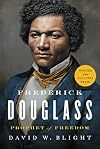
If there is a more thoroughly researched, well-written account of Frederick Douglass's life I cannot imagine what it would be. Prior to reading this, I was aware of him but only just. Now I feel as though I've met the man. Congratulations and appreciation to author David Blight for that.
Frederick Douglass! What an extraordinary individual!
Born a slave of mixed blood (his white owner fathered him with his black slave mother), he taught himself to read and self-educated himself far beyond show more what most of us ever achieve. He escaped his owner and literally fought his way to freedom. At least freedom of sorts because prejudice, hate, and bigotry followed him the rest of his life. His career became speaking out against slavery and I doubt there was anyone more prolific or better at it in 19th century America than Frederick Douglass.
Most of us know the Civil War ended slavery and was followed by the Reconstruction Period, a time meant to rebuild the defeated south. I never thought much about that; the war ended, the north won, slaves were freed, the union saved, time to rebuild the south. That's not at all how things went.
Another name for the post Civil War period could easily be the Lynching Period, certainly in the southern states where vengeance for having lost the war was the reaction of many whites. Even today there is no accurate account of how many blacks, and whites who dared to support blacks, were lynched by white mobs, but the number is conservatively in the thousands.
Here we are now in the 21st century when all of this nastiness of our history is just a distant memory, right? Nothing could be further from the truth. Our time of slavery right up to today, including the current administration, is a loud echo of all that happened over 150 years ago. You don't think so? Read this book!
This was a Christmas gift last year. The fact that I am just now adding it to my list of books read should tell you something about how fast I read, how much I read each time I read, how often I read, and/or the length of this book. It's a little bit of all four.
I read a couple of hours every night at an average speed; books, magazines, newspapers, and news feeds. That leaves this book's length to be considered. Just under 850 pages. I mention this only to prepare you for what lay ahead should you choose to take this on. I hope you do. show less
Frederick Douglass! What an extraordinary individual!
Born a slave of mixed blood (his white owner fathered him with his black slave mother), he taught himself to read and self-educated himself far beyond show more what most of us ever achieve. He escaped his owner and literally fought his way to freedom. At least freedom of sorts because prejudice, hate, and bigotry followed him the rest of his life. His career became speaking out against slavery and I doubt there was anyone more prolific or better at it in 19th century America than Frederick Douglass.
Most of us know the Civil War ended slavery and was followed by the Reconstruction Period, a time meant to rebuild the defeated south. I never thought much about that; the war ended, the north won, slaves were freed, the union saved, time to rebuild the south. That's not at all how things went.
Another name for the post Civil War period could easily be the Lynching Period, certainly in the southern states where vengeance for having lost the war was the reaction of many whites. Even today there is no accurate account of how many blacks, and whites who dared to support blacks, were lynched by white mobs, but the number is conservatively in the thousands.
Here we are now in the 21st century when all of this nastiness of our history is just a distant memory, right? Nothing could be further from the truth. Our time of slavery right up to today, including the current administration, is a loud echo of all that happened over 150 years ago. You don't think so? Read this book!
This was a Christmas gift last year. The fact that I am just now adding it to my list of books read should tell you something about how fast I read, how much I read each time I read, how often I read, and/or the length of this book. It's a little bit of all four.
I read a couple of hours every night at an average speed; books, magazines, newspapers, and news feeds. That leaves this book's length to be considered. Just under 850 pages. I mention this only to prepare you for what lay ahead should you choose to take this on. I hope you do. show less
A Slave No More: Two Men Who Escaped to Freedom, Including Their Own Narratives of Emancipation by David W. Blight
Facing a seven-hour drive, I picked up this audiobook so that I wouldn’t have to listen to a business book for that long in one day. The author David Blight had won a Pulitzer Prize and is renowned for his annals of African-American history. I knew his writing to be eloquent and clear, and his observations of human nature, compassionate and acute. I had great hopes for this drive, and thankfully, with Blight’s erudite help, it passed very quickly. I was drawn into and moved by these show more self-written life stories of two self-emancipated slaves.
Self-written emancipation narratives are extremely rare. Though oral stories circulated in American culture after the Civil War, few were written down. Even fewer were written down by the formerly enslaved person themselves. These two narratives fit squarely in that category, grammatical errors and all. Only in recent decades, the public became aware of them. Blight artfully retells each of these stories for modern readers and then shares both stories in their original, unedited form.
Listening to this book is like peeling a vidalia onion, each step slightly tear-inducing yet commingled with a savory sweetness. Blight opens with an introduction and then tells their stories using scholarly knowledge to bring modern readers up to speed. Then, he shares broader historical information not in the original accounts, like what we know happened to them afterwards and how their lives fit into wider American history. Finally, the essential core is shared in the life stories in the self-emancipated heroes themselves, told in their own words. The entire product is moving and engrossing.
John Washington was enslaved in Virginia yet became literate as a city slave. After escaping, he ended up helping the Union army while fighting for his wife and children’s freedom. Wallace Turnage, enslaved in the fields of Alabama, tried to escape an impressive five times as a teenager before finally succeeding. Turnage’s tale became more exciting each time I heart it, and the final telling – in his own words – stirred my heart within. He overcame being hunted, whippings, hunger, daunting landscapes, and the waters of Mobile Bay in order to gain freedom. What better voice to tell of America’s deep meaning!
Since after the Civil War all the way to today, many white people have tried to sweep slavery’s unseemliness into a forgotten past. That’s unfortunate. Not only is that unjust for people still struggling with similar racist obstacles today, but it also lacks the depths of inspiration for all of us. People like John Washington and Wallace Turnage are inspiring human beings for what they overcame to treasure life’s freedoms. They just happened to be black slaves. They are proud emblems of America. During the upcoming Black History Month, they inspire me, a white man with plenty of privilege, to learn more about the people around me in America and to benefit from their stories, their courage, and their heart. show less
Self-written emancipation narratives are extremely rare. Though oral stories circulated in American culture after the Civil War, few were written down. Even fewer were written down by the formerly enslaved person themselves. These two narratives fit squarely in that category, grammatical errors and all. Only in recent decades, the public became aware of them. Blight artfully retells each of these stories for modern readers and then shares both stories in their original, unedited form.
Listening to this book is like peeling a vidalia onion, each step slightly tear-inducing yet commingled with a savory sweetness. Blight opens with an introduction and then tells their stories using scholarly knowledge to bring modern readers up to speed. Then, he shares broader historical information not in the original accounts, like what we know happened to them afterwards and how their lives fit into wider American history. Finally, the essential core is shared in the life stories in the self-emancipated heroes themselves, told in their own words. The entire product is moving and engrossing.
John Washington was enslaved in Virginia yet became literate as a city slave. After escaping, he ended up helping the Union army while fighting for his wife and children’s freedom. Wallace Turnage, enslaved in the fields of Alabama, tried to escape an impressive five times as a teenager before finally succeeding. Turnage’s tale became more exciting each time I heart it, and the final telling – in his own words – stirred my heart within. He overcame being hunted, whippings, hunger, daunting landscapes, and the waters of Mobile Bay in order to gain freedom. What better voice to tell of America’s deep meaning!
Since after the Civil War all the way to today, many white people have tried to sweep slavery’s unseemliness into a forgotten past. That’s unfortunate. Not only is that unjust for people still struggling with similar racist obstacles today, but it also lacks the depths of inspiration for all of us. People like John Washington and Wallace Turnage are inspiring human beings for what they overcame to treasure life’s freedoms. They just happened to be black slaves. They are proud emblems of America. During the upcoming Black History Month, they inspire me, a white man with plenty of privilege, to learn more about the people around me in America and to benefit from their stories, their courage, and their heart. show less
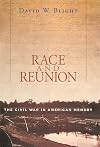
David Blight is an eminent, Pulitzer-Prize-winning historian interested in the role of race in American history. Many think that American attitudes about race were “solved” by the Civil War and the emancipation of slaves. Those battles were won by the Union and not the Confederacy, right? This book seeks to chronicle how in the 50 years after emancipation (until around World War I), southern states and the promotion of “Lost Cause” ideology won a place in American society, north and show more south. Americans were more concerned with reconciliation among the whites than peace among all peoples. This attitude laid the necessity of further social action in the Civil Rights movements, up to today.
When I was ten years old, I moved from St. Louis, Missouri, to upstate South Carolina. I noticed a cultural difference in attitudes about the Civil War. My community in St. Louis was quite proudly multicultural while my community in South Carolina was predominantly white. Southernisms abounded, like the word “y’all” and sayings like “The devil’s beating his wife” when it rained. Likewise, conversations about the Civil War were less about the end of slavery and more about family who fought.
I have since lived in northern, western, and southern states and currently live in urban Tennessee. I’ve seen a lot of attitudes about the Civil War and racism: Northern pride over “uneducated southerners,” southern regions with a pro-Union history, southerners celebrating frank ignorance, and a Nashville pride of birthing the Civil Rights movement. Often forgotten are the victims and survivors of slavery and white supremacy. Blight’s book indicts all white history with abundant, carefully reasoned evidence. Our ancestors almost universally favored white reunion over racial reconciliation. Civil rights movements, past and present, try to overturn the remnants of such structural racism. White supremacy lingered far past 1863 or 1865. Indeed, some is still with us, north and south.
I appreciate this book for correcting my common tendency to overlook racial injustice. I’ve tried to fight it in protests, professional advocacy, and personal relationships. Yet anywhere in America, it’s easy to fall prey to forgetting historical inertia. And I remain a complicit part of that forgetful inertia. Blight’s work clearly corrects that tendency in a dispassionate, erudite, and reflective manner. By enlightening me and healing my own unknowing biases, I hope it will help me have better relationships and construct a better society. The American experiment is not done yet, and Race and Reunion can help put up a few more supporting flanks in its house. show less
When I was ten years old, I moved from St. Louis, Missouri, to upstate South Carolina. I noticed a cultural difference in attitudes about the Civil War. My community in St. Louis was quite proudly multicultural while my community in South Carolina was predominantly white. Southernisms abounded, like the word “y’all” and sayings like “The devil’s beating his wife” when it rained. Likewise, conversations about the Civil War were less about the end of slavery and more about family who fought.
I have since lived in northern, western, and southern states and currently live in urban Tennessee. I’ve seen a lot of attitudes about the Civil War and racism: Northern pride over “uneducated southerners,” southern regions with a pro-Union history, southerners celebrating frank ignorance, and a Nashville pride of birthing the Civil Rights movement. Often forgotten are the victims and survivors of slavery and white supremacy. Blight’s book indicts all white history with abundant, carefully reasoned evidence. Our ancestors almost universally favored white reunion over racial reconciliation. Civil rights movements, past and present, try to overturn the remnants of such structural racism. White supremacy lingered far past 1863 or 1865. Indeed, some is still with us, north and south.
I appreciate this book for correcting my common tendency to overlook racial injustice. I’ve tried to fight it in protests, professional advocacy, and personal relationships. Yet anywhere in America, it’s easy to fall prey to forgetting historical inertia. And I remain a complicit part of that forgetful inertia. Blight’s work clearly corrects that tendency in a dispassionate, erudite, and reflective manner. By enlightening me and healing my own unknowing biases, I hope it will help me have better relationships and construct a better society. The American experiment is not done yet, and Race and Reunion can help put up a few more supporting flanks in its house. show less
Lists
Awards


You May Also Like


Associated Authors
Statistics
- Works
- 23
- Also by
- 10
- Members
- 4,565
- Popularity
- #5,507
- Rating
- 4.0
- Reviews
- 63
- ISBNs
- 97
- Languages
- 4
- Favorited
- 5

