
Jordy Rosenberg
Author of Confessions of the Fox
About the Author
Works by Jordy Rosenberg
Critical Enthusiasm: Capital Accumulation and the Transformation of Religious Passion (2011) 8 copies
Zpověď lišáka 1 copy
Good Material 1 copy
Associated Works
Tagged
Common Knowledge
- Canonical name
- Rosenberg, Jordy
- Gender
- male
- Occupations
- associate professor (18th Century Literature, and Sexuality and Gender Studies)
- Agent
- Susan Golomb
- Nationality
- USA
- Places of residence
- New York, New York, USA
Northampton, Massachusetts, USA - Associated Place (for map)
- USA
Members
Reviews
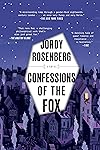
It's a common experience among transgender people, especially those of us who read a lot, to start to get frustrated with the knowledge that none of the books we read are really For us.
It's hard to explain because of course not every book you read has to be For You, and in fact it's necessary and preferable to read books that are not explicitly For You because that's how you begin to understand the experiences of people who are different than you-- but at the end of the day, it's very lonely show more to read stacks of books and know that a lot, if not most, of the authors are ignorant of or even morally opposed to your very existence.
It's even more difficult to explain that it's not always as simple as just going down a list and picking books with transgender characters, because most of those books aren't really For us either; they're for cisgender people who want an easily understood, easily digestible trans narrative to swallow so that they can feel like they've successfully absorbed a story that wasn't For them.
Even books by trans authors aren't always For us, despite being generally more respectful, usually because the author assumes that in order to appeal to cisgender readers they must dilute the trans experience into something that cisgender people can relate to (which is, of course, nigh impossible).
This book is possibly the first book I've read that I knew, without a single doubt, was For Me. This was written by a trans man, for trans people, without any dumbing-down, hand-holding, or explanations for cis people. I could go into the hows and whys, try and explain all the things this book made me feel, but I'm not sure I would do it justice. This book is unlike anything else. show less
It's hard to explain because of course not every book you read has to be For You, and in fact it's necessary and preferable to read books that are not explicitly For You because that's how you begin to understand the experiences of people who are different than you-- but at the end of the day, it's very lonely show more to read stacks of books and know that a lot, if not most, of the authors are ignorant of or even morally opposed to your very existence.
It's even more difficult to explain that it's not always as simple as just going down a list and picking books with transgender characters, because most of those books aren't really For us either; they're for cisgender people who want an easily understood, easily digestible trans narrative to swallow so that they can feel like they've successfully absorbed a story that wasn't For them.
Even books by trans authors aren't always For us, despite being generally more respectful, usually because the author assumes that in order to appeal to cisgender readers they must dilute the trans experience into something that cisgender people can relate to (which is, of course, nigh impossible).
This book is possibly the first book I've read that I knew, without a single doubt, was For Me. This was written by a trans man, for trans people, without any dumbing-down, hand-holding, or explanations for cis people. I could go into the hows and whys, try and explain all the things this book made me feel, but I'm not sure I would do it justice. This book is unlike anything else. show less
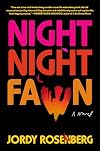
This is an unflinching, often claustrophobic novel that unfolds almost entirely within the mind of a woman approaching death from cancer. It is less a conventional narrative than a sustained act of consciousness—fragmented, digressive, biting, and darkly funny. The effect is immersive but also demanding, as the reader is asked to inhabit a mind that is as abrasive as it is vulnerable.
Its unwavering commitment to this singular voice is the novel’s greatest strength. Yet this narrator is show more not an easy companion. She is consumed by a need for admiration and validation, which manifests in relentless self-justification and a tendency to measure others against her own unmet expectations. Her relationships, especially with her family, are filtered through a lens of jealousy and resentment that can feel stifling. Notwithstanding her sharp, distinctly Jewish wit, the narrator’s tendency toward self-laceration, biting irony and a finely tuned sense of the absurdities of family life and bodily decline can be wearing. Yet there are moments when humor cuts through the dread of mortality with a kind of defiant elegance. Indeed, Rosenberg adeptly captures a New York sensibility with her. She is quick, neurotic, steeped in cultural memory, and often brutally honest. (Not unlike a David Sedaris monologue).
Most troubling is her fixation on her daughter, whose sexuality becomes a focal point for the narrator’s anxieties and attempts at control. These passages are painful, sometimes infuriating to read. They seem to be deliberately devoid of easy moral resolution. Her efforts to manipulate and reinterpret her daughter’s identity reveal not only generational and cultural tensions but also the narrator’s own deep insecurity and fear of irrelevance.
The novel has a few minor shortcomings. Rosenberg does not seem interested in making this woman conventionally likable. Instead, he leans into her contradictions. She is both perceptive and delusional, cruel and wounded, funny and exhausting. This refusal to soften her edges gives the book a kind of integrity but also risks alienating some readers. Likewise, the novel’s stream-of-consciousness approach can feel meandering. Thoughts loop back on themselves, memories blur into present sensations, and time becomes elastic. This can mirror the disorientation of illness and dying but does test patience. Moreover, the lack of narrative momentum gives one a sense of stasis. She is not so much moving toward resolution as circling an inevitable end.
In the final analysis, Night Night Fawn is less about plot than about what it feels like to be inside a mind reckoning with its own extinction. It is a challenging, sometimes abrasive work that captures a very particular voice with remarkable fidelity. While the narrator may be hard to admire, the novel’s commitment to an uncomfortable honesty makes it a compelling, if not always enjoyable, read. show less
Its unwavering commitment to this singular voice is the novel’s greatest strength. Yet this narrator is show more not an easy companion. She is consumed by a need for admiration and validation, which manifests in relentless self-justification and a tendency to measure others against her own unmet expectations. Her relationships, especially with her family, are filtered through a lens of jealousy and resentment that can feel stifling. Notwithstanding her sharp, distinctly Jewish wit, the narrator’s tendency toward self-laceration, biting irony and a finely tuned sense of the absurdities of family life and bodily decline can be wearing. Yet there are moments when humor cuts through the dread of mortality with a kind of defiant elegance. Indeed, Rosenberg adeptly captures a New York sensibility with her. She is quick, neurotic, steeped in cultural memory, and often brutally honest. (Not unlike a David Sedaris monologue).
Most troubling is her fixation on her daughter, whose sexuality becomes a focal point for the narrator’s anxieties and attempts at control. These passages are painful, sometimes infuriating to read. They seem to be deliberately devoid of easy moral resolution. Her efforts to manipulate and reinterpret her daughter’s identity reveal not only generational and cultural tensions but also the narrator’s own deep insecurity and fear of irrelevance.
The novel has a few minor shortcomings. Rosenberg does not seem interested in making this woman conventionally likable. Instead, he leans into her contradictions. She is both perceptive and delusional, cruel and wounded, funny and exhausting. This refusal to soften her edges gives the book a kind of integrity but also risks alienating some readers. Likewise, the novel’s stream-of-consciousness approach can feel meandering. Thoughts loop back on themselves, memories blur into present sensations, and time becomes elastic. This can mirror the disorientation of illness and dying but does test patience. Moreover, the lack of narrative momentum gives one a sense of stasis. She is not so much moving toward resolution as circling an inevitable end.
In the final analysis, Night Night Fawn is less about plot than about what it feels like to be inside a mind reckoning with its own extinction. It is a challenging, sometimes abrasive work that captures a very particular voice with remarkable fidelity. While the narrator may be hard to admire, the novel’s commitment to an uncomfortable honesty makes it a compelling, if not always enjoyable, read. show less
It is hard to properly review this book without spoilers, but I am going to do my best to give people a sense of why they should read this surprising, hilarious, heartbreaking. imperfect and brilliant novel.
In these pages, we walk through the final days of Barbara Rosenberg, the prototype for the social-climbing Manhattan-via-Brooklyn Jewish mother of the late 20th/early 21st century. Barbara is smart and she is relentless. And yet she fails at her prime directive, thus leading a life of show more endless disappointment. There is a point in the book where Barbara is described as Barbra Streisand in a biopic of Barbra, where she is played by Joan Crawford. That is not wholly inaccurate, and funnier than my take, which is a cross between Joan Rivers and Fran Fine's mother on The Nanny, with a very healthy dose of my own mother. Barbara lies in an Oxy haze as pancreatic cancer gets its last laugh, and goes back and forth between relating her present (and I will just say the reader needs to bear in mind that a dying person on Oxy is not the most reliable of narrators) and reviewing her life to this point. Barbara, again like my mother, is possibly looking to atone, and instead chooses self-justification for the most part. Everything has disappointed her, and nothing so much as raising a daughter whom she dressed in velvet and sent to Spence and who turned out to be, in Barbara's words, a "bulldagger." I am guessing this is deeply autobiographical. The disappointing daughter is even named Jordana. Even if this is not autobiographical, it tells someone's story, or really many people's stories. I felt like it told a lot of my story with my mother. I am not, like Jordy, trans. But like Barbara, were my mother still alive, she would spend hours telling you the ways in which I was a disappointment; I know that because when she was alive, she was happy to do that over a salad and a Tab whenever the opportunity arose. Like my own mother, though, Barbara is not a villain. She is someone who believes in every fiber of her being that she is helping her daughter to be what she has been trained to consider a success, and like my mother, she is baffled by her spectacular failure to create that person despite doing all the right things.
I am going to stop talking about the content of the book here because going in mostly blind is a great idea. So much of this is surprising and emotionally intense (in a non-manipulative way), and there are plenty of laughs to balance out the gutting parts. I wonder if this is accessible to people who have not spent a good bit of time around a particular type of Jewish matron, but the aforementioned The Nanny, Seinfeld, and The Marvelous Mrs. Maisel were popular, so I guess this might be too. I hope so, because Jordy Rosenberg has served up his truth in a way that feels like he has performed surgery to excise and hold up to the light his emotional center. I don't think he incorporated the supernatural/mythical elements (the hawk and the fawn) well, but it is, to my mind, a minor quibble. If you think all the stories have already been told, this book will tell you otherwise.
I listened to this read by the author, and Rosenberg does a great Jewish matron. show less
In these pages, we walk through the final days of Barbara Rosenberg, the prototype for the social-climbing Manhattan-via-Brooklyn Jewish mother of the late 20th/early 21st century. Barbara is smart and she is relentless. And yet she fails at her prime directive, thus leading a life of show more endless disappointment. There is a point in the book where Barbara is described as Barbra Streisand in a biopic of Barbra, where she is played by Joan Crawford. That is not wholly inaccurate, and funnier than my take, which is a cross between Joan Rivers and Fran Fine's mother on The Nanny, with a very healthy dose of my own mother. Barbara lies in an Oxy haze as pancreatic cancer gets its last laugh, and goes back and forth between relating her present (and I will just say the reader needs to bear in mind that a dying person on Oxy is not the most reliable of narrators) and reviewing her life to this point. Barbara, again like my mother, is possibly looking to atone, and instead chooses self-justification for the most part. Everything has disappointed her, and nothing so much as raising a daughter whom she dressed in velvet and sent to Spence and who turned out to be, in Barbara's words, a "bulldagger." I am guessing this is deeply autobiographical. The disappointing daughter is even named Jordana. Even if this is not autobiographical, it tells someone's story, or really many people's stories. I felt like it told a lot of my story with my mother. I am not, like Jordy, trans. But like Barbara, were my mother still alive, she would spend hours telling you the ways in which I was a disappointment; I know that because when she was alive, she was happy to do that over a salad and a Tab whenever the opportunity arose. Like my own mother, though, Barbara is not a villain. She is someone who believes in every fiber of her being that she is helping her daughter to be what she has been trained to consider a success, and like my mother, she is baffled by her spectacular failure to create that person despite doing all the right things.
I am going to stop talking about the content of the book here because going in mostly blind is a great idea. So much of this is surprising and emotionally intense (in a non-manipulative way), and there are plenty of laughs to balance out the gutting parts. I wonder if this is accessible to people who have not spent a good bit of time around a particular type of Jewish matron, but the aforementioned The Nanny, Seinfeld, and The Marvelous Mrs. Maisel were popular, so I guess this might be too. I hope so, because Jordy Rosenberg has served up his truth in a way that feels like he has performed surgery to excise and hold up to the light his emotional center. I don't think he incorporated the supernatural/mythical elements (the hawk and the fawn) well, but it is, to my mind, a minor quibble. If you think all the stories have already been told, this book will tell you otherwise.
I listened to this read by the author, and Rosenberg does a great Jewish matron. show less
2026. An elegy for an old Jewish woman in Yorkville, Manhattan, dying of cancer and reflecting on her life. She’s is deeply disappointed that her daughter is a lesbian and she has no grandchildren. Her daughter is there taking care of her as she dies, and (spoilers, spoilers, spoilers, spoilers)
I longed for them to have even a few kind words between them before she died, but they didn’t. It was painful, but it really made you understand her point of view, so it didn’t seem so show more unreasonable. I was sad that she couldn’t see any of the joy in her daughter’s life, but from her perspective it was impossible. I felt like her life was pathethic, and I still can’t shake that feeling although I’m not sure that’s the author’s intention. Certainly it was a disappointing life. She didn’t acquire the wealth, lifestyle, or social status she wanted. Her careers hopes were thwarted before they even began. Her best friend betrayed her, cruelly stealing her story for her writing. It all had a lot to do with the way the times changed for women at the exact time between her life as a wife and mother, and her daughter’s life as a lesbian from the seventies on. It was so good, but so sad. show less
I longed for them to have even a few kind words between them before she died, but they didn’t. It was painful, but it really made you understand her point of view, so it didn’t seem so show more unreasonable. I was sad that she couldn’t see any of the joy in her daughter’s life, but from her perspective it was impossible. I felt like her life was pathethic, and I still can’t shake that feeling although I’m not sure that’s the author’s intention. Certainly it was a disappointing life. She didn’t acquire the wealth, lifestyle, or social status she wanted. Her careers hopes were thwarted before they even began. Her best friend betrayed her, cruelly stealing her story for her writing. It all had a lot to do with the way the times changed for women at the exact time between her life as a wife and mother, and her daughter’s life as a lesbian from the seventies on. It was so good, but so sad. show less
Lists
Awards


You May Also Like


Associated Authors
Statistics
- Works
- 6
- Also by
- 1
- Members
- 719
- Popularity
- #35,294
- Rating
- 3.8
- Reviews
- 21
- ISBNs
- 21
- Languages
- 1


