

Sandra Blakeslee
Author of Phantoms in the Brain: Probing the Mysteries of the Human Mind
About the Author
Image credit: via author's website
Works by Sandra Blakeslee
The Body Has a Mind of Its Own: How Body Maps in Your Brain Help You Do (Almost) Everything Better (2007) 285 copies, 6 reviews
What About the Kids?: Raising Your Children Before, During, and After Divorce (2003) — Author — 58 copies
Associated Works
Sleights of Mind: What the Neuroscience of Magic Reveals about Our Everyday Deceptions (2010) 488 copies, 10 reviews
Tagged
Common Knowledge
- Gender
- female
- Education
- University of California, Berkeley
- Occupations
- journalist
- Organizations
- The New York Times
- Nationality
- USA
- Places of residence
- Santa Fe, New Mexico, USA
- Associated Place (for map)
- New Mexico, USA
Members
Reviews
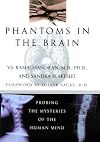
Neuroscientist V. S. Ramachandran introduces us to patients who have suffered deeply strange effects from damage to various parts of their brains, from an inability to recognize or admit that their arm or leg is paralyzed, to the conviction that their loved ones have been replaced by impostors, to becoming ultra-religious in the wake of certain kinds of seizures. He also talks extensively about phantom limbs, a subject he's done a lot of research on. He describes what we know about what's show more going on in the brains of these people, the many unanswered questions that still remain, his ideas for experiments to help answer some of those questions, and his big-picture thoughts on what it all means for how our brains and our minds function.
I already knew about the various pathologies he's describing, having done a fair bit of reading already on the subject of the human brain, so I was a little worried, going in, that I might find it all kind of old hat. (Or old The Man Who Mistook His Wife for a Hat, maybe.) But instead I was absolutely fascinated, because brains are just absolutely wonderful and weird, and Ramachandran vividly illustrates just how weird they can get. Plus also sort of terrified, because thinking too hard about this stuff forces you to face some really unsettling implications about the nature of the self and what can happen to it. There were a lot of ideas in here that were new to me, too, as they seem to be very much Ramachandran's own. Mind you, a lot of those ideas are clearly very speculative, not to mention possibly being out of date, as this book was published nearly twenty years ago. And Ramachandran seems to combine some impressively keen scientific thinking with a tendency to perhaps be a little too open minded about some less scientific ideas. But it was all really, really thought-provoking, nonetheless. show less
I already knew about the various pathologies he's describing, having done a fair bit of reading already on the subject of the human brain, so I was a little worried, going in, that I might find it all kind of old hat. (Or old The Man Who Mistook His Wife for a Hat, maybe.) But instead I was absolutely fascinated, because brains are just absolutely wonderful and weird, and Ramachandran vividly illustrates just how weird they can get. Plus also sort of terrified, because thinking too hard about this stuff forces you to face some really unsettling implications about the nature of the self and what can happen to it. There were a lot of ideas in here that were new to me, too, as they seem to be very much Ramachandran's own. Mind you, a lot of those ideas are clearly very speculative, not to mention possibly being out of date, as this book was published nearly twenty years ago. And Ramachandran seems to combine some impressively keen scientific thinking with a tendency to perhaps be a little too open minded about some less scientific ideas. But it was all really, really thought-provoking, nonetheless. show less
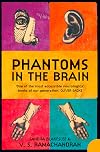
V.S. Ramachandran is a neurologist. He is also and mostly well-known for his work on phantom limbs, strange cases where patients, although amputated or paralysed can still 'feel' their missing limbs to the point of claiming being able to move them or feeling them in pain! In this fascinating book, Ramachandran, then, uses such cases as a starting point to an enthralling journey where he exposes the few we know about the functioning of the brain.
Reconciliating those claiming that each part of show more the brain is fully autonomous and highly specialised with those arguing, on the contrary, that it works as a whole, that it would be foolish to ascribe to some of its very specific areas very specific roles, he here dresses a map of this wonderful organ, and demonstrates, bizarre fact showing its incredible plasticity, that such map can be modified depending upon our experiences! So it is for so-called phantom limbs, then; them being a sort of 'bug' between concerned parts (motor cortex, muscles, parietal lobes...) as much as being a whole psychological process whereas the brain 'negates' the amputation/ paralysis of the limb in question. Freud meets neurosciences, throwing a new light upon human nature.
The author, though, doesn't stop here. Since it's only by focusing on extreme pathological cases that we can try and better understand the normal functioning of such a complex organ, Ramachandran, faithful to the literature on the topic, takes us upon a fascinating journey in exploring other strange cases, from hallucinations to split identities. Doing so, he forces us to think about what constitutes the 'me', consciousness, our perception of the world around and ourselves, questioning, in the end, what 'I' means.
It's an enthralling read, yet you'll have to hold on to your seat! It's a complex topic, and, the author being a prestigious scientists he, at times, struggles to come down from his ivory tower to put his enthusiasm at the level of lay reader as I am. The structure can be a bit messy, with confusing jargon, drifting as much into hard sciences as into philosophy. It surely is loaded with information and is highly instructive, but clearly targeted to the passionate among us! The effort, though, will be highly rewarding -here's a fascinating insight. show less
Reconciliating those claiming that each part of show more the brain is fully autonomous and highly specialised with those arguing, on the contrary, that it works as a whole, that it would be foolish to ascribe to some of its very specific areas very specific roles, he here dresses a map of this wonderful organ, and demonstrates, bizarre fact showing its incredible plasticity, that such map can be modified depending upon our experiences! So it is for so-called phantom limbs, then; them being a sort of 'bug' between concerned parts (motor cortex, muscles, parietal lobes...) as much as being a whole psychological process whereas the brain 'negates' the amputation/ paralysis of the limb in question. Freud meets neurosciences, throwing a new light upon human nature.
The author, though, doesn't stop here. Since it's only by focusing on extreme pathological cases that we can try and better understand the normal functioning of such a complex organ, Ramachandran, faithful to the literature on the topic, takes us upon a fascinating journey in exploring other strange cases, from hallucinations to split identities. Doing so, he forces us to think about what constitutes the 'me', consciousness, our perception of the world around and ourselves, questioning, in the end, what 'I' means.
It's an enthralling read, yet you'll have to hold on to your seat! It's a complex topic, and, the author being a prestigious scientists he, at times, struggles to come down from his ivory tower to put his enthusiasm at the level of lay reader as I am. The structure can be a bit messy, with confusing jargon, drifting as much into hard sciences as into philosophy. It surely is loaded with information and is highly instructive, but clearly targeted to the passionate among us! The effort, though, will be highly rewarding -here's a fascinating insight. show less
Who am I? At least once in his lifetime, everyone must have faced this question. It is a hard question to answer and this book shows that it is probably a lot more harder than we think. For this book shows that the idea of “I”, of “myself” is actually an illusion. It is something formed by the acts of neurons in our brain. Hence when something happens to these wonderful cells our identity can change. “I” that I know it, could change into someone else. How scary is that.
But it is show more exactly what Dr. Ramachandran, a prominent neuroscientist, tries to share with us in his book “Phantoms in the Brain”. Written together with Sandra Blakeslee the book describes Ramachandran’s encounters with patients, all with some sort of problems in their brains, which ironically, because of their defects, illuminate how our brains work. They show that actually there are many phantoms and zombies in our brains. We think they only take over when we are devoid of consciousness, but no, they are there with us every time, we’re just not aware of “them”.
The book has 12 chapters, each deals with different aspect of human brain. In Chapter 1 “The Phantom Within” he introduces the world of neuroscience. Chapter 2 “Knowing Where to Scratch” describes the cases of phantom limbs – where amputees actually feels and get all sorts of sensory input from their missing limbs, which is partly caused by the remapping of parts of the brain that originally deals with the sensory input from the limbs because it suddenly stopped getting the input. In Chapter 3 “Chasing the Phantom” Dr. Ramachandran further investigate the cases of phantom limbs. He actually discovered a therapy that helps trick their brains into rearranging the neurons and by that “accepting” that their limbs are gone.
Chapter 4 “The Zombie in the Brain” deals with the process of vision, which is actually not as simple as we thought it to be. Here he describes the case of Diane who due to carbon monoxide poisoning became blind. Diane can’t see things, can’t describe things. When she is shown a letter box she can’t describe what it was or how it was oriented. However when she is given a letter to slid into the letter box, immediately she orientate it parallel to the slot and slid the letter in. It’s like there’s a zombie, an unconscious part of Diane who guide her hands without her actually seeing the letter and the letter box. Through patients like her neuroscientists learn that the processing of vision in our brains in complex. To put it simple, there’s a “what” pathway that recognises things, forms and colours and assigns identifications to them. Then there’s a “how” pathway that deals with spatial positioning and orientating. The two pathways are located in different parts of the brain and a damage to one part doesn’t disturb the function of the other. Fascinating stuff! Chapter 5 “The Secret Life of James Thurber” still deals with vision. This time he explores the way our brain produces representations of the vision sensory inputs. Here we learn about our vision blind spots and how our brain tries to fill the gap to produce a complete picture. The chapter is filled with interesting pictures for experimenting and play around with our blind spots.
Chapter 6 “Through the Looking Glass” describes patients who because of some damage to their brains from stroke, experience a neglect of one side of their body, such that they don’t even realise that that side of the body exists. In Chapter 7 “The Sound of One Hand Clapping” describes cases of anosognosia where patients who are paralysed in some part of their body refuse to accept it such that they either belief that part of their body still work normally and unparalysed, or they even think that those parts do not belong to them. In Chapter 8 “The Unbearable Likeness of Being” Ramachandran delves into the cases of Capgras’ delusion where patients think that their loved ones are actually impostors.
Is there a God button in the brain? That part of the brain which helps human to experience a deeper meaning of things and feel the presence of a higher being? Is there a God gene? Ramachandran explores these questions in Chapter 9 “God and the Limbic System”. In Chapter 10 “The Woman Who Died Laughing” he explores the possible evolutionary roots of laughter and smiles. Chapter 11 “You Forgot to Deliver the Twin” investigates the relationship of mind and body and interactions between them.
The last chapter “Do Martians See Red?” looks into consciousness. While the other chapters are clear and relatively easy to understand, this one is – understandably, considering the tough subject - difficult. Here Ramachandran propose a way to explore consciousness, not from philosophical point of view, but from neuroscientific point of view. Even after reading it twice I can only understand less than 50% of what he says here.
However, apart from the last chapter the book is written in simple language that is relatively easy to understand. It is often quite humorous as well. The descriptions of patients and cases are what make the book so interesting.
Neuroscience seems to be the death toll to Freud. But Ramachandran doesn’t think so. He thinks that Freud is a genius at observing the problems of human mind. It is in the finding the causes of these problems that he failed, and it is where neuroscience now takes over.
After reading the book we are left to wonder – who am I? Are we just puppets controled by a bunch of neurotic neurons? show less
But it is show more exactly what Dr. Ramachandran, a prominent neuroscientist, tries to share with us in his book “Phantoms in the Brain”. Written together with Sandra Blakeslee the book describes Ramachandran’s encounters with patients, all with some sort of problems in their brains, which ironically, because of their defects, illuminate how our brains work. They show that actually there are many phantoms and zombies in our brains. We think they only take over when we are devoid of consciousness, but no, they are there with us every time, we’re just not aware of “them”.
The book has 12 chapters, each deals with different aspect of human brain. In Chapter 1 “The Phantom Within” he introduces the world of neuroscience. Chapter 2 “Knowing Where to Scratch” describes the cases of phantom limbs – where amputees actually feels and get all sorts of sensory input from their missing limbs, which is partly caused by the remapping of parts of the brain that originally deals with the sensory input from the limbs because it suddenly stopped getting the input. In Chapter 3 “Chasing the Phantom” Dr. Ramachandran further investigate the cases of phantom limbs. He actually discovered a therapy that helps trick their brains into rearranging the neurons and by that “accepting” that their limbs are gone.
Chapter 4 “The Zombie in the Brain” deals with the process of vision, which is actually not as simple as we thought it to be. Here he describes the case of Diane who due to carbon monoxide poisoning became blind. Diane can’t see things, can’t describe things. When she is shown a letter box she can’t describe what it was or how it was oriented. However when she is given a letter to slid into the letter box, immediately she orientate it parallel to the slot and slid the letter in. It’s like there’s a zombie, an unconscious part of Diane who guide her hands without her actually seeing the letter and the letter box. Through patients like her neuroscientists learn that the processing of vision in our brains in complex. To put it simple, there’s a “what” pathway that recognises things, forms and colours and assigns identifications to them. Then there’s a “how” pathway that deals with spatial positioning and orientating. The two pathways are located in different parts of the brain and a damage to one part doesn’t disturb the function of the other. Fascinating stuff! Chapter 5 “The Secret Life of James Thurber” still deals with vision. This time he explores the way our brain produces representations of the vision sensory inputs. Here we learn about our vision blind spots and how our brain tries to fill the gap to produce a complete picture. The chapter is filled with interesting pictures for experimenting and play around with our blind spots.
Chapter 6 “Through the Looking Glass” describes patients who because of some damage to their brains from stroke, experience a neglect of one side of their body, such that they don’t even realise that that side of the body exists. In Chapter 7 “The Sound of One Hand Clapping” describes cases of anosognosia where patients who are paralysed in some part of their body refuse to accept it such that they either belief that part of their body still work normally and unparalysed, or they even think that those parts do not belong to them. In Chapter 8 “The Unbearable Likeness of Being” Ramachandran delves into the cases of Capgras’ delusion where patients think that their loved ones are actually impostors.
Is there a God button in the brain? That part of the brain which helps human to experience a deeper meaning of things and feel the presence of a higher being? Is there a God gene? Ramachandran explores these questions in Chapter 9 “God and the Limbic System”. In Chapter 10 “The Woman Who Died Laughing” he explores the possible evolutionary roots of laughter and smiles. Chapter 11 “You Forgot to Deliver the Twin” investigates the relationship of mind and body and interactions between them.
The last chapter “Do Martians See Red?” looks into consciousness. While the other chapters are clear and relatively easy to understand, this one is – understandably, considering the tough subject - difficult. Here Ramachandran propose a way to explore consciousness, not from philosophical point of view, but from neuroscientific point of view. Even after reading it twice I can only understand less than 50% of what he says here.
However, apart from the last chapter the book is written in simple language that is relatively easy to understand. It is often quite humorous as well. The descriptions of patients and cases are what make the book so interesting.
Neuroscience seems to be the death toll to Freud. But Ramachandran doesn’t think so. He thinks that Freud is a genius at observing the problems of human mind. It is in the finding the causes of these problems that he failed, and it is where neuroscience now takes over.
After reading the book we are left to wonder – who am I? Are we just puppets controled by a bunch of neurotic neurons? show less
The Body Has a Mind of Its Own: How Body Maps in Your Brain Help You Do (Almost) Everything Better by Sandra Blakeslee
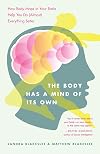
Fascinating summary of the many years of research into how the brain has "maps" for its interactions and relationships with the world, starting with the work of Wilder Penfield in the 1930's and concluding with the notion that our brains are not directed by some central "homunculus" but rather we{you} "...have the irreducible illustion of being the conductor of your life's music in all its coplexity, emotional nuance, crescendo and diminuendo - the ballad that is the you-ness of you."
Our show more brains have "maps" of neural circuitry that adjust to our circumstances and surroundings - the Blakeslees provide NUMEROUS fascinating examples of how our brains can incorporate even the tools we use into our "body maps" such that our brain "sees" the tools as extensions of our bodies.
One might be tempted to conclude, after reading this book, that the Blakeslees are suggesting that our consciousness is the sum-total of the interactions of these maps.
Whether or not such is the case, the descriptions they provide of the ongoing scientific research are fascinating as are their inclusions of some of the bizarre illusions that one can safely try for oneself regarding sensations of one's own body (and even mentally incorporating someone else's body part(s) into one's one map)! show less
Our show more brains have "maps" of neural circuitry that adjust to our circumstances and surroundings - the Blakeslees provide NUMEROUS fascinating examples of how our brains can incorporate even the tools we use into our "body maps" such that our brain "sees" the tools as extensions of our bodies.
One might be tempted to conclude, after reading this book, that the Blakeslees are suggesting that our consciousness is the sum-total of the interactions of these maps.
Whether or not such is the case, the descriptions they provide of the ongoing scientific research are fascinating as are their inclusions of some of the bizarre illusions that one can safely try for oneself regarding sensations of one's own body (and even mentally incorporating someone else's body part(s) into one's one map)! show less
Lists
Awards


You May Also Like


Associated Authors
Statistics
- Works
- 10
- Also by
- 3
- Members
- 3,323
- Popularity
- #7,699
- Rating
- 4.1
- Reviews
- 30
- ISBNs
- 65
- Languages
- 9