
About the Author
John J. Ratey, M.D., is associate clinical professor of psychiatry at Harvard Medical School.
Works by John J. Ratey
Driven to Distraction: Recognizing and Coping with Attention Deficit Disorder from Childhood Through Adulthood (1994) — Author — 2,192 copies, 16 reviews
Delivered from Distraction: Getting the Most out of Life with Attention Deficit Disorder (2005) 903 copies, 12 reviews
A User's Guide to the Brain: Perception, Attention, and the Four Theaters of the Brain (2001) 698 copies, 7 reviews
ADHD 2.0: New Science and Essential Strategies for Thriving with Distraction--from Childhood through Adulthood (2021) 500 copies, 3 reviews
Shadow Syndromes: Recognizing and Coping with the Hidden Psychological Disorders That Can Influence Your Behavior and Silently Determine the Course of Your Life (1997) 226 copies, 2 reviews
Driven to Distraction: Recognizing and Coping with Attention Deficit Disorder — Author — 2 copies
Zivilisationskrank: Wie wir unsere biologische Natur mit dem modernen Leben versöhnen (German Edition) (2016) 1 copy
Spark (Unabridged) Part 2 1 copy
Spark (Unabridged) Part 1 1 copy
Tagged
Common Knowledge
- Birthdate
- 1948-04-07
- Gender
- male
Members
Reviews
Delivered from Distraction: Getting the Most out of Life with Attention Deficit Disorder by Edward M. Hallowell
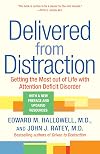
"In 1994, Driven to Distraction sparked a revolution in our understanding of attention deficit disorder. Now a second revolution is under way in the approach to ADD, and the news is great. Drug therapies, our awareness of the role of diet and exercise, even the way we define the disorder -- all are changing radically. In this new book, Drs. Edward M. Hallowell and John J. Ratey build on the breakthroughs of Driven to Distraction to offer a comprehensive and entirely up-to-date guide to show more living a rich and productive life with ADD.
"Tailored expressly to ADD learning styles and attention spans, Driven to Distraction provides accessible, engaging discussions of every aspect of the condition, including new diagnostic procedures; whether ADD runs in families; links between ADD and other conditions; ways people with ADD can free up their inner talents; the truth about the new drugs and how they work; exciting advances in nonpharmaceutical therapies; sexual problems associated with ADD and how to resolve them; and strategies for dealing with procrastination, clutter, and chronic forgetfulness. Driven to Distraction is a wise, nurturing guide to releasing the positive energy that ll people with ADD hold inside."
~~back cover
Reading this book, I discovered more things about myself that are the result of my ADD, most specifically: piles. I've always made piles and they've always gotten out of hand; I thought it was just me. I looked around my house and remembered all the enormous piles I've dealt with and removed, and then I looked around again at all the new piles that have taken their place. "Then, one unsuspecting day, we walk into our disorganized office and see that it looks like a dumpster was emptied in it, and we fall to our knees and cry. We feel overwhelmed and inept. Incompetent. Lost. And so sad." What a perfect description of my life! "Most people will counsel you on how to get superorganuized. I urge you to ignore that advice if you have ADD. It is just not in the cards for you. But it doesn't matter. Instead, put your energy into getting well enough organized to reach your dreams." Talk about your get-out-of-jail-free cards! Following this excellent, practical advice will mean giving up my dream of a minimalist, uncluttered house and office, but obviously that's exactly what I need to do.
This book has this kind of practical, supportive advice for so many of the problems and difficulties that plague people with ADD. I can't recommend it strongly enough! show less
"Tailored expressly to ADD learning styles and attention spans, Driven to Distraction provides accessible, engaging discussions of every aspect of the condition, including new diagnostic procedures; whether ADD runs in families; links between ADD and other conditions; ways people with ADD can free up their inner talents; the truth about the new drugs and how they work; exciting advances in nonpharmaceutical therapies; sexual problems associated with ADD and how to resolve them; and strategies for dealing with procrastination, clutter, and chronic forgetfulness. Driven to Distraction is a wise, nurturing guide to releasing the positive energy that ll people with ADD hold inside."
~~back cover
Reading this book, I discovered more things about myself that are the result of my ADD, most specifically: piles. I've always made piles and they've always gotten out of hand; I thought it was just me. I looked around my house and remembered all the enormous piles I've dealt with and removed, and then I looked around again at all the new piles that have taken their place. "Then, one unsuspecting day, we walk into our disorganized office and see that it looks like a dumpster was emptied in it, and we fall to our knees and cry. We feel overwhelmed and inept. Incompetent. Lost. And so sad." What a perfect description of my life! "Most people will counsel you on how to get superorganuized. I urge you to ignore that advice if you have ADD. It is just not in the cards for you. But it doesn't matter. Instead, put your energy into getting well enough organized to reach your dreams." Talk about your get-out-of-jail-free cards! Following this excellent, practical advice will mean giving up my dream of a minimalist, uncluttered house and office, but obviously that's exactly what I need to do.
This book has this kind of practical, supportive advice for so many of the problems and difficulties that plague people with ADD. I can't recommend it strongly enough! show less
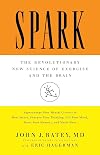
This has been sitting in my Audible library for a while. I think I started it instead of Abercrombie's Heroes because I wanted to listen to more non-fic in an "eat more broccoli" sort of way.
THIS BROCCOLI IS DELICIOUS!!!
Ratey makes the case for exercise as a therapy for many psychiatric disorders based on neuroscience, good studies, and persuasive argumentation. He's not selling a panacea. He's not against treating disorders w/ pharmaceuticals, but he does show the evidence that exercise show more (both aerobic and more complex movements like martial-arts or dancing) create positive changes in brain chemistry and architecture.
It is persuasive, smart, and fun to read. Highly recommended. show less
THIS BROCCOLI IS DELICIOUS!!!
Ratey makes the case for exercise as a therapy for many psychiatric disorders based on neuroscience, good studies, and persuasive argumentation. He's not selling a panacea. He's not against treating disorders w/ pharmaceuticals, but he does show the evidence that exercise show more (both aerobic and more complex movements like martial-arts or dancing) create positive changes in brain chemistry and architecture.
It is persuasive, smart, and fun to read. Highly recommended. show less

An informative book topic, though I was often confounded by the author's extrapolation of research that was too rarely cited to support the point they wanted to emphasize. The main difficulty arose based on their sketchy referrals to the underlying research. To accurately place Ratey and Manning's information in context required my reading the background research papers on which the authors rely. Curiosity-driven, I wanted to be confident that their interpretation of academic articles was show more supportable. A citation list at the end of each chapter would have effectively improved the reading progress. Despite some minor personal disagreements with their way of explaining, a great deal of useful interpretation in the book and lifestyle insights are emphasized which can easily escape interested people's notice otherwise.
I was particularly happy to see meat and dairy categories promoted as having a suitable place in the human diet. More importantly, coining the word carbovore as a descriptor of today's human being in modern society was brilliant. The chapter(s) explaining that the digestion (metabolism) of all carbohydrates ultimately reduces 'carbs' to sugar in the bloodstream were approachable for any interested reader to grasp.
This discussion tied in to an explanation of the resulting inflammation (from high carbohydrate intake) and referred to data showing the potential for cardiovascular problems, as well as obesity. Such useful insights would be useful if the general population coping with obesity and painful joints etc. could have an understanding along these lines.
The book didn't strike me as prescriptive or bossy, although I found countless instances of writing style choices which could mislead readers. For example, evolution is a change in the heritable characteristics of all living organisms. It is passive and happens over long periods of time. Too frequently, the authors write in a manner indicating there is thought, consciousness, or deliberation in these processes. A small point, but with huge consequences in terms of understanding the geological time frame. There were also passages that sidetracked the thrust of the discussion with lengthy case history anecdotes, instead of cutting to the chase to make the point. Hence a 3½-star book, though it does carry a 5-star message. show less
I was particularly happy to see meat and dairy categories promoted as having a suitable place in the human diet. More importantly, coining the word carbovore as a descriptor of today's human being in modern society was brilliant. The chapter(s) explaining that the digestion (metabolism) of all carbohydrates ultimately reduces 'carbs' to sugar in the bloodstream were approachable for any interested reader to grasp.
This discussion tied in to an explanation of the resulting inflammation (from high carbohydrate intake) and referred to data showing the potential for cardiovascular problems, as well as obesity. Such useful insights would be useful if the general population coping with obesity and painful joints etc. could have an understanding along these lines.
The book didn't strike me as prescriptive or bossy, although I found countless instances of writing style choices which could mislead readers. For example, evolution is a change in the heritable characteristics of all living organisms. It is passive and happens over long periods of time. Too frequently, the authors write in a manner indicating there is thought, consciousness, or deliberation in these processes. A small point, but with huge consequences in terms of understanding the geological time frame. There were also passages that sidetracked the thrust of the discussion with lengthy case history anecdotes, instead of cutting to the chase to make the point. Hence a 3½-star book, though it does carry a 5-star message. show less
A user's guide to the brain : perception, attention, and the four theaters of the brain by John J. Ratey
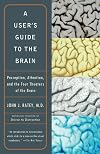
The title is a bit of a misnomer, not so much in content but in tone. The blurb on the front of my copy mentions "man on the street vocabulary." I'm not quite sure I would go that far. This book IS accessible, but I'd say the man on the street who hasn't gone to college might have some trouble. It's not so much the vocabulary. Although the book doesn't shy away from the neuroanatomy jargon, it does tend to explain the terms fairly well and shows pictures. Still, there is a lot of content, show more and if someone came to this "user's guide" with no background in psychology or neurology, he might encounter quite a challenge with information density. The approach is definitely from a medical angle in many places; e.g., here's what can go wrong when this part of the brain doesn't develop properly. Readers can learn about the workings of the brain in Everyman as well as the brain basis for psychiatric and neurological conditions. Because of the author's background, there is a little extra attention paid to autism and attention deficit disorder, but more common conditions such as stroke are also given their due.
While there are certainly anecdotes peppering the text, this book isn't as approachable as the set of stories in a more Oliver Sacks-style approach. This book does read more like a survey course in psychology than entertainment for the curious. And survey it does, building a good case for the importance of the often taken for granted aspects of perception and cognition that underlie the development of behavioral differences so often treated as simple "chemical imbalances" for which a pill is a simple cure. I appreciated that the author brought to an intelligent public the subtleties of how genetics and environment interact. Where such writers as Damasio and Schacter have written books catering to subtopics (the role of emotion in rationality and memory respectively), Ratey wants to tackle developmental psychology and plasticity following brain injury and genetic differences and the impact of social environment and...and...and. Having read fairly widely in the area of popular cognitive science, I didn't find a lot that was new here, but I was struck by the breadth and the ambitiousness of bringing so much together in what seems to be intended as a popular book. Although a brief list of suggested reading is presented, it too seems a bit confused as to its aim, sometimes aiming for the average educated layperson and sometimes a bit higher than that. The book did not seem quite "popular" enough in style to eliminate all references, but there were none. There were also some passages that seemed a bit repetitious in certain sections of the book, where descriptions had been added in two places, but editing didn't remove redundancies.
I enjoyed reading this book and integrating so many areas of neuroscience and psychology, but I think perhaps the author and his ghostwriter were still not quite sure of their audience. The parts are pulled into a whole rather well, and there is a good deal to savor. There are important discussions about how small differences untreated can lead to large difficulties in social and occupational functioning, but also important things to say about the resilience of the brain when given targeted treatment. I do recommend the work, although perhaps not to those uninitiated, who do not already know of Phineas Gage or who have never heard the terms aphasia or serotonin. show less
While there are certainly anecdotes peppering the text, this book isn't as approachable as the set of stories in a more Oliver Sacks-style approach. This book does read more like a survey course in psychology than entertainment for the curious. And survey it does, building a good case for the importance of the often taken for granted aspects of perception and cognition that underlie the development of behavioral differences so often treated as simple "chemical imbalances" for which a pill is a simple cure. I appreciated that the author brought to an intelligent public the subtleties of how genetics and environment interact. Where such writers as Damasio and Schacter have written books catering to subtopics (the role of emotion in rationality and memory respectively), Ratey wants to tackle developmental psychology and plasticity following brain injury and genetic differences and the impact of social environment and...and...and. Having read fairly widely in the area of popular cognitive science, I didn't find a lot that was new here, but I was struck by the breadth and the ambitiousness of bringing so much together in what seems to be intended as a popular book. Although a brief list of suggested reading is presented, it too seems a bit confused as to its aim, sometimes aiming for the average educated layperson and sometimes a bit higher than that. The book did not seem quite "popular" enough in style to eliminate all references, but there were none. There were also some passages that seemed a bit repetitious in certain sections of the book, where descriptions had been added in two places, but editing didn't remove redundancies.
I enjoyed reading this book and integrating so many areas of neuroscience and psychology, but I think perhaps the author and his ghostwriter were still not quite sure of their audience. The parts are pulled into a whole rather well, and there is a good deal to savor. There are important discussions about how small differences untreated can lead to large difficulties in social and occupational functioning, but also important things to say about the resilience of the brain when given targeted treatment. I do recommend the work, although perhaps not to those uninitiated, who do not already know of Phineas Gage or who have never heard the terms aphasia or serotonin. show less
Lists
You May Also Like


Associated Authors
Statistics
- Works
- 17
- Members
- 6,111
- Popularity
- #4,029
- Rating
- 3.9
- Reviews
- 58
- ISBNs
- 99
- Languages
- 7