

Louise Desalvo (1942–2018)
Author of Writing as a Way of Healing: How Telling Our Stories Transforms Our Lives
About the Author
Louise A. DeSalvo was born Louise Anita Sciacchetano in Jersey City, New Jersey on September 27, 1942. She received a bachelor's degree in English from Douglass College in 1963. She taught at Wood-Ridge High School for four years before receiving a master's degree in English in 1972 and a Ph.D. in show more English in 1977 from New York University. She taught at Fairleigh Dickinson University from 1977 to 1982 before becoming a professor of English and creative writing at Hunter College. She was an authority on Virginia Woolf and a memoirist on Italian-American culture. She wrote and edited numerous books including Virginia Woolf: The Impact of Childhood Sexual Abuse on Her Life and Work; Between Women: Biographers, Novelists, Critics, Teachers and Artists Write About Their Work on Women; Territories of the Voice: Short Stories by Irish Women; The Letters of Vita Sackville-West to Virginia Woolf; The Milk of Almonds: Italian American Women Writers on Food and Culture; Writing as a Way of Healing; and The Art of Slow Writing. She wrote several memoirs including Crazy in the Kitchen, Chasing Ghosts, The House of Early Sorrows, and Vertigo, which won the Gay Talese Award. Her novel, Casting Off, was published in 1987. She died from metastatic breast cancer on October 31, 2018 at the age of 76. (Bowker Author Biography) show less
Works by Louise Desalvo
Writing as a Way of Healing: How Telling Our Stories Transforms Our Lives (1999) 351 copies, 2 reviews
Virginia Woolf: The Impact of Childhood Sexual Abuse on Her Life and Work (1989) 210 copies, 2 reviews
Between Women: Biographers, Novelists, Critics, Teachers and Artists Write about Their Work on Women (1984) — Editor — 70 copies
Conceived with Malice: Literature as Revenge in the Lives of Woolf, Lawrence, Barnes, Miller (1994) 50 copies
Territories of the Voice: Contemporary Stories by Irish Women Writers (1989) — Editor — 45 copies, 1 review
Associated Works
Here Lies My Heart: Essays on Why We Marry, Why We Don't, and What We Find There (1999) — Contributor — 62 copies, 3 reviews
True Stories, Well Told: From the First 20 Years of Creative Nonfiction Magazine (2014) — Contributor — 56 copies, 10 reviews
Tagged
Common Knowledge
- Other names
- Sciacchetano, Louise Anita (birth name)
- Birthdate
- 1942-09-27
- Date of death
- 2018-10-31
- Gender
- female
- Education
- New York University (MA - English, PhD - English)
Rutgers University (BA - English) - Occupations
- literary scholar
memoirist
biographer
food writer
professor (Writing and Literature)
essayist - Organizations
- City University of New York (Hunter College)
Fairleigh Dickinson University - Nationality
- USA
- Birthplace
- Jersey City, New Jersey, USA
- Places of residence
- Hoboken, New Jersey, USA
Ridgefield, New Jersey, USA - Place of death
- Montclair, New Jersey, USA
- Associated Place (for map)
- New Jersey, USA
Members
Reviews
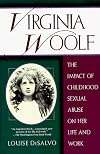
DeSalvo's analysis of Virginia Woolf's childhood and how it influenced her writing rings even more true now, what with the #MeTo movement and its revelations, than when the book was published in 1990. I was especially moved by her contention that Woolf fought back against her family and her society through her writing. I finished the book with a strong belief in the value of writing to define and assert the self, especially when you are being pressed to conform to a social structure that show more denigrates you. show less
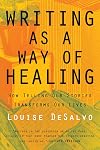
I have now read this book twice. The first time was shortly after my husband was diagnosed with brain cancer and it just seemed like a good time. This time just seemed like a good time because I remember it being so very comforting as a writing instruction book in general - a book about telling our stories. And it has such a wealth of examples of other great pieces of literature and authors who have used writing to save themselves from destruction and helped themselves through pain and show more illness.
There are some jewels in this book.
I loved this: (Alice) Walker compares her lifesaving habit of storytelling to the tradition of native American sand painting. In Native American cultures, she reports, “when you feel sick at heart, sick in soul, you do sand paintings. Or you make a basket. The thing is that you are focused on creating something. And while you’re doing that, there’s a kind of spiritual alchemy that happens and you turn that bad feeling into something that becomes a golden light. It’s all because you are intensely creating something that is beautiful. And in Native American cultures, by the time you’ve finished the sand painting, you’re well. the point is to heal yourself.”
I definitely recommend this book if you are looking for a way to help yourself through a hard time, a health crisis, sadness, or a way to heal from anything. We all have something from which to heal. Tell your story. Even if you keep it to yourself, if you follow these steps in writing it down, you can help heal your soul. show less
There are some jewels in this book.
I loved this: (Alice) Walker compares her lifesaving habit of storytelling to the tradition of native American sand painting. In Native American cultures, she reports, “when you feel sick at heart, sick in soul, you do sand paintings. Or you make a basket. The thing is that you are focused on creating something. And while you’re doing that, there’s a kind of spiritual alchemy that happens and you turn that bad feeling into something that becomes a golden light. It’s all because you are intensely creating something that is beautiful. And in Native American cultures, by the time you’ve finished the sand painting, you’re well. the point is to heal yourself.”
I definitely recommend this book if you are looking for a way to help yourself through a hard time, a health crisis, sadness, or a way to heal from anything. We all have something from which to heal. Tell your story. Even if you keep it to yourself, if you follow these steps in writing it down, you can help heal your soul. show less
I have mixed feelings about this book. There was some good advice in here to be sure, and I thought it gave some good insight into the relationship between writing and mental health that I hadn't thought about before. I particularly liked the parts about writing as a general practice, not necessarily about writing about emotional pain specifically, and how it can help one do well emotionally.
But at the same time there was an odd thread of judgmentalness towards people with mental illness, show more which is not exactly what one would expect from a book dealing with emotional pain. The author seemed much more sympathetic towards people who have experienced specific instances of trauma (which seemed to be mainly who the book was written for) but do not have a diagnosed mental illness than people who are just bipolar or depressed. She said some pretty shitty things about Sylvia Plath (who's my favourite author and someone I'm very sensitive about) and said numerous times that she "didn't have a mother" because her mother was depressed and sometimes had a hard time taking care of her when she was growing up. As someone who's bipolar, reading things like that really got to me. I definitely expected more sympathy from someone writing a book like this.
Overall I thought it was a worthwhile read in spite of the parts that bothered me. I'm going to be taking some of the advice into consideration with my own writing. show less
But at the same time there was an odd thread of judgmentalness towards people with mental illness, show more which is not exactly what one would expect from a book dealing with emotional pain. The author seemed much more sympathetic towards people who have experienced specific instances of trauma (which seemed to be mainly who the book was written for) but do not have a diagnosed mental illness than people who are just bipolar or depressed. She said some pretty shitty things about Sylvia Plath (who's my favourite author and someone I'm very sensitive about) and said numerous times that she "didn't have a mother" because her mother was depressed and sometimes had a hard time taking care of her when she was growing up. As someone who's bipolar, reading things like that really got to me. I definitely expected more sympathy from someone writing a book like this.
Overall I thought it was a worthwhile read in spite of the parts that bothered me. I'm going to be taking some of the advice into consideration with my own writing. show less
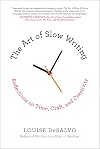
Aiming for the finish line, rather than focusing on the practice … won’t get you your black belt in karate; if the instructors realize you’re in it for the belt only, you’re told to discontinue your study.
This is a good primer on the writing process and the writing life, particularly advocating a slower, more thoughtful attention to process rather than goal. Its 60 essays are each 4-5-pages, informational and inspirational with a myriad of famous writers’ experiences, organized show more into sections about getting ready to write; beginning writing; challenges and successes; time away from writing; and finishing a long-form work. There is a fair amount of repetition among the essays. Good for beginning (or returning) writers. show less
This is a good primer on the writing process and the writing life, particularly advocating a slower, more thoughtful attention to process rather than goal. Its 60 essays are each 4-5-pages, informational and inspirational with a myriad of famous writers’ experiences, organized show more into sections about getting ready to write; beginning writing; challenges and successes; time away from writing; and finishing a long-form work. There is a fair amount of repetition among the essays. Good for beginning (or returning) writers. show less
Lists
Awards


You May Also Like


Associated Authors
Statistics
- Works
- 18
- Also by
- 6
- Members
- 1,155
- Popularity
- #22,249
- Rating
- 4.0
- Reviews
- 11
- ISBNs
- 60
- Languages
- 5
- Favorited
- 2