
Jean-Philippe Blondel
Author of The 6:41 to Paris
About the Author
Image credit: Jean-Philippe Blondel
Works by Jean-Philippe Blondel
Associated Works
A Very French Christmas: The Greatest French Holiday Stories of All Time (2017) — Contributor — 34 copies, 1 review
Tagged
Common Knowledge
- Birthdate
- 1964-10
- Gender
- male
- Nationality
- Frankreich
- Birthplace
- Troyes, Champagne-Ardenne, Frankreich
Members
Reviews
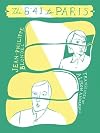
Cécile Duffaut, a middle-aged French woman, married with a teenage daughter, boards a train to Paris at the station near the home of her elderly parents. Oop! Is that Philippe Leduc she spots? He's headed her way; the only empty seat is right next to her. She's not happy to see him, but is modestly comforted that he apparently does not recognize her. Au contraire, he does recognize her, and the stew suddenly boiling in his brain is no different than the stew in hers. You see, Cécile and show more Philippe had an affair nearly 30 years before, which ended with Cécile humiliated, livid, returning from London alone. Though they haven't seen each other since, neither has forgotten any detail of their affair. Each is silently assessing the other's appearance, dress, poise, each thinking, "Hmmm. Might we get together again?" show less
"Stop apologizing, Fabrice. I've always liked listening to other people. It relaxes me."
"That's also my favorite activity. So, as it happens, running a cafe is ideal."
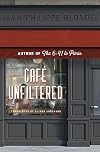
I received this as an ARC. I love cafes (could you tell?), and French cafes like this one are special. When a character asks us at the end whether we'd like to join her there, my answer was a resounding yes.
We get to meet the shy owner, Fabrice, and the amiable former owner, Jocelyn, and Chloe, the mysterious artist who sits in show more the back and sketches customers, and Fabrice's friend from childhood Jose, who assists him at the cafe, along with several others entwined with their lives or otherwise associated with the cafe. Blondel manages to seamlessly weave their stories together, some of which contain substantial surprises. Life, ah, sweet, unpredictable life. I happily stayed at this cafe until closing, and I'd love to spend more time there. show less
"That's also my favorite activity. So, as it happens, running a cafe is ideal."
I received this as an ARC. I love cafes (could you tell?), and French cafes like this one are special. When a character asks us at the end whether we'd like to join her there, my answer was a resounding yes.
We get to meet the shy owner, Fabrice, and the amiable former owner, Jocelyn, and Chloe, the mysterious artist who sits in show more the back and sketches customers, and Fabrice's friend from childhood Jose, who assists him at the cafe, along with several others entwined with their lives or otherwise associated with the cafe. Blondel manages to seamlessly weave their stories together, some of which contain substantial surprises. Life, ah, sweet, unpredictable life. I happily stayed at this cafe until closing, and I'd love to spend more time there. show less
 This review was written for LibraryThing Early Reviewers.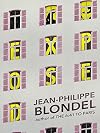
Exposure. What does the word mean to you? Is it physical? Emotional? Is it purely public or can a person be exposed to themselves? Is exposure positive or negative? We speak of exposing a person's character or their lies. Flashers expose their bodies. But then there's the sense of exposure within photography. Different exposures lead to different final images. Can a person, a thing, an action be partially exposed and still be true? Jean-Philippe Blondel is playing with many different ideas show more of exposure and their impact in his novel Exposed.
Louis Claret is an English teacher in France. He's invited to a gallery showing when one of his former pupils, now a well known painter, has a retrospective and the novel opens with him reflecting on the fact that he's lost his passion for teaching and he's uncertain why he was included on the guest list for the event. When he meets his student, Alexandre Laudin, again they speak of nothing of any consequence and Claret's life continues on as it always has. But then Laudin gets in touch with him and the two kindle an odd sort of friendship, a kind of reliance on each other. And Laudin asks his former teacher to model for a planned triptych, not just to pose for a conventional portrait but to pose nude. This request exposes Louis not only in a physical sense but it exposes him emotionally too as he considers the request.
The novel is not sexual, exactly. The frisson is more in the lure of possibility and of seeing oneself (hopefully) admired through the eyes of another. It is in the potential for Laudin to uncover the essence of his old teacher, of Claret baring not just his flesh but his soul. The novel is narrated by Louis and it is deeply meditative and introspective. There are no big plot movements, only small events in the quiet reckoning Louis makes of his life in late middle age. He weaves the instances of his childhood, his now failed marriage, and his relationship with his adult daughters into the experience of being Laudin's subject and perhaps even his friend. There is an elegiac tone to the novel and Louis' life, as he exposes his past, has a sort of torpor to it. It is a subtle, ambiguous novel, one where the meaning, the art is continually exposed, layer by painstaking layer, even after the last page is finished. It is a short novel but one that leaves the reader wondering in the end just what all has, in fact, been exposed. The heart of Claret? Who's to say? show less
Louis Claret is an English teacher in France. He's invited to a gallery showing when one of his former pupils, now a well known painter, has a retrospective and the novel opens with him reflecting on the fact that he's lost his passion for teaching and he's uncertain why he was included on the guest list for the event. When he meets his student, Alexandre Laudin, again they speak of nothing of any consequence and Claret's life continues on as it always has. But then Laudin gets in touch with him and the two kindle an odd sort of friendship, a kind of reliance on each other. And Laudin asks his former teacher to model for a planned triptych, not just to pose for a conventional portrait but to pose nude. This request exposes Louis not only in a physical sense but it exposes him emotionally too as he considers the request.
The novel is not sexual, exactly. The frisson is more in the lure of possibility and of seeing oneself (hopefully) admired through the eyes of another. It is in the potential for Laudin to uncover the essence of his old teacher, of Claret baring not just his flesh but his soul. The novel is narrated by Louis and it is deeply meditative and introspective. There are no big plot movements, only small events in the quiet reckoning Louis makes of his life in late middle age. He weaves the instances of his childhood, his now failed marriage, and his relationship with his adult daughters into the experience of being Laudin's subject and perhaps even his friend. There is an elegiac tone to the novel and Louis' life, as he exposes his past, has a sort of torpor to it. It is a subtle, ambiguous novel, one where the meaning, the art is continually exposed, layer by painstaking layer, even after the last page is finished. It is a short novel but one that leaves the reader wondering in the end just what all has, in fact, been exposed. The heart of Claret? Who's to say? show less
Rating: 3.5* of five
The Publisher Says: Cécile, a stylish forty-seven-year-old, has spent the weekend visiting her parents in a provincial town southeast of Paris. By early Monday morning, she's exhausted. These trips back home are always stressful and she settles into a train compartment with an empty seat beside her. But it's soon occupied by a man she instantly recognizes: Philippe Leduc, with whom she had a passionate affair that ended in her brutal humiliation thirty years ago.
In the show more fraught hour and a half that ensues, their express train hurtles towards the French capital. Cécile and Philippe undertake their own face to face journey—In silence? What could they possibly say to one another?—with the reader gaining entrée to the most private of thoughts. This is a psychological thriller about past romance, with all its pain and promise.
I RECEIVED A DRC FROM THE PUBLISHER VIA EDELWEISS+. THANK YOU.
My Review: Great loves that end badly don't, in my own experience, end. "The one that got away" and "the slime who broke my heart" and other such angry, wistful, and vaporous utterances are mainstays of entire genres of literature, romantic or suspenseful or violent as they need to be. Love needs an ending, not merely an end.
These two former lovers get a shocking amount of thinking (but nothing else) done on their trip to Paris; home, or not. Voyages are excellent mulling-over time. "Was it worth it?" A question that never offers one answer or even one foundation for an answer.
New Vessel Press requests $9.99 transfer itself to them before you may legally access the nebulous, intellectual jeu d'esprit of a story. show less
The Publisher Says: Cécile, a stylish forty-seven-year-old, has spent the weekend visiting her parents in a provincial town southeast of Paris. By early Monday morning, she's exhausted. These trips back home are always stressful and she settles into a train compartment with an empty seat beside her. But it's soon occupied by a man she instantly recognizes: Philippe Leduc, with whom she had a passionate affair that ended in her brutal humiliation thirty years ago.
In the show more fraught hour and a half that ensues, their express train hurtles towards the French capital. Cécile and Philippe undertake their own face to face journey—In silence? What could they possibly say to one another?—with the reader gaining entrée to the most private of thoughts. This is a psychological thriller about past romance, with all its pain and promise.
I RECEIVED A DRC FROM THE PUBLISHER VIA EDELWEISS+. THANK YOU.
My Review: Great loves that end badly don't, in my own experience, end. "The one that got away" and "the slime who broke my heart" and other such angry, wistful, and vaporous utterances are mainstays of entire genres of literature, romantic or suspenseful or violent as they need to be. Love needs an ending, not merely an end.
These two former lovers get a shocking amount of thinking (but nothing else) done on their trip to Paris; home, or not. Voyages are excellent mulling-over time. "Was it worth it?" A question that never offers one answer or even one foundation for an answer.
New Vessel Press requests $9.99 transfer itself to them before you may legally access the nebulous, intellectual jeu d'esprit of a story. show less
Lists
Awards


You May Also Like


Associated Authors
Statistics
- Works
- 34
- Also by
- 1
- Members
- 473
- Popularity
- #52,093
- Rating
- 3.7
- Reviews
- 40
- ISBNs
- 97
- Languages
- 6
