
J. R. Thorp
Author of Learwife
About the Author
Works by J. R. Thorp
Tagged
Common Knowledge
- Gender
- female
- Short biography
- She won a Markievicz Award from the Irish Arts Council in 2021 and was one of The Observer's top 10 debut novelists of 2021. She was shortlisted for the BBC Opening Lines Prize, won the London Short Story Award in 2011, and has been published in the Cambridge Literary Review, Manchester Review, Wave Composition, and elsewhere. She wrote the libretto for the highly acclaimed modern opera Dear Marie Stopes and has had works commissioned by the Arts Council, the Wellcome Trust and St Paul’s Cathedral, amongst others.
- Nationality
- Australia
- Associated Place (for map)
- Australia
Members
Reviews
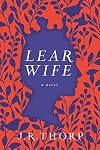
“I am the queen of two crowns, banished fifteen years, the famed and gilded woman, bad-luck baleful girl, mother of three small animals, now gone. I am fifty-five years old. I am Lear’s wife. I am here.”
This story is an imagining of the life of King Lear’s wife. She is only briefly mentioned in Shakespeare’s play and is said to be deceased. Learwife brings her vividly to life. King Lear and her three daughters (Goneril, Regan, and Cordelia) are dead. Queen Lear has been exiled to show more an abbey for the past fifteen years. We eventually discover the reason for her banishment.
We spend the entire book in the queen’s head. We are privy to her thoughts, dreams, memories, feelings, and mental decline. The narrative is stream-of-consciousness, shifting backward and forward in time. We listen to her interactions with the nuns and the abbess. The queen is not a pleasant woman. She is cunning and manipulative, and we begin to understand why the two eldest daughters turned out as they did.
The writing is operatic and evokes a period of long ago – it is not quite Shakespearean but is a modernized version. This writing style is effective in creating the atmosphere of isolation and bitterness. For example: “Holy girls in torchlight, scraped open with fear. Perhaps they think I have tentacles, snake-throat, a black tongue. I would bare my teeth at them; I would be mythic.”
This is a beautiful and creative piece of writing. It is character-driven and slow in developing. It is more about adding to the original play. Themes include loss, grief, power, and the role of women of the time to bear a male heir. Familiarity with Shakespeare’s King Lear is essential to the enjoyment of this novel. show less
This story is an imagining of the life of King Lear’s wife. She is only briefly mentioned in Shakespeare’s play and is said to be deceased. Learwife brings her vividly to life. King Lear and her three daughters (Goneril, Regan, and Cordelia) are dead. Queen Lear has been exiled to show more an abbey for the past fifteen years. We eventually discover the reason for her banishment.
We spend the entire book in the queen’s head. We are privy to her thoughts, dreams, memories, feelings, and mental decline. The narrative is stream-of-consciousness, shifting backward and forward in time. We listen to her interactions with the nuns and the abbess. The queen is not a pleasant woman. She is cunning and manipulative, and we begin to understand why the two eldest daughters turned out as they did.
The writing is operatic and evokes a period of long ago – it is not quite Shakespearean but is a modernized version. This writing style is effective in creating the atmosphere of isolation and bitterness. For example: “Holy girls in torchlight, scraped open with fear. Perhaps they think I have tentacles, snake-throat, a black tongue. I would bare my teeth at them; I would be mythic.”
This is a beautiful and creative piece of writing. It is character-driven and slow in developing. It is more about adding to the original play. Themes include loss, grief, power, and the role of women of the time to bear a male heir. Familiarity with Shakespeare’s King Lear is essential to the enjoyment of this novel. show less
“I am the queen of two crowns, banished fifteen years, the famed and gilded woman, bad-luck baleful girl, mother of three small animals, now gone. I am fifty-five years old. I am Lear’s wife. I am here.”
This story is an imagining of the life of King Lear’s wife. She is only briefly mentioned in Shakespeare’s play and is said to be deceased. Learwife brings her vividly to life. King Lear and her three daughters (Goneril, Regan, and Cordelia) are dead. Queen Lear has been exiled to show more an abbey for the past fifteen years. We eventually discover the reason for her banishment.
We spend the entire book in the queen’s head. We are privy to her thoughts, dreams, memories, feelings, and mental decline. The narrative is stream-of-consciousness, shifting backward and forward in time. We listen to her interactions with the nuns and the abbess. The queen is not a pleasant woman. She is cunning and manipulative, and we begin to understand why the two eldest daughters turned out as they did.
The writing is operatic and evokes a period of long ago – it is not quite Shakespearean but is a modernized version. This writing style is effective in creating the atmosphere of isolation and bitterness. For example: “Holy girls in torchlight, scraped open with fear. Perhaps they think I have tentacles, snake-throat, a black tongue. I would bare my teeth at them; I would be mythic.”
This is a beautiful and creative piece of writing. It is character-driven and slow in developing. It is more about adding to the original play. Themes include loss, grief, power, and the role of women of the time to bear a male heir. Familiarity with Shakespeare’s King Lear is essential to the enjoyment of this novel. show less
This story is an imagining of the life of King Lear’s wife. She is only briefly mentioned in Shakespeare’s play and is said to be deceased. Learwife brings her vividly to life. King Lear and her three daughters (Goneril, Regan, and Cordelia) are dead. Queen Lear has been exiled to show more an abbey for the past fifteen years. We eventually discover the reason for her banishment.
We spend the entire book in the queen’s head. We are privy to her thoughts, dreams, memories, feelings, and mental decline. The narrative is stream-of-consciousness, shifting backward and forward in time. We listen to her interactions with the nuns and the abbess. The queen is not a pleasant woman. She is cunning and manipulative, and we begin to understand why the two eldest daughters turned out as they did.
The writing is operatic and evokes a period of long ago – it is not quite Shakespearean but is a modernized version. This writing style is effective in creating the atmosphere of isolation and bitterness. For example: “Holy girls in torchlight, scraped open with fear. Perhaps they think I have tentacles, snake-throat, a black tongue. I would bare my teeth at them; I would be mythic.”
This is a beautiful and creative piece of writing. It is character-driven and slow in developing. It is more about adding to the original play. Themes include loss, grief, power, and the role of women of the time to bear a male heir. Familiarity with Shakespeare’s King Lear is essential to the enjoyment of this novel. show less
The story ends with the death of King Lear and his daughters, a tragedy, yet one member of the family is still alive, Lear's wife, imprisoned in an abbey for fifteen years. She no longer knows her own name but the Queen is still a queen and holds power as the abbey is quarantined and the old abbess dies. Still manipulative she muses on her past and the reasons why she was forsaken whilst plotting her escape.
This is an absolutely brilliant book. It takes the Shakespearean tale of King Lear show more and offers a side-story which is completely wonderful. The Queen is an unlikable character yet as she descends into senility her story is complete. The writing is complex but intelligible, the plot clear yet wonderfully developed and poetic cadence works so well. show less
This is an absolutely brilliant book. It takes the Shakespearean tale of King Lear show more and offers a side-story which is completely wonderful. The Queen is an unlikable character yet as she descends into senility her story is complete. The writing is complex but intelligible, the plot clear yet wonderfully developed and poetic cadence works so well. show less
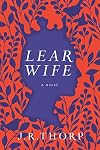
'Under the crack of this grief I feel myself slipping out into other forms: animal, vegetal, sea-spill foam, winter wind, a boar roaring blue in the dark. Then at least I would fit the tales: story-woman, death's head, corrupting flesh at the touch. Oh, I know them, every ghost has good ears.'
This is a beautifully written and powerful imagining of the wife of King Lear, who merits only a passing mention in Shakespeare's play. Opening as the news of the death of her husband and three show more daughters reaches her at the convent where she has been in exile for years, the book explores the grief and shock of her new situation. The book is written in the first-person, present tense, which gives the book an immediacy and a very deep personal resonance. As she is about to leave, an outbreak of the plague shuts the convent down and the queen's personal life slowly starts to mirror that of her late husband.
And yet... For me, despite the sheer talent that J.R. Thorp exhibits, there is a sense of over-writing here. There is too much repetition and, well, 'wordiness'. She keeps writing about leaving the convent - frankly if she had just done it then she would have got out before the plague outbreak! One newspaper critic, in their review, called it the self-indulgence of a debut novel which desperately needed a good editor. I 100% agree. For all the linguistic and emotional power, the book needed to be shorter to pack the proper punch, and it probably didn't need to over-use the motifs and themes of the original play quite so much - which is why I come in at only 3 stars. I do, however, very much look forward to seeing what's next for the author. show less
This is a beautifully written and powerful imagining of the wife of King Lear, who merits only a passing mention in Shakespeare's play. Opening as the news of the death of her husband and three show more daughters reaches her at the convent where she has been in exile for years, the book explores the grief and shock of her new situation. The book is written in the first-person, present tense, which gives the book an immediacy and a very deep personal resonance. As she is about to leave, an outbreak of the plague shuts the convent down and the queen's personal life slowly starts to mirror that of her late husband.
And yet... For me, despite the sheer talent that J.R. Thorp exhibits, there is a sense of over-writing here. There is too much repetition and, well, 'wordiness'. She keeps writing about leaving the convent - frankly if she had just done it then she would have got out before the plague outbreak! One newspaper critic, in their review, called it the self-indulgence of a debut novel which desperately needed a good editor. I 100% agree. For all the linguistic and emotional power, the book needed to be shorter to pack the proper punch, and it probably didn't need to over-use the motifs and themes of the original play quite so much - which is why I come in at only 3 stars. I do, however, very much look forward to seeing what's next for the author. show less
Lists
Awards


You May Also Like
Associated Authors
Statistics
- Works
- 1
- Members
- 134
- Popularity
- #151,726
- Rating
- 3.7
- Reviews
- 6
- ISBNs
- 14