
Nigel Williams (1) (1948–)
Author of The Wimbledon Poisoner
For other authors named Nigel Williams, see the disambiguation page.
About the Author
Image credit: Unattributed photo at Sheffield Doc Fest
Series
Works by Nigel Williams
The Wimbledon Trilogy: "Wimbledon Poisoner", "They Came from SW19", "East of Wimbledon" (1995) 37 copies
Theseus and the Minotaur [1991 The StoryTeller: Greek Myths TV episode] (1991) — Screenwriter — 1 copy
Perseus and the Gorgon [1990 The StoryTeller: Greek Myths TV episode] (1990) — Screenwriter — 1 copy
Associated Works
Tagged
Common Knowledge
- Canonical name
- Williams, Nigel
- Birthdate
- 1948-01-20
- Gender
- male
- Nationality
- UK
- Birthplace
- Cheadle, Cheshire, England, UK
- Map Location
- England, UK
Members
Reviews
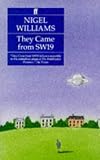
I thought this might be an appropriate book to read during Wimbledon fortnight, though it was some way into the book before anyone actually mentioned tennis. I reached the halfway point convinced the author was a comic genius – this was humour to split the sides , and it was far more accessible than the other stuff I have read by him, which tended towards in-jokes about TV scriptwriters. Its sheer irreverence was a breath of fresh air. At one point the narrator reflects: “You can’t show more take Jesus back to the shop, guys. He doesn’t come on approval. He is even harder to dispose of than a subscription to the Reader’s Digest”. I did think that members of the Aetherius Society, who would perhaps consider themselves to be satirised by this book, might even have laughed.
Then came Part 2, and there was a change of gear. The humour dried up, events became confusing and scenes started to go on...and on...and on.... At one point I considered speed-reading. I would concede that the progress of events is broadly satisfying to the reader, but in its concluding sections the book seems to lay claim to a real-world relevance and a sort of grittiness that sat uncomfortably with the high farce that had gone before. show less
Then came Part 2, and there was a change of gear. The humour dried up, events became confusing and scenes started to go on...and on...and on.... At one point I considered speed-reading. I would concede that the progress of events is broadly satisfying to the reader, but in its concluding sections the book seems to lay claim to a real-world relevance and a sort of grittiness that sat uncomfortably with the high farce that had gone before. show less
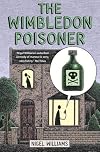
I picked this book up and read it in defiance of 95% of my brain cells which were screaming "NO!" Having read four Nigel Williams novels previously, I've noticed a pattern: man with insufferable wife has mid-life crisis and starts acting bizarrely before a weak-as-water conclusion attempts to convince the reader nothing they previously read was real anyway. I will admit to harbouring hopes that this, one of the author's best known works, might buck the trend.
I'm not going to spoil by show more indicating whether the formula was followed or not, but there were enough other things about the book that I didn't get on with to depress the star rating on their own. There was humour, as always, but I found it hard to laugh at, given its juxtaposition with the nastiness of the whole plot. The only chapter which raised a titter with me was the one featuring the Jungian analyst and his wine box. In general, the tendency of the character Henry to characterise his neighbours with pithy one-sentence summaries, was clever, and I could see why some people would find the whole thing hilarious, and I wanted to - I really did, but I just couldn't.
Perhaps the problem was that either central character Henry really was a nasty piece of work and there was nothing remotely funny about that, or we were going to be treated to a Nigel Williams-style ending in which none of it actually happened, in which case (my inner cynic kept reminding me) the joke was on me as a reader and I wasn't going to dignify it with so much as a titter.
Perhaps it was the casual racism that littered the dialogue. The sort that later on comes with a wink and a reassurance "I'm not racist, really", and then later still, a wink with the other eye and the comment "I was kidding - I actually am racist". I didn't know where the book stood.
Or perhaps it's the whole Wimbledon-ness of it. I haven't been to Wimbledon, except to stand in a humungous queue to get into the tennis, and have no idea what intrinsic character that suburb possesses, but it's almost as if the area counts as a separate character , and there's a whiny voice saying 'if you lived here you'd understand'. Well I don't, and I don't.
I expect I'll be on my own in not really liking this book, and to be fair, I shouldn't have made that rash decision to read it. Next time I will listen to those brain cells. show less
I'm not going to spoil by show more indicating whether the formula was followed or not, but there were enough other things about the book that I didn't get on with to depress the star rating on their own. There was humour, as always, but I found it hard to laugh at, given its juxtaposition with the nastiness of the whole plot. The only chapter which raised a titter with me was the one featuring the Jungian analyst and his wine box. In general, the tendency of the character Henry to characterise his neighbours with pithy one-sentence summaries, was clever, and I could see why some people would find the whole thing hilarious, and I wanted to - I really did, but I just couldn't.
Perhaps the problem was that either central character Henry really was a nasty piece of work and there was nothing remotely funny about that, or we were going to be treated to a Nigel Williams-style ending in which none of it actually happened, in which case (my inner cynic kept reminding me) the joke was on me as a reader and I wasn't going to dignify it with so much as a titter.
Perhaps it was the casual racism that littered the dialogue. The sort that later on comes with a wink and a reassurance "I'm not racist, really", and then later still, a wink with the other eye and the comment "I was kidding - I actually am racist". I didn't know where the book stood.
Or perhaps it's the whole Wimbledon-ness of it. I haven't been to Wimbledon, except to stand in a humungous queue to get into the tennis, and have no idea what intrinsic character that suburb possesses, but it's almost as if the area counts as a separate character , and there's a whiny voice saying 'if you lived here you'd understand'. Well I don't, and I don't.
I expect I'll be on my own in not really liking this book, and to be fair, I shouldn't have made that rash decision to read it. Next time I will listen to those brain cells. show less

There, alone in the quiet house, I picked up the first page of Paul's letter to me. I wanted to read it like a love letter but of course I didn't. I read it like a detective, looking for clues and traps.I read it like a critic, trying to understand the hidden meaning of each sentence, and why each word had been chosen. Because this is a story about how things look, about how a tone of voice or a trick of style can betray you and, most importantly, how words on a page can lie as easily and show more cruelly as the false lover in whose arms you may have fallen peacefully asleep.
After Fiona McMillan has been attacked twice by a masked man, she discovers a clue that tells her that it must be one of the three men she works with. When she receives a package containing several versions of the events, including an anonymous account by her attacker, she is sure that he intends to kill her and is determined to unmask him before that can happen, but it doesn't help that everyone seems to be lying, hiding things or at any rate being inconsistent and getting their dates mixed up.
I liked Fiona's decision not to be a victim, despite being terrified and obeying her attacker's order to tell no-one about the first attack, but I wasn't sure about the ending, which was a little abrupt and quite ambiguous (although that's not always a bad thing). show less
After Fiona McMillan has been attacked twice by a masked man, she discovers a clue that tells her that it must be one of the three men she works with. When she receives a package containing several versions of the events, including an anonymous account by her attacker, she is sure that he intends to kill her and is determined to unmask him before that can happen, but it doesn't help that everyone seems to be lying, hiding things or at any rate being inconsistent and getting their dates mixed up.
I liked Fiona's decision not to be a victim, despite being terrified and obeying her attacker's order to tell no-one about the first attack, but I wasn't sure about the ending, which was a little abrupt and quite ambiguous (although that's not always a bad thing). show less
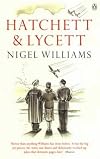
A very enjoyable and funny book, this tells of the two eponymous friends, both in love with prim and pretty schoolteacher Norma. Set at the start of WWII it evokes the naivety and privation of pre-war England, as experienced in a country village in Kent. Beautifully judged writing with believable, engaging characters – village life, school life, each given a solid treatment – with the children particularly shown in all their pathos and primitive ferocity.
The plot involves the rescue of show more a fugitive from Hitler, mass hysteria in a girls’ school, thwarted love and fulfilled love – and it gallops along with tremendous verve and pace. This book had me laughing out loud several times. Williams writes knowingly about men’s strange inability to talk about their emotions and women’s even stranger inability to talk about little else. A tremendously good job done here. show less
The plot involves the rescue of show more a fugitive from Hitler, mass hysteria in a girls’ school, thwarted love and fulfilled love – and it gallops along with tremendous verve and pace. This book had me laughing out loud several times. Williams writes knowingly about men’s strange inability to talk about their emotions and women’s even stranger inability to talk about little else. A tremendously good job done here. show less
Lists
Awards


You May Also Like


Associated Authors
Statistics
- Works
- 36
- Also by
- 4
- Members
- 1,242
- Popularity
- #20,660
- Rating
- 3.8
- Reviews
- 26
- ISBNs
- 112
- Languages
- 7