

Terence M. Green (1947–2025)
Author of Shadow of Ashland
About the Author
Image credit: Terence M. Green
Series
Works by Terence M. Green
Associated Works
Northern Frights 1: Chilling tales by Robert Bloch, Charles De Lint, Steve Rasnic Tem, Tanya Huff, Garfield Reeves-Steve (1992) — Contributor — 13 copies
Isaac Asimov's Science Fiction Magazine: Vol. 12, No. 1 [January 1988] (1988) — Contributor — 13 copies
Tagged
Common Knowledge
- Birthdate
- 1947
- Date of death
- 2025-12-19
- Gender
- male
- Nationality
- Canada
- Associated Place (for map)
- Canada
Members
Reviews

Born from the experience of searching for a missing uncle, this tale starts in the same fashion, and then entwines letters half-a-century old, time travel, the despair of 1930’s unemployment, union organizing, caves, baseball, and the hope of familial connections into a book that reads so much better than I’ve managed to make it sound. From a promise made to his dying mother, Leo follows the trail of his uncle from their home in Toronto as he searches for work heading ever south, show more eventually staying for some time in Ashland, Kentucky. Leo makes a connection with his Uncle Jack as he experiences some of the same things.
Expecting this to be a family memoir book, I was at first a bit disappointed when encountering the time travel component. Though not my preferred cup of tea, I did thoroughly enjoy this particular brew. show less
Expecting this to be a family memoir book, I was at first a bit disappointed when encountering the time travel component. Though not my preferred cup of tea, I did thoroughly enjoy this particular brew. show less
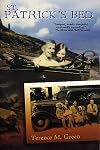
We expect multi-generational novels to cover hundreds of pages, yet Terence M. Green's "St. Patrick's Bed," published in 2001, is just a skimpy 220 pages, and even then a number of those pages are completely blank. Yet the Canadian author's story, a sequel to "Shadow of Ashland," involves three generations of the Nolan family, with references to some earlier ones. If the novel seems slight, it proves itself not insubstantial.
Narrated by Leo Nolan, who like his father before him works in the show more circulation department of a major Toronto newspaper, the plot primarily deals with what happens when Adam, Leo's 22-year-old adopted son, announces that he wants to meet his actual father, a man named Bobby Swiss, who lives in Dayton, Ohio. Bobby was the teenage boyfriend of Jeanne, Leo's wife, but she and Bobby never married, and they drew apart when Adam was born. Now Adam wants to find out what he is like.
Before Adam makes the trip to Ohio to meet Bobby Swiss, Leo decides to go himself to satisfy his own curiosity about his son's real father and about the man who gave Jeanne a child when he himself has been unable to do so.
That, in a nutshell, is the story, which probably wouldn't even take 220 pages except that Leo's thoughts frequently turn to his father, Tommy Nolan, who has recently died, and to his and his wife's courtship and marriage. These memories, relived with grace and style, fill many of those pages. Green also describes many of the details of Leo's drive to Dayton and back, which includes a stop in my own city of Ashland, Ohio. Clearly Green has taken this drive himself. And that drive is not the only part of the novel that feels like the real thing. show less
Narrated by Leo Nolan, who like his father before him works in the show more circulation department of a major Toronto newspaper, the plot primarily deals with what happens when Adam, Leo's 22-year-old adopted son, announces that he wants to meet his actual father, a man named Bobby Swiss, who lives in Dayton, Ohio. Bobby was the teenage boyfriend of Jeanne, Leo's wife, but she and Bobby never married, and they drew apart when Adam was born. Now Adam wants to find out what he is like.
Before Adam makes the trip to Ohio to meet Bobby Swiss, Leo decides to go himself to satisfy his own curiosity about his son's real father and about the man who gave Jeanne a child when he himself has been unable to do so.
That, in a nutshell, is the story, which probably wouldn't even take 220 pages except that Leo's thoughts frequently turn to his father, Tommy Nolan, who has recently died, and to his and his wife's courtship and marriage. These memories, relived with grace and style, fill many of those pages. Green also describes many of the details of Leo's drive to Dayton and back, which includes a stop in my own city of Ashland, Ohio. Clearly Green has taken this drive himself. And that drive is not the only part of the novel that feels like the real thing. show less
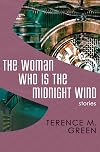
*** Ashland, Kentucky
A mother's dying wish: to see her long-lost brother again, just once before she dies. Her son attempts to track him down, but 'Uncle Jack' hasn't been seen or heard from in decades. Then, something weird happens...
A quietly eerie story, slightly Bradbury-esque, about how the past's loose ends can haunt us.
*** Barking Dogs
In the near future (ok, it's 1996, and Phil Donahue is still on the air, but I can hang with that) a lie detector has been perfected, and made show more available for consumer use. The latest buyer of the new and popular item is a city cop. (Of course, there's no money in the budget for such things to be made part of the police department's official equipage.) How he uses the device, and the repercussions are a thoughtful exploration of truth, honesty - and how much we really want to know.
Even though some of the details are dated, the core of the story is very timely.
I see online that this story was later expanded into a rather poorly-reviewed novel. I haven't read it, but I'm not sure this would work as a novel, although I think it's a very good short story. It's more of an idea-piece than a character-oriented story.
*** Legacy
A man goes to visit his father in an institution. Is it a prison? A hospital? Or something else altogether? He must ask him a certain question...
The near-future setting is the jumping-off point to highlight the peculiarity of the ties of blood and loyalty, forged of both love and hatred.
** The Woman Who Is the Midnight Wind
Widowed on a colony world, a woman comes to make a decision which those around her find baffling and incomprehensible. There's some nice stuff here about isolation and what it means to be human... but I have to deduct a star, because the attempt at a 'woman's' point of view is awkward to the point of absurdity - and the 'female' theme is a major part of the piece.
*** Room 1786
Probably more timely now than it was when it was written. A teacher's lament regarding how technology is changing the school experience.
** Japanese Tea
This one, I found a bit reminiscent of Philip K. Dick. A teacher in a high-security future school is pursuing an affair with a willing student. A new drug gets brought into the mix, and things get weird.
** Susie Q2
A lonely man is contemplating suicide. But first, he has to say farewell to the personalities he's programmed into his A.I.
*** Till Death Do Us Part
An ex-wife makes sure that her first husband gets his come-uppance - from beyond the grave, thanks to new technology.
** Point Zero
Joe Nicholson travels a lot for work, and doesn't really have a lot going on in his life. His main pleasure is visiting strip clubs in whatever town he happens to be in, where he regards the entertainers with an odd mix of bemusement and awe. But then, a strange truth is revealed, and Joe is offered a 'once in a lifetime' opportunity. But will he decide to go for it?
I felt this story was rather weak; it depends on an 'othering' of strippers that I found very bizarre and out-of-touch.
**** Of Children in the Foliage
Inspired by a T.S. Eliot quote - which I suppose makes it unsurprising that this was my favorite story in the collection. A couple moves to an inhabited world, where humans and the native aliens coexist peacefully, and strive to overcome cultural and inherent differences to understand each other. A quiet, but lovely story.
I picked this book up because of the blurb which described Green as "one of Canada's finest writers." I've had good experiences with quite a few Canadian authors, so thought I'd check out an author I wasn't familiar with. Many thanks to Open Road Media and NetGalley for the opportunity to familiarize myself with his work. As always, my opinions are solely my own. show less
A mother's dying wish: to see her long-lost brother again, just once before she dies. Her son attempts to track him down, but 'Uncle Jack' hasn't been seen or heard from in decades. Then, something weird happens...
A quietly eerie story, slightly Bradbury-esque, about how the past's loose ends can haunt us.
*** Barking Dogs
In the near future (ok, it's 1996, and Phil Donahue is still on the air, but I can hang with that) a lie detector has been perfected, and made show more available for consumer use. The latest buyer of the new and popular item is a city cop. (Of course, there's no money in the budget for such things to be made part of the police department's official equipage.) How he uses the device, and the repercussions are a thoughtful exploration of truth, honesty - and how much we really want to know.
Even though some of the details are dated, the core of the story is very timely.
I see online that this story was later expanded into a rather poorly-reviewed novel. I haven't read it, but I'm not sure this would work as a novel, although I think it's a very good short story. It's more of an idea-piece than a character-oriented story.
*** Legacy
A man goes to visit his father in an institution. Is it a prison? A hospital? Or something else altogether? He must ask him a certain question...
The near-future setting is the jumping-off point to highlight the peculiarity of the ties of blood and loyalty, forged of both love and hatred.
** The Woman Who Is the Midnight Wind
Widowed on a colony world, a woman comes to make a decision which those around her find baffling and incomprehensible. There's some nice stuff here about isolation and what it means to be human... but I have to deduct a star, because the attempt at a 'woman's' point of view is awkward to the point of absurdity - and the 'female' theme is a major part of the piece.
*** Room 1786
Probably more timely now than it was when it was written. A teacher's lament regarding how technology is changing the school experience.
** Japanese Tea
This one, I found a bit reminiscent of Philip K. Dick. A teacher in a high-security future school is pursuing an affair with a willing student. A new drug gets brought into the mix, and things get weird.
** Susie Q2
A lonely man is contemplating suicide. But first, he has to say farewell to the personalities he's programmed into his A.I.
*** Till Death Do Us Part
An ex-wife makes sure that her first husband gets his come-uppance - from beyond the grave, thanks to new technology.
** Point Zero
Joe Nicholson travels a lot for work, and doesn't really have a lot going on in his life. His main pleasure is visiting strip clubs in whatever town he happens to be in, where he regards the entertainers with an odd mix of bemusement and awe. But then, a strange truth is revealed, and Joe is offered a 'once in a lifetime' opportunity. But will he decide to go for it?
I felt this story was rather weak; it depends on an 'othering' of strippers that I found very bizarre and out-of-touch.
**** Of Children in the Foliage
Inspired by a T.S. Eliot quote - which I suppose makes it unsurprising that this was my favorite story in the collection. A couple moves to an inhabited world, where humans and the native aliens coexist peacefully, and strive to overcome cultural and inherent differences to understand each other. A quiet, but lovely story.
I picked this book up because of the blurb which described Green as "one of Canada's finest writers." I've had good experiences with quite a few Canadian authors, so thought I'd check out an author I wasn't familiar with. Many thanks to Open Road Media and NetGalley for the opportunity to familiarize myself with his work. As always, my opinions are solely my own. show less
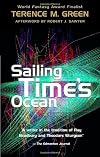
Publication Note:
Sailing Time’s Ocean is a reprint of Terence Green’s novel – Children of the Rainbow, which was previously published in 1992 by McClelland and Stewart. At that time the publisher had ambitious plans for an in house Science Fiction line. Unfortunately the experiment was mishandled and Children of the Rainbow vanished, never receiving the audience it should have. I initially encountered the story under its original title on a remainder table at a McClelland and Stewart show more clearance sale in the mid 1990s and eagerly devoured it. This reprint is well worth a look.
What's it about:
The year 2072 finds a rising Inca civilization, whose spiritual leader has discovered how to send people through time. Fletcher Christian IV, a direct descendant of his Bounty mutineer namesake, is given the opportunity to travel in time to Pitcairn Island of 1972. During the transition an unexpected disturbance in the space-time continuum causes Fletcher to switch places with a prisoner of the Norfolk Island penal colony in 1835. The prisoner, Bran Michael Dalton, is suddenly transplanted to Fletcher’s intended destination. An unexpectedly free man, Dalton attempts to cope with the strange workings of 1972, while Christian is forced to endure unbelievable torture and humiliation as a prisoner on Norfolk Island.
What sounds like a fairly standard premise of being lost in time and trying to find your way home becomes transformed into something more in the hands of author Terrence Green. An incredibly detailed and well-researched novel, not since Papillion by Henri “Papillion” Charriere have the horrors of penal colonies been so vividly portrayed.
In addition to the well drawn fictional characters of Fletcher Christian IV and Bran Dalton, Green skilfully incorporates real life person David McTaggart into the mix. McTaggart’s historical stand against French nuclear tests in the South Pacific play a pivotal role in the novel and set in motion the events that displace both Bran Dalton and Fletcher Christian in time.
On the surface Sailing Time’s Ocean is about time travel and penal colonies but what makes it a gripping read is the complex characters and their personal relationships that form the heart of the novel. Norfolk Island’s commandant, Major Anderson, is not simply portrayed as a strict disciplinarian, but rather we are shown a father and a husband who lives for his work, but still cares deeply for his family. Similarly Christian’s relationship with his wife Liana, and later his dealings with his fellow prisoners and Major Anderson serve to humanize him and help the reader connect with him and ultimately the story. While the story may have science fiction elements to it, it’s the human drama and Green’s elegant prose that carry the day.
See my full review here - http://www.timetravelreviews.com/books/green_sailingtimesocean.html show less
Sailing Time’s Ocean is a reprint of Terence Green’s novel – Children of the Rainbow, which was previously published in 1992 by McClelland and Stewart. At that time the publisher had ambitious plans for an in house Science Fiction line. Unfortunately the experiment was mishandled and Children of the Rainbow vanished, never receiving the audience it should have. I initially encountered the story under its original title on a remainder table at a McClelland and Stewart show more clearance sale in the mid 1990s and eagerly devoured it. This reprint is well worth a look.
What's it about:
The year 2072 finds a rising Inca civilization, whose spiritual leader has discovered how to send people through time. Fletcher Christian IV, a direct descendant of his Bounty mutineer namesake, is given the opportunity to travel in time to Pitcairn Island of 1972. During the transition an unexpected disturbance in the space-time continuum causes Fletcher to switch places with a prisoner of the Norfolk Island penal colony in 1835. The prisoner, Bran Michael Dalton, is suddenly transplanted to Fletcher’s intended destination. An unexpectedly free man, Dalton attempts to cope with the strange workings of 1972, while Christian is forced to endure unbelievable torture and humiliation as a prisoner on Norfolk Island.
What sounds like a fairly standard premise of being lost in time and trying to find your way home becomes transformed into something more in the hands of author Terrence Green. An incredibly detailed and well-researched novel, not since Papillion by Henri “Papillion” Charriere have the horrors of penal colonies been so vividly portrayed.
In addition to the well drawn fictional characters of Fletcher Christian IV and Bran Dalton, Green skilfully incorporates real life person David McTaggart into the mix. McTaggart’s historical stand against French nuclear tests in the South Pacific play a pivotal role in the novel and set in motion the events that displace both Bran Dalton and Fletcher Christian in time.
On the surface Sailing Time’s Ocean is about time travel and penal colonies but what makes it a gripping read is the complex characters and their personal relationships that form the heart of the novel. Norfolk Island’s commandant, Major Anderson, is not simply portrayed as a strict disciplinarian, but rather we are shown a father and a husband who lives for his work, but still cares deeply for his family. Similarly Christian’s relationship with his wife Liana, and later his dealings with his fellow prisoners and Major Anderson serve to humanize him and help the reader connect with him and ultimately the story. While the story may have science fiction elements to it, it’s the human drama and Green’s elegant prose that carry the day.
See my full review here - http://www.timetravelreviews.com/books/green_sailingtimesocean.html show less
Awards


You May Also Like


Associated Authors
Statistics
- Works
- 9
- Also by
- 7
- Members
- 374
- Popularity
- #64,495
- Rating
- 3.5
- Reviews
- 9
- ISBNs
- 38
- Favorited
- 1