
Maureen Jennings
Author of Except the Dying
About the Author
Image credit: maureenjennings.com
Series
Works by Maureen Jennings
Il figlio della notte 1 copy
L'ombra del padre 1 copy
La carne e il sangue 1 copy
Onora il Male 1 copy
Tombe senza nome 1 copy
Murdoch Mysteries: Season 11 1 copy
Murdoch Mysteries: Season 09 1 copy
Murdoch Mysteries: Season 08 1 copy
Associated Works
Tagged
Common Knowledge
- Birthdate
- 1939
- Gender
- female
- Education
- University of Windsor (B.A. | Philosphy and Psychology)
University of Toronto (M.A. | English Literature) - Nationality
- England (birth)
Canada - Birthplace
- Birmingham, England, UK
- Places of residence
- Toronto, Ontario, Canada
- Associated Place (for map)
- Birmingham, England, UK
Members
Reviews
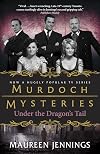
My wife got into a show called Murdoch Mysteries, a cozy Canadian mystery show that takes place in 1900. Then she got our kids into it (we have strange kids). So I often have to hear the dinner talk with the detective and coroner’s relationship, the lieutenant’s quest for a promotion, the gruff police chief’s drinking habits, etc. It’s a pretty good show if you like Castle or Monk or The Mentalist and so on. But it started as a book series, so I thought I’d check that out.
The book show more is quite different. Like you’ve probably gathered from other reviews, it’s grim and gritty, not shirking from the terrible dirty parts of living at the turn of the century–disease, child abuse, orphans, classism, lack of women’s rights, etc. Themes circle issues you can’t deal with on nice Canadian TV. For example, in the TV series, they’ve, through necessity of the cases (and the necessity of the writers probably) accidentally created things like the polygraph and night vision goggles and luminol. In the book, he’s struggling to stop from masturbating he’s an adult male Catholic.
I’m not sure people who like the series will like this, especially if they have delicate sensibilities (for example, this one has a lot of abortion and “promiscuous women” and child death). They are two different things–much like Song of Ice and Fire vs. Game of Thrones. Or Arthur Conan Doyle’s Sherlock Holmes stories vs. Benedict Cumberbatch’s Sherlock. I liked it, but that’s because I can separate Book Murdoch from Television Murdoch.
However, I don’t think I’d read any other books in the series. It lacks what makes the TV show charming (Murdoch’s boyish curiosity, the strong female presence, the anachronistic plots like the “Wrestlemania” one). If I need grim and gritty detective novels, there are plenty of others I can go to. Frankly, I’m surprised whoever created this show found a kernel of what it became. But shrug. show less
The book show more is quite different. Like you’ve probably gathered from other reviews, it’s grim and gritty, not shirking from the terrible dirty parts of living at the turn of the century–disease, child abuse, orphans, classism, lack of women’s rights, etc. Themes circle issues you can’t deal with on nice Canadian TV. For example, in the TV series, they’ve, through necessity of the cases (and the necessity of the writers probably) accidentally created things like the polygraph and night vision goggles and luminol. In the book, he’s struggling to stop from masturbating he’s an adult male Catholic.
I’m not sure people who like the series will like this, especially if they have delicate sensibilities (for example, this one has a lot of abortion and “promiscuous women” and child death). They are two different things–much like Song of Ice and Fire vs. Game of Thrones. Or Arthur Conan Doyle’s Sherlock Holmes stories vs. Benedict Cumberbatch’s Sherlock. I liked it, but that’s because I can separate Book Murdoch from Television Murdoch.
However, I don’t think I’d read any other books in the series. It lacks what makes the TV show charming (Murdoch’s boyish curiosity, the strong female presence, the anachronistic plots like the “Wrestlemania” one). If I need grim and gritty detective novels, there are plenty of others I can go to. Frankly, I’m surprised whoever created this show found a kernel of what it became. But shrug. show less
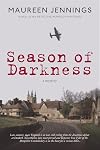
England, 1940. Dunkirk has been evacuated, and German nationals in England have been rounded up and interned in camps. One such camp is near Whitchurch, Shropshire, where DI Tom Tyler is in charge of the local police force. Tyler is called in on a particularly sad case one morning: the death of a Land Army girl at the side of the road. Foul play is a certainty, but who would want her dead and why? The evidence seems to indicate German involvement, but in wartime one cannot jump to show more conclusions.
I picked up this book specifically because of the WW2 setting and it delivered admirably in that regard. I learned a bit about the Land Army, which recruited women to do farm work and other chores of that nature while the men who normally did them were off at the front. The book also shows what life was like in another part of England during the war, far away from London and the Blitz, and how the war could complicate police investigations, whether from lack of human resources or concerns of national security.
The characters were interesting and felt believable and established; overall I'd say they didn't suffer from First in Series Syndrome. The reader is simply dropped into their world and receives context and explanation as required. In fact, the feeling of "established characters" is so convincing that I had to check more than once to make absolutely sure this was actually the first book in the series.
The pace was good, with short chapters that felt substantial; after spending a few days reading the book on the bus I was astonished to realize that I'd read 300 pages. It is a big book but moves fairly quickly, and I will definitely check out the next installment in the series. I would recommend it if you're interested in mysteries set during WW2 and/or in rural England. show less
I picked up this book specifically because of the WW2 setting and it delivered admirably in that regard. I learned a bit about the Land Army, which recruited women to do farm work and other chores of that nature while the men who normally did them were off at the front. The book also shows what life was like in another part of England during the war, far away from London and the Blitz, and how the war could complicate police investigations, whether from lack of human resources or concerns of national security.
The characters were interesting and felt believable and established; overall I'd say they didn't suffer from First in Series Syndrome. The reader is simply dropped into their world and receives context and explanation as required. In fact, the feeling of "established characters" is so convincing that I had to check more than once to make absolutely sure this was actually the first book in the series.
The pace was good, with short chapters that felt substantial; after spending a few days reading the book on the bus I was astonished to realize that I'd read 300 pages. It is a big book but moves fairly quickly, and I will definitely check out the next installment in the series. I would recommend it if you're interested in mysteries set during WW2 and/or in rural England. show less
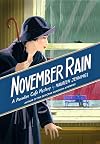
This is the second book in the Paradise Cafe series. The author, Maureen Jennings, is also the creator of the Detective Murdoch series which is such a success as a TV series. Jack Murdoch makes an appearance in this book but the main character is PI Charlotte Frayne.
Charlotte is on her own in November 1936 as her boss, Mr. Gilmore (who is Jewish as we discovered in the first book, Heat Wave) is overseas on a personal errand. That's okay because when two well-dressed women are at the office show more door first thing in the morning it is Charlotte they wish to engage. They are the Jessops, mother-in-law and daughter-in-law, and they have come to hire Charlotte to investigate the death of their son and husband, Gerald Jessop. The police have ruled the death a suicide but his mother refuses to accept that. Gerald was badly disfigured in World War I and has struggled with alcohol and drug addiction ever since. Charlotte agrees to investigate but since the detective in charge was her friend Jack Murdoch privately she doubts the death was anything other than what it has been deemed. The same day she is contacted by the owner of a clothing factory. Mr. Rosenthal suspects that someone among the employees is trying to organize a union and he wants someone to go undercover at the factory. The day Charlotte turns up for work the door is locked and all the employees are standing outside waiting for the supervisor to open up. They are still there when Mr. Rosenthal drives up and he unlocks the door but only allows Charlotte to accompany him. They find the supervisor, Mr. Klein, lying on one of the cutting tables with a pair of scissors sticking out of his chest.
As books of this type are usually constructed, both cases have links to the Paradise Cafe which is a place where Toronto's poor can get a hot meal for a reasonable cost. Charlotte was hired in the last book by one of the owners to investigate missing funds and by the time the case was over she and Hilliard Taylor were in love. During most of this book Hilliard is away looking after his son who lives in Sudbury and had to go to hospital to have his tonsils removed. A few phone calls and messages have to sustain Charlotte but it appears that absence does indeed make the heart grow fonder.
The aftermath of World War I is still being felt even 18 years after the Armistice. One detail that I had never before learned was that blue benches were placed in parks for disfigured veterans to sit on so that members of the public would know to avert their eyes as they passed. Talk about making an honourable soldier feel like a pariah. show less
Charlotte is on her own in November 1936 as her boss, Mr. Gilmore (who is Jewish as we discovered in the first book, Heat Wave) is overseas on a personal errand. That's okay because when two well-dressed women are at the office show more door first thing in the morning it is Charlotte they wish to engage. They are the Jessops, mother-in-law and daughter-in-law, and they have come to hire Charlotte to investigate the death of their son and husband, Gerald Jessop. The police have ruled the death a suicide but his mother refuses to accept that. Gerald was badly disfigured in World War I and has struggled with alcohol and drug addiction ever since. Charlotte agrees to investigate but since the detective in charge was her friend Jack Murdoch privately she doubts the death was anything other than what it has been deemed. The same day she is contacted by the owner of a clothing factory. Mr. Rosenthal suspects that someone among the employees is trying to organize a union and he wants someone to go undercover at the factory. The day Charlotte turns up for work the door is locked and all the employees are standing outside waiting for the supervisor to open up. They are still there when Mr. Rosenthal drives up and he unlocks the door but only allows Charlotte to accompany him. They find the supervisor, Mr. Klein, lying on one of the cutting tables with a pair of scissors sticking out of his chest.
As books of this type are usually constructed, both cases have links to the Paradise Cafe which is a place where Toronto's poor can get a hot meal for a reasonable cost. Charlotte was hired in the last book by one of the owners to investigate missing funds and by the time the case was over she and Hilliard Taylor were in love. During most of this book Hilliard is away looking after his son who lives in Sudbury and had to go to hospital to have his tonsils removed. A few phone calls and messages have to sustain Charlotte but it appears that absence does indeed make the heart grow fonder.
The aftermath of World War I is still being felt even 18 years after the Armistice. One detail that I had never before learned was that blue benches were placed in parks for disfigured veterans to sit on so that members of the public would know to avert their eyes as they passed. Talk about making an honourable soldier feel like a pariah. show less
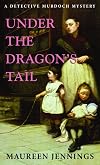
In the second of Jenning’s Detective Murdoch books, a midwife and abortionist in late 19th century Toronto is found dead by her foster sons. It soon comes to light that many of her clients have come from high-class society, and Dolly (the midwife) had a habit of getting every little penny that she could from her clients, even years after they have had need of her services – sometimes in the form of blackmail. Acting detective Murdoch is on the case, trying to find out exactly who show more murdered Dolly, and one of her foster sons who soon turns up dead as well.
I’m still new to the mystery genre, and I don’t know if I would really get into the genre if it wasn’t for Murdoch. I haven’t enjoyed any other mystery book quite as much as the ones in this series, I have to say. I find it unpredictable and thoroughly readable. The setting is so much fun – Victorian Toronto! – and the characters, oh! the characters. Love love love them all! Especially Murdoch himself.
Oh, Murdoch, how much do I love you? I don’t even know where to begin. You ballroom dance! You race bicycles. You are oh-so-smart. You feel guilty about being attracted to one of your fellow boarders, and it is so adorable. You are a practicing Catholic in a Very Protestant Toronto, and must go through so many struggles because of it. I do love you, and I think every book will make my love for you grow. In fact, I haven’t loved any fictional character this much since Horatio Hornblower and Lieutenant Bush.
As mentioned, I love that Murdoch is a very devout practicing Catholic in a very Protestant Toronto – it gives a bit of an insight to the struggle it must have been at that point in time, as well as how hard it must be to be a part of a minority group in the present time. And you can see how his beliefs have an impact on his daily life - especially when it comes to a fellow boarder that he seems to have a bit of a crush on. He believes he could never be with her because she isn’t Catholic, but he still likes her anyway (and it’s so cute - especially the part in the epilogue where he’s got women he finds attractive on both sides of him and he’s rather flustered).
I especially loved the interaction between Murdoch and Annie Brogan, a young stage performer who gets involved in the case. She’s a lot more outgoing and revealing than the women Murdoch is used to. It is quite amusing to see Annie go from being wary of Murdoch to trying to embarrass him constantly, and I would have loved to see more of her.
The Bottom Line: Definitely loved this book. Devoured it. Would highly recommend it, and I’m very much looking forward to reading the others in this series. show less
I’m still new to the mystery genre, and I don’t know if I would really get into the genre if it wasn’t for Murdoch. I haven’t enjoyed any other mystery book quite as much as the ones in this series, I have to say. I find it unpredictable and thoroughly readable. The setting is so much fun – Victorian Toronto! – and the characters, oh! the characters. Love love love them all! Especially Murdoch himself.
Oh, Murdoch, how much do I love you? I don’t even know where to begin. You ballroom dance! You race bicycles. You are oh-so-smart. You feel guilty about being attracted to one of your fellow boarders, and it is so adorable. You are a practicing Catholic in a Very Protestant Toronto, and must go through so many struggles because of it. I do love you, and I think every book will make my love for you grow. In fact, I haven’t loved any fictional character this much since Horatio Hornblower and Lieutenant Bush.
As mentioned, I love that Murdoch is a very devout practicing Catholic in a very Protestant Toronto – it gives a bit of an insight to the struggle it must have been at that point in time, as well as how hard it must be to be a part of a minority group in the present time. And you can see how his beliefs have an impact on his daily life - especially when it comes to a fellow boarder that he seems to have a bit of a crush on. He believes he could never be with her because she isn’t Catholic, but he still likes her anyway (and it’s so cute - especially the part in the epilogue where he’s got women he finds attractive on both sides of him and he’s rather flustered).
I especially loved the interaction between Murdoch and Annie Brogan, a young stage performer who gets involved in the case. She’s a lot more outgoing and revealing than the women Murdoch is used to. It is quite amusing to see Annie go from being wary of Murdoch to trying to embarrass him constantly, and I would have loved to see more of her.
The Bottom Line: Definitely loved this book. Devoured it. Would highly recommend it, and I’m very much looking forward to reading the others in this series. show less
Lists
Awards


You May Also Like


Associated Authors
Statistics
- Works
- 48
- Also by
- 6
- Members
- 2,379
- Popularity
- #10,788
- Rating
- 3.6
- Reviews
- 89
- ISBNs
- 166
- Languages
- 4
- Favorited
- 3