
Giles Blunt
Author of Forty Words for Sorrow
About the Author
Image credit: Janna Eggeheen
Series
Works by Giles Blunt
Tagged
Common Knowledge
- Canonical name
- Blunt, Giles
- Birthdate
- 1952-02-02
- Gender
- male
- Education
- University of Toronto (English literature)
- Occupations
- screenwriter
- Awards and honors
- Arthur Ellis Award (2004)
- Agent
- Helen Heller (Helen Heller Agency)
- Short biography
- I grew up in North Bay, Ontario, a child of parents so English that the space on their passports for citizenship could only be filled in: British Beyond Belief. They had colorful accents and amusing habits and never allowed themselves to be influenced by Canadians. Consequently I lived in England at home and Canada at school.
Things were further confused by my growing up Catholic. British people aren't supposed to be Catholic, but I attended a Catholic boys' school called Scollard Hall where I was subject to the usual bullying and injustice. I wouldn't have missed it for the world. Eventually, I negotiated a deal with my parents that got me into a regular school for grades twelve and thirteen. Algonquin Composite had actual girls in it and consequently my attendance improved.
The result of this peculiar background was that I never felt truly Canadian; I always felt like a visitor. Then, in 1980, I moved to New York City where I lived for the next 22 years. Americans treat Canadians in their midst with a sort of amused condescension that's quite touching. You know: "They come down here, they take our women..."
Living in New York gave me enough distance from northern Ontario to see it through a very long lens. I now visit North Bay and it seems exotic. It is exotic. It's ridiculous that anybody should live there, really, in the land of ice and snow. I mean, what kind of person comes to a hunk of rock surrounded by ice and pine trees and figures it's a good bet to settle down there? Okay, fur traders. But as soon as they have enough money fur traders head for Florida just like everyone else. - Nationality
- Canada
- Birthplace
- Windsor, Ontario, Canada
- Places of residence
- North Bay, Ontario, Canada
New York, New York, USA
Toronto, Ontario, Canada
Windsor, Ontario, Canada - Associated Place (for map)
- Ontario, Canada
Members
Reviews

Rating: 3.75* of five
The Book Report: The first John Cardinal mystery, we're introduced to Detective Cardinal as he is reassigned to Homicide after being yanked into burglaries and other such unglamourous pursuits for daring to investigate the strange disappearances of several very young people in fictional Algonquin Bay, Ontario. The disappearees all have in common the fact they're run away before, not an unusual thing there in Algonquin Bay, which is a central exchange point for rail, bus, show more and highway travel for the whole country. Cardinal smells something wrong, though, and spends the town's resources too freely for his boss's comfort...until suddenly one of those disappearees turns up "all corpisfied and gross" (to quote a character on the late, lamented TV show Firefly). Cardinal is brought back to Homicide, with a new partner called Lise. She just happens to be on her first murder investigation, rewarded for her huge success in nailing a corrupt politician as the result of a special forensic accounting investigation.
And spying on Cardinal for Internal Affairs. There's a pickle to be in: Spying on your popular partner to see if he really committed a crime some years back and, if so, to rat him out to persons possibly untrustworthy. Go Lise! Way to start a new life!
Meanwhile, the author lets us in on the doings of the murderous in real time; feeds us clues to Cardinal's sad and stressful past and present; prefigures several inevitable moments in the pursuit of a sociopath; and blows up the entire power structure of the town. All comes out, surprisingly, better than the worst and not even all that bad.
My Review: **WARNING: GRAPHIC AND HORRIFYING SADISTIC VIOLENCE** (The book, not the review.)
This really shouldn't be marketed as a mystery. We know whodunit and whydunit. It's a chase thriller, and a good one. The violence warned of above is upsetting to me due to its victims being kids. In the end, Blunt's coolly presented, razor-edged prose and his vile, horrible imagination kept me awake and flopping from side to side in agonized suspense until I reached the end of the book. It was harrowing and horrible! I can't wait to read the next one! show less
The Book Report: The first John Cardinal mystery, we're introduced to Detective Cardinal as he is reassigned to Homicide after being yanked into burglaries and other such unglamourous pursuits for daring to investigate the strange disappearances of several very young people in fictional Algonquin Bay, Ontario. The disappearees all have in common the fact they're run away before, not an unusual thing there in Algonquin Bay, which is a central exchange point for rail, bus, show more and highway travel for the whole country. Cardinal smells something wrong, though, and spends the town's resources too freely for his boss's comfort...until suddenly one of those disappearees turns up "all corpisfied and gross" (to quote a character on the late, lamented TV show Firefly). Cardinal is brought back to Homicide, with a new partner called Lise. She just happens to be on her first murder investigation, rewarded for her huge success in nailing a corrupt politician as the result of a special forensic accounting investigation.
And spying on Cardinal for Internal Affairs. There's a pickle to be in: Spying on your popular partner to see if he really committed a crime some years back and, if so, to rat him out to persons possibly untrustworthy. Go Lise! Way to start a new life!
Meanwhile, the author lets us in on the doings of the murderous in real time; feeds us clues to Cardinal's sad and stressful past and present; prefigures several inevitable moments in the pursuit of a sociopath; and blows up the entire power structure of the town. All comes out, surprisingly, better than the worst and not even all that bad.
My Review: **WARNING: GRAPHIC AND HORRIFYING SADISTIC VIOLENCE** (The book, not the review.)
This really shouldn't be marketed as a mystery. We know whodunit and whydunit. It's a chase thriller, and a good one. The violence warned of above is upsetting to me due to its victims being kids. In the end, Blunt's coolly presented, razor-edged prose and his vile, horrible imagination kept me awake and flopping from side to side in agonized suspense until I reached the end of the book. It was harrowing and horrible! I can't wait to read the next one! show less
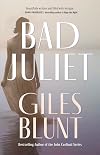
This historical novel is part romance and part mystery narrated by an older, wiser narrator detailing events that led to his increasing self-awareness 40 years earlier.
In 1915, 22-year-old Paul Gascoyne, after sabotaging an academic career, becomes an English literature tutor to patients at a tuberculosis sanitarium in the Adirondacks of upper New York State. There he meets Sarah Ballard, a young woman who survived the Lusitania disaster. To rouse her out of her gloom, Paul encourages her show more to write a memoir. It eventually becomes clear that her memoir is a mix of fact and fiction. Then when her health deteriorates and death is not unlikely, Sarah begs Paul to be the one person in the world who will truly know her and she reveals secrets she has told only one other person. But is she a reliable narrator of her life story?
There is also a romance story. Paul falls in love with the beautiful, enigmatic Sarah, but she is in love with Jasper Keene, a promising playwright, who is also in love with her. The three are friends, but when Jasper disappears for extended periods without explanation, Sarah turns to Paul. She often places him in the difficult position of assisting her relationship with Jasper. Will Paul be able to put Sarah’s happiness ahead of his personal desires?
It is the characterization of Paul which stood out for me. As a man in his sixties, Paul describes his younger self very aptly: a “callow, pompous, and self-involved” young man who needs to learn that “he may misjudge people and get things wrong even when – especially when – he is most confident he is right.” When he first arrives in Saranac Lake, it takes him a while to escape “his personal ivory tower . . . moated with prejudice” and leave behind his “juvenile resentment at the injustice of my exile.” His life has been privileged and not particularly difficult until his fiancée jilts him and then he throws away a job as a university lecturer because he isn’t given what he wants. He seems very much a spoiled, entitled young man.
It is Paul’s attitude to women that I found particularly distasteful. He decides that his mission for the next few years will be to become “’a thoroughgoing cad . . . a heartbreaker of the first order. I’m going to enjoy as much female affection as possible while limiting my own emotional engagement to lofty amusement.’” He wants to rid himself of “the tiresome burden of virginity” and so attempts to seduce women without any concern for their feelings or reputations. Totally oblivious to the double standard, he then believes that he could never “fall in love with anyone who was not a virgin.” He has a lot to learn about love and the lessons are painful, as he realizes only later.
These views about love cause him a lot of difficulty; full of self-importance, he doesn’t like his beliefs challenged. For the longest time, he will not allow himself to believe what Sarah tells him about her life. She admonishes him, “’What I may have been to you I don’t know – a Madonna? A Juliet attached to the wrong Romeo? I make a bad Juliet. But for some reason – some reason that has nothing to do with who or what I actually am – you’ve chosen to idealize me.’” He is very much a doubting Thomas with “an innate preference for comfortable ignorance.”
I loved the writing style. I enjoy diction which uses words like farceur, Panglossian, gracile, and seraglio. Literary allusions abound: reference is made to Charles Dickens, T. S. Eliot, Robert Louis Stevenson, Stephen Crane, George Eliot, Henry James, Joseph Conrad, and, of course, Shakespeare. And the title is perfect. Given the fate of Sarah and Jasper, that title provides food for thought.
Giles Blunt may be best known for his John Cardinal detective series, but this literary fiction is definitely worthy of attention too.
Note: Please check out my reader's blog (https://schatjesshelves.blogspot.com/) or substack (https://doreenyakabuski.substack.com/) for over 1,200 of my book reviews. show less
In 1915, 22-year-old Paul Gascoyne, after sabotaging an academic career, becomes an English literature tutor to patients at a tuberculosis sanitarium in the Adirondacks of upper New York State. There he meets Sarah Ballard, a young woman who survived the Lusitania disaster. To rouse her out of her gloom, Paul encourages her show more to write a memoir. It eventually becomes clear that her memoir is a mix of fact and fiction. Then when her health deteriorates and death is not unlikely, Sarah begs Paul to be the one person in the world who will truly know her and she reveals secrets she has told only one other person. But is she a reliable narrator of her life story?
There is also a romance story. Paul falls in love with the beautiful, enigmatic Sarah, but she is in love with Jasper Keene, a promising playwright, who is also in love with her. The three are friends, but when Jasper disappears for extended periods without explanation, Sarah turns to Paul. She often places him in the difficult position of assisting her relationship with Jasper. Will Paul be able to put Sarah’s happiness ahead of his personal desires?
It is the characterization of Paul which stood out for me. As a man in his sixties, Paul describes his younger self very aptly: a “callow, pompous, and self-involved” young man who needs to learn that “he may misjudge people and get things wrong even when – especially when – he is most confident he is right.” When he first arrives in Saranac Lake, it takes him a while to escape “his personal ivory tower . . . moated with prejudice” and leave behind his “juvenile resentment at the injustice of my exile.” His life has been privileged and not particularly difficult until his fiancée jilts him and then he throws away a job as a university lecturer because he isn’t given what he wants. He seems very much a spoiled, entitled young man.
It is Paul’s attitude to women that I found particularly distasteful. He decides that his mission for the next few years will be to become “’a thoroughgoing cad . . . a heartbreaker of the first order. I’m going to enjoy as much female affection as possible while limiting my own emotional engagement to lofty amusement.’” He wants to rid himself of “the tiresome burden of virginity” and so attempts to seduce women without any concern for their feelings or reputations. Totally oblivious to the double standard, he then believes that he could never “fall in love with anyone who was not a virgin.” He has a lot to learn about love and the lessons are painful, as he realizes only later.
These views about love cause him a lot of difficulty; full of self-importance, he doesn’t like his beliefs challenged. For the longest time, he will not allow himself to believe what Sarah tells him about her life. She admonishes him, “’What I may have been to you I don’t know – a Madonna? A Juliet attached to the wrong Romeo? I make a bad Juliet. But for some reason – some reason that has nothing to do with who or what I actually am – you’ve chosen to idealize me.’” He is very much a doubting Thomas with “an innate preference for comfortable ignorance.”
I loved the writing style. I enjoy diction which uses words like farceur, Panglossian, gracile, and seraglio. Literary allusions abound: reference is made to Charles Dickens, T. S. Eliot, Robert Louis Stevenson, Stephen Crane, George Eliot, Henry James, Joseph Conrad, and, of course, Shakespeare. And the title is perfect. Given the fate of Sarah and Jasper, that title provides food for thought.
Giles Blunt may be best known for his John Cardinal detective series, but this literary fiction is definitely worthy of attention too.
Note: Please check out my reader's blog (https://schatjesshelves.blogspot.com/) or substack (https://doreenyakabuski.substack.com/) for over 1,200 of my book reviews. show less

I saw the first series of Cardinal, the TV adaptation of Forty Words For Sorrow, a few years ago and enjoyed the way it created an atmosphere of distrust and threat that was partly embodied by the fierce cold weather in which most of the action took place.
It turns out that the TV version was fairly faithful to the book but there were, inevitably, simplifications so there was enough about the book that was different to keep it feeling fresh.
Both of the main detectives, John Cardinal and Lise show more Delorme, are well-drawn. They come across as believably human and they are quite different from one another: age, gender and ethnic background. I liked how their relationship developed from a starting point of (well-deserved) mutual suspicion to something that might become a partnership, albeit a partnership between two naturally solitary people.
There was a focus on mental health in the book that felt a little off-kilter. The killers are depicted as psychotic. Cardinal's wife is bipolar. Cardinal himself verges on paranoid (although people really are out to get him) and Delorme has an exceptionally low now for association which, if it's not pathological, certainly puts her in a mental minority. None of this was badly done but it did feel a little as if poor mental health was the main cause of sorrow in this book. In my experience, it's more often the other way around.
The atmosphere of the novel was dolorous but not hopeless. The bleak winter weather and the mostly rural landscape are almost characters in their own right.
The plot was twisty and there are a couple of side plots to make things interesting. I'll be back for the rest of the series. show less
It turns out that the TV version was fairly faithful to the book but there were, inevitably, simplifications so there was enough about the book that was different to keep it feeling fresh.
Both of the main detectives, John Cardinal and Lise show more Delorme, are well-drawn. They come across as believably human and they are quite different from one another: age, gender and ethnic background. I liked how their relationship developed from a starting point of (well-deserved) mutual suspicion to something that might become a partnership, albeit a partnership between two naturally solitary people.
There was a focus on mental health in the book that felt a little off-kilter. The killers are depicted as psychotic. Cardinal's wife is bipolar. Cardinal himself verges on paranoid (although people really are out to get him) and Delorme has an exceptionally low now for association which, if it's not pathological, certainly puts her in a mental minority. None of this was badly done but it did feel a little as if poor mental health was the main cause of sorrow in this book. In my experience, it's more often the other way around.
The atmosphere of the novel was dolorous but not hopeless. The bleak winter weather and the mostly rural landscape are almost characters in their own right.
The plot was twisty and there are a couple of side plots to make things interesting. I'll be back for the rest of the series. show less

Crime Machine by Giles Blunt is the 5th book in his police procedural series that features Canadian police detective John Cardinal. It has been a year since his wife was murdered, and John has made a few changes in his life, but he is still a dedicated detective working out of Algonquin Lake, Ontario. John, his partner Lise Delorme and other members of the force are looking at cold cases when a new and horrifying crime happens. A Russian couple have been found in an empty summer home, both show more have been shot and then beheaded.
This is just the beginning of a bizarre case where criminal acts are committed by members of a crime family. Some of these criminals are mere children, while others are psychopathic. The story takes many twists and turns and John and Lise work diligently at untangling the various threads and putting the case together.
This is a great series and Crime Machine is a thrilling addition. The author skilfully ties the various threads together and gives the book a ‘wow’ factor with the edge-of-your-seat opening and closing. Overall I thoroughly enjoyed this complex and well written mystery. show less
This is just the beginning of a bizarre case where criminal acts are committed by members of a crime family. Some of these criminals are mere children, while others are psychopathic. The story takes many twists and turns and John and Lise work diligently at untangling the various threads and putting the case together.
This is a great series and Crime Machine is a thrilling addition. The author skilfully ties the various threads together and gives the book a ‘wow’ factor with the edge-of-your-seat opening and closing. Overall I thoroughly enjoyed this complex and well written mystery. show less
Lists
Global Mysteries (2)
Five star books (1)
Awards


You May Also Like


Statistics
- Works
- 14
- Members
- 3,373
- Popularity
- #7,553
- Rating
- 3.6
- Reviews
- 204
- ISBNs
- 205
- Languages
- 8
- Favorited
- 15
