
Diane Johnson (1) (1934–)
Author of Le Divorce
For other authors named Diane Johnson, see the disambiguation page.
About the Author
Image credit: Courtesy of Squaw Valley Community of Writers
Works by Diane Johnson
Associated Works
Writers on Writing: Collected Essays from the New York Times (2001) — Contributor — 478 copies, 5 reviews
A Truth Universally Acknowledged: 33 Great Writers on Why We Read Jane Austen (2009) — Contributor — 411 copies, 18 reviews
Who's Writing This? Notations on the Authorial I, with Self-Portraits {not Antæus} (1995) — Contributor — 76 copies
Literary Traveller: An Anthology of Contemporary Short Fiction (1994) — Contributor — 55 copies, 1 review
Simple Soirées: seasonal menus for sensational dinner parties (2005) — Foreword, some editions — 40 copies
Tagged
Common Knowledge
- Legal name
- Murray, Diane Lain Johnson
- Birthdate
- 1934-04-28
- Gender
- female
- Education
- University of California, Los Angeles (PhD)
Utah State University
Stephens College - Occupations
- novelist
travel writer
essayist
screenwriter
book reviewer - Organizations
- American Academy of Arts and Letters (Literature ∙ 1999)
- Awards and honors
- Robert Kirsch Award (1992)
- Nationality
- USA
- Birthplace
- Moline, Illinois, USA
- Places of residence
- San Francisco, California, USA
Paris, Île-de-France, France - Associated Place (for map)
- USA
Members
Reviews
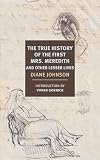
Mary Ellen Peacock Needles Meredith was married to a man the Victorians considered one of the 'Great Men' of their time, the writer George Meredith. Meredith was someone Virginia Woolf in a later age considered "the most grown up of the Victorian novelists". This book is not about George though. It is about Mary Ellen, his first wife, one of those in the orbit of the famous, but not famous herself, and so destined to be a "lesser life".
Briefly, Mary Ellen was educated well by her father the show more writer Thomas Peacock. Married at twenty-three, two months later she was a pregnant widow. Four years later she met and married Meredith, who was seven years her junior. Thus began a life of drudgery, while George wrote. Ten years later, at thirty-seven, she had an affair with Henry Wallis and left the marriage. Pregnant once more, she found herself alone and dying of the kidney disease that would kill her at forty. She died alone and in debt, for as Johnson tells us Because of course, as every Victorian knew, if you have sinned you cannot, cannot possibly, expect to die surrounded by your family and friends. George had refused permission for their son to see his mother ever again, and relented only when it was too late.
Johnson describes George as "momentarily afflicted" by Mary Ellen's death. He wrote to a friend following a vacation when I entered the world again... I found that one had quitted it who bore my name: and this filled my mind with melancholy recollections which I rarely give way to. Thomas Peacock was devastated and never fully recovered.
What Diane Johnson has done is write a biography where there are no lesser lives. As she says, But we know a lesser life does not seem lesser to the person who leads one. She looks at as many of Mary Ellen and George's family and social circles as she can, and then fits them together in an inspired and delightful fashion, so demonstrating some of the complexity of Victorian life.
Johnson says she became interested in Mary Ellen ...resenting on her behalf the way she was always dismissed in biographies of George Meredith: the unhappy wife who had left him and, of course, died, as if death were the deserved fate for Victorian wives who broke the rules. She managed to track down the house where Mary Ellen and Henry's son had lived. The couple who had just inherited it let her go through the box room, and there she found letters from Mary Ellen to Henry. Fifty years later, this biography has certainly stood the test of time. Ironically, George Meredith himself hasn't fared as well. show less
Briefly, Mary Ellen was educated well by her father the show more writer Thomas Peacock. Married at twenty-three, two months later she was a pregnant widow. Four years later she met and married Meredith, who was seven years her junior. Thus began a life of drudgery, while George wrote. Ten years later, at thirty-seven, she had an affair with Henry Wallis and left the marriage. Pregnant once more, she found herself alone and dying of the kidney disease that would kill her at forty. She died alone and in debt, for as Johnson tells us Because of course, as every Victorian knew, if you have sinned you cannot, cannot possibly, expect to die surrounded by your family and friends. George had refused permission for their son to see his mother ever again, and relented only when it was too late.
Johnson describes George as "momentarily afflicted" by Mary Ellen's death. He wrote to a friend following a vacation when I entered the world again... I found that one had quitted it who bore my name: and this filled my mind with melancholy recollections which I rarely give way to. Thomas Peacock was devastated and never fully recovered.
What Diane Johnson has done is write a biography where there are no lesser lives. As she says, But we know a lesser life does not seem lesser to the person who leads one. She looks at as many of Mary Ellen and George's family and social circles as she can, and then fits them together in an inspired and delightful fashion, so demonstrating some of the complexity of Victorian life.
Johnson says she became interested in Mary Ellen ...resenting on her behalf the way she was always dismissed in biographies of George Meredith: the unhappy wife who had left him and, of course, died, as if death were the deserved fate for Victorian wives who broke the rules. She managed to track down the house where Mary Ellen and Henry's son had lived. The couple who had just inherited it let her go through the box room, and there she found letters from Mary Ellen to Henry. Fifty years later, this biography has certainly stood the test of time. Ironically, George Meredith himself hasn't fared as well. show less
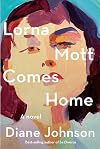
"Happiness runs in a circular motion" - Donovan - and this novel is La Ronde indeed! Lorna, mom and grandmother, art expert, is fed up with the flirtations of her French husband and returns to San Francisco and her kids, grandkids, and a mess of a city. She's got to find an apartment (nothing affordable) and re-establish her career (no one's interested). Her progeny are also neck-deep in financial problems and it seems that only Lorna's first ex-husband's second wife's money can solve them. show more But it might be even worse for Ran, the ex-husband, and Amy, his wealthy second wife - their daughter Gilda, a fifteen year old with diabetes, becomes pregnant after a back seat stand with a twenty year old college student. Lorna's two families, the two ex's, and her two countries all seem doomed to disaster. There's a big cast here, but Lorna's character, wisdom, and humor shine through and her light leads the way to a satisfying conclusion that begs for a sequel. show less

Diane Johnson, the queen of novels about American ex-pats in France, now follows one of her ex-pats back home. Lorna Mott is a woman of a certain age who has been living in France with her second husband (French) for twenty-five years. Now finding him still philandering (a his age!), decides to throw him over and go back home to San Francisco. She has a plan to pick-up her long-discarded career as a lecturer on art history, to have a little pied-a-terre in San Francisco, and to straighten show more out her grown children.
However, she soon finds that things have really changed in twenty-five years. The only apartment she can afford is a semi-seedy one in the foggy Avenues, the powers to be in the art world don’t seem very anxious to set her up on the lecture circuit, and her children…well, one is a depressive divorcee eking out a living selling crafts on Etsy, another seems to have absconded to Thailand with funds belonging to his business, and the third while still dreaming of being a musician, is pretty much just a failure. And let’s not even discuss her former husband who has taken a tech zillionaire for his second wife and is living the life that Lorna thinks that she deserves.
Johnson throws all these characters into a wonderful stew of international manners as Lorna comes to realize that just maybe you can’t go home again after all. show less
However, she soon finds that things have really changed in twenty-five years. The only apartment she can afford is a semi-seedy one in the foggy Avenues, the powers to be in the art world don’t seem very anxious to set her up on the lecture circuit, and her children…well, one is a depressive divorcee eking out a living selling crafts on Etsy, another seems to have absconded to Thailand with funds belonging to his business, and the third while still dreaming of being a musician, is pretty much just a failure. And let’s not even discuss her former husband who has taken a tech zillionaire for his second wife and is living the life that Lorna thinks that she deserves.
Johnson throws all these characters into a wonderful stew of international manners as Lorna comes to realize that just maybe you can’t go home again after all. show less

[b:Natural Opium: Some Travelers' Tales|763255|Natural Opium Some Travelers' Tales|Diane Johnson|https://s.gr-assets.com/assets/nophoto/book/50x75-a91bf249278a81aabab721ef782c4a74.png|749343] is a collection of travel essays published thirty years ago that now seem curiously quaint. As I haven't travelled abroad since (reluctantly) getting a smart phone, it hadn't really occurred to me how they've transformed international travel. Before pocket internet access, you would arrive somewhere show more abroad and just... not not know where anything was unless you had a map or guide, not understand the signage unless you knew the local language or had a phrase book, and need to ask for help with things. Another retro element is Johnson's husband taking the Concorde - remember when that was a thing? If you're under 25, presumably not.
Johnson's thoughtful yet somewhat acidic tone seems coloured by the fact that her travels were not chosen for her. The journeys all over the world that she recounts involved accompanying her husband (a doctor) on work trips to meetings of the International Infectious Disease Council. I wondered whether she was more inclined to criticise something that she didn't choose, but also more open to new experiences because she wasn't paying for them? Her adventures include walking on the Great Barrier Reef, a safari in Tanzania, perilous late-night sledding in Switzerland, and touring ancient tombs in Egypt.
My favourite chapter covered an unexpected stop in the then-Soviet Union on a flight from Paris to Hong Kong. I enjoyed these comments on the psychological impact of international travel:
I was less keen on some of the preceding chapters, although the insight into how travel has changed was thought-provoking. I prefer armchair travel by book to the real thing, but [b:Natural Opium: Some Travelers' Tales|763255|Natural Opium Some Travelers' Tales|Diane Johnson|https://s.gr-assets.com/assets/nophoto/book/50x75-a91bf249278a81aabab721ef782c4a74.png|749343] didn't quite hit the spot. Perhaps Johnson's judgements on her fellow-travellers seemed a bit too sharp and her treatment of cultural differences somewhat inevitably old-fashioned. show less
Johnson's thoughtful yet somewhat acidic tone seems coloured by the fact that her travels were not chosen for her. The journeys all over the world that she recounts involved accompanying her husband (a doctor) on work trips to meetings of the International Infectious Disease Council. I wondered whether she was more inclined to criticise something that she didn't choose, but also more open to new experiences because she wasn't paying for them? Her adventures include walking on the Great Barrier Reef, a safari in Tanzania, perilous late-night sledding in Switzerland, and touring ancient tombs in Egypt.
My favourite chapter covered an unexpected stop in the then-Soviet Union on a flight from Paris to Hong Kong. I enjoyed these comments on the psychological impact of international travel:
Poor [husband] in uncomfortable Shenyang, or perhaps he was by now in Hong Kong. Any worries about him seemed far away, that effect of travel by which real life is left behind and a new reality, the here and now, is more important. The new difficulties of the here and now make the old seem flat and simple. I felt an intense pleasure merely in being, here, this minute. The absence of normal context proves that you must exist independent of it, you, a being alive. Here I am, a woman alone in the Soviet Union, and I will go on being me. The world is interesting and the food not bad (as long as you pay in hard currency). Thinking like this, I was filled with the happiest of traveller's emotions, an existential sense of belonging.
I was less keen on some of the preceding chapters, although the insight into how travel has changed was thought-provoking. I prefer armchair travel by book to the real thing, but [b:Natural Opium: Some Travelers' Tales|763255|Natural Opium Some Travelers' Tales|Diane Johnson|https://s.gr-assets.com/assets/nophoto/book/50x75-a91bf249278a81aabab721ef782c4a74.png|749343] didn't quite hit the spot. Perhaps Johnson's judgements on her fellow-travellers seemed a bit too sharp and her treatment of cultural differences somewhat inevitably old-fashioned. show less
Lists
Awards


You May Also Like


Associated Authors
Statistics
- Works
- 21
- Also by
- 18
- Members
- 3,528
- Popularity
- #7,198
- Rating
- 3.9
- Reviews
- 75
- ISBNs
- 156
- Languages
- 12
- Favorited
- 1
