
George Ricker Berry (1865–1945)
Author of Interlinear Greek-English New Testament: King James version: With Greek-English Lexicon and New Testament Synonyms
About the Author
Works by George Ricker Berry
Interlinear Greek-English New Testament: King James version: With Greek-English Lexicon and New Testament Synonyms (1897) 844 copies, 4 reviews
The Interlinear Literal Translation of the Hebrew Old Testament (Genesis-Exodus) (2007) 43 copies, 1 review
The Interlinear Literal Translation of the Greek New Testament Plus Greek-English Lexicon By Berry and New Testament Synonyms (1895) 23 copies
Berry's Greek-English New Testament Lexicon With Synonyms: Numerically Coded to Strong's Exhaustive Concordance : King James Version (1980) 16 copies
A new Greek-English lexicon to the New Testament, supplemented by a chapter elucidating the synonyms of the New Testament (2017) 11 copies
Interlinear Greek-English New Testament : with a Greek-English lexicon and New Testament synonyms 3 copies
THE HEBREW OLD TESTAMENT 2 copies
The Interlinear KJV: Parallel New Testament in Greek and English Based On the Majority Text with Lexicon and Synonyms (Greek Edition) (2016) 2 copies
The book of Psalms 1 copy
The Newberry study Bible 1 copy
New Greek-English Lexicon 1 copy
Greek to English Interlinear 1 copy
Associated Works
The Interlinear Literal Translation of the Greek New Testament (2018) — some editions — 58 copies, 1 review
Tagged
Common Knowledge
- Birthdate
- 1865-10-15
- Date of death
- 1945-05-24
- Gender
- male
- Education
- Colby University (1885)
Newton Theological Institution - Occupations
- professor of Semitics
Baptist minister - Organizations
- University of Chicago
Colgate University
American Baptist Churches - Nationality
- USA
- Birthplace
- West Sumner, Maine, USA
- Place of death
- Cambridge, Massachusetts, USA
- Associated Place (for map)
- USA
Members
Reviews
Interlinear Greek-English New Testament : With Greek-English Lexicon and New Testament Synonyms (King James version) by George Ricker Berry
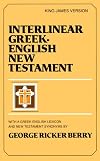
This edition is sort of the Edsel of New Testament cribs: No one thought much of it at the time, but somehow, with age, it is thought to have been better than it was.
Let's define what we have here:
* A Greek text of the New Testament, approximating the so-called Textus Receptus but in fact not quite the same as other editions of that name (although the differences are trivial)
* An interlinear gloss
* A parallel version of the King James New Testament
* A comparison of other editions of the New show more Testament, including those of Elzevier, Griesbach, Lachmann, Tischendorf (eighth edition), Tregelles, Alford, and Wordsworth
* The George Ricker Berry Lexicon, which is a separate book appended to the rest.
All of these parts have their problems. The Textus Receptus in its original form was compiled by the great scholar Erasmus -- but he did it in a frightful haste to meet a publisher's deadline, and admitted that it was "precipitated rather than edited." Only about half a dozen of the 3000 or so Greek New Testament manuscripts now known were consulted in preparing this edition, and they certainly weren't the best half dozen. Although scholars still disagree about what is the best New Testament text, all serious scholars agree that this isn't it.
The King James Bible is translated from the Textus Receptus, so it is a good fit for the Greek text. But if the Greek text is bad, the translation will be bad -- and it does not reflect the four hundred years of linguistic scholarship since then.
The comparison of editions was made by F. H. A. Scrivener, and is good as far as it goes. But the last editions it includes are those of Tischendorf and Tregelles. It does not include the ground-breaking edition of Westcott and Hort, which completely redefined New Testament textual criticism. Nor does it include the editions of Weiss, Von Soden, Merk, Bover, or the now-popular United Bible Societies edition. In other words, while it compares some editions of the Greek New Testament, it doesn't compare the important ones!
The interlinear is probably the best part of the first volume. It is easy to understand and mostly quite good, although it suffers from the fact that it was compiled before archaeology revealed the nature of the New Testament's koine dialect.
Which brings us to the lexicon. This is newer than the text -- it refers to Westcott and Hort. But it still is too old to include the material found in the Egyptian desert and elsewhere. These discoveries revolutionized our understanding of New Testament Greek. This koine was not the same as Classical Greek; the vocabulary was somewhat different and the grammar simplified. This has genuinely changed our understanding of some New Testament passages.
So what we have is a bad text, an incomplete apparatus, and an out-of-date lexicon. Why is it still in print? Well, the fact that it's out of copyright probably helps! More modern editions require payment of royalties. Still, there are better interlinears (Marshall or Brown/Comfort/Douglas) and better lexicons (Bauer's). This was, in its time, a noble and useful publication. But, these days, it's like that old Edsel: It needs a lot of work, and even if you get it fixed up, the gas mileage will stink. show less
Let's define what we have here:
* A Greek text of the New Testament, approximating the so-called Textus Receptus but in fact not quite the same as other editions of that name (although the differences are trivial)
* An interlinear gloss
* A parallel version of the King James New Testament
* A comparison of other editions of the New show more Testament, including those of Elzevier, Griesbach, Lachmann, Tischendorf (eighth edition), Tregelles, Alford, and Wordsworth
* The George Ricker Berry Lexicon, which is a separate book appended to the rest.
All of these parts have their problems. The Textus Receptus in its original form was compiled by the great scholar Erasmus -- but he did it in a frightful haste to meet a publisher's deadline, and admitted that it was "precipitated rather than edited." Only about half a dozen of the 3000 or so Greek New Testament manuscripts now known were consulted in preparing this edition, and they certainly weren't the best half dozen. Although scholars still disagree about what is the best New Testament text, all serious scholars agree that this isn't it.
The King James Bible is translated from the Textus Receptus, so it is a good fit for the Greek text. But if the Greek text is bad, the translation will be bad -- and it does not reflect the four hundred years of linguistic scholarship since then.
The comparison of editions was made by F. H. A. Scrivener, and is good as far as it goes. But the last editions it includes are those of Tischendorf and Tregelles. It does not include the ground-breaking edition of Westcott and Hort, which completely redefined New Testament textual criticism. Nor does it include the editions of Weiss, Von Soden, Merk, Bover, or the now-popular United Bible Societies edition. In other words, while it compares some editions of the Greek New Testament, it doesn't compare the important ones!
The interlinear is probably the best part of the first volume. It is easy to understand and mostly quite good, although it suffers from the fact that it was compiled before archaeology revealed the nature of the New Testament's koine dialect.
Which brings us to the lexicon. This is newer than the text -- it refers to Westcott and Hort. But it still is too old to include the material found in the Egyptian desert and elsewhere. These discoveries revolutionized our understanding of New Testament Greek. This koine was not the same as Classical Greek; the vocabulary was somewhat different and the grammar simplified. This has genuinely changed our understanding of some New Testament passages.
So what we have is a bad text, an incomplete apparatus, and an out-of-date lexicon. Why is it still in print? Well, the fact that it's out of copyright probably helps! More modern editions require payment of royalties. Still, there are better interlinears (Marshall or Brown/Comfort/Douglas) and better lexicons (Bauer's). This was, in its time, a noble and useful publication. But, these days, it's like that old Edsel: It needs a lot of work, and even if you get it fixed up, the gas mileage will stink. show less
A Dictionary of New Testament Greek Synonyms, with Indexes to Bauer's Greek-English Lexicon and Brown's Dictionary by George Ricker Berry

A terribly organized but helpful little volume.
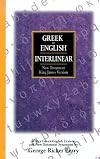
This interlinear is based on the Received Text and is, on the whole, very good.
THE INTERLINEAR LITERAL TRANSLATION OF THE HEBREW OLD TESTAMENT, WITH THE KING JAMES VERSION AND THE REVISED VERSION...GENESIS AND EXODUS by George Ricker Berry

Considering that my copy has a publisher date of 1946, the year before the discovery of the Dead Sea Scrolls, it is amazingly accurate.
Lists
Awards

You May Also Like


Associated Authors
Statistics
- Works
- 46
- Also by
- 2
- Members
- 1,190
- Popularity
- #21,606
- Rating
- 4.0
- Reviews
- 6
- ISBNs
- 23
- Languages
- 1