
Mike Brooks (1)
Author of Dark Run
For other authors named Mike Brooks, see the disambiguation page.
Series
Works by Mike Brooks
Associated Works
Tagged
Common Knowledge
- Gender
- male
- Education
- Nottingham University
- Occupations
- author
- Agent
- Alex Cochran (C&W)
- Nationality
- UK
- Birthplace
- Ipswich, Suffolk, England, UK
- Places of residence
- Nottingham, Nottinghamshire, England, UK
- Associated Place (for map)
- England, UK
Members
Reviews
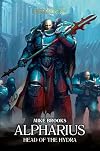
I thoroughly enjoyed this novella. Alpharius is one of my favourite characters in the 40k universe and its great to see him get a voice. One of the fun things about Alpharius, of course, is that you can't trust that voice, so an author can have fun without butting up against the existing fluff. This has come across well in Brooks' novel, which is a gleeful space opera that flys around the founding days of the Imperium throwing doubt on all sorts of knowns, messes with the known unknowns, and show more gives us some new unknown unknowns too! show less

One of the things that authors love about fantasy and science fiction is that they can introduce new dynamics into a story without having to conform to the norms and strictures of existing society. In my review of The Left Hand of Darkness, I expressed doubt that Ursula K. Le Guin was a science fiction writer, saying “I suspect that she is really a sociologist who writes about how people interact in societies, using imaginary distant worlds as the medium by which she explores how her show more subjects react in a given situation.” Written in 1969, when the concept of gender dysphoria was in its infancy, LDoH successfully managed to discuss gender identity without creating a controversy.
In the first book of a new series, Mike Brooks is using the same tactics to again address gender identity. As with Le Guin, readers can easily read and enjoy this story without focusing on gender issues, but for those who want more meat in their fiction, Brooks delivers.
The story has two distinct story lines. In the first, Tjakorshan raiders (think Vikings) land their ships near Black Keep, a Naridan village (think England) causing panic until the Tjakorshan chieftain explains that they are not there to plunder. They only wish to settle. Fearing that if they refuse, they would all be slaughtered, The Naridans grudgingly agree. The social dynamics between these two peoples makes this story a lot of fun to read. What is most interesting is that when disagreements occur, they do not happen in the way that most readers will expect. The staunchly religious Naridans thought nothing of same sex relationships but thought of women practicing the healing arts as witches. The pagan Tjakorshan, on the other hand, considered homosexual relationships an abomination that should be punished harshly. Is it possible for populations so different to coexist peacefully? There is only one way to find out.
In the other story line, assassins are sent to kill a potential claimant to the God-King’s throne. In this country, there are four genders, based on both biology and self-identification, which known by the accent over the words ‘shè’, ‘shé’, ‘hè’ and ‘hé’. It’s an intriguing idea that suggests that the differences between peoples can be simultaneously slight and consequential.
Bottom line: I thoroughly enjoyed this book although I found the chapters set in Black Keep more entertaining. I look forward to reading future volumes in this series.
* This review was based on an advanced reading copy obtained at no cost from the publisher in exchange for an unbiased review. While this does take any ‘not worth what I paid for it’ statements out of my review, it otherwise has no impact on the content of my review.
FYI: On a 5-point scale I assign stars based on my assessment of what the book needs in the way of improvements:
*5 Stars – Nothing at all. If it ain’t broke, don’t fix it.
*4 Stars – It could stand for a few tweaks here and there but it’s pretty good as it is.s
*3 Stars – A solid C grade. Some serious rewriting would be needed in order for this book to be considered great or memorable.
*2 Stars – This book needs a lot of work. A good start would be to change the plot, the character development, the writing style and the ending.
*1 Star – The only thing that would improve this book is a good bonfire. show less
In the first book of a new series, Mike Brooks is using the same tactics to again address gender identity. As with Le Guin, readers can easily read and enjoy this story without focusing on gender issues, but for those who want more meat in their fiction, Brooks delivers.
The story has two distinct story lines. In the first, Tjakorshan raiders (think Vikings) land their ships near Black Keep, a Naridan village (think England) causing panic until the Tjakorshan chieftain explains that they are not there to plunder. They only wish to settle. Fearing that if they refuse, they would all be slaughtered, The Naridans grudgingly agree. The social dynamics between these two peoples makes this story a lot of fun to read. What is most interesting is that when disagreements occur, they do not happen in the way that most readers will expect. The staunchly religious Naridans thought nothing of same sex relationships but thought of women practicing the healing arts as witches. The pagan Tjakorshan, on the other hand, considered homosexual relationships an abomination that should be punished harshly. Is it possible for populations so different to coexist peacefully? There is only one way to find out.
In the other story line, assassins are sent to kill a potential claimant to the God-King’s throne. In this country, there are four genders, based on both biology and self-identification, which known by the accent over the words ‘shè’, ‘shé’, ‘hè’ and ‘hé’. It’s an intriguing idea that suggests that the differences between peoples can be simultaneously slight and consequential.
Bottom line: I thoroughly enjoyed this book although I found the chapters set in Black Keep more entertaining. I look forward to reading future volumes in this series.
* This review was based on an advanced reading copy obtained at no cost from the publisher in exchange for an unbiased review. While this does take any ‘not worth what I paid for it’ statements out of my review, it otherwise has no impact on the content of my review.
FYI: On a 5-point scale I assign stars based on my assessment of what the book needs in the way of improvements:
*5 Stars – Nothing at all. If it ain’t broke, don’t fix it.
*4 Stars – It could stand for a few tweaks here and there but it’s pretty good as it is.s
*3 Stars – A solid C grade. Some serious rewriting would be needed in order for this book to be considered great or memorable.
*2 Stars – This book needs a lot of work. A good start would be to change the plot, the character development, the writing style and the ending.
*1 Star – The only thing that would improve this book is a good bonfire. show less
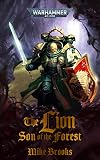
Mike Brooks is asked to perform a magic trick: bring back a primarch out of thin air, make The Fallen sensible, do it all without making the needs of the tabletop game sales completely abusing the coherency of his story. He pulls it off!
I have not read anything by Mike Brooks before, but when I saw this book floating around social media, I was intrigued and subsequently grateful to receive an eARC from NetGalley and Rebellion Publishing.
Driven out of their lands by a daemon known only as The Golden, the Tjakorshi -- lead by their female chief, Saana Sattistutar -- made the treacherous voyage across the seas to Narida, specifically to Black Keep, a land they had raided many times before. When seeking parlay, Daimon show more Blackcreek betrays his law father and law brother -- and his own honor -- to attempt something unthinkable: peace, between his people and those of Tjakorsha. Elsewhere in Narida, war is brewing as the God-King's rule is threatened by the Splinter King and his family, and with rumors that Nari (the first God-King) has been reborn.
The main storyline in The Black Coast follows Daimon Blackcreek (of Narida) and Saana Sattistutar (from Tjakorsha) as their people try to make peace. I think the author did a really good job of capturing potential issues that might arise from years of contention between two seemingly-disparate people and cultures, and how they might work together. The rest of the plot didn't take up near as much page-time, but it did set up really nicely a lot of future plot arcs in the subsequent books in this series.
As an epic fantasy, and the first in a trilogy to boot, it did take a little to get into the flow of the story, but that's just because there's SO MUCH detail the author put into world-building -- providing distinctive cultures for the peoples of the land, crafting a plethora of believable characters, war dragons, etc. -- it was, understandably, a little overwhelming at first. But once I got into a rhythm, the story flew by and felt more natural.
I also really liked the inclusivity and LQBTQA+ rep in this book. There were many queer characters present in this book, and it was (mostly) treated as the norm with no one blinking an eye, which I think is so important. Another important aspect set out in the beginning was the idea of gender in Alaba: "Alabans claim that concepts of 'man' and 'woman' do not apply, and insist they have either five or six genders, depending on how they are counted", and their tonal variations on "me" depend on whether they wish to be perceived as high masculine, low masculine, high feminine, low feminine, gender-neutral formal, or as no gender. There were scenes that emphasized the idea of not misgendering anyone before knowing for certain their preferences, and it was something that I thought was really great, especially in epic fantasy.
There was just something about this book that felt...refreshing. Now I can't wait for the next books in this series...
Thank you to NetGalley and Rebellion publishing for an eARC of this book in exchange for an honest review. All thoughts and opinions are my own. show less
Driven out of their lands by a daemon known only as The Golden, the Tjakorshi -- lead by their female chief, Saana Sattistutar -- made the treacherous voyage across the seas to Narida, specifically to Black Keep, a land they had raided many times before. When seeking parlay, Daimon show more Blackcreek betrays his law father and law brother -- and his own honor -- to attempt something unthinkable: peace, between his people and those of Tjakorsha. Elsewhere in Narida, war is brewing as the God-King's rule is threatened by the Splinter King and his family, and with rumors that Nari (the first God-King) has been reborn.
The main storyline in The Black Coast follows Daimon Blackcreek (of Narida) and Saana Sattistutar (from Tjakorsha) as their people try to make peace. I think the author did a really good job of capturing potential issues that might arise from years of contention between two seemingly-disparate people and cultures, and how they might work together. The rest of the plot didn't take up near as much page-time, but it did set up really nicely a lot of future plot arcs in the subsequent books in this series.
As an epic fantasy, and the first in a trilogy to boot, it did take a little to get into the flow of the story, but that's just because there's SO MUCH detail the author put into world-building -- providing distinctive cultures for the peoples of the land, crafting a plethora of believable characters, war dragons, etc. -- it was, understandably, a little overwhelming at first. But once I got into a rhythm, the story flew by and felt more natural.
I also really liked the inclusivity and LQBTQA+ rep in this book. There were many queer characters present in this book, and it was (mostly) treated as the norm with no one blinking an eye, which I think is so important. Another important aspect set out in the beginning was the idea of gender in Alaba: "Alabans claim that concepts of 'man' and 'woman' do not apply, and insist they have either five or six genders, depending on how they are counted", and their tonal variations on "me" depend on whether they wish to be perceived as high masculine, low masculine, high feminine, low feminine, gender-neutral formal, or as no gender. There were scenes that emphasized the idea of not misgendering anyone before knowing for certain their preferences, and it was something that I thought was really great, especially in epic fantasy.
There was just something about this book that felt...refreshing. Now I can't wait for the next books in this series...
Thank you to NetGalley and Rebellion publishing for an eARC of this book in exchange for an honest review. All thoughts and opinions are my own. show less
Lists
Awards


You May Also Like


Associated Authors
Statistics
- Works
- 40
- Also by
- 24
- Members
- 1,365
- Popularity
- #18,834
- Rating
- 3.7
- Reviews
- 41
- ISBNs
- 113
- Languages
- 2