
Robert H. Ferrell (1921–2018)
Author of Dear Bess: The Letters from Harry to Bess Truman
About the Author
Robert Hugh Ferrell was born in Cleveland, Ohio on May 8, 1921. He studied music and education at Bowling Green State University in Ohio, but his education was interrupted by World War II. He served as a chaplain's assistant in the Army Air Forces before being promoted to staff sergeant. After the show more war, he received a B.S. in education from Bowling Green State University and a master's degree and a Ph.D. in history from Yale University. He taught at Indiana University in Bloomington from 1953 until his retirement in 1988. He expanded his dissertation into a book, Peace in Their Time: The Origins of the Kellogg-Briand Pact, which was published in 1952 and won the American Historical Association's George Louis Beer Prize. He wrote or edited more than 60 books including Off the Record: The Private Papers of Harry S. Truman; Harry S. Truman: A Life; The Eisenhower Diaries; Woodrow Wilson and World War I, 1917-1921; American Diplomacy: The Twentieth Century; The Strange Deaths of President Harding; Five Days in October: The Lost Battalion of World War I; and Argonne Days in World War I. He died on August 8, 2018 at the age of 97. (Bowker Author Biography) show less
Series
Works by Robert H. Ferrell
Harry S. Truman and the Modern American Presidency (Library of American Biography Series) (1983) 44 copies
Unjustly Dishonored: An African American Division in World War I (Volume 1) (American Military Experience) (2011) 15 copies
American Diplomacy in the Great Depression: Hoover-Stimson Foreign Policy, 1929-1933 (1969) 13 copies
The Question of MacArthur's Reputation: Côte De Châtillon, October 14-16, 1918 (2008) 8 copies, 1 review
Grace Coolidge: The People's Lady in Silent Cal's White House (Modern First Ladies) (2008) 8 copies, 1 review
Truman at Postdam 1 copy
Associated Works
Presidential Leadership: Rating the Best and the Worst in the White House (2004) — Contributor — 160 copies, 3 reviews
Tagged
Common Knowledge
- Legal name
- Ferrell, Robert Hugh
- Birthdate
- 1921-05-08
- Date of death
- 2018-08-08
- Gender
- male
- Education
- Bowling Green State University (BS|1946)
Yale University (PhD|1951) - Occupations
- historian
- Organizations
- Indiana University
- Nationality
- USA
- Birthplace
- Cleveland, Ohio, USA
- Associated Place (for map)
- Ohio, USA
Members
Reviews
Grace Coolidge: The People's Lady in Silent Cal's White House (Modern First Ladies) by Robert H. Ferrell
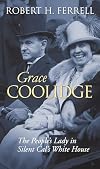
This is an excellent biography of an almost forgotten first lady. Grace Coolidge was one of the most popular ladies in the United States during her husband's presidency. Everything she did was copied and discussed. However, today, she is hidden behind the more well-known occupiers of the office of First Lady of the United States.
Grace Coolidge was a perfect foil for her notoriously "Silent" husband. She was energetic and outgoing. She made a real effort to be likeable and relatable in the show more press. Children loved her and wanted to meet her. However, much of her personality was stifled by her husband. When he died, Grace Coolidge came into her own and lived life on her terms.
Mrs. Coolidge's early life is very elusive. Hardly anything, apart from stories told and retold time and again, survives. Documentation of her life didn't really begin until her husband held public office. This book is a worthy installment in the Modern First Ladies edition of biographies, and Grace Coolidge's life is certainly well-worth reading. What a charming lady! show less
Grace Coolidge was a perfect foil for her notoriously "Silent" husband. She was energetic and outgoing. She made a real effort to be likeable and relatable in the show more press. Children loved her and wanted to meet her. However, much of her personality was stifled by her husband. When he died, Grace Coolidge came into her own and lived life on her terms.
Mrs. Coolidge's early life is very elusive. Hardly anything, apart from stories told and retold time and again, survives. Documentation of her life didn't really begin until her husband held public office. This book is a worthy installment in the Modern First Ladies edition of biographies, and Grace Coolidge's life is certainly well-worth reading. What a charming lady! show less
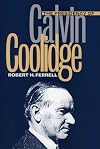
Robert Farrell's contribution to the excellent "Presidency" series of the University Press of Kansas offers a clear-eyed but sympathetic portrait of the thirtieth president. Coolidge today is remembered only as "Silent Cal" (if he is remembered at all), the Vermont stoic who presided over the nation from 1923 (on the death of Harding) to 1929. Farrell brings him back to life, and demonstrates that he was a man of greater depth and abilities than he is usually given credit for. But the fact show more remains that he was a champion of small government (the Tea Party is bound to discover him any day now) and his executive style was much like Eisenhower's - appoint a capable cabinet and leave day-to-day management of public affairs to them, intervening only when necessary.
Fortunately for Coolidge (and the nation), most of his term in office coincided with a long period of peace and prosperity, and there appeared little need for a strong executive. On the other hand, however, his final two full years as president (1927-1928) witnessed runaway growth in the stock market and a massive expansion of speculative investment (otherwise known as a bubble) that ended with a loud crash in October 1929, after Coolidge had left office. In retrospect he was criticized for being asleep at the wheel while the American economy ran off the tracks into severe and prolonged depression. Farrell concludes that "the economy was the greatest problem of the moment, and Coolidge understood it less than some of his contemporaries. If he failed in the presidency, this was his major failure...Somehow, one wishes that during the last presidential year or two, the bright, hardworking, slightly cynical, simple (in the right sense of that adjective) man in the White House had fixed his mind on the nation's fragile economy. One wishes that he had gathered the best minds...and asked them what to do, and then, although the task would have been difficult, sought to do it."
It's easy to share Farrell's wish, which was written in 1998, but in light of the economic crisis that befell the nation in 2008, it's difficult to blame Coolidge, who lived in an era of limited economic data and minimal government regulation, for failing to recognize and respond to the same kind of irrational exuberance that George W. Bush and Alan Greenspan recognized but ignored. show less
Fortunately for Coolidge (and the nation), most of his term in office coincided with a long period of peace and prosperity, and there appeared little need for a strong executive. On the other hand, however, his final two full years as president (1927-1928) witnessed runaway growth in the stock market and a massive expansion of speculative investment (otherwise known as a bubble) that ended with a loud crash in October 1929, after Coolidge had left office. In retrospect he was criticized for being asleep at the wheel while the American economy ran off the tracks into severe and prolonged depression. Farrell concludes that "the economy was the greatest problem of the moment, and Coolidge understood it less than some of his contemporaries. If he failed in the presidency, this was his major failure...Somehow, one wishes that during the last presidential year or two, the bright, hardworking, slightly cynical, simple (in the right sense of that adjective) man in the White House had fixed his mind on the nation's fragile economy. One wishes that he had gathered the best minds...and asked them what to do, and then, although the task would have been difficult, sought to do it."
It's easy to share Farrell's wish, which was written in 1998, but in light of the economic crisis that befell the nation in 2008, it's difficult to blame Coolidge, who lived in an era of limited economic data and minimal government regulation, for failing to recognize and respond to the same kind of irrational exuberance that George W. Bush and Alan Greenspan recognized but ignored. show less
A semi-biography and a semi-historiography of the Harding presidency and the Harding legacy. The main thrust of the book, broken down topically, is that everything you know about Harding just ain't true and is instead the product of malicious lies and innuendo spread by people who did not like him or his politics. In the Nan Britton chapter, Ferrell never quite comes out and says she's lying, but you get the gist that she is probably exaggerating. Of course, we now know (post-August 2015) show more that Nan Britton and Harding were lovers, and did spawn a love child. I still believe that you can't wholesale trust everything said in her memoir. The book is good at showing how liberal historians can shape the discourse of history for decades to come. show less
This is the first biography I read of President Coolidge. It is very dry and academic in style, but I didn't mind.
I now believe that if any twentieth-century American president could be called a good man, it must have been Calvin Coolidge. He had possibly the most outwardly uninteresting and unappealing personality of any president, but who cares? because I believe he was more committed to leaving the American people alone, to not intruding in their everyday lives, than any president outside show more the Founding Fathers' generation. He was also probably the president most committed to fiscal discipline: every year of his one term saw the budget balanced; taxes were repeatedly cut, and Coolidge once made a speech about reducing pencil expenditures!
About his laconic and unsociable personality, there is a plausible theory in another bio I plan to read. Calvin Coolidge's younger son, Calvin Jr., died in 1924--the same year Coolidge was elected for his own term after replacing the deceased president Harding. Robert E. Gilbert believes that because of Calvin Jr.'s death, Calvin Sr. suffered from clinical depression throughout his term, which would explain his quiet, passive and often socially inept behavior.
I also plan to read Coolidge's autobiography, which he wrote not long after leaving office. show less
I now believe that if any twentieth-century American president could be called a good man, it must have been Calvin Coolidge. He had possibly the most outwardly uninteresting and unappealing personality of any president, but who cares? because I believe he was more committed to leaving the American people alone, to not intruding in their everyday lives, than any president outside show more the Founding Fathers' generation. He was also probably the president most committed to fiscal discipline: every year of his one term saw the budget balanced; taxes were repeatedly cut, and Coolidge once made a speech about reducing pencil expenditures!
About his laconic and unsociable personality, there is a plausible theory in another bio I plan to read. Calvin Coolidge's younger son, Calvin Jr., died in 1924--the same year Coolidge was elected for his own term after replacing the deceased president Harding. Robert E. Gilbert believes that because of Calvin Jr.'s death, Calvin Sr. suffered from clinical depression throughout his term, which would explain his quiet, passive and often socially inept behavior.
I also plan to read Coolidge's autobiography, which he wrote not long after leaving office. show less
Lists
Awards

You May Also Like


Associated Authors
Statistics
- Works
- 44
- Also by
- 2
- Members
- 1,227
- Popularity
- #20,921
- Rating
- 3.8
- Reviews
- 18
- ISBNs
- 101