

Richard Kearney
Author of The Continental Philosophy Reader
About the Author
Richard Kearney holds the Charles Seelig Chair of Philosophy at Boston College. He is director of the Guestbook Project for creative peace pedagogy and he has written many books on the philosophy of imagination and embodiment, translated into over a dozen languages. His previous Columbia University show more Press books include Anatheism; Returning to God After God [2009] and Reimagining the Sacred (2016). show less
Works by Richard Kearney
Modern Movements in European Philosophy: Phenomenology, Critical Theory, Structuralism (1986) 67 copies, 1 review
Debates in Continental Philosophy: Conversations with Contemporary Thinkers (Perspectives in Continental Philosophy) (2004) 19 copies
Dialogues With Contemporary Continental Thinkers: The Phenomenological Heritage, Paul Ricoeur, Emmanuel Levinas, Herbert Marcuse, Stanislas Breton, (1984) 10 copies
Radical Hospitality: From Thought to Action (Perspectives in Continental Philosophy) (2021) 7 copies
Phenomenologies of the Stranger: Between Hostility and Hospitality (Perspectives in Continental Philosophy) (2011) 6 copies
Poetics of Modernity: Toward a Hermeneutic Imagination (Philosophy and Literary Theory) (1995) 5 copies
Poétique du possible: Phénoménologie herméneutique de la figuration (Bibliothèque des archives de philosophie) (French Edition) (1984) 2 copies
Heidegger's three gods 2 copies
Ξένοι, θεοί και τέρατα 1 copy
A Poética do Possível 1 copy
The William Desmond Reader 1 copy
Associated Works
Toward a Theology of Eros: Transfiguring Passion at the Limits of Discipline (2007) — Contributor — 34 copies
What Happened in and to Moral Philosophy in the Twentieth Century?: Philosophical Essays in Honor of Alasdair MacIntyre (2013) — Contributor — 13 copies
Difficulties of Ethical Life (Perspectives in Continental Philosophy) (2008) — Contributor — 4 copies
Cross and Khora: Deconstruction and Christianity in the Work of John D. Caputo [Postmodern Ethics 1] (2010) — Contributor — 2 copies
Tagged
Common Knowledge
- Canonical name
- Kearney, Richard
- Legal name
- Kearney, Richard Marius
- Other names
- Kearney, Richard M.
- Birthdate
- 1954-12-08
- Gender
- male
- Education
- University of Paris X (Ph.D|1980)
McGill University (MA|1976)
University College Dublin (BA|1975)
Glenstal Abbey School - Occupations
- professor
philosopher - Organizations
- Boston College
University College Dublin - Awards and honors
- Royal Irish Academy (1994)
- Nationality
- Ireland
- Birthplace
- Cork, Ireland
- Places of residence
- Cork, County Cork, Ireland
Montréal, Québec, Canada
Nanterre, France
Boston, Massachusetts, USA - Associated Place (for map)
- Ireland
Members
Reviews
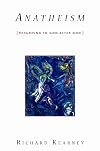
Kearney presents a provocative philosophy of returning to belief in God after the unbelief, or a necessary atheistic critique. I appreciated Kearney's distillation of a wide range of philosophers and complex themes with logic, clarity, and a beautiful language. Moreover this book gives me a sense of hope, a vision of the dynamic wager of embracing or excluding the Other, God as stranger, and the power of a reclamation, rather than abandonment, of religious belief.
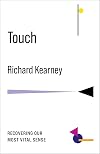
Touch: Recovering Our Most Vital Sense by Richard Kearney is a nice addition to the No Limits series. He examines the sense of touch and its importance to human beings, from pleasure to healing and simply our being in the world.
The books in this series tend to be short and to the point yet, to get the most from them, one needs to try not to read them too quickly. This volume is no exception, though for me there was one section that almost made me skip/skim several pages. In fairness, those show more same pages may well be what speaks most deeply to another reader, so it is not a flaw so much as missed connection between what the book is supposedly doing there and what it in fact did to this one particular reader. But otherwise, I found the discussions and rationale quite interesting.
The part that I could have done without, or at least have it done in a more even-handed manner, is part of the chapter on the Wounded Healer. Kearney cites several examples from antiquity, Greek and Roman mythology, then beats us over the head with a much too long excursion into Christian mythology while giving short bits about other traditions and mythologies and excluding, for the most part, Eastern tradition. I think the Christian example is every bit as important as the others, but not to the exclusion or expense of the other traditions and mythology. If you're going to cite mythology, then don't give one that much more space than the others just because it happens to be a mythology you still believe in in spite of all evidence to the contrary. But, for those subscribing to that mythology, this will likely be a positive section for them. I found it repetitive and at the expense of other equally important and valid examples.
His discussion of how we are at risk of "losing touch" with each other and, frankly, with ourselves, is compelling. It fell down when for a couple paragraphs at the end the "solution" seems to be variations on the theme of "enjoy what you do virtually but also put the technology down and enjoy the real world as well." Really? That is the best you have? Of course it makes sense, but for those who have never really done without their technology, that is like telling an alcoholic "just enjoy a periodic drink but also enjoy times without alcohol." Great in theory, impossible in practice.
I know it sounds like I didn't like this book, and that is not the case. Take out (or reduce) several repetitive pages and make a better suggestion in that one paragraph and I would have had only positive things to say. I'd say 135 or so positive pages out of about 140 makes the book a success.
Reviewed from a copy made available by the publisher via NetGalley. show less
The books in this series tend to be short and to the point yet, to get the most from them, one needs to try not to read them too quickly. This volume is no exception, though for me there was one section that almost made me skip/skim several pages. In fairness, those show more same pages may well be what speaks most deeply to another reader, so it is not a flaw so much as missed connection between what the book is supposedly doing there and what it in fact did to this one particular reader. But otherwise, I found the discussions and rationale quite interesting.
The part that I could have done without, or at least have it done in a more even-handed manner, is part of the chapter on the Wounded Healer. Kearney cites several examples from antiquity, Greek and Roman mythology, then beats us over the head with a much too long excursion into Christian mythology while giving short bits about other traditions and mythologies and excluding, for the most part, Eastern tradition. I think the Christian example is every bit as important as the others, but not to the exclusion or expense of the other traditions and mythology. If you're going to cite mythology, then don't give one that much more space than the others just because it happens to be a mythology you still believe in in spite of all evidence to the contrary. But, for those subscribing to that mythology, this will likely be a positive section for them. I found it repetitive and at the expense of other equally important and valid examples.
His discussion of how we are at risk of "losing touch" with each other and, frankly, with ourselves, is compelling. It fell down when for a couple paragraphs at the end the "solution" seems to be variations on the theme of "enjoy what you do virtually but also put the technology down and enjoy the real world as well." Really? That is the best you have? Of course it makes sense, but for those who have never really done without their technology, that is like telling an alcoholic "just enjoy a periodic drink but also enjoy times without alcohol." Great in theory, impossible in practice.
I know it sounds like I didn't like this book, and that is not the case. Take out (or reduce) several repetitive pages and make a better suggestion in that one paragraph and I would have had only positive things to say. I'd say 135 or so positive pages out of about 140 makes the book a success.
Reviewed from a copy made available by the publisher via NetGalley. show less
Modern Movements in European Philosophy: Phenomenology, Critical Theory, Structuralism by Richard Kearney
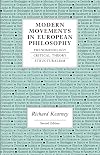
I spent the first semester of 2012 studying the philosophy of subjectivity, which brought me into contact with many philosophical schools from Cartesianism to Feminism. One of my favourite “discoveries” was the phenomenological school of philosophy, specifically that of Martin Heidegger and Maurice Merleau-Ponty (and, yes, I am aware that Heidegger probably would not have considered himself a phenomenologist). I had to do an assignment discussing Heidegger and Merleau-Ponty’s views of show more the self, which brought Richard Kearney’s book to my attention, among others. As the title makes clear, Kearney discusses various strands of modern European (or Continental) philosophy. He presents the works of nineteen philosophers under the broad headings of Phenomenology, Critical Theory, and Structuralism. A slight complaint would be that Kearney sometimes shoehorns certain philosophers into the respective categories, even when they themselves denied that they practised philosophy of that school (the above example of Heidegger is one; Foucault’s presence under the Structuralists is another). Kearney does, however, always indicate these instances, and cogently argues for their inclusion under the specific categories. Perhaps he could have done without the broad categories – perhaps he thought the broad categories would help to structure his book. In any case, it is only a minor quibble.
Of the three categories, I am constitutionally most drawn to the phenomenological philosophers, and consequently found Kearney’s explication of their theories the most congenial. Here it is Merleau-Ponty’s arguments concerning embodied subjectivity that I find most interesting and cogent. On the other hand, I also find Edmund Husserl’s ground-breaking phenomenological work interesting – he was, after all, the father of such studies – and Heidegger is always intriguing. Jean-Paul Sartre and Paul Ricoeur are also great French philosophers in this tradition, with Sartre providing both philosophical and literary works to support his standpoint. To be honest, the only phenomenologist (though he would also deny this categorisation) that Kearney considers whom I actively dislike, is Jacques Derrida. Like heady wine, Derrida is an acquired taste that I never managed to, well, acquire. It is not that I completely disagree with deconstructionism, however you might want to define deconstructionism (would you want to define it?) Rather, I dislike Derrida’s arrogance. His claims about literature are too complex to go into here. Let us just say that I think a lot of his writing is pure hokum. Maybe my inbuilt sh*t-detector is overactive when it comes to his textual strategies. Maybe I just feel threatened by his decentring of the literary canon. Maybe… well, enough of that. I would rather be reading Merleau-Ponty, in any case.
Critical Theory was a whole new field to me. It is, basically, a Marxist school of philosophy. On the whole, I do not have a high regard for Marxism, especially its positivist adherents, but some of the Critical Theorists seem like interesting and convincing thinkers. I do not have the required knowledge to really write anything coherent about their philosophies, but I would like to read some of their works, especially those of Walter Benjamin and Herbert Marcuse.
I am a bit more acquainted with Structuralist theories, though not so much that I can really write intelligibly about most of the Structuralist thinkers. I studied Ferdinand de Saussure, who introduced Structuralism into linguistics, for a bit during a course in English grammar, but that was a few years ago. He seems like a very original thinker, even though his writings are mostly very technical. Similarly, I studied Claude Lévi-Strauss in a course on Ancient Cultural History. He introduced Structuralist thinking into anthropology, but all I can really remember about his work is how unconvincing I found most of his explanations of myths. Of the other Structuralists, I know the most about Foucault, who, though an interesting and controversial thinker, I do not particularly like. His work on madness and sexual deviancy interests me, even though I doubt I would agree with most of his conclusions. Then we have Lacan, Althusser, Barthes, and Kristeva. I am aware of Barthes’s claims concerning the ‘death of the author’, thanks to a Poetics and Literary Theory course I took. Kristeva also seems interesting, especially her “post-feminist” ideology, if ideology is the right word.
This is a great introduction to some of the most important philosophers of the previous century. Even though I doubt I will be reading more of some of them, I found it a mind-expanding prolegomena to modern European philosophy. I recommend it for its clarity and inherent interestingness.
A note: I feel that this is, in some ways, a sorry, bedraggled excuse for a review, as I have mostly relied on value-judgements, instead of focussing on the content of Kearney’s book. My problem was how to condense Kearney’s complex explications of the philosophers’ theories into a readable, and not overlong, review. Being intimidated by this problem, I took the coward’s way out and relied on the aforesaid personal judgements. I am sure that a better review of the book is possible, but it would involve more effort than I am willing to expend at the moment. show less
Of the three categories, I am constitutionally most drawn to the phenomenological philosophers, and consequently found Kearney’s explication of their theories the most congenial. Here it is Merleau-Ponty’s arguments concerning embodied subjectivity that I find most interesting and cogent. On the other hand, I also find Edmund Husserl’s ground-breaking phenomenological work interesting – he was, after all, the father of such studies – and Heidegger is always intriguing. Jean-Paul Sartre and Paul Ricoeur are also great French philosophers in this tradition, with Sartre providing both philosophical and literary works to support his standpoint. To be honest, the only phenomenologist (though he would also deny this categorisation) that Kearney considers whom I actively dislike, is Jacques Derrida. Like heady wine, Derrida is an acquired taste that I never managed to, well, acquire. It is not that I completely disagree with deconstructionism, however you might want to define deconstructionism (would you want to define it?) Rather, I dislike Derrida’s arrogance. His claims about literature are too complex to go into here. Let us just say that I think a lot of his writing is pure hokum. Maybe my inbuilt sh*t-detector is overactive when it comes to his textual strategies. Maybe I just feel threatened by his decentring of the literary canon. Maybe… well, enough of that. I would rather be reading Merleau-Ponty, in any case.
Critical Theory was a whole new field to me. It is, basically, a Marxist school of philosophy. On the whole, I do not have a high regard for Marxism, especially its positivist adherents, but some of the Critical Theorists seem like interesting and convincing thinkers. I do not have the required knowledge to really write anything coherent about their philosophies, but I would like to read some of their works, especially those of Walter Benjamin and Herbert Marcuse.
I am a bit more acquainted with Structuralist theories, though not so much that I can really write intelligibly about most of the Structuralist thinkers. I studied Ferdinand de Saussure, who introduced Structuralism into linguistics, for a bit during a course in English grammar, but that was a few years ago. He seems like a very original thinker, even though his writings are mostly very technical. Similarly, I studied Claude Lévi-Strauss in a course on Ancient Cultural History. He introduced Structuralist thinking into anthropology, but all I can really remember about his work is how unconvincing I found most of his explanations of myths. Of the other Structuralists, I know the most about Foucault, who, though an interesting and controversial thinker, I do not particularly like. His work on madness and sexual deviancy interests me, even though I doubt I would agree with most of his conclusions. Then we have Lacan, Althusser, Barthes, and Kristeva. I am aware of Barthes’s claims concerning the ‘death of the author’, thanks to a Poetics and Literary Theory course I took. Kristeva also seems interesting, especially her “post-feminist” ideology, if ideology is the right word.
This is a great introduction to some of the most important philosophers of the previous century. Even though I doubt I will be reading more of some of them, I found it a mind-expanding prolegomena to modern European philosophy. I recommend it for its clarity and inherent interestingness.
A note: I feel that this is, in some ways, a sorry, bedraggled excuse for a review, as I have mostly relied on value-judgements, instead of focussing on the content of Kearney’s book. My problem was how to condense Kearney’s complex explications of the philosophers’ theories into a readable, and not overlong, review. Being intimidated by this problem, I took the coward’s way out and relied on the aforesaid personal judgements. I am sure that a better review of the book is possible, but it would involve more effort than I am willing to expend at the moment. show less
On Paul Ricoeur: The Owl of Minerva (Transcending Boundaries in Philosophy and Theology) by Richard Kearney

A thematically ordered overview of Ricoeur's entire oeuvre by his student Kearney. It is accessible, accurate, and insighful. Recommended reading for students of Ricoeur's work!
Lists
You May Also Like


Associated Authors
Statistics
- Works
- 68
- Also by
- 8
- Members
- 1,280
- Popularity
- #20,031
- Rating
- 3.8
- Reviews
- 9
- ISBNs
- 144
- Languages
- 6
- Favorited
- 2