
Daniel Stone (1) (1985–)
Author of The Food Explorer: The True Adventures of the Globe-Trotting Botanist Who Transformed What America Eats
For other authors named Daniel Stone, see the disambiguation page.
About the Author
Image credit: By Slowking4 - https://www.flickr.com/photos/73455099@N07/48660109157/, CC BY-SA 2.0, https://commons.wikimedia.org/w/index.php?curid=83848355
Works by Daniel Stone
The Food Explorer: The True Adventures of the Globe-Trotting Botanist Who Transformed What America Eats (2018) 360 copies, 14 reviews
American Poison: A Deadly Invention and the Woman Who Battled for Environmental Justice (2025) 40 copies, 2 reviews
Associated Works
Tagged
Common Knowledge
- Legal name
- Stone, Daniel Evan
- Birthdate
- 1985
- Gender
- male
- Education
- Johns Hopkins University
University of California, Davis - Occupations
- journalist
- Nationality
- USA
- Places of residence
- Santa Barbara, California, USA
- Associated Place (for map)
- California, USA
Members
Reviews
The Food Explorer: The True Adventures of the Globe-Trotting Botanist Who Transformed What America Eats by Daniel Stone
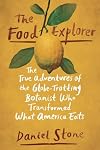
Wow. I am not normally a voracious page-turner of non-fiction, but this one did it for me.
This is the true story of David Fairchild, a man who was responsible for immeasurably enriching America's agriculture. Does that sound dull? It's not. If you're like me, you love food. If you're like me, you maybe also consider yourself fairly willing to try new things and food of different ethnicities. BUT, none of us can escape that we are probably pretty complacent about the foods we have grown up show more with, the foods we assume "belong" to our people and our lifestyle. These foods somehow seem to just naturally have pride of place on our menu, and that's just the way it is, and they're normal, and everything else, while interesting and maybe delicious, is slightly exotic and "outside."
Wrong.
When I learned, from this book, how much painstaking work and passion went into importing new plants into America--plants that produce food we now take for granted--I was in awe. When I realized what an absolute lottery of chance it was that certain plants found success in the United States and other plants never quite got a proper opportunity due to accident or poor timing, I was confounded. My exciting, profound takeaway from this book is that there is SO MUCH food out there and given a slight alteration in history or policy, ALL of it could have been MY "normal". If this doesn't change the way you look at food, and enhance your willingness to try all types, then nothing will.
This book was extremely well written. Usually when I read non-fiction, I set myself goals of a certain number of pages per time. When I was at about 70% towards the end, I intended to stop for a bit, but I just kept on going. I wanted to know what happened to David Fairchild, to his star explorer Frank Meyer (SO tragic and when I use Meyer lemons from now on I will contemplate his life with the proper gravitas), and to the edge-of-your-seat battle between the plant importers and the pest preventers.
This is a tale of a little espionage, a little diplomacy, a little bureaucracy, a little romance, a lot of friendship, and a driving curiosity about the good stuff on the planet.
Here are a few choice quotes:
"[Fairchild] used to say, 'Never be satisfied with what you know, only with what more you can find out."
"Fairchild liked the idea of espionage, but he was as skilled at covert action as he was at ballroom dancing, having done neither."
"For a botanist, the first taste of a new plant was like meeting a new person, and recalling it flooded the mind with memories of where it had happened, what the tongue expected, and what it found instead."
"Wasn't it strange, Fairchild observed, man's propensity to be satisfied with so little when so much was available?" YES, I think so too!
"A glass ceiling could be shattered once; after that, latecomers could only break the pieces into smaller and smaller shards."
"His cynicism about people's stubborn tastes had grown strong. "I know there are many people who will shy at the idea of even tasting the leaves of the papaya," Fairchild wrote..."But as they shake their heads they will reach for a cigarette."
***I first learned about this book from a Smithsonian podcast called "Side Door," and NetGalley kindly gave me access to a digital review copy. show less
This is the true story of David Fairchild, a man who was responsible for immeasurably enriching America's agriculture. Does that sound dull? It's not. If you're like me, you love food. If you're like me, you maybe also consider yourself fairly willing to try new things and food of different ethnicities. BUT, none of us can escape that we are probably pretty complacent about the foods we have grown up show more with, the foods we assume "belong" to our people and our lifestyle. These foods somehow seem to just naturally have pride of place on our menu, and that's just the way it is, and they're normal, and everything else, while interesting and maybe delicious, is slightly exotic and "outside."
Wrong.
When I learned, from this book, how much painstaking work and passion went into importing new plants into America--plants that produce food we now take for granted--I was in awe. When I realized what an absolute lottery of chance it was that certain plants found success in the United States and other plants never quite got a proper opportunity due to accident or poor timing, I was confounded. My exciting, profound takeaway from this book is that there is SO MUCH food out there and given a slight alteration in history or policy, ALL of it could have been MY "normal". If this doesn't change the way you look at food, and enhance your willingness to try all types, then nothing will.
This book was extremely well written. Usually when I read non-fiction, I set myself goals of a certain number of pages per time. When I was at about 70% towards the end, I intended to stop for a bit, but I just kept on going. I wanted to know what happened to David Fairchild, to his star explorer Frank Meyer (SO tragic and when I use Meyer lemons from now on I will contemplate his life with the proper gravitas), and to the edge-of-your-seat battle between the plant importers and the pest preventers.
This is a tale of a little espionage, a little diplomacy, a little bureaucracy, a little romance, a lot of friendship, and a driving curiosity about the good stuff on the planet.
Here are a few choice quotes:
"[Fairchild] used to say, 'Never be satisfied with what you know, only with what more you can find out."
"Fairchild liked the idea of espionage, but he was as skilled at covert action as he was at ballroom dancing, having done neither."
"For a botanist, the first taste of a new plant was like meeting a new person, and recalling it flooded the mind with memories of where it had happened, what the tongue expected, and what it found instead."
"Wasn't it strange, Fairchild observed, man's propensity to be satisfied with so little when so much was available?" YES, I think so too!
"A glass ceiling could be shattered once; after that, latecomers could only break the pieces into smaller and smaller shards."
"His cynicism about people's stubborn tastes had grown strong. "I know there are many people who will shy at the idea of even tasting the leaves of the papaya," Fairchild wrote..."But as they shake their heads they will reach for a cigarette."
***I first learned about this book from a Smithsonian podcast called "Side Door," and NetGalley kindly gave me access to a digital review copy. show less
American Poison: A Deadly Invention and the Woman Who Battled for Environmental Justice by Daniel Stone
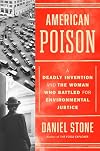
This is not a sad story. It’s a shocking one…but ultimately it’s a story of two incredible Americans and their fight to build conflicting worlds. from American Poison by Daniel Stone
In the 1920s, the brilliant chemist Thomas Midgley developed an additive to gasoline that solved engine knock and increased fuel efficiency, the lucrative discovery known as Ethyl. Midgley denied that Ethyl’s lead content was a health hazard, ignoring the signs that it had affected his body.
Dr. Alice show more Hamilton, born to wealth, was driven to change the world’s ills. She was concerned with the health of workers in industry. There were no laws to protect workers–including the millions of children working in mills and factories and mines–only laws to protect capitalists. Her work at Hull House with Jane Addams and her medical training impelled her environmental activism. She became an authority on lead poisoning and she challenged the notion that Ethyl’s lead was harmless.
Tetraethyl lead was killing men, causing hallucinations, and sudden personality changes with violent outbursts. Hamilton knew that lead poisoning was irreversible, that lead remained in the body for ever, and that no amount of exposure to lead was safe.
The story sent chills up my spine as I read about the challengers to Ethyl failing due to skewed and biased data and the lack of a long term, scientific, study.
Midgley became wealthy, denying to the end that his declining health was from lead poisoning. Hamilton wrote the book that became the definitive guide to known poisons in the workplace and inspired future environmentalists like Rachel Carson. In 1970, Congress finally created the occupational Safety and Health Act. In 1975 catalytic converters ended the need for leaded gasoline.
And yet Hamilton has been forgotten.
Studies have indicated that the greatest use of leaded gasoline, peaking in the 1970s, is shadowed by a peak in crime twenty years later, indicting that children exposed to lead became young adults with brain damage. I shudder to consider the children of Flint, Michigan, exposed to lead in their water. To know that the lead in gasoline has contaminated everything, is in the soil, is terrifying.
This book affected me in a very personal way. In the 1940s, my grandfather built a gas station literally in his front yard. My father ran the station after he graduated from high school. At some time, all my uncles worked at the station.
The house was divided into three apartments, and all my cousins and I lived there in our early years.
Dad and friends working on a car at the station
My Uncle Lee ready to pump gas
My maternal grandfather moved to Metro Detroit for an engineering job at GM, and the family relocated after them. After a few years working as a mechanic in a service station Dad finally got a job at Chrysler.
All of my family would have been affected by the chemicals in gasoline, tetraethyl lead and benzene. Dad recalled dealing with asbestos lined brake pads. He died of non-Hodgkin’s lymphoma, but also suffered from severe anemia and neuropathy. And I have to wonder how exposure to lead and other toxins played out in his health.
I have read this kind of story over and over, how one person crusades to better the world, standing up to power and money, which too often wins in the short term, but not before leaving a poisonous legacy.
Thanks to the publisher for a free book through NetGalley. show less
In the 1920s, the brilliant chemist Thomas Midgley developed an additive to gasoline that solved engine knock and increased fuel efficiency, the lucrative discovery known as Ethyl. Midgley denied that Ethyl’s lead content was a health hazard, ignoring the signs that it had affected his body.
Dr. Alice show more Hamilton, born to wealth, was driven to change the world’s ills. She was concerned with the health of workers in industry. There were no laws to protect workers–including the millions of children working in mills and factories and mines–only laws to protect capitalists. Her work at Hull House with Jane Addams and her medical training impelled her environmental activism. She became an authority on lead poisoning and she challenged the notion that Ethyl’s lead was harmless.
Tetraethyl lead was killing men, causing hallucinations, and sudden personality changes with violent outbursts. Hamilton knew that lead poisoning was irreversible, that lead remained in the body for ever, and that no amount of exposure to lead was safe.
The story sent chills up my spine as I read about the challengers to Ethyl failing due to skewed and biased data and the lack of a long term, scientific, study.
Midgley became wealthy, denying to the end that his declining health was from lead poisoning. Hamilton wrote the book that became the definitive guide to known poisons in the workplace and inspired future environmentalists like Rachel Carson. In 1970, Congress finally created the occupational Safety and Health Act. In 1975 catalytic converters ended the need for leaded gasoline.
And yet Hamilton has been forgotten.
Studies have indicated that the greatest use of leaded gasoline, peaking in the 1970s, is shadowed by a peak in crime twenty years later, indicting that children exposed to lead became young adults with brain damage. I shudder to consider the children of Flint, Michigan, exposed to lead in their water. To know that the lead in gasoline has contaminated everything, is in the soil, is terrifying.
This book affected me in a very personal way. In the 1940s, my grandfather built a gas station literally in his front yard. My father ran the station after he graduated from high school. At some time, all my uncles worked at the station.
The house was divided into three apartments, and all my cousins and I lived there in our early years.
Dad and friends working on a car at the station
My Uncle Lee ready to pump gas
My maternal grandfather moved to Metro Detroit for an engineering job at GM, and the family relocated after them. After a few years working as a mechanic in a service station Dad finally got a job at Chrysler.
All of my family would have been affected by the chemicals in gasoline, tetraethyl lead and benzene. Dad recalled dealing with asbestos lined brake pads. He died of non-Hodgkin’s lymphoma, but also suffered from severe anemia and neuropathy. And I have to wonder how exposure to lead and other toxins played out in his health.
I have read this kind of story over and over, how one person crusades to better the world, standing up to power and money, which too often wins in the short term, but not before leaving a poisonous legacy.
Thanks to the publisher for a free book through NetGalley. show less
The Food Explorer: The True Adventures of the Globe-Trotting Botanist Who Transformed What America Eats by Daniel Stone
This is a worthwhile read, not only to learn the history of foods we take for granted in North America, but to observe the opposing politics that continue to prevail today. Do we open our doors wide to the world, believing that there will be rewards or do we bar the door out of fear that new things will harm us?
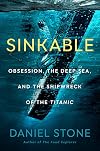
This was a fascinating story about the aftermath of the Titanic sinking. The author researches all the different people who had the dream of finding the Titanic which is way more people than you’d think. There’s a thread that weaves throughout about one guy’s dream which is a mix of pathetic, sad, and funny; the author tells his story well with sympathy and honesty. I loved all the history about other ships that have sunk throughout the centuries; just the question at the beginning show more which asks us to guess how many are under water had an unbelievable answer. I like this author’s style so hope to read his other book about food sometime this year. show less
Lists
Awards


You May Also Like


Associated Authors
Statistics
- Works
- 3
- Also by
- 1
- Members
- 485
- Popularity
- #50,912
- Rating
- 4.1
- Reviews
- 17
- ISBNs
- 20
- Languages
- 1