
Myrtle Reed (1874–1911)
Author of Lavender and Old Lace
About the Author
Works by Myrtle Reed
Rare Myrtle Reed / A Weaver of Dreams 1911 - NY: G.P. Putnam's Sons, 1911 [Hardcover] Reed, Myrtle 2 copies
Sonnets to a Lover 1 copy
Rare Myrtle Reed / Old Rose and Silver 1909 - NY: G.P. Putnam's Sons, 1909 [Hardcover] Reed, Myrtle 1 copy
Rare Myrtle Reed / A Weaver of Dreams 1911 - NY: G.P. Putnam's Sons, 1911 [Hardcover] Reed, Myrtle 1 copy
Światło w oknie 1 copy
Associated Works
Tagged
Common Knowledge
- Legal name
- McCullough, Myrtle Reed
- Other names
- McCullough, Myrtle Reed
Green, Olive (pen name for her cookbooks)
Norton, Katherine LaFarge - Birthdate
- 1874-09-27
- Date of death
- 1911-08-17
- Gender
- female
- Occupations
- author
poet
journalist
cookbook author
philanthropist - Short biography
- Myrtle Reed was born in Norwood Park, Chicago, Illinois, the youngest of three children and the only daughter of author Elizabeth Armstrong Reed and her husband Hiram Vaughn Reed, a preacher. Myrtle attended West Division High School in Chicago, where she edited the school newspaper. After graduating from high school, she began publishing her poems and stories, first in The Acorn, a magazine catering to children. Soon she became a regular contributor to such periodicals as Munsey's, Harper's Bazaar, and Cosmopolitan.
Her debut novel, Love Letters of a Musician (1899) was well-received by the public. It was followed by two more novel in rapid succession. However, it was Lavender and Old Lace (1902), that established her as an author, and the book inspired a stage adaptation in 1938. President Theodore Roosevelt read her The Book of Clever Beasts (1904) and wrote her a letter in praise of it. Her nonfiction book Love Affairs of Literary Men (1907) included Jonathan Swift, Alexander Pope, Thomas Carlyle, and Edgar Allan Poe. As a high school student, Myrtle began corresponding with James Sydney McCullough, a young Irish-Canadian newspaper editor in Toronto, and eventually married him in 1906 after a courtship that lasted nearly 15 years. Myrtle also wrote a series of cookbooks under the pseudonym Olive Green. Several of her works were published posthumously following her death of an overdose of sleep medication at age 37 in 1911. - Nationality
- USA
- Birthplace
- Chicago, Illinois, USA
- Places of residence
- Chicago, Illinois, USA
- Place of death
- Chicago, Illinois, USA
- Burial location
- Graceland Cemetery, Chicago, Illinois, USA
- Associated Place (for map)
- Chicago, Illinois, USA
Members
Reviews

This novel from 1905 is obviously old-fashioned, but I found it entertaining and often very funny. Harlan and Dorothy are young newlyweds. They inherit a big, gloomy country mansion from Harlan‰Ãªs Uncle Ebeneezer, whom they have never met. Shortly after they move in, and Harlan begins to pursue his dream of writing a novel, EbeneezerÂês wacky relatives begin arriving. They claim that they always spend summers at the mansion, and see no reason why a change in ownership should show more alter this satisfactory custom.
This motley cast of characters not only impose on Harlan and DorothyÂês hospitality, but they have an ulterior motive: they all believe the Uncle has hidden money and other valuables on the premises, and each believes he or she is the one Ebeneezer intended to have it. This leads to much stealthy nocturnal exploration of the house and grounds, and various players absconding into the shrubbery with shovels and spades.
It could all be quite hilarious, but the author doesnÂêt completely commit to the farce. She also interjects some very serious and somber musings on what itÂês like to be a writer and how isolating and all consuming the creative process becomes. I found these passages to be interesting, but completely discordant in tone with the rest of the novel, dulling the humorous edge.
Despite these complaints, this was a quick and quaint read, and it was fun discovering the clever way Ebeneezer had set up his relatives for their final comeuppance. show less
This motley cast of characters not only impose on Harlan and DorothyÂês hospitality, but they have an ulterior motive: they all believe the Uncle has hidden money and other valuables on the premises, and each believes he or she is the one Ebeneezer intended to have it. This leads to much stealthy nocturnal exploration of the house and grounds, and various players absconding into the shrubbery with shovels and spades.
It could all be quite hilarious, but the author doesnÂêt completely commit to the farce. She also interjects some very serious and somber musings on what itÂês like to be a writer and how isolating and all consuming the creative process becomes. I found these passages to be interesting, but completely discordant in tone with the rest of the novel, dulling the humorous edge.
Despite these complaints, this was a quick and quaint read, and it was fun discovering the clever way Ebeneezer had set up his relatives for their final comeuppance. show less
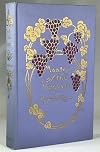
Occasionally I like to read a really awful book. Not just mediocre, as though an author had a good premise and just couldn't execute it, but really bad. Master of the vineyard filled the bill very nicely. Alden Marsh, the master of the vineyard, is a spoiled brat who hates grapes and is only hanging around because his mother manipulated him into it. He becomes engaged to Rosemary, a hearty young girl badly in need of a makeover, chiefly because she's the only female creature between 20 and show more 50 that he knows. He is then immediately captivated by a mysterious and beautiful stranger, with whom he shares some sort of weird telepathic connection. They fall in love, but she is duty bound to return to her husband. He is reconciled to grapes and to Rosemary after pages of turgid prose.
The best thing about the novel are the two villains of the piece--Rosemary's grandmother and aunt. Reed had a real comic gift, especially with lower-class characters, and the two women have several ignorant panel discussions about items in the newspaper that are actually quite funny. This aside, this is an awful example of an early 20th century romantic novel. show less
The best thing about the novel are the two villains of the piece--Rosemary's grandmother and aunt. Reed had a real comic gift, especially with lower-class characters, and the two women have several ignorant panel discussions about items in the newspaper that are actually quite funny. This aside, this is an awful example of an early 20th century romantic novel. show less
This book was not entirely what I was expecting it to be. There is both happiness and unhappiness in it, but it is probably the sorrow that leaves the biggest impression, even though everything ends being basically okay. There is one unforgettable and cruelly horrific scene that I could not make myself read in depth--animal lovers would do well to watch out. The best part of the book is young Dr. Ralph and Araminta. Dr. Anthony Dexter is utterly cold and incomprehensible, and I didn't care show more to read so much about him. Those parts of the book were really hard. It makes me wonder whether I would really want to read other things by this author. It was just a book that left me feeling more sad than happy. show less
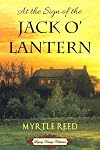
Originally published in 1902, Myrtle Reed's At the Sign of the Jack O'Lantern is a delightful novel about a young, newly married couple and their adventures in their new home.
Upon the death of his Uncle Ebeneezer, a man he has never met, Harlan Carr becomes the new owner of Ebeneezer's stately home in the country. Eager to get away from New York City, Harlan and his new wife Dorothy immediately set out for the property, where Harlan, a writer, plans to compose his first novel. As they show more settle into their new home, Dorothy begins to think there is more to the house, and deceased Uncle Ebeneezer, than meets the eye. Dorothy's feelings are further compounded by the arrival of Ebeneezer's distant relatives, who have used his home as a summer gathering place for years and don't view Ebeneezer's death and the subsequent change in ownership as a reason to stop visiting. As a result, Harlan and Dorothy find themselves host to variety of guests, putting a strain on their marriage and jeopardizing the completion of Harlan's novel. Can their marriage, as well as Harlan's writing career, survive?
At the Sign of the Jack O'Lantern is full of quirky characters, some loveable, some despicable. Harlan and Dorothy Carr are well-drawn and sympathetic, and it is easy to comprehend their mounting frustration as their new home is invaded by a steady stream of uninvited guests. The interaction of Harlan and Dorothy with their guests, as well as the guests' interaction with each other, is often times comic. Further hilarity ensues when each guest searches, under the cover of darkness, for the riches they just know Ebeneezer left behind for them. Even in death, however, it seems it is Uncle Ebeneezer who will have the last laugh.
As evident by the novel's title, At the Sign of the Jack O'Lantern makes for a perfect autumn read. Nevertheless, given its comic nature and fabulous cast of characters it is a book that can be enjoyed at any time of the year. show less
Upon the death of his Uncle Ebeneezer, a man he has never met, Harlan Carr becomes the new owner of Ebeneezer's stately home in the country. Eager to get away from New York City, Harlan and his new wife Dorothy immediately set out for the property, where Harlan, a writer, plans to compose his first novel. As they show more settle into their new home, Dorothy begins to think there is more to the house, and deceased Uncle Ebeneezer, than meets the eye. Dorothy's feelings are further compounded by the arrival of Ebeneezer's distant relatives, who have used his home as a summer gathering place for years and don't view Ebeneezer's death and the subsequent change in ownership as a reason to stop visiting. As a result, Harlan and Dorothy find themselves host to variety of guests, putting a strain on their marriage and jeopardizing the completion of Harlan's novel. Can their marriage, as well as Harlan's writing career, survive?
At the Sign of the Jack O'Lantern is full of quirky characters, some loveable, some despicable. Harlan and Dorothy Carr are well-drawn and sympathetic, and it is easy to comprehend their mounting frustration as their new home is invaded by a steady stream of uninvited guests. The interaction of Harlan and Dorothy with their guests, as well as the guests' interaction with each other, is often times comic. Further hilarity ensues when each guest searches, under the cover of darkness, for the riches they just know Ebeneezer left behind for them. Even in death, however, it seems it is Uncle Ebeneezer who will have the last laugh.
As evident by the novel's title, At the Sign of the Jack O'Lantern makes for a perfect autumn read. Nevertheless, given its comic nature and fabulous cast of characters it is a book that can be enjoyed at any time of the year. show less
You May Also Like


Associated Authors
Statistics
- Works
- 29
- Also by
- 1
- Members
- 712
- Popularity
- #35,610
- Rating
- 3.9
- Reviews
- 16
- ISBNs
- 199
- Languages
- 2
- Favorited
- 2
