
Mark Frost (1) (1953–)
Author of The List of Seven
For other authors named Mark Frost, see the disambiguation page.
About the Author
Mark Frost is a novelist, television/film writer, director, and producer. Frost is the son of actor Warren Frost, brother of writer Scott Frost and actress Lindsay Frost. He studied acting, directing, and playwriting at Carnegie Mellon. Frost worked on the TV shows Hill Street Blues (as a writer), show more Twin Peaks (as a co-creator, writer, and co-executive producer with David Lynch) and On the Air (as a co-creator, writer, and co-executive producer with David Lynch). He received an Emmy nomination in 1984 for Outstanding Writing for a Drama Series for Hill Street Blues. He received 2 Emmy nominations in 1990 for Twin Peaks. Mark Frost published his first novel, The List of Seven, in 1993. His other published works include The Six Messiahs (1996), Before I Wake (1997 under the pseudonym Eric Bowman), The Greatest Game Ever Played (2002), The Match (2007) and The Palladin Prophecy Series. He provided the story for Fantastic Four: Rise of the Silver Surfer that was released in 2007. Twin Peaks: The Final Dossier was published in 2017. (Bowker Author Biography) show less
Series
Works by Mark Frost
The Autobiography of F.B.I. Special Agent Dale Cooper: My Life, My Tapes (1991) — Author — 504 copies, 9 reviews
Game Six: Cincinnati, Boston, and the 1975 World Series: The Triumph of America's Pastime (2009) 171 copies, 2 reviews
Fantastic Four / Fantastic Four: Rise of the Silver Surfer [Blu-ray] (2001) — Screenwriter — 38 copies
Twin Peaks, Disc 4 1 copy
Twin Peaks: xxx 1 copy
Associated Works
Murder at Teal's Pond: Hazel Drew and the Mystery That Inspired Twin Peaks (2022) — Foreword — 192 copies, 6 reviews
Twin Peaks : The Second Season Part One Of Two — some editions — 4 copies
Tagged
Common Knowledge
- Legal name
- Frost, Mark
- Other names
- Bowman, Eric (pseudonym)
- Birthdate
- 1953-11-25
- Gender
- male
- Education
- Carnegie Mellon University
- Occupations
- novelist
screenwriter
director
producer - Agent
- Ed Victor
- Relationships
- Frost, Warren (parent)
Frost, Lindsay (sibling)
Frost, Scott (sibling) - Nationality
- USA
- Birthplace
- Brooklyn, New York, USA
- Places of residence
- Brooklyn, New York, USA
Los Angeles, California, USA
Minneapolis, Minnesota, USA
Pittsburgh, Pennsylvania, USA
Ojai, California, USA - Associated Place (for map)
- USA
Members
Reviews
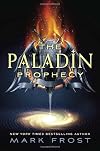
booknook — Young Adult book reviews
Oh my god. Full stop.
This book totally awed me. I almost passed up the opportunity to read The Paladin Prophecy. It wasn't grabbing me. But on a whim, I figured "Why not" and got it through Netgalley. I'm so glad I did! For me, this book was right on par with Insignia, both in style/story and in how much I loved it. And if you read my review of Insignia, you'll know how much I adored it and realize exactly what that statement means. It means that The show more Paladin Prophecy is insanely "knock-your-pants-off and leave you butt naked but you won't even care because you're too busy reading" awesome. It's like Harry Potter style school/fantasy, meets "kids save the world" Percy Jackson, meets insanely awesome mind-blowing "OHMYGOD I WANT THAT" technology, meets the page-turning awe that is Dan Brown conspiracy/history-brought-to-life/secret society. Put it all together and you get this incredibly original story that will suck you in and won't let you go.
The first thing I have to talk about is the characters, because holy crap, the characters are really what make this book absolutely freakin' incredible. Every single character in this book is so alive and filled with amazing personality. I actually didn't fully appreciate Will's character until maybe 100+ pages into the book. The first part of the book is largely Will on his own, running from danger, and maybe interacting with one or two people here and there. But when Will settles into his new group of friends, he really comes alive! He has this cocky, witty personality that really shines when he's stepping up to bullies. He doesn't take any crap from them and he makes that so obvious. IT'S AWESOME!!! Like, wow.
The other characters in the book are equally amazing. They're all hilarious and quirky in their own ways and had me cracking up. I want to be friends with these people! Seriously! Where can I find them?? Why aren't my friends that cool??
As for the story, sometimes I honestly felt like I had no idea what the heck was going on, but I didn't care, because something kept me absolutely glued to this book. I just sat down and read and read and read, because I had to know what the heck was going on and I was eager to absorb every word until my eyes bled! I literally had no idea where this book was leading for the longest time. I just couldn't get my head around what to expect — is this magic? Is this kick-ass X-Men genetic evolution? Is this Dan Brown conspiracy? I had no idea, but it just wasn't something I was worrying about. I was too busy cracking up over the hilarious dialogue, or wishing the characters existed in real life, or just enjoying the action and mysterious plot as it was developing. I realized that this book is about the ride; it's about the not knowing; and it's about trying to solve the mystery of what's going on.
Throughout the book, we learn about 100 different "rules to live by" that Will's father drilled into him as he was growing up. At first I thought these rules were kind of weird and cheesy but pretty soon I was retracting that statement. They're pretty awesome, and surprisingly good advice. They definitely gave the story a little something extra, since they kept popping up in good moments. I actually felt like I was learning life advice from this book, as weird as that sounds! here are a few examples:
I won't reveal anymore because part of the fun of the book is seeing these rules for yourself as the story develops. ;)
The end of this book was an absolute whirlwind of action and puzzles. Parts of it were honestly a little confusing to me, but I think that might have been the formatting on my e-ARC. We suddenly hear from a bunch of different points of view but there were no section separators (and not even extra line breaks) to tell me when the POV was switching, so it got a little crazy. But I'm sure this will probably be better laid out in the final copies!
I definitely recommend this book a hundred times over if you like action, mystery, a bit of science, and some crazy fantasy X-Men type stuff. This book could easily be the next Percy Jackson & the Olympians! show less
Oh my god. Full stop.
This book totally awed me. I almost passed up the opportunity to read The Paladin Prophecy. It wasn't grabbing me. But on a whim, I figured "Why not" and got it through Netgalley. I'm so glad I did! For me, this book was right on par with Insignia, both in style/story and in how much I loved it. And if you read my review of Insignia, you'll know how much I adored it and realize exactly what that statement means. It means that The show more Paladin Prophecy is insanely "knock-your-pants-off and leave you butt naked but you won't even care because you're too busy reading" awesome. It's like Harry Potter style school/fantasy, meets "kids save the world" Percy Jackson, meets insanely awesome mind-blowing "OHMYGOD I WANT THAT" technology, meets the page-turning awe that is Dan Brown conspiracy/history-brought-to-life/secret society. Put it all together and you get this incredibly original story that will suck you in and won't let you go.
The first thing I have to talk about is the characters, because holy crap, the characters are really what make this book absolutely freakin' incredible. Every single character in this book is so alive and filled with amazing personality. I actually didn't fully appreciate Will's character until maybe 100+ pages into the book. The first part of the book is largely Will on his own, running from danger, and maybe interacting with one or two people here and there. But when Will settles into his new group of friends, he really comes alive! He has this cocky, witty personality that really shines when he's stepping up to bullies. He doesn't take any crap from them and he makes that so obvious. IT'S AWESOME!!! Like, wow.
The other characters in the book are equally amazing. They're all hilarious and quirky in their own ways and had me cracking up. I want to be friends with these people! Seriously! Where can I find them?? Why aren't my friends that cool??
"I happen to be sitting on the sickest, most awesome idea for a social network site ever. [...] I take all the best parts of YouTube, Twitter, and Facebook, and combine them into a whole new service called... YouTwit-face."
—ARC of The Paladin Prophecy, Page 173
As for the story, sometimes I honestly felt like I had no idea what the heck was going on, but I didn't care, because something kept me absolutely glued to this book. I just sat down and read and read and read, because I had to know what the heck was going on and I was eager to absorb every word until my eyes bled! I literally had no idea where this book was leading for the longest time. I just couldn't get my head around what to expect — is this magic? Is this kick-ass X-Men genetic evolution? Is this Dan Brown conspiracy? I had no idea, but it just wasn't something I was worrying about. I was too busy cracking up over the hilarious dialogue, or wishing the characters existed in real life, or just enjoying the action and mysterious plot as it was developing. I realized that this book is about the ride; it's about the not knowing; and it's about trying to solve the mystery of what's going on.
Throughout the book, we learn about 100 different "rules to live by" that Will's father drilled into him as he was growing up. At first I thought these rules were kind of weird and cheesy but pretty soon I was retracting that statement. They're pretty awesome, and surprisingly good advice. They definitely gave the story a little something extra, since they kept popping up in good moments. I actually felt like I was learning life advice from this book, as weird as that sounds! here are a few examples:
#5 TRUST NO ONE
#7 DON'T CONFUSE GOOD LUCK WITH A GOOD PLAN
#26 ONCE IS AN ANOMALY. TWICE IS A COINCIDENCE. THREE TIMES IS A PATTERN. AND AS WE KNOW...
#27 SOMETIMES THE ONLY WAY TO DEAL WITH A BULLY IS TO HIT FIRST. HARD.
—ARC of The Paladin Prophecy
I won't reveal anymore because part of the fun of the book is seeing these rules for yourself as the story develops. ;)
The end of this book was an absolute whirlwind of action and puzzles. Parts of it were honestly a little confusing to me, but I think that might have been the formatting on my e-ARC. We suddenly hear from a bunch of different points of view but there were no section separators (and not even extra line breaks) to tell me when the POV was switching, so it got a little crazy. But I'm sure this will probably be better laid out in the final copies!
I definitely recommend this book a hundred times over if you like action, mystery, a bit of science, and some crazy fantasy X-Men type stuff. This book could easily be the next Percy Jackson & the Olympians! show less
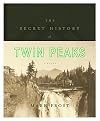
The Secret History of Twin Peaks: A Novel from series co-creator Mark Frost reads like an interactive work with Frost presenting it as a mysterious dossier about the town that FBI Deputy Director Gordon Cole tasked Special Agent Tamara Preston with examining. The reader follows along with Preston's examination, which begins with the earliest account of Twin Peaks from Lewis and Clark's expedition and ends shortly after the events of the second season of the show. Some of the history expands show more upon the information series co-creator David Lynch presented in his 1991 book, Twin Peaks: An Access Guide to the Town, while simultaneously expanding upon events that occurred in the background or were only briefly referenced in the show. Frost's book complicates the accepted understanding of the White and Black Lodges, placing them in context with UFO sightings, alien abductions, and government cover-ups. I have not yet started watching the new season, so I don't know if this plays a role in the plot, but Frost certainly hints at a greater exploration of the White and Black Lodges. In its execution, The Secret History of Twin Peaks: A Novel closely resembles J. J. Abrams' and Doug Dorst's 2013 book, S., with its puzzles and interactive plot. Due to this, it will primarily appeal to fans of the show and the presence of spoilers for the first two seasons means that new viewers should not read this until after they have watched the original series. show less
Part of me suspects the Secret History of Twin Peaks was written just for me. During the weeks I devoted to reading Mark Frost’s novel, I spent my days looking forward to digging comfortably into the couch and getting lost in the world of Twin Peaks again and again, of getting a preview of the show we’d all be watching come May. This book devours you, with its layers of mystery, layers of implication — it makes you simultaneously an accomplice to ‘the Archivist,’ dutifully show more collating Twin Peaks’ historical records and connecting supernatural dots, and an investigative FBI agent along T_____ P______, reviewing and studying the mysterious Archivist’s dossier.
Yes, the Secret History of Twin Peaks was written just for me, but that also makes it a hard tale to recommend. The audience is a niche one — Twin Peaks fans, and not just casual Twin Peaks fans, but die-hards; those who have been waiting with baited breath for 25 years to get answers creators Mark Frost and David Lynch left us with in ’92.
[N.B. This review features images and formatting specific to my book site, dendrobibliography: Check it out here.]
Frost’s epistolary structure and lack of a singular narrative easy or inviting. Instead of telling a focused story, the Secret History of Twin Peaks offers only suggestions and snippets — through hand-written letters, transcripts, historical photos, news and magazine articles, medical records, receipts, book excerpts (often real), commentary, and commentary-on-commentary. (Think Mark Z. Danielewski’s House of Leaves, or, more recently, Doug Dorst and J.J. Abrams’ S. The physical edition is recommended.) Nor is it hard to call Frost’s reliance on historical documents and writing — so much so that it’s nearly academic — exciting. No, this felt like my book because of convergences:
The social history of the Pacific Northwest, of the timber industry, of environmentalism, of native oppression, of the small-town personalities that shaped our present-day Seattle and other cities — it’s all fascinating to me, and much of it a personal hobby.* The elaborate and often real history of the Pacific Northwest is interwoven with a century of ‘real’ conspiracy theories and modern mythology. Characters from the town of Twin Peaks step in and out of otherwise-genuine history books, adding a touch of conspiracy and sinister awareness to their television appearances.
We see a gap in the Lewis and Clark journals filled in with a spiritual visit to the Owl Cave not long before Lewis’ suspicious ‘suicide’; rumblings of a mysterious pale tribe suspected to be the descendants of the 12th-century traveler, Madoc; the Weyerhaeuser Company moves across the forests of the Pacific Northwest, inspiring the founding of lumber mills like the Packard Mill; the slow removal of the Nez Perce (and other tribes) from what will eventually become the Hanford Nuclear Site, featuring personalities like Liver-Eating Johnson and Chief Joseph; vulgar letters by pioneers and forgotten in Spokane’s Masonic Lodge, where the authors stumble upon Owl Cave and then vanish — the meaner of whom is named Bob; things get far more complicated once we hit the 20th century.
Douglas Milford, the brother of Dwayne Milford, long-time mayor of Twin Peaks, is at the center of almost every story. His appearance in the TV show was fleeting and seemingly benign: He appeared briefly as an old coot, a rapscallion who fell for the red-haired seductress Lana Budding. His real role is much broader, we learn. He spent his 20s in a drunken haze after an encounter with alien entities at Owl Cave. By 1947, however, he’s joined the Air Force, and is deepening an involvement in government cover-ups of alien conspiracy theories. Like the X-Files‘ Cigarette-Smoking Man, Douglas Milford seems to be at the center of every conspiracy theory connecting the dots between the government and aliens or supernatural. Roswell, Harold Dahl, Kenneth Arnold, Ray Palmer, Paul Lantz, Jack Parsons, Aleister Crowley, L. Ron Hubbard, Fred Crisman, Richard Nixon, Project Sign, Project Grudge, the Bohemian Grove, Majestic-12 — he seems connected to everything, including the events of the original series. Even Gordon Cole, the FBI Deputy Director played by David Lynch in the original series, has a close relationship with Douglas Milford.
While Douglas Milford is the primary focus of Mark Frost’s novel, we also get insight into most personalities from the show. Obnoxious anti-heroes like Hank Jennings have their backgrounds filled-in and explained: Once a star of the town, he was dragged own both by his abusive drunk of a father (who, of course, was tied to UFO conspiracies) and falling under manipulative villains like Jacques Renault. Nadine’s family history, excusing a couple plotholes, gives sanity to her character’s apparent insanity — and it’s a sad tale. The story of Margaret ‘Log Lady’ Lanterman, however, is the saddest of all. She’s not just another quirky David Lynch character, quirky for the sake of being quirky, but a woman rich in history — she has an advanced degree in forestry; she was an environmentalist long before Earth Day; she was married for just a single day; and was abducted within Owl Cave in 1947.
I felt unsatisfied with the fates of Andrew and Josie Packard on the show. Secret History expands on those two (and a few other neglected characters) extensively. Andrew Packard isn’t so much a conniving genius as he is a bumbling one. Josie Packard is a sociopathic monster, responsible for many triad-related murders in China (including her father’s). Her triad ties came up in the show, but for whatever reason they never stuck with me as defining character traits: I still get sucked into her innocent act every time.
Additionally, we learn more about Dale Cooper (who, it’s implied, ran into trouble between the finale and the present-day investigation), Dwayne Milford (a former scout leader), Thomas Eckhardt, Big Ed, Norma, Catherine and Pete Martell, Carl Rodd (abducted alongside the Log Lady in ’47), Audrey Horne, Ben Horne, the Bookhouse Boys, Tommy ‘Hawk’ Hill, Dr. Jacoby andhis brother Robert Jacoby (a local journalist who passed away in 1988). Not everyone, however, makes an appearance: We don’t learn much about ShellyJohnston, Leo Johnston, Bobby Briggs, Jacques Renault’s brothers, Donna Hayward, or the rest of the Horne family (Johnny, Sylvia, Jerry). Lucy Moran and Andy Brennan get about one joke in, each. James Hurley is briefly mentioned, just enough to state he’s as boring as he seemed in the show: He likes Charlotte’s Web.
There are many stones left unturned, however, and answers stop roughly around the time of the original series finale. We get closure on the bomb blast that may or may not have killed certain characters, but not much beyond the year 1989 for any characters or events.
There are echoes of Dale Cooper in Special Agent T_____ P______, who fills the borders of the dossier with notes verifying information, adding their own research on top of the dossier, and a lot of obscure movie trivia and recommendations. (Making T.P. more similar to Special Agent Francis York Morgan from the 2010 game Deadly Premonition, himself modeled after Dale Cooper.) Word is T.P. will be either a fixture of the revived TV show in 2017, or in future novels — Twin Peaks: The Final Dossier is scheduled for October 2017.
For fans of Twin Peaks (and fans of puzzles), the Secret History is an absolute delight — but a tough one. Mark Frost shows a wild and careful degree of research to connect the history of Twin Peaks into every conspiracy to touch not just the Pacific Northwest, but American politics. The breadth of dots connected to the show’s mythology is mindboggling, and feeling like I was in on the take made the return trip to Twin Peaks one of the most fun outings I’ve had this year. show less
Yes, the Secret History of Twin Peaks was written just for me, but that also makes it a hard tale to recommend. The audience is a niche one — Twin Peaks fans, and not just casual Twin Peaks fans, but die-hards; those who have been waiting with baited breath for 25 years to get answers creators Mark Frost and David Lynch left us with in ’92.
[N.B. This review features images and formatting specific to my book site, dendrobibliography: Check it out here.]
Frost’s epistolary structure and lack of a singular narrative easy or inviting. Instead of telling a focused story, the Secret History of Twin Peaks offers only suggestions and snippets — through hand-written letters, transcripts, historical photos, news and magazine articles, medical records, receipts, book excerpts (often real), commentary, and commentary-on-commentary. (Think Mark Z. Danielewski’s House of Leaves, or, more recently, Doug Dorst and J.J. Abrams’ S. The physical edition is recommended.) Nor is it hard to call Frost’s reliance on historical documents and writing — so much so that it’s nearly academic — exciting. No, this felt like my book because of convergences:
The social history of the Pacific Northwest, of the timber industry, of environmentalism, of native oppression, of the small-town personalities that shaped our present-day Seattle and other cities — it’s all fascinating to me, and much of it a personal hobby.* The elaborate and often real history of the Pacific Northwest is interwoven with a century of ‘real’ conspiracy theories and modern mythology. Characters from the town of Twin Peaks step in and out of otherwise-genuine history books, adding a touch of conspiracy and sinister awareness to their television appearances.
We see a gap in the Lewis and Clark journals filled in with a spiritual visit to the Owl Cave not long before Lewis’ suspicious ‘suicide’; rumblings of a mysterious pale tribe suspected to be the descendants of the 12th-century traveler, Madoc; the Weyerhaeuser Company moves across the forests of the Pacific Northwest, inspiring the founding of lumber mills like the Packard Mill; the slow removal of the Nez Perce (and other tribes) from what will eventually become the Hanford Nuclear Site, featuring personalities like Liver-Eating Johnson and Chief Joseph; vulgar letters by pioneers and forgotten in Spokane’s Masonic Lodge, where the authors stumble upon Owl Cave and then vanish — the meaner of whom is named Bob; things get far more complicated once we hit the 20th century.
Douglas Milford, the brother of Dwayne Milford, long-time mayor of Twin Peaks, is at the center of almost every story. His appearance in the TV show was fleeting and seemingly benign: He appeared briefly as an old coot, a rapscallion who fell for the red-haired seductress Lana Budding. His real role is much broader, we learn. He spent his 20s in a drunken haze after an encounter with alien entities at Owl Cave. By 1947, however, he’s joined the Air Force, and is deepening an involvement in government cover-ups of alien conspiracy theories. Like the X-Files‘ Cigarette-Smoking Man, Douglas Milford seems to be at the center of every conspiracy theory connecting the dots between the government and aliens or supernatural. Roswell, Harold Dahl, Kenneth Arnold, Ray Palmer, Paul Lantz, Jack Parsons, Aleister Crowley, L. Ron Hubbard, Fred Crisman, Richard Nixon, Project Sign, Project Grudge, the Bohemian Grove, Majestic-12 — he seems connected to everything, including the events of the original series. Even Gordon Cole, the FBI Deputy Director played by David Lynch in the original series, has a close relationship with Douglas Milford.
While Douglas Milford is the primary focus of Mark Frost’s novel, we also get insight into most personalities from the show. Obnoxious anti-heroes like Hank Jennings have their backgrounds filled-in and explained: Once a star of the town, he was dragged own both by his abusive drunk of a father (who, of course, was tied to UFO conspiracies) and falling under manipulative villains like Jacques Renault. Nadine’s family history, excusing a couple plotholes, gives sanity to her character’s apparent insanity — and it’s a sad tale. The story of Margaret ‘Log Lady’ Lanterman, however, is the saddest of all. She’s not just another quirky David Lynch character, quirky for the sake of being quirky, but a woman rich in history — she has an advanced degree in forestry; she was an environmentalist long before Earth Day; she was married for just a single day; and was abducted within Owl Cave in 1947.
I felt unsatisfied with the fates of Andrew and Josie Packard on the show. Secret History expands on those two (and a few other neglected characters) extensively. Andrew Packard isn’t so much a conniving genius as he is a bumbling one. Josie Packard is a sociopathic monster, responsible for many triad-related murders in China (including her father’s). Her triad ties came up in the show, but for whatever reason they never stuck with me as defining character traits: I still get sucked into her innocent act every time.
Additionally, we learn more about Dale Cooper (who, it’s implied, ran into trouble between the finale and the present-day investigation), Dwayne Milford (a former scout leader), Thomas Eckhardt, Big Ed, Norma, Catherine and Pete Martell, Carl Rodd (abducted alongside the Log Lady in ’47), Audrey Horne, Ben Horne, the Bookhouse Boys, Tommy ‘Hawk’ Hill, Dr. Jacoby andhis brother Robert Jacoby (a local journalist who passed away in 1988). Not everyone, however, makes an appearance: We don’t learn much about ShellyJohnston, Leo Johnston, Bobby Briggs, Jacques Renault’s brothers, Donna Hayward, or the rest of the Horne family (Johnny, Sylvia, Jerry). Lucy Moran and Andy Brennan get about one joke in, each. James Hurley is briefly mentioned, just enough to state he’s as boring as he seemed in the show: He likes Charlotte’s Web.
There are many stones left unturned, however, and answers stop roughly around the time of the original series finale. We get closure on the bomb blast that may or may not have killed certain characters, but not much beyond the year 1989 for any characters or events.
There are echoes of Dale Cooper in Special Agent T_____ P______, who fills the borders of the dossier with notes verifying information, adding their own research on top of the dossier, and a lot of obscure movie trivia and recommendations. (Making T.P. more similar to Special Agent Francis York Morgan from the 2010 game Deadly Premonition, himself modeled after Dale Cooper.) Word is T.P. will be either a fixture of the revived TV show in 2017, or in future novels — Twin Peaks: The Final Dossier is scheduled for October 2017.
For fans of Twin Peaks (and fans of puzzles), the Secret History is an absolute delight — but a tough one. Mark Frost shows a wild and careful degree of research to connect the history of Twin Peaks into every conspiracy to touch not just the Pacific Northwest, but American politics. The breadth of dots connected to the show’s mythology is mindboggling, and feeling like I was in on the take made the return trip to Twin Peaks one of the most fun outings I’ve had this year. show less
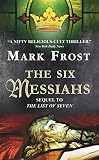
When I first read THE SIX MESSIAHS, I was more than a bit disappointed with it. I wanted a sequel to the excellent LIST OF SEVEN. I wanted Jack Sparks and Conan Doyle, hunting down the bad guy, with all the appropriate Sherlockian nods and winks that would entail. What we get instead is a dizzying host of characters, hardly anything of Jack Sparks, and not much at all of Doyle.
If you're looking for Sherlock in this one, you're really looking in the wrong place. THE SIX MESSIAHS is a show more different beast entirely. It's more about suffering, and redemption, and the power of cults than anything else.
On this second reading I got the point a lot quicker than on the first, and I raced through it. Frost is great at pacing, has an eye for what makes a character memorable, and an inventive imagination that keeps the whole thing careering along.
There's a bit too much head-hopping around the point of view characters for my liking, and even a couple of places where it gets confusing trying to figure out which head we're supposed to be in at the time. And in the rush to the finish, a couple of characters get sidelined and don't really get to finish their part of the story.
But that's just quibbling. All in all, it's a fine romp. And despite what I said earlier, there is indeed a glimpse of Sherlock, right at the end, when the right thing is done and most of the threads are tied up.
I keep hoping for another sequel from Frost to see what Doyle gets up to next, but the new Twin Peaks will do just fine in the meantime. show less
If you're looking for Sherlock in this one, you're really looking in the wrong place. THE SIX MESSIAHS is a show more different beast entirely. It's more about suffering, and redemption, and the power of cults than anything else.
On this second reading I got the point a lot quicker than on the first, and I raced through it. Frost is great at pacing, has an eye for what makes a character memorable, and an inventive imagination that keeps the whole thing careering along.
There's a bit too much head-hopping around the point of view characters for my liking, and even a couple of places where it gets confusing trying to figure out which head we're supposed to be in at the time. And in the rush to the finish, a couple of characters get sidelined and don't really get to finish their part of the story.
But that's just quibbling. All in all, it's a fine romp. And despite what I said earlier, there is indeed a glimpse of Sherlock, right at the end, when the right thing is done and most of the threads are tied up.
I keep hoping for another sequel from Frost to see what Doyle gets up to next, but the new Twin Peaks will do just fine in the meantime. show less
Lists
Best Beach Reads (1)
100 Hemskaste (1)
Awards


You May Also Like


Associated Authors
Statistics
- Works
- 29
- Also by
- 5
- Members
- 8,146
- Popularity
- #2,970
- Rating
- 3.8
- Reviews
- 141
- ISBNs
- 274
- Languages
- 14