
David Lynch (1) (1946–2025)
Author of Catching the Big Fish: Meditation, Consciousness, and Creativity
For other authors named David Lynch, see the disambiguation page.
About the Author
David Lynch is an American filmmaker, director, musician, painter, and photographer, born in Montana in 1946. His feature films and television series include Eraserhead (1977), The Elephant Man (1980), Dune (1984), Blue Velvet (1986), Wild at Heart (1990), Twin Peaks: Fire Walk with Me (1992), Lost show more Highway (1997), The Straight Story (1999), Mulholland Drive (2001), and Inland Empire (2006). He was nominated for 13 Academy Awards, 10 BAFTA (winning 3 for The Elephant Man and 1 for Mulholland Drive), and 13 Golden Globes. He is the co-author of Lynch on Lynch (with Chris Rodley), and Room to Dream: A Life in Art (with Kristine McKenna). (Bowker Author Biography) show less
Image credit: David Lynch photographed by Albert Watson circa 1990 in New York City Photoshoot for Rolling Stone magazine
Works by David Lynch
Wild At Heart (Collector's Edition) 8 copies
David Lynch Boxset: Eraserhead / Dune / Blue Velvet / Wild At Heart / Twin Peaks: Fire Walk With Me / Lost Highway (Videos) (2012) 6 copies
Dumbland [2002 film] 6 copies
Twin Peaks : The Second Season Part Two Of Two (2017) — Contributor; Réalisateur, some editions — 4 copies
David Lynch: The Lime Green Set — Director — 4 copies
Twin Peaks : The Second Season Part One Of Two — Contributor; some editions — 4 copies
Twin Peaks - ep#1-7 3 copies
Polish night music 2 copies
The Grandmother [1970 short film] 2 copies
The Angriest Dog In The World 2 copies
Unistamisruum 1 copy
Twin Peaks, Disc 2 1 copy
Twin Peaks, Disc 8 1 copy
Cellophane memories 1 copy
Dune [script -- 7th draft] 1 copy
Fox Bat Strategy 1 copy
Twin Peaks: The Pilot script 1 copy
Io vedo me stesso 1 copy
Twin Peaks, Disc 6 1 copy
Twin Peaks, Disc 7 1 copy
Bad the John Boy [single] 1 copy
David Lynch Collection: Elephant Man / Mulholland Drive / Inland Empire — Director — 1 copy
I'm waiting here [single] 1 copy
Twin Peaks, Disc 1 1 copy
Bestimix 72 : David Lynch 1 copy
One Saliva Bubble 1 copy
Ronnie Rocket 1 copy
Associated Works
Twin Peaks: Limited Event Series Original Soundtrack (2017) — Executive Producer; Contributor — 3 copies
This train 2 copies
Tagged
Common Knowledge
- Canonical name
- Lynch, David
- Legal name
- Lynch, David Keith
- Birthdate
- 1946-01-20
- Date of death
- 2025-01-16
- Gender
- male
- Education
- Pennsylvania Academy of the Fine Arts
American Film Institute Conservatory - Occupations
- director
writer
producer
artist
photographer
musician - Awards and honors
- Légion d'Honneur (Chevalier, 2002)
Légion d'Honneur (Officier, 2009)
Golden Lion for Lifetime Achievement (2006)
Palme d'Or (1990)
The Edward MacDowell Medal (2017)
César Award for Best Foreign Film (1982, 2002) (show all 12)
Academy Honorary Award (2019)
Best Director, Cannes Film Festival (2001)
European Film Award for Best Non-European Film (1999)
Independent Spirit Special Distinction Award (2007)
Saturn Award for Best Guest Performance (2018)
AFI Schnaffer Alumni Medal (1991) - Relationships
- Lynch, Jennifer (daughter)
- Cause of death
- cardiac arrest
COPD - Nationality
- USA
- Birthplace
- Missoula, Montana, USA
- Places of residence
- Los Angeles, California, USA
- Place of death
- Los Angeles, California, USA
- Burial location
- Hollywood Forever Cemetery, Los Angeles, California, USA
- Associated Place (for map)
- Los Angeles, California, USA
Members
Discussions
David Lynch in Legacy Libraries (June 2025)
Reviews
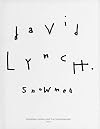
As his Spring, 2007 Cartier Foundation retrospective, The Air Is On Fire, made plain to all who saw it, the talents of the great American filmmaker David Lynch reach far beyond his acknowledged achievements in cinema: he is also an excellent painter, draughtsman and photographer. His photography to date has fallen loosely into four distinct genres or series: nudes (Bacon-esque images of digitally distorted Victorian photographs), still lifes (spark-plugs, dental machinery), industrial show more landscapes--and snowmen. Published to accompany the Cartier show, this compact volume brings together Lynch's black-and-white photographs of snowmen, all taken in the suburbs of his hometown of Boise, Idaho. Exhibiting his characteristic preoccupation with ominous beauty as these ephemeral folk sculptures decompose in front of snow-covered tract houses, Lynch pays scant regard to the cheerier and more genial properties of snowmen, and indeed some of these images will remind viewers of the shadowy black-and-white tones of Lynch's 1977 film Eraserhead. "If you have some shadow or darkness in the frame, then your mind can travel in there and dream," he has stated. Lynch's indisputable gift for teasing out the sinister flipsides of the props and rituals of American suburbia is beautifully evidenced in this small, gift-worthy book show less

I love The Straight Story. Watching that movie, for me, is like listening to a favorite album I can just reset the needle on over and over again all day long on a lazy day around the house. I'm pretty sure Harry Dean Stanton is still around. He's always worth checking out, whatever role he plays. Sissy Spacek is phenomenal too as the developmentally disabled mother who's lost custody of her kids, living with her elderly father -- a recent stroke survivor (Richard Farnsworth) -- who's got one show more last mission in life riding a lawn tractor ... the look in her vacated eyes staring out the window, Sissy Spacek's ... makes me nearly despondent myself over her devastating loss, just remembering it ... and all of it, her unspeakably sad loss, conveyed on film, completely without words. That's the power of great acting and great David Lynch film making. And that moving, melancholic soundtrack, written and performed by Angelo Badalamenti -- ahhhhhhh. Or the circulating, resplendent cinematography: the same images, like the chorus of a song, replayed with soaring power again and again. Images of bucolic farmland and pastures. Wide shots of wheat fields swaying in orchestral-like oneness with the autumn winds.
Haunts me, too, thinking that Richard Farnsworth took his life shortly after his majestic performance on that state-by-state trekking, three-m.p.h.-driving, lawn tractor odyssey in The Straight Story, documenting the real life story of Alvin Straight's snail-pace journey across Iowa and Wisconsin on a ruby red John Deere lawn tractor. What determination! What commitment to a reconciling cause! And what a poignant crackup -- that scene where he loses his brakes on that steep downgrade and finds himself sitting on a runaway lawnmower speeding down a hill toward imminent destruction! Not to mention the redemptive influence he has in the lives he encounters along the way, good Lord, especially that pregnant girl leaving him a morning goodbye -- "I-got-your-message" -- of tied cords at the campsite along the road (I'm getting gooseflesh just thinking about it), on toward the quiet, contemplative redemption with his cancer-stricken brother, played by the incomparably gaunt and rickety, Harry Dean Stanton, approaching death: brothers who haven't spoken to one another once over some stupid argument they had, twenty-odd years ago. God, that profound ending. That stunning camera shot. Those stars. show less
Haunts me, too, thinking that Richard Farnsworth took his life shortly after his majestic performance on that state-by-state trekking, three-m.p.h.-driving, lawn tractor odyssey in The Straight Story, documenting the real life story of Alvin Straight's snail-pace journey across Iowa and Wisconsin on a ruby red John Deere lawn tractor. What determination! What commitment to a reconciling cause! And what a poignant crackup -- that scene where he loses his brakes on that steep downgrade and finds himself sitting on a runaway lawnmower speeding down a hill toward imminent destruction! Not to mention the redemptive influence he has in the lives he encounters along the way, good Lord, especially that pregnant girl leaving him a morning goodbye -- "I-got-your-message" -- of tied cords at the campsite along the road (I'm getting gooseflesh just thinking about it), on toward the quiet, contemplative redemption with his cancer-stricken brother, played by the incomparably gaunt and rickety, Harry Dean Stanton, approaching death: brothers who haven't spoken to one another once over some stupid argument they had, twenty-odd years ago. God, that profound ending. That stunning camera shot. Those stars. show less
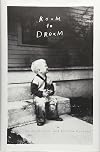
Room to Dream
David Lynch is a fascinating person, moreso than I thought before reading this book. If you judged by his movies and television shows, you’d probably think . . . truly strange man, probably with eccentric habits, odd appearance, maybe a little difficult to deal with.
The Lynch we see here, especially in his younger years, really is very much consistent with his movies and television shows, but in a different way. On the surface, a character right out of 50s mythology — show more bright eyed, clean cut, downright chipper (he actually uses the phrase “peachy keen”), but, maybe like those same 50s in reality, with an underlying bass line of darkness and anxiety.
The book is written as a kind of back and forth between his biographer, Kristine McKenna, and his own thoughts and reflections on the events McKenna recounts. It’s kind of a peek behind the curtain of the events McKenna tells us about, Lynch’s director’s commentary on his own life.
The format gives us a mix of facts and impressions. The facts are themselves interesting, sometimes for their prosaic blandness — Lynch’s perfectly normal childhood, his popularity, his adventures in the Boy Scouts, . . . Certainly as he grows up, he takes more eccentric turns — his obsession with art and with making things, a kind of innocent inattention to things around him — but he’s always straight as an arrow — there’s nothing secretive or mysterious going on, even if his actions and personality leave the norm behind.
In fact, I think it’s exactly that normalcy that is ultimately disarming in Lynch’s personality and disturbing in his work. The normalcy of that 50s world in which he grew up somehow can’t be believed. It advertises that it is skin deep, that if you only dig a tiny bit deeper, you’ll find a world that is threatening and anxious.
Even as odd a movie as Eraserhead binds that normalcy with anxiety — there are scenes in which we wait, with nothing happening but with no chance of relaxation because there’s a thrumming mood of anxiety that pervades the most normal moments. McKenna in fact says that it is the mood of Eraserhead that dominates the movie, more than characters, plot, or dialogue. It’s a mood that makes the movie, for me, almost impossible to sit still and watch.
And that’s Lynch. The normal itself is anxious. It’s not just in the movies or the television shows — it’s in him. Think Kyle MacLachlan in Blue Velvet or Twin Peaks, or even Lynch himself as Gordon Cole in Twin Peaks. I get the feeling that Lynch had to do very little acting to be Gordon Cole.
There are other aspects to the book — Lynch’s path through art and film school, his dedication to Transcendental Meditation, his distinctive directorial style, all the quirkiness that eventually shows in his personal life and relationships. One theme that runs through them, by my reading, is that Lynch has never had a quarrel with things and thoughts that are not conventionally rational. He welcomes surprise turns of thought, discontinuities, hunches, signs, and the like. Experiencing it in his personality makes me see it more clearly in his work as well.
I have to admit I found the first half of the book much more interesting and engaging than the second half. In the first half, Lynch is more “pure” in some sense — he’s just himself, with ideas and projects in his younger days. Then . . . he’s “David Lynch” — despite himself and all protestations, he’s famous, and everybody wants to do something with him. It’s like a part of the resistance is gone, and the resistance, especially for someone of Lynch’s quirkiness, helps make him special, and gives him the humble wonder that made David Lynch, but, seemingly, not so much “David Lynch.”
Even the personality he expresses in his own commentary seems to change as he talks about events later in his life. He’s more bothered by things. He never loses the golly-gosh personality entirely, but life does seem to have weathered it a bit. I did take heart, though, that the revival of Twin Peaks (Twin Peaks, the Return) seemed to revive the old David Lynch. Hopefully, there’s still more to come. show less
David Lynch is a fascinating person, moreso than I thought before reading this book. If you judged by his movies and television shows, you’d probably think . . . truly strange man, probably with eccentric habits, odd appearance, maybe a little difficult to deal with.
The Lynch we see here, especially in his younger years, really is very much consistent with his movies and television shows, but in a different way. On the surface, a character right out of 50s mythology — show more bright eyed, clean cut, downright chipper (he actually uses the phrase “peachy keen”), but, maybe like those same 50s in reality, with an underlying bass line of darkness and anxiety.
The book is written as a kind of back and forth between his biographer, Kristine McKenna, and his own thoughts and reflections on the events McKenna recounts. It’s kind of a peek behind the curtain of the events McKenna tells us about, Lynch’s director’s commentary on his own life.
The format gives us a mix of facts and impressions. The facts are themselves interesting, sometimes for their prosaic blandness — Lynch’s perfectly normal childhood, his popularity, his adventures in the Boy Scouts, . . . Certainly as he grows up, he takes more eccentric turns — his obsession with art and with making things, a kind of innocent inattention to things around him — but he’s always straight as an arrow — there’s nothing secretive or mysterious going on, even if his actions and personality leave the norm behind.
In fact, I think it’s exactly that normalcy that is ultimately disarming in Lynch’s personality and disturbing in his work. The normalcy of that 50s world in which he grew up somehow can’t be believed. It advertises that it is skin deep, that if you only dig a tiny bit deeper, you’ll find a world that is threatening and anxious.
Even as odd a movie as Eraserhead binds that normalcy with anxiety — there are scenes in which we wait, with nothing happening but with no chance of relaxation because there’s a thrumming mood of anxiety that pervades the most normal moments. McKenna in fact says that it is the mood of Eraserhead that dominates the movie, more than characters, plot, or dialogue. It’s a mood that makes the movie, for me, almost impossible to sit still and watch.
And that’s Lynch. The normal itself is anxious. It’s not just in the movies or the television shows — it’s in him. Think Kyle MacLachlan in Blue Velvet or Twin Peaks, or even Lynch himself as Gordon Cole in Twin Peaks. I get the feeling that Lynch had to do very little acting to be Gordon Cole.
There are other aspects to the book — Lynch’s path through art and film school, his dedication to Transcendental Meditation, his distinctive directorial style, all the quirkiness that eventually shows in his personal life and relationships. One theme that runs through them, by my reading, is that Lynch has never had a quarrel with things and thoughts that are not conventionally rational. He welcomes surprise turns of thought, discontinuities, hunches, signs, and the like. Experiencing it in his personality makes me see it more clearly in his work as well.
I have to admit I found the first half of the book much more interesting and engaging than the second half. In the first half, Lynch is more “pure” in some sense — he’s just himself, with ideas and projects in his younger days. Then . . . he’s “David Lynch” — despite himself and all protestations, he’s famous, and everybody wants to do something with him. It’s like a part of the resistance is gone, and the resistance, especially for someone of Lynch’s quirkiness, helps make him special, and gives him the humble wonder that made David Lynch, but, seemingly, not so much “David Lynch.”
Even the personality he expresses in his own commentary seems to change as he talks about events later in his life. He’s more bothered by things. He never loses the golly-gosh personality entirely, but life does seem to have weathered it a bit. I did take heart, though, that the revival of Twin Peaks (Twin Peaks, the Return) seemed to revive the old David Lynch. Hopefully, there’s still more to come. show less
Definitely get the audiobook version of this - you can’t transcribe Lynch’s pacing and delivery, and it’s essential.
"These were the days when Europe was very very far away. It was actually the same distance but it seemed far away."
"She had breasts that never seemed to end."
"It's time to get with the program. Walk away from suffering. Walk away from problems. Walk away from blowing the brains out of somebody."
One of the funniest books I've listened to, it's all in that deadpan delivery. show more
There's a dual biography/memoir thing going on, but the self-narrated bits by Lynch are the highlight of course. I don't think there's a bad word said about Lynch or by Lynch about anyone else. Everything has a vaseline haze of glamour and getting along, even down to his apparent cheating on women and breakups with wives, it's all just the best thing ever and everyone was the closest of friends. Even with his work; on Dune the worst he'll say is feeling like he sold out. When Mulholland Drive collapses, when Wild At Heart gets self-parody reviews, there's nothing with bite in this book about any of it. Lynch is just surfing the wave of life, man.
You don't get a sense of looking behind the curtain at any point here. It's an interesting comparison to the much starker Every Man for Himself and God Against All: A Memoir Herzog memoir (also get the audiobook there), who essentially tells you up front he's going to lie his way through the telling of the memoir because he's uninterested in truth, and only interested in the story. Two highly independent visionary directors with completely different styles and aesthetics, many of the same struggles with funding their projects and navigating public reception, both having "sold out" at times to fund projects, but the memoirs are night and day, almost literally.
The most detailed account with some deeper insights about production concerns the development of Eraserhead, but while it covers most of his other works the detail is superficial and if you're interested you've heard most all of it before, including the tidbits on Twin Peaks. In between the shilling for TM, you get some idea of what Lynch is like as a person in the scatterbrained high and low approach he takes to narrating his own memoirs. While listening to this was very enjoyable, I'd struggle to itemize what I learned. Lynch's method for directing; first with just the actors, setting up the blocking, then involving the DP, and later the crew, after which they do the proper take is perhaps the most revolutionary and practical tip found in the book. In storytelling, his ability to follow hunches to the point of tearing up half the script to follow a new rabbit (the famous story of the creation of Bob is recounted here once again).
Oh, and of course I learned that TM is the truth, light and salvation for the entire human race of course. We'd better "get hip" to this teaching before "that fucking bunch in DC" destroy nature and let global warming become a nightmare killing the trees. Lynch really isn't subtle about the preaching portion. show less
"These were the days when Europe was very very far away. It was actually the same distance but it seemed far away."
"She had breasts that never seemed to end."
"It's time to get with the program. Walk away from suffering. Walk away from problems. Walk away from blowing the brains out of somebody."
One of the funniest books I've listened to, it's all in that deadpan delivery. show more
There's a dual biography/memoir thing going on, but the self-narrated bits by Lynch are the highlight of course. I don't think there's a bad word said about Lynch or by Lynch about anyone else. Everything has a vaseline haze of glamour and getting along, even down to his apparent cheating on women and breakups with wives, it's all just the best thing ever and everyone was the closest of friends. Even with his work; on Dune the worst he'll say is feeling like he sold out. When Mulholland Drive collapses, when Wild At Heart gets self-parody reviews, there's nothing with bite in this book about any of it. Lynch is just surfing the wave of life, man.
You don't get a sense of looking behind the curtain at any point here. It's an interesting comparison to the much starker Every Man for Himself and God Against All: A Memoir Herzog memoir (also get the audiobook there), who essentially tells you up front he's going to lie his way through the telling of the memoir because he's uninterested in truth, and only interested in the story. Two highly independent visionary directors with completely different styles and aesthetics, many of the same struggles with funding their projects and navigating public reception, both having "sold out" at times to fund projects, but the memoirs are night and day, almost literally.
The most detailed account with some deeper insights about production concerns the development of Eraserhead, but while it covers most of his other works the detail is superficial and if you're interested you've heard most all of it before, including the tidbits on Twin Peaks. In between the shilling for TM, you get some idea of what Lynch is like as a person in the scatterbrained high and low approach he takes to narrating his own memoirs. While listening to this was very enjoyable, I'd struggle to itemize what I learned. Lynch's method for directing; first with just the actors, setting up the blocking, then involving the DP, and later the crew, after which they do the proper take is perhaps the most revolutionary and practical tip found in the book. In storytelling, his ability to follow hunches to the point of tearing up half the script to follow a new rabbit (the famous story of the creation of Bob is recounted here once again).
Oh, and of course I learned that TM is the truth, light and salvation for the entire human race of course. We'd better "get hip" to this teaching before "that fucking bunch in DC" destroy nature and let global warming become a nightmare killing the trees. Lynch really isn't subtle about the preaching portion. show less
Lists
Awards


You May Also Like


Associated Authors
Statistics
- Works
- 107
- Also by
- 35
- Members
- 6,072
- Popularity
- #4,053
- Rating
- 3.8
- Reviews
- 83
- ISBNs
- 260
- Languages
- 23
- Favorited
- 7


