
Alan F. Segal (1945–2011)
Author of Paul the Convert: The Apostolate and Apostasy of Saul the Pharisee
About the Author
Alan F. Segal (1945-2011) was professor of religion and Ingeborg Rennert Professor of Jewish Studies at Barnard College, Columbia University. He taught two of the college's most popular courses: "Life After Death" and "Introduction to the Hebrew Bible." He is the author of a number of books, show more including Life After Death: A History of the Afterlife in Western Religion, Paul the Convert: The Apostolate and Apostasy of Saul of Pharisee, and Rebecca's Children: Judaism and Christianity in the Roman World. show less
Works by Alan F. Segal
Two Powers in Heaven: Early Rabbinic Reports about Christianity and Gnosticism (Library of Early Christology) (2002) 110 copies, 1 review
Israel's God and Rebecca's Children: Christology and Community in Early Judaism and Christianity (2007) 26 copies
The Other Judaisms of Late Antiquity: Second Edition (Library of Early Christology) (1987) 17 copies
Jesus at 2000 : concluding panel: presentations and discussion [video recording] (1995) — Speaker — 1 copy
Associated Works
The Incarnation: An Interdisciplinary Symposium on the Incarnation of the Son of God (2002) — Contributor — 60 copies
The Jewish Roots of Christological Monotheism: Papers from the St. Andrews Conference on the Historical Origins of the Worship of Jesus (Supplements to the Journal for the Study… (1999) — Contributor — 25 copies
With Letters of Light: Studies in the Dead Sea Scrolls, Early Jewish Apocalypticism, Magic, and Mysticism (Ekstasis: Religious Experience from Antiquity to the Middle Ages) (2010) — Contributor — 7 copies
Jesus in Twentieth Century Literature, Art, and Movies (Ubc Studies in Religion) (2007) — Contributor — 6 copies
Tagged
Common Knowledge
- Legal name
- Segal, Alan Franklin
- Birthdate
- 1945-08-02
- Date of death
- 2011-02-13
- Gender
- male
- Education
- Amherst College (BA, 1967)
Brandeis University (MA, 1969) - Occupations
- professor
- Organizations
- Barnard College
American Academy of Religion (Chair of the History of Religions Committee)
Columbia University - Nationality
- USA
- Birthplace
- Worcester, Massachusetts, USA
- Associated Place (for map)
- Massachusetts, USA
Members
Reviews

I have to admit that this book was not what I expected. (I would still be interested in that one, too.) It is much more a book about what we can learn about the development of the Bible from the variations on stories and themes that we find there. Fascinating!
Segal writes a bit too much about those he calls extreme Biblical minimalists. It becomes clear that the book is specifically written against them. This does not reflect on the work he presents here, but I could have done without it.
Segal writes a bit too much about those he calls extreme Biblical minimalists. It becomes clear that the book is specifically written against them. This does not reflect on the work he presents here, but I could have done without it.
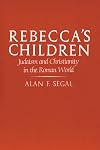
This one starts out *really* slowly, and very, very badly- the introduction is little more than turgid, unnecessary jargon that achieves absolutely nothing. As if that's not bad enough, the whole thing is an effective lesson in what can happen to your prose when you refuse to say 'I' (i.e., tortuous circumlocutions that end up saying almost the exact opposite of what you actually want to say). And the first chapter, on ancient Israel between Cyrus and the Romans, is over-long and show more under-informative.
Thankfully, it gets good after that. It's a shame that his chapters are so rigidly distinguished ('this is a chapter about Judaism, that is a chapter about Christianity'), when the main importance of the book is to show that there was no such thing as Christianity at the time, and that what we think of as Judaism didn't exist either- they were both born at the same time due to massive disturbances in the late antique world. Segal shows how that happened, why the resulting religions were successful, and says a little bit about what seems, from a Christian/post-Christian perspective, to be the main issue: how can you have a religion of one God that isn't universal? show less
Thankfully, it gets good after that. It's a shame that his chapters are so rigidly distinguished ('this is a chapter about Judaism, that is a chapter about Christianity'), when the main importance of the book is to show that there was no such thing as Christianity at the time, and that what we think of as Judaism didn't exist either- they were both born at the same time due to massive disturbances in the late antique world. Segal shows how that happened, why the resulting religions were successful, and says a little bit about what seems, from a Christian/post-Christian perspective, to be the main issue: how can you have a religion of one God that isn't universal? show less
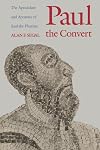
An excellent book on Paul, in other words: the best book on Paul I have read so far. Segal's depth of thought is unparallelled in the field of early Christianity. I don't believe I have a single other book with that much ++++-es in the margin.
Understandably Segal doesn't solve the Jesus-Paul problem as he accepts the traditional chronology of the origins of Christianity.
Understandably Segal doesn't solve the Jesus-Paul problem as he accepts the traditional chronology of the origins of Christianity.
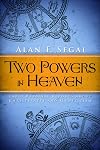
REVIEW NOTES: Israel's Divine Council, Mormonism, and Evangelicalism: Clarifying the Issues and Directions for Future Study
Michael S. Heiser
FARMS Review: Volume - 19, Issue - 1, Pages: 315—23
Provo, Utah: Maxwell Institute, 2007; http://maxwellinstitute.byu.edu/publications/review/?vol=19&num=1&id=645
Michael S. Heiser
FARMS Review: Volume - 19, Issue - 1, Pages: 315—23
Provo, Utah: Maxwell Institute, 2007; http://maxwellinstitute.byu.edu/publications/review/?vol=19&num=1&id=645
Lists
You May Also Like


Associated Authors
Statistics
- Works
- 11
- Also by
- 10
- Members
- 1,115
- Popularity
- #23,040
- Rating
- 3.9
- Reviews
- 4
- ISBNs
- 27
- Languages
- 2
- Favorited
- 1