
Wayne A. Meeks (1932–2023)
Author of The HarperCollins Study Bible
About the Author
Wayne A. Meeks is the Woolsey Professor Emeritus of Religious Studies at Yale University. He has served as president of the Society of Biblical Literature and the Studiorum Novi Testamenti Scoietas and is a fellow of the British Academy and of the American Academy of Arts and Sciences.
Works by Wayne A. Meeks
The Moral World of the First Christians (Library of Early Christianity) (1986) 304 copies, 2 reviews
The Prophet-King: Moses Traditions and the Johannine Christology (Johannine Monograph) (1967) 18 copies
Associated Works
Early Biblical Interpretation (Library of Early Christianity) (1986) — Editor, some editions — 276 copies
Moral Exhortation a Greco Roman Sourcebook (Library of Early Christianity) (1986) — Editor, some editions — 147 copies
The Social World of the First Christians: Essays in Honor of Wayne A. Meeks (1995) — Honoree — 36 copies
The Idea of Biblical Interpretation: Essays in Honor of James L. Kugel (Supplements to the Journal for the Study of Judaism) (2004) — Contributor — 18 copies
Religions in Antiquity: Essays in Memory of Erwin Ramsdell Goodenough (1970) — Contributor — 6 copies
Tagged
Common Knowledge
- Canonical name
- Meeks, Wayne A.
- Legal name
- Meeks, Wayne Atherton
- Birthdate
- 1932-01-08
- Date of death
- 2023-01-10
- Gender
- male
- Education
- University of Alabama (B.S., 1953)
Austin Presbyterian Theological Seminary (B.D., 1956)
University of Tuebingen (graduate study, 1956-57)
Yale University (M.A., 1963)
Yale University (Ph.D., Religous Studies, 1965) - Occupations
- cleric
university professor
professor of biblical studies - Organizations
- Yale University
Presbyterian Church (ordained 1956)
Indiana University
Dartmouth College
Society of Biblical Literature (president)
Studiorum Novi Testamenti Societas (president) - Awards and honors
- Fulbright Fellowship (1956-57)
Kent Fellowship (1962-65)
National Endowment for the Humanities Fellowship (1975-76)
Guggenheim Fellowship (1979-80)
British Academy (Corresponding Fellow, 1992)
American Academy of Arts and Sciences (2004) - Nationality
- USA
- Birthplace
- Aliceville, Alabama, USA
- Associated Place (for map)
- Alabama, USA
Members
Reviews
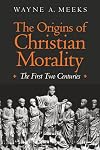
Constructing the moralities and ethical sensibilities of people is always difficult, especially when you’re at a remove of about twenty centuries, yet this is what Wayne Meeks, Woolsey Professor of Biblical Studies at Yale University, does in “The Origins of Christian Morality: The First Two Centuries.”
Some of the things Meeks looks at won’t surprise people, but the depth and breadth of the readings that he can bring to the conversation is striking. He discusses conversion and how show more it always emphasizes both the personal and the communal, breaking away from a wider community and joining a more “select” one. He looks at some of the conversion stories, like Justin Martyr’s “Dialogue with Trypho,” as a way of trying to concretize this change of a primary reference group. By emphasizing the world from which they turned, new Christians (mostly Jews, but later Gentiles, too) also serve to provide exhortatory stories of the morality of the new group itself.
Another common topic in early Christian morality is whether we should come to love or hate the world. By looking at a variety of texts, including Gnostic, Pauline, and Johannine, he shows how they all give different advice about how connected we should be to the world. In John, for example, the goal was not what Meeks calls “philosophical high-mindedness,” but the cultivation of “a passionate, sectarian, practical love that binds members to the group exclusively to one another and to the God they believe in” (p. 61). Gnostics, on the other hand, were often accused of being ascetics who hated the world because of the way they wanted to escape the creation of the Demiurge.
Meeks includes a fascinating section on the specific language of Christian obligation, and how those took certain literary forms. Christian moral practice took a number of shapes, some of which were quite simply lists of dos and don’ts, while others included gnomes (gnomia in Greek, sententiae in Latin) which were collected aphorisms or witty maxims. Still others were moral imperatives (precepts and commands), or discussions of certain topics and commonplaces (like “on friendship” or “on the family”). Meeks composes a grammar of moral obligation through these forms and how they are connected with some schools of Hellenistic philosophy. He goes on to discuss similar topics in the following chapters, including “The Body as Sign and Problem,” “A Life Worthy of God,” “Senses of an Ending,” “The Moral Story,” and “History, Pluralism, and Christian Morality.”
I really took a lot away from this book, and would recommend it to anyone who is interested in the first two centuries of Christian ethics, especially with an emphasis on the development of moral communities. It’s a scholarly book, with no hint of an agenda that we usually associate with books on subjects like this. As you might be able to tell from my discussion above, Meeks arranges his discussion topically, making use of the appropriate texts as he goes along. He also writes in the best of ethnographic traditions, with a thorough, rigorous knowledge of the material and an objective, concerted effort to better understand his subjects. show less
Some of the things Meeks looks at won’t surprise people, but the depth and breadth of the readings that he can bring to the conversation is striking. He discusses conversion and how show more it always emphasizes both the personal and the communal, breaking away from a wider community and joining a more “select” one. He looks at some of the conversion stories, like Justin Martyr’s “Dialogue with Trypho,” as a way of trying to concretize this change of a primary reference group. By emphasizing the world from which they turned, new Christians (mostly Jews, but later Gentiles, too) also serve to provide exhortatory stories of the morality of the new group itself.
Another common topic in early Christian morality is whether we should come to love or hate the world. By looking at a variety of texts, including Gnostic, Pauline, and Johannine, he shows how they all give different advice about how connected we should be to the world. In John, for example, the goal was not what Meeks calls “philosophical high-mindedness,” but the cultivation of “a passionate, sectarian, practical love that binds members to the group exclusively to one another and to the God they believe in” (p. 61). Gnostics, on the other hand, were often accused of being ascetics who hated the world because of the way they wanted to escape the creation of the Demiurge.
Meeks includes a fascinating section on the specific language of Christian obligation, and how those took certain literary forms. Christian moral practice took a number of shapes, some of which were quite simply lists of dos and don’ts, while others included gnomes (gnomia in Greek, sententiae in Latin) which were collected aphorisms or witty maxims. Still others were moral imperatives (precepts and commands), or discussions of certain topics and commonplaces (like “on friendship” or “on the family”). Meeks composes a grammar of moral obligation through these forms and how they are connected with some schools of Hellenistic philosophy. He goes on to discuss similar topics in the following chapters, including “The Body as Sign and Problem,” “A Life Worthy of God,” “Senses of an Ending,” “The Moral Story,” and “History, Pluralism, and Christian Morality.”
I really took a lot away from this book, and would recommend it to anyone who is interested in the first two centuries of Christian ethics, especially with an emphasis on the development of moral communities. It’s a scholarly book, with no hint of an agenda that we usually associate with books on subjects like this. As you might be able to tell from my discussion above, Meeks arranges his discussion topically, making use of the appropriate texts as he goes along. He also writes in the best of ethnographic traditions, with a thorough, rigorous knowledge of the material and an objective, concerted effort to better understand his subjects. show less
HarperCollins Study Bible: New Revised Standard Version (with the Apocryphal/Deuterocanonical Books) by Wayne A. Meeks
Writing for the Committee which undertook the translations, Bruce Metzger explains in the Preface that "The Bible carries its full message...to all persons and communities who read it so that they may discern and understand what God is saying to them." This text is accompanied with Notes which are generally helpful, or at least interesting, in the study of the scripture.
For example, the chapter in Genesis 30 which explains the origins of the Ammonites and Moabites. The incest is described as show more an "unflattering episode". This is taken as "fitting recompense for Lot's carelessness about his daughters' welfare" in 19.8, and notes that "from Moab will eventually come Ruth, ancestor of King David" who in turn is the progenitor of Jesus. The story of Lot's daughters making Lot drunk so as to have sex with him also "recalls the drunkenness of Noah and resultant sexual indiscretion by one of his offspring in 9.18-27. The subsequent sons' names in the Septuagint are a play on the incest theme.
{The repeated eruption of incest may also reflect Egyptian influences. The same book otherwise commands that incest would have been a stoning offense. Drunkeness is an aggravating, not mitigating factor. Remarkably, for the Christians, the delineation of this lineage is supposed to provide some kind of legitimacy to the Messiah coming from the incestuous root of these drunken sots. For the Judaic tribes, it only adds to the confusion of exactly how they originated, and who is included in their number.}
This work does combine the multiple "bibles" of Judaic, eastern and western Christian traditions, including the apocrypha, and notes the differences between them. With indexed colored Map Plates. show less
For example, the chapter in Genesis 30 which explains the origins of the Ammonites and Moabites. The incest is described as show more an "unflattering episode". This is taken as "fitting recompense for Lot's carelessness about his daughters' welfare" in 19.8, and notes that "from Moab will eventually come Ruth, ancestor of King David" who in turn is the progenitor of Jesus. The story of Lot's daughters making Lot drunk so as to have sex with him also "recalls the drunkenness of Noah and resultant sexual indiscretion by one of his offspring in 9.18-27. The subsequent sons' names in the Septuagint are a play on the incest theme.
{The repeated eruption of incest may also reflect Egyptian influences. The same book otherwise commands that incest would have been a stoning offense. Drunkeness is an aggravating, not mitigating factor. Remarkably, for the Christians, the delineation of this lineage is supposed to provide some kind of legitimacy to the Messiah coming from the incestuous root of these drunken sots. For the Judaic tribes, it only adds to the confusion of exactly how they originated, and who is included in their number.}
This work does combine the multiple "bibles" of Judaic, eastern and western Christian traditions, including the apocrypha, and notes the differences between them. With indexed colored Map Plates. show less
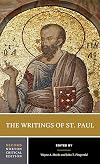
This is a great resource for Pauline Studies. It contains an excellent critical edition of the entire Pauline corpus arranged by the school of thought that divides the Pauline writings into the uncontested letters followed by the contested letters (i.e. deutero-Pauline). The translation in this updated edition is TNIV and it is heavily footnoted including great introductory essays for each letter.
In addition to the Pauline epistles, it also includes pseudo-Pauline works dating from the show more second-fourth centuries. This is followed by a tremendous variety of scholarly essays and writings dealing with views of Paul in the ancient church, law versus grace and the problem of ethics, Pauline Christianity and its relationship with Judaism, essays on reading Romans, and a sampler of modern approaches to Paul and his letters.
We used this for a class on Pauline literature and it was an indispensable resource. There was primary and secondary source material for every subject we wished to cover. I would highly recommend this edition to anyone's library. It will provide useful for years to come. show less
In addition to the Pauline epistles, it also includes pseudo-Pauline works dating from the show more second-fourth centuries. This is followed by a tremendous variety of scholarly essays and writings dealing with views of Paul in the ancient church, law versus grace and the problem of ethics, Pauline Christianity and its relationship with Judaism, essays on reading Romans, and a sampler of modern approaches to Paul and his letters.
We used this for a class on Pauline literature and it was an indispensable resource. There was primary and secondary source material for every subject we wished to cover. I would highly recommend this edition to anyone's library. It will provide useful for years to come. show less

Exploring the ethical content of the Greco-Roman and Jewish traditions, Dr. Meeks shows how Christians developed their own identity and moral language from a variety of sources and for new religious purposes.
Lists
books read 2018 (1)
Awards


You May Also Like


Associated Authors
Statistics
- Works
- 15
- Also by
- 9
- Members
- 4,514
- Popularity
- #5,559
- Rating
- 4.1
- Reviews
- 21
- ISBNs
- 44
- Languages
- 4
- Favorited
- 1
