
Heinrich Friedrich Wilhelm Gesenius (1786–1842)
Author of The Brown-Driver-Briggs Hebrew and English Lexicon
About the Author
Works by Heinrich Friedrich Wilhelm Gesenius
Gesenius' Hebrew and Chaldee Lexicon to the Old Testament Scriptures: Numerically Coded to Strong's Exhaustive Concordance, with an English Index of More Than 12,000 Entries (1949) 542 copies, 2 reviews
Hebräisches und Aramäisches Handwörterbuch über das Alte Testament: Gesamtausgabe (German Edition) (1921) 59 copies
Hebräisches Elementarbuch 3 copies
Gesenius Hebrew Grammer 2 copies
Hebräisches und aramäisches Handwörterbuch über das Alte Testament. Lief. 1, [Alef]-G (1987) 2 copies
Hebräisches und aramäisches Handwörterbuch über das Alte Testament, Bearb. von Frants Buhl u.a., 1 copy
A Hebrew and English lexicon of the Old Testament, with an appendix containing the Biblical Aramaic 1 copy
Handworterbuch 1 copy
Hebräisches und aramäisches Handwörterbuch über das Alte Testament. Lief. 6, Sh-T, Aram. (2010) 1 copy
Hebrew and Chaldee Lexicon 1 copy
Thesaurus Philologico-criticus linguae Hebraicae et Chaldaicae Veteris Testamenti, Vol. 3 (2010) 1 copy
Tagged
Common Knowledge
- Canonical name
- Gesenius, Heinrich Friedrich Wilhelm
- Birthdate
- 1786-02-03
- Date of death
- 1842-10-23
- Gender
- male
- Occupations
- Pädagoge
Lehrbuchautor - Relationships
- Gesenius, Heinrich Friedrich Wilhelm (Vater)
- Nationality
- Germany
- Birthplace
- Halle an der Saale, Deutschland
- Place of death
- San Remo, Italien
- Associated Place (for map)
- Germany
Members
Reviews
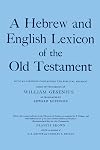
What I like about this lexicon is the comparative information from other Semitic languages. In general it is useful and straightforward.
The groupings of definitions into senses is very well done in my opinion, as far as my knowledge of biblical Hebrew goes. I frequently find that it covers all extant senses of each word quite thoroughly.
It is always really strange, though, to realize that the creator firmly believed that Indo-European and Semitic languages were related. In the linguistics show more world that is an obvious mistake and one that causes semantic aberrations in many of the definitions. For instance, under the demonstrative pronoun זה (Strongs 2090), the Sanskrit, Latin and Greek pronouns are given for comparison, when there is no etymological relation between these words and the Hebrew words.
In comparison to other Semitic lexica, I like that, unlike Arabic lexica (Hans Wehr, etc.), this lexicon lists words by lexeme and not by root. The grouping of words by root is semantically misleading to the uninitiated (i.e. it leads to etymological fallacy) and makes finding words a challenging exercise for scholars doing comparative work without language-specific training (because they cannot always quickly identify citation forms). show less
The groupings of definitions into senses is very well done in my opinion, as far as my knowledge of biblical Hebrew goes. I frequently find that it covers all extant senses of each word quite thoroughly.
It is always really strange, though, to realize that the creator firmly believed that Indo-European and Semitic languages were related. In the linguistics show more world that is an obvious mistake and one that causes semantic aberrations in many of the definitions. For instance, under the demonstrative pronoun זה (Strongs 2090), the Sanskrit, Latin and Greek pronouns are given for comparison, when there is no etymological relation between these words and the Hebrew words.
In comparison to other Semitic lexica, I like that, unlike Arabic lexica (Hans Wehr, etc.), this lexicon lists words by lexeme and not by root. The grouping of words by root is semantically misleading to the uninitiated (i.e. it leads to etymological fallacy) and makes finding words a challenging exercise for scholars doing comparative work without language-specific training (because they cannot always quickly identify citation forms). show less
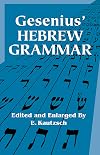
Even though dated, it is still the most comprehensive reference grammar out there. Unfortunately, it is rooted in mid-19th century philology and understanding of language. Definitely time for a new one.

The classic single-volume lexicon of Biblical Hebrew: Despite the the venerable age of the Brown-Driver-Briggs-Gesenius Hebrew-English Lexicon (BDB), it is still unsurpassed as the most practical (in a comprehensiveness/affordability sense) for classroom use. Other solutions are either too basic, such as Holladay's Concise Hebrew and Aramaic Lexicon of the Old Testament, or too expensive to for an introductory course such as the two-volume study edition of Brill's Hebrew and Aramaic Lexicon show more of the Old Testament (HALOT).
A potential drawback to the user of this dictionary is that the lexical list by root will cause difficulty for the user unfamiliar with Hebrew grammar. A certain drawback to the work is that considerable discoveries and advances have been made in the area of Comparative Semitic Linguistics since the work's publication, and therefore the etymological lemmata listed under each root may not be entirely accurate anymore, and the scholarly consensus on the pragmatics of certain verb forms may have changed. For serious academic reference on these matters, one should then turn to the HALOT or the new Sheffield 'Dictionary of Classical Hebrew' (in-progress, most recently published volume: 6 'Samekh-Pe'). show less
A potential drawback to the user of this dictionary is that the lexical list by root will cause difficulty for the user unfamiliar with Hebrew grammar. A certain drawback to the work is that considerable discoveries and advances have been made in the area of Comparative Semitic Linguistics since the work's publication, and therefore the etymological lemmata listed under each root may not be entirely accurate anymore, and the scholarly consensus on the pragmatics of certain verb forms may have changed. For serious academic reference on these matters, one should then turn to the HALOT or the new Sheffield 'Dictionary of Classical Hebrew' (in-progress, most recently published volume: 6 'Samekh-Pe'). show less
The old standard for Hebrew grammars. Extremely extensive yet also quite dense. A true reference grammar. Not recommended for beginners.
Lists
You May Also Like


Associated Authors
Statistics
- Works
- 51
- Members
- 4,779
- Popularity
- #5,256
- Rating
- 4.1
- Reviews
- 16
- ISBNs
- 79
- Languages
- 4

